New Launch - India Real Estate Report 2026.

Services
Knowledge Hub
Resources
Tools

Ask Pulse Ai
©PropTech Pulse 2025, All rights reserved.


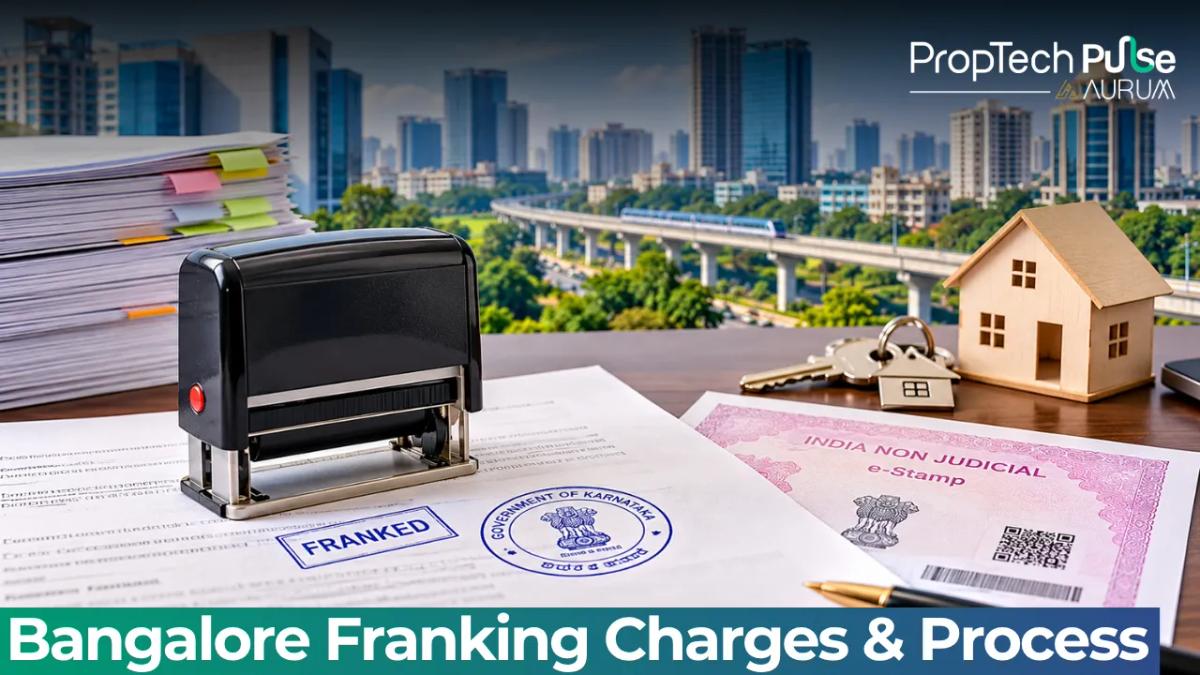
Buying a flat or registering a lease in Bengaluru involves strict compliance rules. First-time buyers often trip up on understanding franking in Bangalore because they mistake buying stamp paper for the physical act itself. Knowing the difference between franking, e-stamping, and adjudication saves cash. It also stops you from wasting hours in queues at Rajaji Nagar. We cover the exact charges and the steps to file without errors below.
What is the Franking Meaning?
Quick answer
Franking is the physical process of affixing a machine-generated barcode and exact timestamp onto an unstamped or pre-paid document at a designated Sub-Registrar Office. It certifies that applicable stamp duty has been paid before the document is submitted to courts or government departments. While bank agreements typically incur a fixed franking fee, property-related franking serves as proof of legal validity.
The word sounds bureaucratic, but the logic is simple. A blank sheet with a virtual code is easy to forge. Once the government applies a unique franking barcode directly onto the page, alteration becomes nearly impossible. This verification step matters most in Bangalore, where property values run high and leases span commercial warehouses to long-term homes.
How the Franking Stamp Duty System Works
Karnataka mandates franking for most high-value financial instruments, property transfer deeds, and long-term commercial contracts. The process happens at the ground level after you have purchased the necessary stamp paper. Take your draft document to the Sub-Registrar Office. The verifying officer checks the format. The franking machine then prints a visible barcode with the exact date and time of authentication.
Once a document carries this franking imprint, it becomes a public record tied to that exact transaction date. You cannot backdate the impression or rewrite clauses afterward. This stops buyers from altering terms mid-deal. Franking sits on top of the base duty as a secondary validation layer. For the full mechanics behind the numbers, read our guide on how is stamp duty calculation used in real estate.
Calculating Your Franking Charges in Bengaluru
Fees fall into two distinct buckets: banking documents and property documents. They behave differently under the Karnataka Stamp Act. Experts familiar with franking in Bangalore note that housing lenders usually absorb the base admin cost. Borrowers typically pay for the actual unit operation.
Home loan and bank agreement franking charges: Before disbursing funds, lenders mandate that the loan sanction letter be physically franked to verify authenticity. Banks usually absorb the base administrative cost, but borrowers often foot the bill for the actual franking unit operation. The charge runs at roughly 0.1% of the total sanctioned loan amount, though most branches enforce a minimum floor price. On an ₹80 lakh loan, expect a manageable cash outlay rather than a massive deduction.
Property transaction franking stamp duty: When you move to actual flat purchases, the standalone franking fee remains comparatively tiny. The heavy financial lifting happens earlier through the primary stamp duty slab and the fixed 1% registration charge. You can review the full Bengaluru stamp duty and registration charges matrix to see how location and buyer demographics shift those baseline percentages.
| Expense Head | Estimated Cost (INR) |
|---|---|
| Primary Stamp Duty (Slab-based rate inclusive of cess and surcharge) | Varies by locality (approx. ₹4.40–4.60 lakhs) |
| Registration Charge (Fixed 1% of sale value) | ₹80,000 |
| Home Loan Sanction Letter Franking Fee | ₹8,000 to ₹12,000 |
| Physical Document Franking Imprint Fee | Nominal (usually absorbed in overall processing) |
| Total Additional Compliance Costs | ~₹88,000 to ₹92,000 |
Women buyers frequently benefit from lower effective stamp duties in Karnataka. Pair your franking strategy with a check on home loans for women benefits tax and stamp duty guides to ensure your paperwork reflects every eligible concession before submitting drafts.
Franking vs E-Stamp and Adjudication in Karnataka
Citizens operating in Bengaluru have three parallel routes to validate their documents. Using the wrong one causes delays or unnecessary spending.
E-Stamp Paper: Issued by the state-controlled e-Stamp India Corporation, this generates a digitally signed bond with a unique alphanumeric certificate number. E-stamping is accepted nationwide and is ideal when you know the exact transaction value before visiting the office. It cuts down physical queuing time significantly.
Traditional Franking: Use traditional franking for ad-hoc submissions, urgent affidavits, or late-minute drafts where a second verification layer satisfies regional courts.
Adjudication: This is the step most blogs miss. If you buy a lower-value stamp paper by mistake for a higher-duty deal, the document becomes technically defective. Apply for judicial admission at the Sub-Registrar Office to fix this. Pay the difference within ninety days of execution. The office validates the contract retroactively, avoiding the cost of buying entirely new stationery.
Warning on drafting delays Do not delay presenting a draft for franking until the day of registration. Sub-Registrar counters in central Bangalore experience bottlenecks when multiple lawyers submit lengthy commercial agreements simultaneously. Submitting early secures a slot and prevents rushed mistakes.
How to Get Documents Franked in Bangalore (Step-by-Step)
Central offices like Rajaji Nagar run a rigid queue system. Get past the verification desk quickly with this sequence.
Step 1: Gather required originals. Carry the original Aadhaar card or passport of the applicant. If a company is involved, bring the board resolution authorizing the signatory. Keep the draft agreement printed on plain A4 sheets initially.
To start, present your draft at the verification counter alongside valid ID so the clerks can approve it for franking. They check the layout, clause numbering, and basic valuation. If they spot structural errors, they hand the draft back. Do not attempt franking until the format is approved.
Once approved, generate the admission token. Pay the franking stamp duty fee via the government portal or a designated treasury branch. You receive a physical token slip containing your unique admission number. This number dictates your priority at the next window.
Return and collect. Hand your token to the machine window. The officer processes the draft, prints the franking barcode, and seals the page. Grab the authenticated copy right away. Check that the printed date matches today’s calendar. A typo means restarting the queue.
If you need specific details on documentation standards, reviewing the rent agreement India rules, format, and stamp duty guidelines ensures your clauses match government expectations before you ever touch a franking machine.
Which method should you choose?
Stick to e-stamps for planned residential sales and commercial leases. The digital certificate removes physical loss risks and speeds up the data entry at registration. Reserve physical franking for urgent affidavits, power-of-attorney renewals, or bank sanction letters that explicitly demand a machine imprint. Always keep adjudication in mind as your financial backup plan. If your valuation calculations drift upward by more than ten percent, use the ninety-day grace period to correct the duty rather than discarding the instrument.
Frequently asked questions
Is franking mandatory for rental agreements in Bengaluru?
Yes, if the lease term extends beyond eleven months or involves substantial commercial value. Short-term stays rarely trigger this requirement, but long-term residential tenancies and office space leases must carry proof of duty payment to be legally enforceable in tenant disputes.
Where can I get my rent agreement franked in Bangalore?
Visit any designated Sub-Registrar Office covering your jurisdiction. Central areas utilize the Rajaji Nagar SRO, while residents in Whitefield, Yelahanka, or Electronic City can use their respective peripheral substations. Each office maintains identical processing standards regardless of geographic spread.
What is the franking charge in Bangalore for property registration?
The base franking fee operates on a sliding percentage of the declared property value. Housing banks usually charge approximately zero point one percent of the loan amount, subject to minimum thresholds. Standard property document impressions incur negligible processing fees compared to the overarching stamp duty slab.
Is franking the same as paying stamp duty?
No. Purchasing the stamp paper satisfies the core tax liability owed to the state. Franking represents the subsequent validation step where a government machine timestamps and authenticates the already-taxed document. You must complete both actions sequentially for the contract to hold legal weight.
How to get an admission number at the Bengaluru Sub-Registrar Office?
Arrive at the verification counter with your drafted agreement and valid photo identification. The clerks inspect the document structure and approve it for processing. After clearing verification, you pay the prescribed fee and the system instantly generates your token slip bearing the admission number required for the final printing window.
Sources
- Government of Karnataka: Treasury regulations regarding judicial admission and stamp paper procurement procedures (accessed October 2026)
Enjoyed this blog article? Visit PropTech Pulse for more interesting blogs.





Ask Pulse Ai anything about real estate

Unlock the Latest in Real Estate
News, Infographics, Blogs & More! Delivered to your inbox.

