New Launch - India Real Estate Report 2026.

Services
Knowledge Hub
Resources
Tools

Ask Pulse Ai
©PropTech Pulse 2025, All rights reserved.


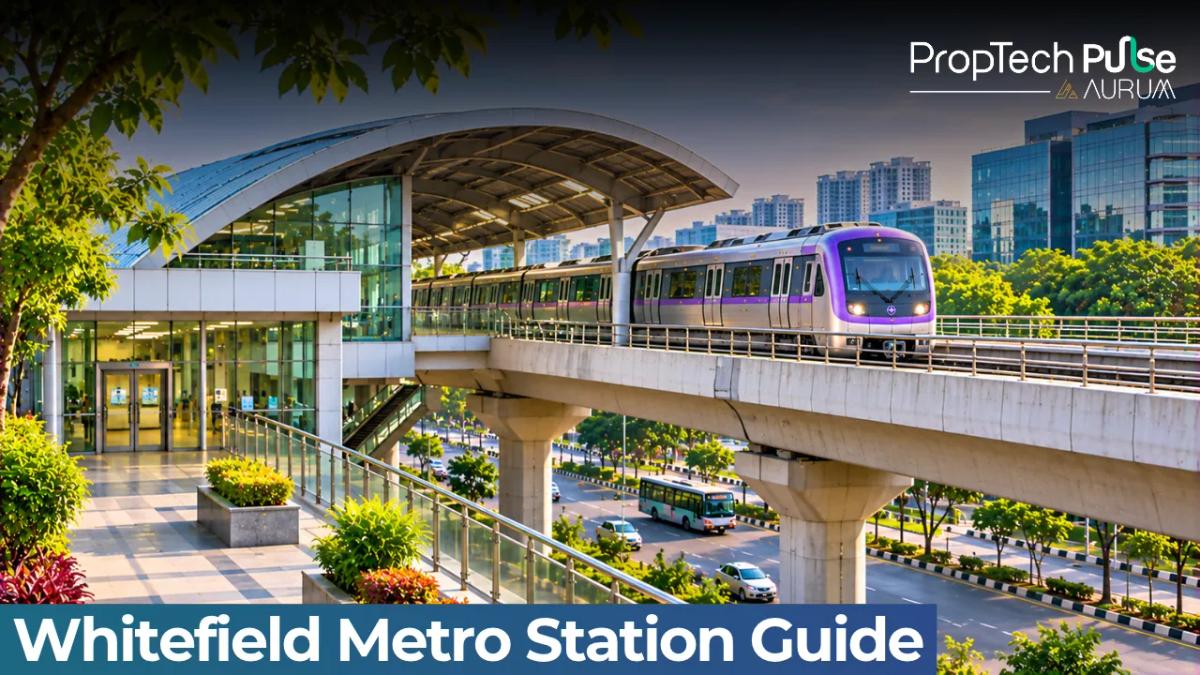
The Whitefield metro station sits at the eastern end of Bengaluru’s Purple Line, serving thousands of daily commuters heading to and from the International Technology Park corridors.
Navigating this hub efficiently saves valuable morning minutes. We cover everything from gate-side exits to the updated 2026 train frequencies.
On the wider transit map, the Bangaluru Whitefield Metro hub anchors the eastern technology corridor. Since the historic inauguration in March 2023, the daily rhythm around this node has shifted noticeably.
Riders face conflicting reports about four-wheeler parking and fare caps. This guide clears up those contradictions, gives you precise fare slabs, and outlines the structural upgrades shrinking your commute time this year.
Whitefield Metro Station: Quick Facts & Location
Quick answer
The Whitefield metro station (WHTM) is the eastern terminus of Bengaluru’s Purple Line, operating from 05:00 AM to 10:45 PM. Fares range from ₹10 to ₹60. The station features ample two-wheeler parking capped at ₹30 daily, but four-wheeler spots are severely restricted. Recent upgrades cut non-peak train wait times to four minutes.
BMRCL built this underground station directly alongside Kempegowda II Road, placing it within walking distance of several major IT campuses.
As the easternmost stop, the station hosts two side platforms handling inbound and outbound services on the Purple Line.
Staff assign WHTM as its official station code. Locals often confuse this stop with the older Kadugodi nodal point, but transit authorities officially list the eastern terminal simply as Whitefield.
The complex features four entry gates, though only two see heavy footfall depending on which side of the road your workplace sits.
Station Code, Platforms & Structure
It operates entirely underground. Each platform accommodates full train sets before they reverse direction toward Krishnarajapura.
The concourse level connects both tracks via escalators and elevators designed to handle heavy monsoon foot traffic efficiently.
Operating Timings and First/Last Trains on the Whitefield Metro
Namma Metro runs from 05:00 AM to 10:45 PM across all lines.
Because Whitefield operates as a terminal, trains arriving at dusk reverse direction immediately rather than sitting idle, keeping service uninterrupted through the night maintenance windows.
Morning peaks start sharply at 07:30 AM. Trains depart every four to six minutes during rush hours. Evening crowds swell between 06:00 PM and 08:30 PM.
If you miss a train here, the gap until the next one rarely exceeds eight minutes outside peak windows.
Employees usually queue at ticket counters or use smart cards to bypass the delay. Last trains heading inward toward KR Puram leave around 10:30 PM.
Night-shift workers returning late should verify the exact timetable on the official app, as weekend and holiday shifts occasionally adjust the final departure by a few minutes.
Riders relying on the Whitefield metro station should track these slight schedule adjustments before committing to evening outings.
Whitefield Metro Fares, Passes and Payment Options
Fares between this station and city centers scale according to distance.
For most trips starting at Whitefield, you pay between ₹10 and ₹60 per ride depending on whether you reach MG Road, Majestic, or the airport extension.
| Destination Zone | Approximate Fare |
|---|---|
| Central Bengaluru (MG Road, Cubbon Park) | ₹25 to ₹35 |
| North Bengaluru (Koramangala, Bommanahalli) | ₹10 to ₹15 |
| Outer Terminals (Airport Extension, Bidadi) | ₹50 to ₹60 |
Daily commuters rely on NMT smart cards loaded through apps or physical kiosks. Digital wallets like Paytm and PhonePe offer instant passes without physical cards.
Salaried professionals working in adjacent tech parks can cap their costs with monthly passes.
These cards typically save nearly twenty percent compared to single trip tokens. Transit authorities update pass limits periodically though.
Verify the official portal before renewing to ensure your card stays valid for the current billing cycle.
Buying a card upfront removes friction at rush-hour gates where manual queues stall movement.
If you are calculating long-term housing costs in this zone, factor in transit savings. A household commuting daily through the metro cuts fuel and cab expenses significantly. Explore how proximity to a metro station affects apartment pricing to understand why properties within walkable radius command premium rentals despite higher base costs.
Navigating Exits: Gate A vs Gate B Landmarks
Navigating surface exits requires knowing which door serves your destination once you reach the ground floor. Understanding which gate leads to your office prevents unnecessary detours across busy roads in the afternoon sun.
Gate A → Railway Station & Bus Depot
Gate A drops you directly onto the BMTC bus interchange and provides pedestrian access toward the Whitefield railway station.
If you transfer between rail and metro systems, exit through Gate A first. The footpath connects to local markets and smaller corporate offices facing the main highway. Staff stationed here assist passengers navigating between multiple transport modes.
Gate B → Channasandra & Tech Parks
Gate B opens directly onto Channasandra village and the main drive to the International Technology Park. Most large IT campuses signpost this exit clearly.
Rideshare pick-up points cluster here. Office goers exiting the Whitefield metro station at 05:30 PM should avoid the main driveway immediately after the gates.
Walk ten meters toward the side lane to find cleaner rideshare zones with less traffic congestion.
Parking and Feeder Connectivity Near the Whitefield Railway Station Parking Hub
Parking disputes frequently confuse newcomers because some portals claim cars park freely while others warn against driving entirely.
Space constraints at the core station mean private car parking faces strict limits. You cannot legally park a private car inside the immediate metro enclosure for free.
Parking alert Driving a car requires finding off-site paid lots near the outer ring road. Four-wheeler parking is strictly restricted near the station core due to space limits. Using unauthorized spots risks fines.
Two-wheeler parking remains the practical solution for most IT employees. The designated bike shed enforces strict hourly rates.
Owners pay ₹15 for the first four hours, then ₹5 per additional hour. Daily caps sit at ₹30, which keeps monthly commutes affordable for budget-conscious workers.
| Duration | Charge |
|---|---|
| First 4 hours | ₹15 |
| Subsequent hours | ₹5 / hour |
| Daily maximum | ₹30 |
E-V chargers sit near the bike sheds, letting owners plug in while attending meetings. These slow-chargers supplement rapid charging available further down the main road.
Local vendors also manage informal lots outside the permitted boundary, but using those voids insurance coverage if vehicles get damaged.
When evaluating a rental near the area, confirm whether buildings offer secure indoor parking. Older constructions lack dedicated slots, forcing occupants to park miles away.
Newer complexes integrate covered spaces that reduce theft risk and protect bikes from monsoon humidity. Review the first-time homebuyer guide to prepare your documents and credit history well ahead of site visits. Proper planning simplifies transactions in fast-moving markets.
Upgrades Impacting the Whitefield Metro Route in 2026
Transit engineers rolled out critical track extensions last quarter to fix bottlenecks that caused minor delays.
Workers extended the shunting neck by forty meters, allowing trains more room to maneuver and reverse smoothly without blocking adjacent tracks.
This change directly lowers wait times. Non-peak intervals have dropped from eight minutes to roughly four minutes.
Morning riders leaving Whitefield now face shorter platform queues. Frequency gains ease pressure on crowded carriages during evening returns.
Real estate values near the Whitefield metro station tend to appreciate faster because connectivity improvements signal developer confidence.
Builders use these transit upgrades in marketing materials, which drives demand from young professionals seeking reliable commutes.
Smart building automation also complements transit hubs, making newer projects easier to maintain. Discover how proptech benefits shape modern homeownership when you buy near these upgraded nodes.
Check local municipal rules regarding property taxes and renovations. Knowing the franking process in Bangalore prevents paperwork delays when finalizing purchase agreements near transit upgrades.
Before You Sign or Rent
The metro expansion makes Whitefield increasingly viable for families prioritizing predictable travel over short commutes. If you rent currently, negotiate clauses that allow easy parking access since private car storage remains scarce.
If you own, monitor nearby listings for undervalued units close to the newer gate expansions.
Transit reliability consistently supports long-term capital growth, provided the surrounding layouts remain flood-free and properly zoned.
Frequently asked questions
What is the fare for the Whitefield metro station?
Single trips from this terminus start at ₹10 for short distances and reach ₹60 for routes reaching the airport. Commuters usually pay ₹25 to ₹35 to reach major hubs like MG Road. Monthly smart-card passes reduce spending and skip token queues during rush hours. You must load funds onto an NMT card before traveling, as machines sometimes reject foreign debit cards late at night. Check the latest fare chart online before topping up.
Is there car parking at the Whitefield metro station?
The core station footprint lacks free private car parking due to severe space limits. Officials advise two-wheelers or rideshare pick-ups at Gate B instead. External vendors manage distant paid lots, but using those spots leaves vehicles exposed to weather and theft without insurance. If you must drive, locate government-approved multi-story parking zones a few kilometers down the ring road where safe, covered alternatives exist away from chaotic roadside stalls.
When was the Whitefield metro inauguration held?
The eastern terminus opened publicly on March 26, 2023, completing the vital Krishnarajapura to Whitefield stretch. The launch reduced years of gridlock for technology sector workers. Daily passenger numbers surged almost immediately following the ribbon cutting ceremony. Subsequent phases expanded network connections northward, solidifying this western-nodal link as a permanent fixture in the city transit ecosystem. Construction delays had pushed the original completion date back by several quarters.
Where is the Whitefield metro station located?
You will find this underground station positioned directly alongside the main Kempegowda II Road thoroughfare. Pedestrians accessing the entrances navigate easily from the Channasandra village perimeter on one side and the BMTC interchanges on the other. GPS pins labeled Whitefield Metro drop walkers exactly at the main plaza level. The location places residents within walking distance of several international technology parks and dense residential clusters seeking convenient transit options.
Sources
Enjoyed this blog article? Visit PropTech Pulse for more interesting blogs.




Ask Pulse Ai anything about real estate

Unlock the Latest in Real Estate
News, Infographics, Blogs & More! Delivered to your inbox.

