New Launch - India Real Estate Report 2026.

Services
Knowledge Hub
Resources
Tools

Ask Pulse Ai
Services
FOR BUYERS & RENTERS
FOR REAL ESTATE DEVELOPERS








Refer other Connectors &
Multiply IncomeRefer other Connectors
& Multiply Income
Refer KuberX & earn
commission on every
loan they get
disbursed.


Scan & Download
©PropTech Pulse 2025, All rights reserved.


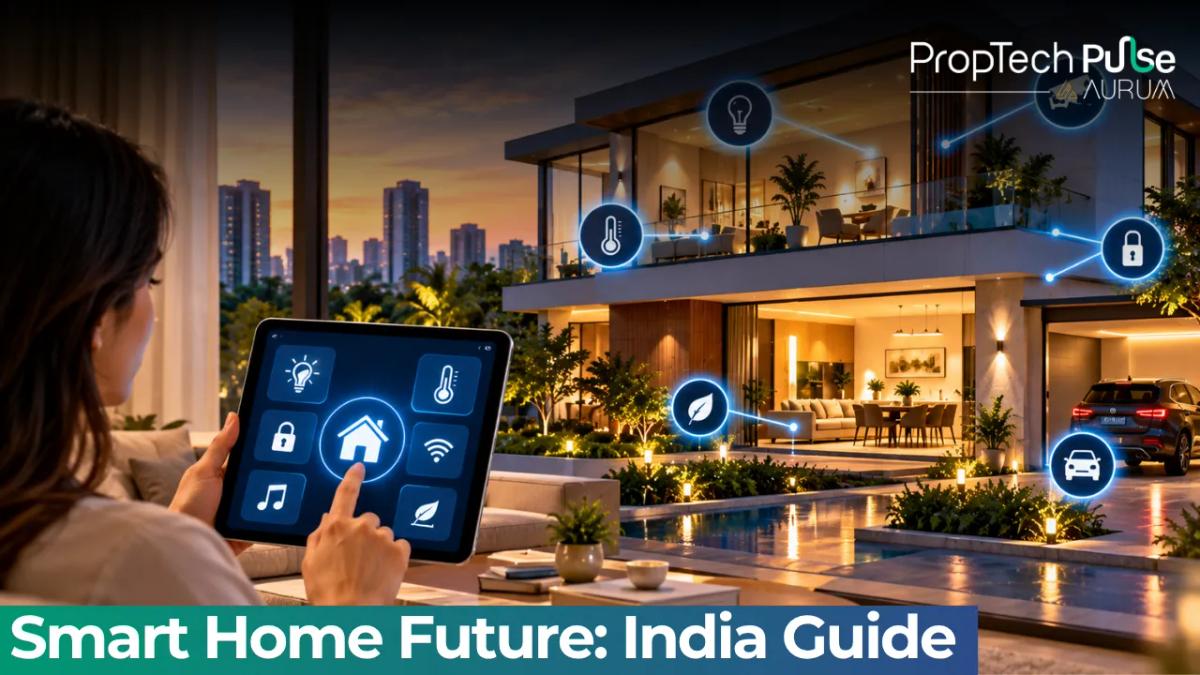
You are about to buy or furnish a home, and every vendor says theirs is the smart one. The harder question is which choices will still make sense in 2032. Gadgets will change. The walls, wires and broadband you commit to now will not.
This guide covers the future of smart homes in India. It sorts likely shifts from hype and shows what to lock in today so you don't pay twice.
The future of smart homes in short
Quick answer
The future of smart homes points to devices that work across brands, run more on local processing, track energy, and learn your routines. Gadgets will keep changing, so spend most on what is hard to change later: wiring, neutral lines, conduits and a solid internet connection.
Today's smart home is often a pile of apps. The next version tries to hide the apps and let the home just work.
If you want the present-day picture first, read the Pulse guides on IoT in real estate and PropTech trends.
Five shifts to watch
Each shift below has a direct effect on what you should buy or build today.
| Shift | What it means | What it means for you |
|---|---|---|
| Common standards such as Matter | Devices from different brands work together | Less lock-in, easier upgrades |
| Local processing | More decisions are made inside the home, not on a server | Faster response and better privacy |
| Energy awareness | Homes track and shift power use | Lower bills, solar and EV readiness |
| Smarter routines | Software learns patterns and adjusts | Fewer manual scenes to set up |
| Health and safety sensing | Leak, smoke, air quality and fall alerts | Early warnings, especially for older family members |
Source: author's assessment of current industry direction; timelines are uncertain.
None of these needs a new house. Most need devices that follow open standards and a home network that is good enough to carry them.
Likely, uncertain or hype
Not every promise deserves your money. Use this sorting when a vendor shows you a "home of the future" demo.
| Claim | Verdict | Reason |
|---|---|---|
| Devices from different brands will work together more often | Likely | Industry standards are already in place and growing |
| Energy tracking becomes common | Likely | Power costs and solar adoption push it |
| A home that fully manages itself with AI | Uncertain | Needs reliable software and clear privacy rules |
| Every appliance connected and useful | Uncertain | Many connected features add little value |
| Smart features will lift your resale price a lot | Hype | Buyers rarely pay a premium that matches the spend |
Source: author's judgement; not a market forecast.
What to future-proof now
Think in layers. Some layers last twenty years, others three.
- Walls and wiring (20+ years). Ask for neutral wires in switch boxes, spare conduits, and extra points where TV, desk and bed will sit.
- Internet (5 to 10 years). Run wired Ethernet to the router, the living room and the study. Place the router centrally.
- Power (10 years). Keep a dedicated circuit for heavy loads and plan a spot for an inverter or EV charger if you drive.
- Devices (3 to 5 years). Buy mid-priced gear, favour open standards, and expect to replace it.
If you are buying under construction, put these on your list for the builder before the walls close. The property buying guide covers the rest of the checks.
A worked cost example
Say you plan 20 smart switch points. If conduits and neutral wires are laid while the flat is being built, assume the extra work costs ₹500 a point, or ₹10,000 in all.
If you add the same wiring later by cutting walls, assume ₹2,500 a point once you count chasing, plaster and paint. That is 20 × 2,500 = ₹50,000.
The gap is ₹40,000. It is also a month of mess. These figures are assumptions to show the method, so ask your contractor for real quotes.
Indian conditions that shape the future
Voltage swings, power cuts and heat hurt electronics, so surge protection and a small UPS for the router are worth the money. Dust and humidity shorten the life of cheap sensors.
Many Indian homes are small, which suits a few well-placed devices more than a full-house system. Societies matter too. Shared lifts, gates and pumps decide a lot of your experience, as the Pulse notes on PropTech facility management and smart city technology show.
Sustainability will push energy features forward. See how PropTech supports sustainability for the wider picture.
Risks to plan for
Vendors close, apps are shut down and cloud-only devices stop working. Prefer products that keep their basic functions when the internet is down.
Data is the second risk. Cameras, locks and voice speakers collect personal information, and the Digital Personal Data Protection Act, 2023 applies. Read what is stored, where, and for how long.
Security is the third. Change default passwords, update firmware and keep smart devices on a separate network from your laptop.
How to decide
Decision rule: spend on what is hard to change (wiring, conduits, internet), keep devices cheap and standards-based, and refuse anything that stops working without the internet. Skip a feature if you can't name how you will use it every week.
If you want to see layouts and finishes before you commit, the AR/VR page is a good place to start. The future of smart homes will arrive in pieces, so build a home that can take each piece when it does.
Frequently asked questions
What will smart homes look like in the next five years?
Expect fewer apps and more devices that work together under common standards. Energy tracking, better voice control and cameras that process video on the device are likely. Treat any specific forecast with caution, since product timelines slip often .
What is Matter and why does it matter for buyers?
Matter is an industry standard that lets devices from different brands work together on the same home network. For you, it lowers the risk of buying into one brand. Check that a device lists Matter support before you pay a premium .
Should I wait for better technology before automating my home?
No, if you need something now. Buy cheap, replaceable devices today and spend carefully on the parts that are hard to change later, such as wiring, conduits and broadband. Gadgets age quickly, while walls do not.
Will AI run my home in the future?
AI will likely handle routines, such as adjusting lights and cooling to how you live. The trade-off is data. Ask what is processed in your home and what is sent to a server, and keep a manual way to run every essential system.
Do smart features add value when selling a flat?
Rarely in a measurable way. Buyers may like pre-wired points and a good lock, but few pay extra for gadgets. Spend on what you will use, and treat resale value as a bonus, not the reason.
Enjoyed this blog article? Visit PropTech Pulse for more interesting blogs.



Ask Pulse Ai anything about real estate

Unlock the Latest in Real Estate
News, Infographics, Blogs & More! Delivered to your inbox.