New Launch - India Real Estate Report 2026.

Services
Knowledge Hub
Resources
Tools

Ask Pulse Ai
©PropTech Pulse 2025, All rights reserved.


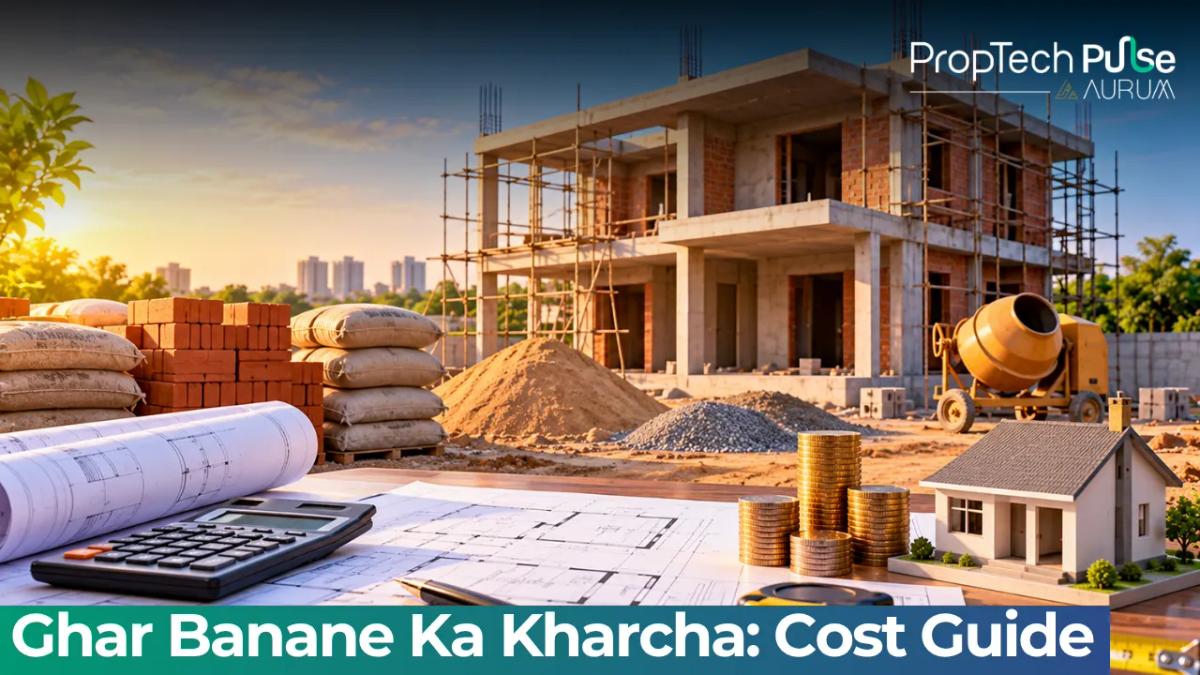
Building a custom home requires more than multiplying area by a simple rate. You also need to factor in municipal codes, soil conditions, and contractor margins.
In Q3 2026, the average ghar banane ka kharcha sits between ₹1,500 and ₹2,200 per square foot for a standard grey structure. Add premium finishes and fixtures and the rate climbs to ₹2,800–₹3,500 per sqft. A typical 1,000 sqft house demands ₹15–22 lakh in direct construction costs alone. These figures exclude approvals, soil tests, and temporary site setups.
Your final bill shifts depending on whether you operate in a metro cluster or a tier-two market. It also depends on how many floors you intend to stack and which engagement model you sign with the contractor.
Current ghar banane ka kharcha per square foot (India, Q3 2026)
Quick answer
The current ghar banane ka kharcha ranges from ₹1,100 to ₹3,500 per square foot depending on finish quality. A standard grey structure costs ₹1,500–₹2,200 per sqft, while complete turnkey projects including tiles, painting, and plumbing fixtures run ₹2,500–₹3,500 per sqft.
Contractors typically break pricing into three finish tiers.
Cement grade, steel specification, timber volume, and plaster thickness determine the gap.
Economy packages work best in rural clusters where hauling freight remains inexpensive.
Standard builds target semi-urban zones and stick to IS-certified fly ash bricks paired with M20 concrete.
Premium projects push boundaries with double-layer damp proofing, AAC blocks, and imported bathroom fittings.
Those choices easily push rates past ₹3,500 per sqft.
| Tier | Material specification | Rate range (per sq ft) |
|---|---|---|
| Economy | Local clay bricks, M15/M20 concrete, basic CPVC piping, local tile brands | ₹1,100 – ₹1,500 |
| Standard | Solid fly ash bricks, M20/M25 concrete, Fe500D steel, branded sanitary, vitrified flooring | ₹1,500 – ₹2,200 |
| Premium | Premium AAC blocks, M25/M30 concrete, Fe550D structural steel, marble/granite, modular electrical fittings | ₹2,200 – ₹3,500+ |
These base rates usually cover civil works, structural framing, and basic MEP rough-ins. They rarely include heavy landscaping, boundary walls over two feet thick, or specialized architectural elements like cantilevered staircases. Always verify what falls inside the quoted envelope before handing over the token amount.
City-wise house construction cost in India 2026
Logistics and labour availability create steep gaps between metros and tier-two markets. Moving steel, sand, and aggregate into narrow Mumbai lanes or Bangalore traffic adds 15–20% to material handling. Conversely, towns in states like Bihar or Jharkhand benefit from cheaper local labour pools. They may pay more for imported finishing materials.
| City / Cluster | Base rate (standard finish) | 1,000 sqft total estimate |
|---|---|---|
| Mumbai / Thane / Navi Mumbai | ₹2,100 – ₹2,600 | ₹21–26 lakh |
| Bengaluru / Hyderabad | ₹1,900 – ₹2,400 | ₹19–24 lakh |
| Delhi NCR / Pune | ₹1,800 – ₹2,300 | ₹18–23 lakh |
| Chennai / Kolkata | ₹1,700 – ₹2,100 | ₹17–21 lakh |
| Tier-2 hubs (Indore, Jaipur, Lucknow) | ₹1,500 – ₹1,900 | ₹15–19 lakh |
| Tier-3 and rural clusters | ₹1,200 – ₹1,600 | ₹12–16 lakh |
If you buy land far from major supply yards, ask the contractor for a separate transit surcharge. Sand transport alone can swing the final bill by several lakhs if the nearest approved pit lies thirty kilometres away. Always factor distance into your initial budget spread before locking the plot.
The hidden ghar banane expenses that blow budgets
A pure per-sqft quote hides the pre-construction work required by law and engineering practice. Municipalities now mandate geotechnical checks and structural stability certificates before issuing start-of-work permits. Skipping these steps might save rupees initially. Faulty foundations lead to cracking walls within three monsoons.
You should also set aside cash for architect retainers, temporary worker sheds, water tank rentals, and sanitation facilities for the site team. Build a separate contingency pool equal to 8–10% of your total project value. Keep this money untouched during early phases. Use it only for scope variations, unexpected soil conditions, or delayed material deliveries triggered by festival spikes.
First-time builders routinely underestimate these off-site costs.
You must treat them as fixed expenses.
Municipal bye-laws vary wildly here.
Some districts charge flat processing fees.
Others tack on percentage-based development levies.
Pull the current fee schedule from your local urban development portal or state rera website.
Tracking your ghar banane ka kharcha closely prevents unexpected vendor markups.
Planning your first home build requires mapping every rupee before bringing a site supervisor onto the plot.
Statutory approvals and RERA compliance
Before pouring concrete, you must clear a checklist of statutory approvals. Municipal corporations require a sanctioned building plan, environmental clearance if applicable, and a geotechnical report confirming soil bearing capacity. You cannot legally begin excavation without these documents.
RERA mandates that fund releases happen strictly based on construction milestones. Homeowners contracting directly must align payment schedules with these stages to secure home loan disbursal. Banks refuse to release further tranches until a certified structural engineer verifies that physical work matches the claimed percentage. Missing this step often stalls your project and triggers penalty clauses in your contract.
Tax deductions for self-constructed homes
Self-construction grants direct eligibility for specific tax breaks under the Income Tax Act. You can claim interest deductions under Section 24(b) once you receive the occupancy certificate. The cap stands at ₹2 lakh annually for self-occupied properties.
If you construct a second house, the limit applies separately to both structures. Principal repayment under Section 80C qualifies up to ₹1.5 lakh per financial year, combined with other investments like EPF or LIC premiums. Keep every receipt, challan, and completion certificate safe. Assessing officers routinely reject claims lacking proper paper trails.
Labour-only vs Turnkey: How you choose changes the construction cost per sq ft
Engagement models dictate who buys the cement and who absorbs price hikes. Labour-only contracts hand material procurement directly to you. Contractors charge ₹250–₹450 per sqft for supervision and skilled execution. You gain transparency and save roughly 15–20% because you cut out the contractor's material margin.
However, you must manage purchasing schedules, vendor disputes, and cash flow timing yourself. If your day job keeps you busy, this route adds massive stress. Turnkey deals bundle everything. The builder sources sand, steel, bricks, and finishing goods under a fixed schedule. Expect quoted rates to sit at ₹1,800–₹3,500 per sqft depending on finishes.
You trade visibility for convenience. The catch lies in the fine print: some turnkey quotes inflate unit rates on common items like shuttering plywood or binding wire while claiming discounts elsewhere. Request a detailed Bill of Quantities attached to the main rate card. Compare it against open-market retail prices in your zone. Banks also prefer structured disbursements for different types of home loans tied to verified construction stages.
Watch out for lump-sum material clauses that lock you into supplier-specific prices. Demand monthly rate cards updated against local mandi averages so you can renegotiate if the market dips.
Worked example: Budgeting a 1,200 sqft standard house
Let's map the math for a two-bedroom, 1,200 sqft floor plate on a ground-plus-one layout. Using a standard-rate bracket of ₹1,850 per sqft for grey structure plus essential MEP rough-ins, the base civil cost lands at approximately ₹22.2 lakh. Add ₹4 lakh for intermediate finishing, basic painting, and window grills to reach a realistic turnkey total of ₹26.2 lakh. Break that number down phase by phase to match bank disbursements.
| Construction Phase | Share of total budget |
|---|---|
| Excavation, foundation, and plinth level | 18% |
| Ground floor slab and column casting | 22% |
| First-floor slab and roof beams | 20% |
| Brickwork, plaster, and waterproofing | 20% |
| Finishing, fixtures, and site clearance | 20% |
| Total estimated cost | ₹26.2 lakh |
Notice how the foundation and slab phases absorb nearly half your capital before the walls even rise. Structure these payments around actual progress inspections rather than calendar dates. Run your projected draw-downs through a home loan EMI calculator so interest accrual doesn't quietly consume your contingency buffer. Most lenders release funds in discrete tranches keyed to structural milestones. Align your contractor invoices exactly with those triggers.
When does your ghar banane ka kharcha go up?
Your actual ghar banane ka kharcha shifts whenever material indices move.
Design complexity drives cost faster than inflation. Every additional floor above ground adds 5–8% to structural rates because load-bearing requirements tighten rapidly. Columns must widen, reinforcement bars thicken, and concrete mixes shift toward higher grades. An irregular plot shape forces wasted cuts in brickwork and extra formwork for awkward angles.
Cantilevers, curved balconies, and exposed structural concrete look striking in renders. They demand skilled carpenters and specialist shutters, pushing labour hours upward. Soil type dictates foundation depth too. Black cotton soil in Maharashtra and Gujarat swells when wet and cracks when dry. You will need deeper strip footings or raft slabs instead of standard spread footings.
Borewell installation, septic tank sizing, and overhead terrace water storage all scale with plot size and family occupancy. Do not rely on brochure estimates. Map variables explicitly and request revised quotes before signing anything.
Frequently asked questions
How much does it cost to build a 1000 sq ft house in India in 2026?
A standard 1,000 sqft independent house currently costs between ₹15 and ₹22 lakh for a complete turnkey finish, depending entirely on your city and material tier. Metro clusters like Mumbai or Bengaluru push the baseline higher due to logistics premiums and stricter municipal codes, while tier-two markets stay closer to the ₹15 lakh mark. These figures exclude land purchase costs, professional architect fees, and non-mandatory landscaping. Always multiply your target area by the applicable per-square-foot bracket for your specific location rather than relying on national averages.
What is the difference between economy and standard construction cost?
Economy builds rely on locally sourced clay bricks, M15 grade concrete, and unbranded CPVC pipes to keep rates under ₹1,500 per sqft. Standard projects upgrade to IS-certified fly ash bricks, M25 concrete mixes, and branded sanitary fixtures, shifting the price tag to the ₹1,500–₹2,200 per sqft range. The structural lifespan remains similar, but premium flooring choices, double-layer waterproofing, and thicker plaster layers in the standard tier reduce long-term maintenance headaches significantly.
Does labour cost increase if I build more than one floor?
Yes, stacking floors raises structural labour expenses by roughly 5 to 8 percent for every additional storey above the ground level. Load-bearing columns require thicker steel cages, concrete grades escalate from M20 to M25 or M30, and formwork complexities grow as vertical loads intensify. Skilled scaffolding teams command higher wages for working at greater heights, while crane rentals become mandatory for lifting heavy steel bundles safely. Factor these escalating margins into your phasing schedule before breaking ground.
Which is cheaper: labour contract or turnkey construction?
A labour-only arrangement saves approximately 15 to 20 percent by eliminating the contractor's material margin, bringing execution costs down to ₹250–₹450 per sqft. You control every bag of cement and rod of steel, shielding your budget from vendor price gouging. However, this model shifts procurement logistics, quality checks, and cash-flow timing directly onto you. Turnkey packages bundle everything but embed hidden markups across bulk orders, making labour contracts financially superior only if you have dedicated on-site management capacity.
What extra money should I keep besides construction cost?
Set aside a minimum contingency buffer equal to 8–10 percent of your total build value to handle sudden sand shortages, design revisions, or monsoon delays. Municipal approval fees, geotechnical soil testing, temporary site sheds, and borewell drilling usually fall outside standard contractor quotes and require separate cash reserves. Professional retainers for structural engineers and licensed architects also demand upfront deposits. Treating these off-site expenses as hard costs rather than optional extras prevents fatal funding crunches halfway through the foundation phase.
Before you pay the token amount
Drop the chase for the lowest headline rate.
Cheap quotes typically sacrifice waterproofing, switch to recycled aggregates, or bank on impossible logistics math.
Match your contractor's rate card to your chosen finish tier.
Cross-reference every material spec against IS codes and ring-fence a reserve for ground surprises.
Test your borrowing ceiling on an eligibility calculator well before pouring the first slab.
Fund loss kills more projects than material shortages.
Track invoices against the phase table and keep all directives in writing.
Enjoyed this blog article? Visit PropTech Pulse for more interesting blogs.





Ask Pulse Ai anything about real estate

Unlock the Latest in Real Estate
News, Infographics, Blogs & More! Delivered to your inbox.

