New Launch - India Real Estate Report 2026.

Services
Knowledge Hub
Resources
Tools

Ask Pulse Ai
©PropTech Pulse 2025, All rights reserved.


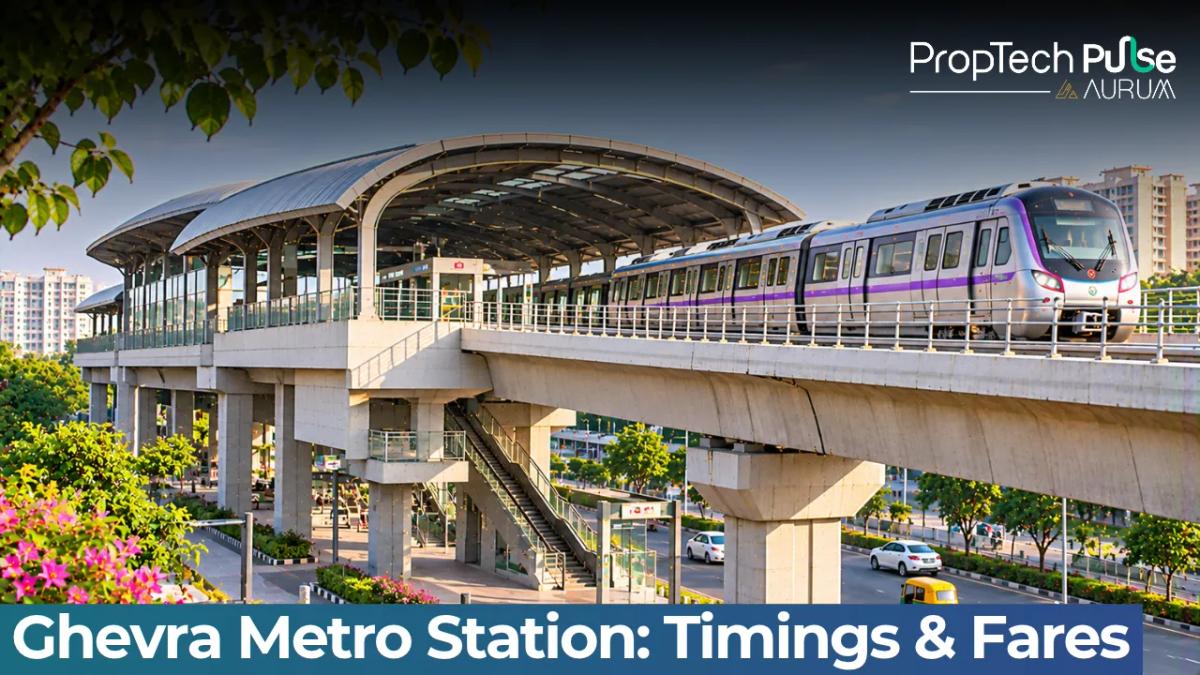
Living in Outer North Delhi means riding the Green Line daily. Knowing how Ghevra station works separates a smooth commute from a frantic dash. The station sits between industrial zones and residential pockets.
Trains split at Ashok Park Main, so you must know platform directions, daily costs, and the lack of parking.
This guide replaces listing fluff with actionable logistics. We use the latest Delhi Metro Rail Corporation data for 2026 to show you exactly what residents need to know.
Quick Answer: Ghevra Metro Timings & Location
Quick answer
Ghevra metro station (code GHEM) lies on the Delhi Metro Green Line in Outer North Delhi. The first train leaves at 05:15 AM towards Inderlok, and the last train runs at 11:37 PM towards Brigadier Hoshiar Singh. Trains arrive every 6 minutes during peak hours and every 7 minutes 45 seconds off-peak. The station has zero on-site parking, meaning residents rely heavily on auto-rickshaws or bicycles.
Type 'ghevra metro' into a search engine and you will find logistical data instead of builder advertisements. The station opened on 24 June 2018. Foot traffic stays heavy from nearby residential blocks and industrial workers.
It connects directly to Rohtak-Bahadurgarh Road, the main artery feeding commuters back into central Delhi and further west to Dwarka.
Ghevra Metro Station Layout: Which Gate Goes Where?
Outer North Delhi terminals often confuse first-time riders because the platforms face opposite directions. Understanding the gate-to-concourse flow saves time and avoids waiting on the wrong track.
Ghevra metro station has two street-level exits that funnel passengers up to the paid area, leading to platforms running north-south.
Gate numbers on elevated stations correspond to road access points, but they simply guide users toward the same staircase clusters. Once inside, you choose your boarding point based on your final destination, not merely the gate you entered.
Platform 1 Destination: Brigadier Hoshiar Singh
Head to Platform 1 if your journey takes you westbound. This platform carries trains heading toward Brigadier Hoshiar Singh and eventually terminates at Dwarka Sector 21.
For residents commuting toward HUDA City Centre or Rajiv Chowk, you do not take this train unless you plan to change lines further down the route.
Platform 2 Destination: Inderlok or Kirti Nagar
Platform 2 is the correct track for heading east toward the city centre and South Delhi. However, there is a specific operational quirk here that trips up many new riders. All trains leave Ghevra bound for either Inderlok or Kirti Nagar via Ashok Park Main, but they diverge once they cross that junction.
Red Line connection: These trains switch tracks at Ashok Park Main to merge with the Red Line, taking you to Kashmere Gate, Chandni Chowk, and Old Delhi.
Yellow Line branch: Trains following this route continue straight past Ashok Park Main toward Tis Hazari, Patel Chowk, and Hauz Khas.
This branching pattern means you still board the same physical platform in Ghevra, but you must verify the final destination displayed on the coach before entering.
If you miss the audio announcement, ask the station duty officer or look for the green directional signage near the ticket barriers.
Ghevra Metro Fares and Ticket Slabs (2026)
Delhi Metro calculates fares based on distance travelled, not zone-based entry. Since Ghevra sits far out on the line, your daily round trip to central hubs puts you in the mid-distance tariff bracket. Below is the standard Mon–Sat pricing structure applicable to smart card reloads and single-use tokens.
| Distance range | Fare (₹) |
|---|---|
| Up to 2 km | 11 |
| After 2 km to 8 km | 13 |
| After 8 km to 17 km | 15 |
| After 17 km to 23 km | 17 |
| After 23 km to 31 km | 19 |
| After 31 km to 40 km | 22 |
| Ghevra to Rajiv Chowk (one-way) | 54 |
Sundays and gazetted holidays offer a flat twenty percent concession across all categories. That drops your Ghevra to Rajiv Chowk ticket from ₹54 down to ₹43.
Students and senior citizens receive additional discounts tied to their registered ID cards. Casual weekly visitors rarely qualify unless they carry valid documentation.
Always keep some change in your wallet or rely on a loaded smart card. The vending machines accept notes and coins, but technical jams at smaller stations frequently lead to queues during peak rush hours.
Weekly commuter tip If you travel five days a week, pre-loading your smart card is cheaper and faster than buying paper tokens. A monthly pass does not exist for this route, so loading ₹500 or ₹1000 ahead of time eliminates queue friction entirely.
Daily Commute: Travelling from Ghevra to Rajiv Chowk and Beyond
For professionals working in Connaught Place or Civil Lines, Ghevra offers an affordable ticket price, but time is the real currency. The ride to Rajiv Chowk takes roughly fifty-five minutes during normal conditions. Crowding slows the doors at Kirti Nagar or Ashok Park Main, pushing the trip closer to an hour and ten minutes.
A worked example for an office worker
Rahul lives in Block C and works at a financial firm near Janpath. He uses the metro five days a week. His daily maths looks like this:
Morning peak departure at 07:30 AM. Train arrives quickly thanks to the 6 minute 15 second frequency. He boards the Kirti Nagar-bound coach. Total travel time lands at 58 minutes.
One-way fare is ₹54. Round-trip cost climbs to ₹108 daily. Over twenty-two working days, that equals ₹2,376 a month strictly on travel.
If he chose a property closer to Rajiv Chowk to skip this commute, his rent would likely jump by ₹25,000. The trade-off is clear. You save significant rental money upfront while accepting longer transit hours.
Most salaried buyers factor in a thirty-minute tolerance window. Rahul sits just past that threshold. The location works for budget-conscious earners who prioritise savings over speed.
Dwarka Sector 21 at the other end of the Green Line sees slightly lower occupancy. Trains feel less cramped, and the journey to Ghevra matches almost identically in duration.
Timing your departure just before the afternoon rush helps bypass the worst congestion.
Public Transit Connections: Rail and Bus Linkups
Local metro reviews often miss how easily you can transfer to Indian Railways and state buses. Ghevra metro station plugs directly into the broader transit grid without requiring a confusing street crossing.
Walking Route to Ghevra Railway Station
Exit the metro complex via Gate No. 2. You will step directly onto a wide pedestrian pathway that follows the railway reserve.
Ghevra Railway Station on the New Delhi-Jind-Mbore branch sits approximately 1.5 kilometres away. It takes roughly twenty minutes on foot.
Cut that time down by flagging down a local cycle auto. You can also walk half the distance and catch a feeder bus instead. The railway link matters mostly if you work in Old Delhi or are travelling outside the National Capital Region entirely.
ISBT and Local Bus Routes Passing Rohtak-Bahadurgarh Road
The Ghevra Mor intersection serves as a massive terminal for DTC and RSRTC buses. Routes connecting to ISBT Kashmiri Gate depart frequently throughout the day. If you live in Basant Enclave Ghevra or Block A Ghevra, just catch a bus here. You get direct rides to Shahdara and Seelampur without swiping a metro card.
Commuters heading towards the western industrial belt catch buses bound for Bawana or Badkal Mor. Traffic on Rohtak Road stays chaotic. Locking in fixed monthly travel passes for these state transport vehicles protects your budget better than relying on surge-priced rideshares.
Living Near Ghevra Metro: Commuter Pros and Cons
Property investors scanning Outer North Delhi immediately clock the value proposition here. Rental yields in pockets like Block C Ghevra remain competitive, drawing students and early-career professionals who cannot afford central Delhi rents.
The proximity to major manufacturing units and wholesale markets guarantees constant demand for rental housing. Landlords rarely experience vacancies exceeding a few days.
The workforce moves fast and requires shelter close to employment hubs. Securing long-term lease contracts pays dividends regardless of macro market dips.
Living next to a high-frequency terminal brings noise pollution. The roar of diesel buses merging onto Rohtak Road and the constant arrival announcements limit open-window living on ground floors.
Second-storey rentals command a premium for exactly this reason. Air quality during winter months also deteriorates rapidly due to vehicular density in the surrounding colonies.
Parking is a major headache. Since DMRC provides no dedicated slots, car owners rely on nearby commercial lots or private societies. Keep some cash handy for autos during heavy rain or shift changes.
Final Decision Rule for Choosing Ghevra
Choose a home near Ghevra metro station if your priority fits within three boundaries. You must earn a modest middle-class salary that benefits heavily from cheaper rents.
Reliable connectivity to West Delhi or Central Delhi workplaces is non-negotiable, accepting a fifty-five minute commute as the cost of entry.
You must also be willing to skip owning a personal vehicle in favour of public transport efficiency. If your daily routine involves frequent meetings in South Delhi or Gurugram beyond Huda City Centre, this corner of the map will eat into your working hours too aggressively.
Frequently asked questions
What is the timing of Ghevra metro station?
The first train leaves Ghevra at 05:15 AM heading towards Inderlok, while the last scheduled service departs at 11:37 PM towards Brigadier Hoshiar Singh. Daytime frequencies run tightly packed every 6 minutes during rush hours and stretch to nearly 8 minutes between late morning and evening stretches. These intervals reflect DMRC efforts to manage the heavy industrial workforce volume in Outer North Delhi.
Which line is Ghevra metro station?
Ghevra sits firmly on the Delhi Metro Green Line, operating between BG&R Depot and Dwarka Sector 21. Trains originating from Ghevra split directions once they cross Ashok Park Main Junction, sending coaches either toward Kirti Nagar on the Yellow Line branch or turning inward toward Inderlok to merge with the Red Line network.
Is there parking at Ghevra metro station?
The station offers absolutely no surface parking spaces for cars or motorcycles. Drivers must park at private facilities located down Rohtak Road or utilize bicycle racks positioned near the main entrance pillars. Most permanent residents simply hand their keys to local valets waiting outside Gate 2 who charge a small monthly fee.
How much is the fare from Ghevra metro to Rajiv Chowk?
A standard one-way journey costs ₹54 during regular weekdays, calculated strictly on the distance covered. Riders traveling on Sundays or gazetted holidays enjoy a twenty percent discount, bringing the ticket price down to ₹43. Student IDs carry separate subsidized tariffs, though casual visitors should always carry sufficient mobile balance on their smart cards.
How long does it take to reach Rajiv Chowk?
Getting from Ghevra to Rajiv Chowk takes roughly fifty-five minutes under normal crowd conditions. The route passes through Kirti Nagar, Patel Chowk, and Chandni Chowk, exposing riders to the busiest interchange zones in the capital. Morning departures between 08:00 and 09:00 AM guarantee standing room only until you disembark near Connaught Place.
Enjoyed this blog article? Visit PropTech Pulse for more interesting blogs.



Ask Pulse Ai anything about real estate

Unlock the Latest in Real Estate
News, Infographics, Blogs & More! Delivered to your inbox.

