New Launch - India Real Estate Report 2026.

Services
Knowledge Hub
Resources
Tools

Ask Pulse Ai
Services
FOR BUYERS & RENTERS
FOR REAL ESTATE DEVELOPERS








Refer other Connectors &
Multiply IncomeRefer other Connectors
& Multiply Income
Refer KuberX & earn
commission on every
loan they get
disbursed.


Scan & Download
©PropTech Pulse 2025, All rights reserved.


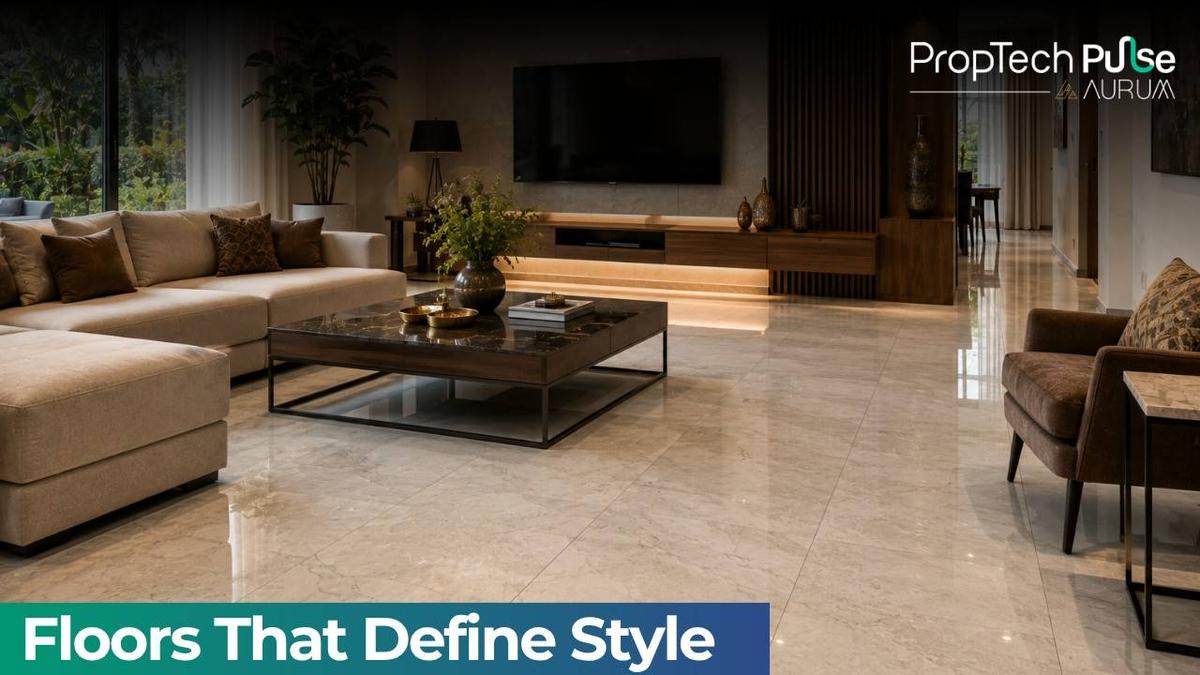
Picking living room tiles sounds simple until you're actually standing in a tile showroom with forty sample boards in front of you, and every single one looks completely different under those bright showroom lights than it will in your actual home. If you've been there, you know the panic.
The living room matters more than any other room when it comes to flooring. It's the first thing guests see, it's where your family spends most of its time, and unlike a bedroom or bathroom, you genuinely can't hide a bad tile choice behind a rug forever. So it's worth getting this one right. Here's a proper, practical walkthrough.
Start With the Tile Material, Not the Design
Before you fall in love with a pattern, figure out which material actually suits how your living room gets used.
Vitrified tiles are the most popular choice for Indian living rooms right now, and for good reason. They're dense, water-resistant, and handle daily foot traffic without a scratch. Standard vitrified tiles run roughly ₹50 to ₹120 per sq. ft., while GVT (glazed vitrified tiles) with better finishes and depth push closer to ₹55 to ₹140 per sq. ft.
Porcelain tiles sit a notch above, typically ₹80 to ₹200 per sq. ft. depending on size and finish. They're incredibly durable and now come in marble-look finishes with genuine-looking veining, so you get the luxury look of marble without marble's maintenance headaches or price tag.
Ceramic tiles are the budget-friendly option, generally ₹30 to ₹80 per sq. ft. They work fine for lower-traffic living rooms but tend to chip more easily than vitrified or porcelain over the years.
Stone and natural finishes (granite, marble) sit at the premium end, anywhere from ₹80 to over ₹500 per sq. ft. depending on the variety, and they bring a texture and individuality that manufactured tiles simply can't fully replicate.
Size Matters More Than You'd Think
This is the part most people skip, and it's a mistake. Large-format tiles, 600x1200mm or bigger, are the clear trend in living rooms right now, and there's a real reason beyond aesthetics: fewer grout lines. Fewer grout lines means the floor reads as one continuous surface, which makes a room look noticeably bigger and cleaner, especially in apartments where floor space is already limited.
Smaller tiles (300x300mm or 600x600mm) aren't wrong, but they work better in smaller rooms or where you specifically want a busier, more patterned look. For an average Indian living room, going one size up from what feels "normal" usually improves the finished look more than people expect.
Matte or Glossy? Think About Light and Footprints First
Glossy tiles reflect light beautifully and make a room feel brighter, but they also show every footprint, dust particle, and water mark almost immediately. If you have kids, pets, or just don't want to be mopping constantly, matte or honed finishes hide daily wear far better while still looking sophisticated.
A middle-ground option that's gained real popularity lately is a polished-sugar or lightly textured finish, glossy enough to catch light softly, but with enough texture that it doesn't show every smudge the way a full-gloss finish does.
Colour: Match the Room, Not Just the Trend
Earth tones, warm beiges, and soft greys remain the safest and most versatile choices for living room flooring, mostly because they don't fight with your furniture or wall colour, whatever that ends up being. If your walls are already a bold colour, keep the tile tone neutral. If your walls are neutral or white, that's your opening to bring in a tile with more visual character, marble-look veining, a warm wood-look finish, or even a subtle geometric pattern.
One genuinely useful trick for smaller living rooms: lighter tile tones (soft white, cream, light grey) make the room feel more open and airy, almost the same principle as painting a small room white.
Don't Ignore Slip Resistance
This gets overlooked constantly, and it shouldn't. Living rooms don't usually deal with water the way bathrooms do, but spills happen, kids run around, and a highly polished glossy tile can genuinely be a hazard, especially in homes with elderly family members or small children. Ask specifically about the tile's slip rating (often listed as an R-rating) before you commit, particularly if you're leaning toward a high-gloss or polished finish.
Half-Wall Tile Accents: A Simple Way to Add Depth
You don't need to tile every wall to get a designer look. A single accent wall, done in a contrasting tile pattern or texture, adds genuine depth and visual interest without the cost or heaviness of tiling the entire room.
A few pairing rules that consistently work:
- Bold wall paint? Pair it with tiles in muted, natural tones so the two don't compete.
- Neutral, understated walls? This is your chance to go bolder with the tile, brighter colours, 3D textures, or a statement pattern.
- Want something truly distinctive? Combine a vivid wall colour with an equally bold, contrasting tile. It's a bigger commitment, but done well, it looks genuinely custom rather than generic.
Before You Buy: A Few Things That'll Save You Regret
Always get samples first. Tiles that look stunning under a showroom's bright, curated lighting can look completely different, often duller or with an unexpected undertone, in your home's natural light. Bring samples home and look at them at different times of day before finalising anything.
- Don't overbuy on the first visit. Order a small quantity first if you're testing a new tile in your space, especially for feature walls or accent areas. Full returns aren't always possible once tiles are cut or installed.
- Bring a paint swatch from your wall. This sounds obvious, but so many people skip it and end up with a tile-wall combination that looked fine in isolation but clashes once it's actually installed.
- Factor in grout colour. It's a small detail that gets ignored constantly, but grout colour changes how "busy" or "clean" a tiled floor looks. Matching grout to the tile gives a seamless look; contrasting grout emphasises the tile pattern and grid.
Why Tiles Are Still Worth It
Beyond looking good, tiled floors genuinely make practical sense for Indian living rooms. They're naturally cool underfoot, which matters through most of the year in Indian climates. They resist scratches and water far better than wood. They don't need refinishing the way hardwood eventually does. And when it's time to sell, good flooring is consistently one of the biggest factors buyers notice; tile floors in good condition can meaningfully improve resale value compared to worn-out alternatives.
The Bottom Line
Choosing living room tiles isn't just about picking the prettiest sample board. Material, size, finish, colour, and even grout choice all work together to decide whether your finished room feels cohesive or slightly off. Take the time to bring samples home, think honestly about how the room actually gets used day to day, and you'll end up with a floor that still looks right five years from now, not just on installation day.
Renovating on a budget? Vitrified tiles in a large format, paired with a matte or lightly textured finish, consistently give the best look-to-cost ratio for Indian living rooms right now. Save the premium stone or marble-look porcelain for a smaller accent area if the full room is out of budget.





Ask Pulse Ai anything about real estate

Unlock the Latest in Real Estate
News, Infographics, Blogs & More! Delivered to your inbox.