New Launch - India Real Estate Report 2026.

Services
Knowledge Hub
Resources
Tools

Ask Pulse Ai
©PropTech Pulse 2025, All rights reserved.


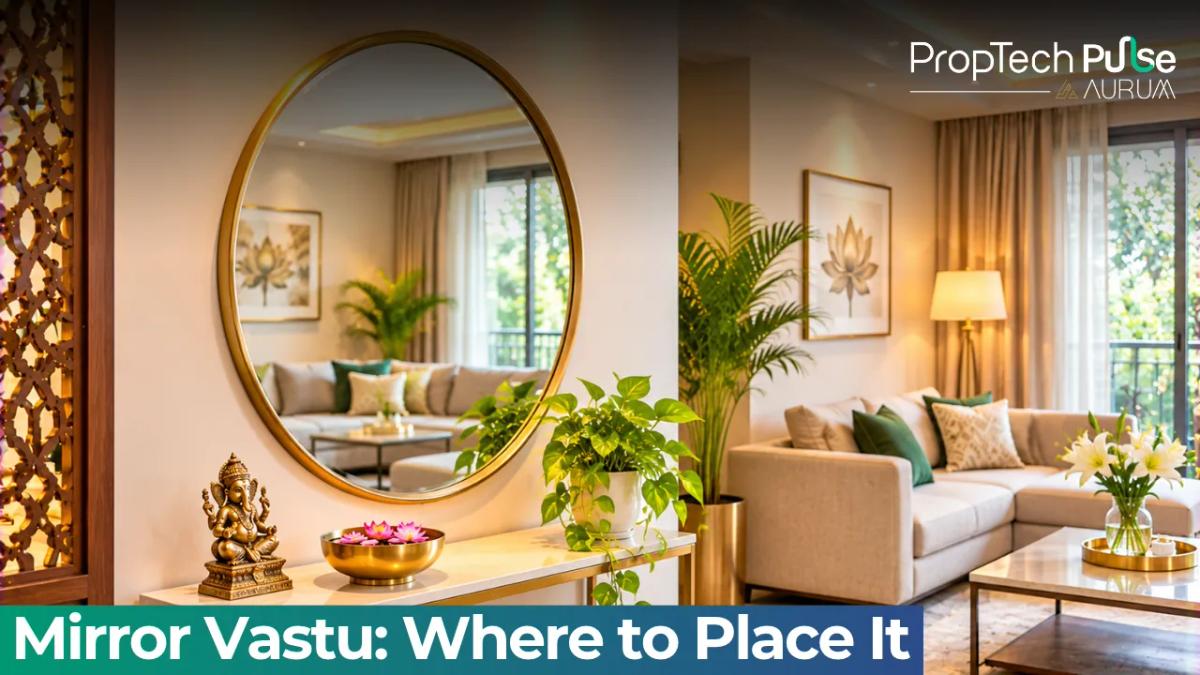
Buyers stress over mirror placement because old Vastu texts speak in abstract terms about energy currents. Mirror vastu is actually quite practical. It deals with light angles, sleep disruption, and spatial perception in compact Indian flats.
Position reflective glass on north or east walls at standing eye level. Keep it clear of the main threshold and direct bed sightlines.
This guide shows exactly where to mount frames, which shapes hold boundaries best, and how to manage fitted wardrobe panels without wrecking your carpet area or paying for full renovation.
The Short Answer: Where to Put a Mirror Today
Quick answer
Place mirrors on the north or east walls at standing eye level. Keep them away from the main door and direct sightlines to your bed. Rectangular or square frames work best, and you should always maintain a clear surface free of cracks or dust.
Position the glass on the left-hand wall as you enter the room, or on the eastern side where morning sun hits directly. That orientation pulls light into the space and creates a sense of openness without blocking furniture flow. You can also use smaller hand mirrors in the entrance corridor, but flip them inward. The rule here is simple: let the glass capture brightness, not block the threshold. We cover the exact reasons why certain doorway alignments matter when you review your floor plan. Understanding mirror direction as per vastu shastra helps you align that initial impression with long-term comfort.
Ideal Spotting: Mirror Direction As Per Vastu Shastra
Living Room and Dining Area Placements
North and east walls carry the primary energy currents in a standard layout. Aligning your largest piece of glass toward these directions supports the traditional goal of welcoming morning rays indoors.You do not need a full-length standing unit unless your hall is spacious enough to accommodate it comfortably. Hang a medium-sized square mirror above a sofa or console table on the northern wall. Keep the bottom edge roughly fifty inches from the floor so it reflects seated guests, not the ceiling. If you host regular family meals, add a second smaller mirror opposite the window on the eastern side to double the daylight hitting your table. See our notes on lighting and layout strategies for dining spaces if you want to test different configurations before committing to drilling holes. Proper mirror placement in your home relies on reading how sunlight shifts through the afternoon. Adjust the angle slightly if you notice harsh glare bouncing onto the television or computer monitors.
Bathroom and Entrance Hall Tips
Bathrooms sit in tricky corners of most homes. Tradition usually discourages large mirrors here because wet areas push moisture and heavy vapors outward. Still, you cannot live without the basin mirror.Stick to small, framed units mounted directly above the sink. Keep the lid closed when not in use, wipe condensation daily, and ensure the fixture never aligns with the bathroom door opening. Corridors and entrance halls behave differently. A well-placed glass panel makes narrow passages feel wider, which is exactly what buyers look for during site visits. Mount it on the inner wall, facing the door but not catching the main gate directly.
That keeps reflections contained and avoids the visual clutter that makes small Indian flats feel crowded.
When planning mirror direction as per vastu shastra, treat corridors as transit zones rather than display rooms. Keep the surface clean and uncluttered so dust doesn't dull the intended light reflection.
South and West Wall Considerations
Many homeowners mistakenly mount mirrors on south or west elevations, assuming larger walls automatically equate to better visibility.Mirror vastu treats those cardinal points differently. South walls absorb intense afternoon heat and tend to cast long, shifting shadows throughout the day.
West walls face the setting sun, which floods rooms with orange glare that turns reflective glass into blinding hazards during peak evening hours. Avoid placing dressing tables or decorative panels on those two sides. If your floor plan forces a reflective surface near a western window, position it behind a sheer curtain that filters the harsh rays before they strike the glass.
Alternatively, angle the frame inward toward a shaded corner so it reflects cool tones instead of baked brick or concrete. This subtle adjustment preserves the boundary while neutralizing thermal buildup.
Rooms to Approach Carefully
Navigating Mirror In Bedroom Vastu Without Starting Renovations
Sleep suffers fast when your headboard reflects your own face. The brain registers movement throughout the night and stays partially alert.Traditional texts warn against sleep disruption and marital friction when people wake up to unexpected reflections. Practical psychology agrees. Constant motion tracking raises cortisol and lowers rest quality. Flip all dressing tables inward toward a side wall, or angle them away from the sleeping zone. If the bedroom layout forces a mirror behind the door, simply pull a decorative screen in front of it while you rest.
There is no need to replace the wardrobe or hire an interior designer. We discuss how to arrange indoor prayer rooms and quiet corners if you also need to map out meditation space in the same room. Bedroom mirrors demand the strictest adherence to mirror direction as per vastu shastra. Salaried professionals who work late hours already suffer from fragmented sleep cycles.
Adding a reflective panic at midnight compounds the problem. Move the mirror entirely outside the bedroom if possible, or store it in a closet until the flat undergoes structural redesign.
The Problem With a Mirror Facing Main Door
Buyers often install decorative panels in the lobby to impress visitors or expand the perceived footprint of a foyer. A direct reflection of the main entrance sends incoming energy straight back out the gate.It feels visually jarring anyway. You catch your own startled expression every time someone knocks, and the layout fights against any attempt to bring in natural light. Remove the offending glass immediately. Relocate the frame to the inner right wall of the corridor, or hang it on the stairwell landing if you have one. A lateral view adds depth without creating a tunnel effect. Check our breakdown of core property layout principles if you want to map energy flow across multiple floors.
Why Two Mirrors Should Never Face Each Other
Opposing panels multiply reflections endlessly. Even a short glance into a hallway produces a receding corridor of identical images.Energy moves in waves, and bouncing light back and forth rapidly exhausts the static charge that settles in a room. The result is mental fatigue, headaches, and scattered focus. Pull the mirrors apart until they face different walls, or swap one unit entirely. A textured wooden screen, a bamboo blind, or a heavy linen drape breaks the line of sight instantly.
Stop trying to force symmetry through glass. Flat surfaces amplify whatever sits in front of them. Keep the surroundings tidy and uncluttered.
Practical Fixes for Modern Flats and Built-In Wardrobes
Builders love fitted wardrobe glass. Developers sell it as a premium finish, but many units face the bed or clash with balcony windows. You cannot rip out carpentry overnight, and hiring contractors to rebuild closets destroys budget. Apply removable fabric covers to movable doors or sliding panels. Cut cloth the same dimensions as the glass, pin it discreetly at the edges, and remove it entirely when you have guests or need extra light for grooming.For fixed installations, a tinted film reduces glare slightly while softening the reflectivity. Some residents also paint the reverse side with dark tempera to mute the shine permanently. If you bought a flat recently and found the mirror orientation completely wrong, do not blame yourself. Layouts vary wildly between phases and elevators.
Move free-standing pieces to safer walls, cover stubborn fittings temporarily, and treat it as a low-cost upgrade rather than a structural failure.
Mirror placement in your home does not require demolition. Smart renters and owners alike adjust behavior first, then modify fixtures later.
Skip the renovation panic. You rarely need to demolish walls to fix misplaced mirrors. Simple fabric covers or shifting a standalone frame to the correct wall works almost always.
Materials, Framing, and Artificial Light
The physical build of a mirror influences how it interacts with room dynamics. Traditional guides prefer brass frames or polished silver backing because these metals conduct heat and light evenly.Modern flats rely heavily on stainless steel or aluminum rims. They work perfectly fine, but lighter frames can feel visually floating and destabilizing in larger halls. Thicker wooden borders ground the reflection better. They absorb minor vibration and give the eye a hard edge to rest on. Avoid frames thinner than two centimeters in high-traffic corridors.
Thin metal rims crack under thermal expansion from nearby air conditioning vents, and cracked glass disrupts the entire mirror vastu protocol. When sourcing replacements, prioritize locally crafted wood joinery over mass-produced aluminum profiles.
The added weight anchors the piece firmly to the masonry.
Artificial lighting changes how reflective positioning plays out after sunset. Cool white LEDs positioned directly above a mirror cast sharp shadows on faces and create cold glare that bounces off the glass repeatedly.
Swap those bulbs for warm yellow shades (2700K to 3000K) or place pendant lights off-center so the beam hits a wall first. Soft illumination travels through the room gently instead of reflecting back into seating areas.
Overhead track lighting should never terminate directly on a reflective surface. Redirect the heads toward bookshelves, artwork, or upholstered chairs where absorption naturally occurs.
Handling Large Glass Facades and Sliding Doors
Open-plan balconies connected to living rooms are a common selling point in newer towers. The floor-to-ceiling glass panels act as massive mirrors once the sun goes down.
You see the entire living room doubled back onto itself, and streetlights from outside pierce through the transparency. This defeats both comfort and traditional boundary rules.
Install blackout curtains that run the full height of the opening. Draw them tightly at dusk to stop the exterior reflection loop. If privacy is your main concern, consider applying frosted decals or privacy film to the lower third of the glass.
This maintains the daylight advantage while breaking the continuous reflective plane that unsettles occupants.
Rented tenants should stick to tension rod blinds that slide inside the window track. These cause zero damage to landlord finishes and can be removed whenever you shift.
Permanent frosting requires professional etching, so weigh the cost against your expected tenancy duration before booking a contractor. Mirror direction as per vastu shastra still applies to expansive glazing.
Treat the glass wall as an active participant in the room, not passive architecture. Manage its reflectivity deliberately throughout the day cycle.
Quick Checklist: Safe Shapes, Heights, and Maintenance
Old manuals suggest avoiding circular or oval frames because curves scatter energy unevenly.
Square and rectangle shapes hold boundaries neatly and match standard wall proportions. Round glass invites too much wandering movement, which unsettles both eyes and minds in compact rooms.
Keep the lowest edge between forty-five and fifty-two inches from the finished floor. Anything lower catches foot traffic reflections and looks messy when shoes enter the frame.
Clean weekly with vinegar spray, check hinges monthly, and replace cracked panes immediately. Broken glass symbolizes fractured progress in traditional lore and poses a real safety hazard for children running through corridors.
| Feature | Recommended | Avoid |
|---|---|---|
| Wall orientation | North or East | South-West corner |
| Shape | Square or Rectangular | Oval or irregular |
| Height | Eye level (approx. 50 inches) | Below floor level |
| Facing direction | Toward light or open space | Directly opposite bed or main door |
| Maintenance | Clean and crack-free | Cloudy or broken glass |
Take Away the Guesswork: Next Steps
Most mirror clashes stem from last-minute decoration choices rather than permanent construction. Rearrange existing pieces, slide screens in front of problematic cabinets, and observe how light changes over a full day before buying new hardware.
When in doubt, consult the experts. You can book a personal consultation through Pulse Vastu's Live Vastu Check service to get targeted advice tailored to your actual floor plan, room measurements, and facing direction.
Frequently asked questions
Is it safe to keep a mirror in the bedroom if it does not face the bed?
Yes, you can safely install a mirror in the bedroom as long as the glass never catches your sleeping position directly. Position it on a side wall near a closet, or hide it behind a sliding wardrobe door that opens sideways. Avoid hanging it above the pillow or aligning it with the window beside your headrest. Side placement works fine and still gives you a quick appearance check before leaving the house.
Can I cover a mirror instead of moving it?
Absolutely. Fabric panels or custom-fitted curtains solve the problem without requiring carpentry work. Pin a thick cotton sheet over the glass when you sleep and roll it aside during the day to restore natural light. Removable adhesive hooks hold the drape cleanly without damaging painted walls. This method gives you complete control over reflection intensity while keeping the original layout intact.
Does mirror direction as per vastu shastra change if the house faces west?
The underlying rules stay consistent regardless of whether your building fronts north, east, south or west. West-facing plots receive intense afternoon sunlight, so placing reflective glass directly on that elevation magnifies heat and glare. Shift the primary mirror to the northern or eastern interior wall instead, keeping it angled toward open courtyard spaces or shaded balconies to maintain calm indoor temperatures.
What happens if two mirrors face each other in the hallway?
Opposing panels create an infinite tunnel of reflections that drains mental stamina and triggers nervous tension. Light bounces endlessly between the surfaces, preventing energy from settling in the corridor. Remove one unit entirely, or rotate the second mirror so it points toward a solid wall. A single well-placed frame solves the issue without altering your structural plumbing or electrical routing.
Which wall is best for a mirror in the living room according to tradition?
Tradition points to the left-hand wall as you walk through the front door, provided that wall runs along the north or east boundary of the hall. This spot captures morning illumination and projects it evenly across the seating arrangement. Keep the glass framed in wood or brass, maintain a comfortable viewing height, and ensure no sharp furniture corners point directly at the reflective surface.
Enjoyed this blog article? Visit PropTech Pulse for more interesting blogs.



Ask Pulse Ai anything about real estate

Unlock the Latest in Real Estate
News, Infographics, Blogs & More! Delivered to your inbox.

