New Launch - India Real Estate Report 2026.

Services
Knowledge Hub
Resources
Tools

Ask Pulse Ai
Services
FOR BUYERS & RENTERS
FOR REAL ESTATE DEVELOPERS








Refer other Connectors &
Multiply IncomeRefer other Connectors
& Multiply Income
Refer KuberX & earn
commission on every
loan they get
disbursed.


Scan & Download
©PropTech Pulse 2025, All rights reserved.


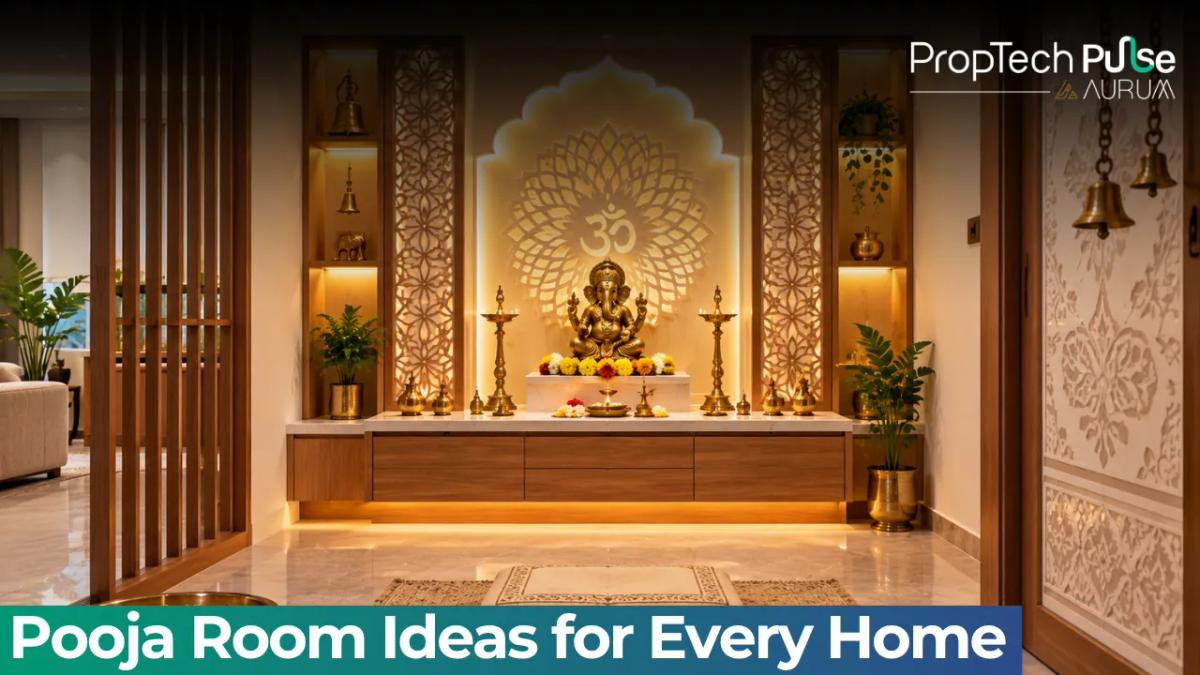
A pooja space needs calm, light and a little privacy. In many flats it also has to fit into a corner of the hall or a small niche, with no spare room at all.
This guide to pooja room design for home covers size, placement, materials, lighting, safety and a sample cost for a wall-mounted unit.
Pooja room design in short
Quick answer
Pick a quiet spot, keep the design simple, and use easy-to-clean materials such as marble or finished wood. Add warm, soft light, a safe place for the lamp and storage for pooja items. In a small flat, a wall-mounted unit works well.
The best pooja room design for home suits your family's practice, not a catalogue photo. A clean, uncluttered space with good light and enough room to sit or stand will serve you better than heavy decor.
Start with how you pray. Do you sit on the floor, stand, or use a small table? That decides the size.
Where to place it
Choose a quiet corner away from the bathroom, the main door traffic and heavy kitchen smoke. Keep it where the family can reach it easily every morning.
Some families follow Vastu for direction and placement, and traditions differ by region and household. The Pulse note on Vastu in real estate explains the common ideas.
Whatever you choose, keep the idols at a comfortable height and leave space to move around them.
Layouts for different homes
| Layout | Best for | Watch out for |
|---|---|---|
| Separate pooja room | Larger flats and independent houses | Needs ventilation for smoke from lamps |
| Wall-mounted unit in the hall | Most 2 BHK and 3 BHK flats | Keep it away from the TV wall and walking path |
| Corner shelf or niche | Compact flats | Check wall strength and fire clearance |
| Pooja unit with doors | Homes that want privacy | Keep doors easy to open and well ventilated |
Source: author's practical notes for typical Indian apartments.
If you are still working out where each room sits, the 2 BHK house plan guide shows common layouts.
Ideas by element
| Element | Idea | Why it works |
|---|---|---|
| Unit | Wall-mounted unit with a back panel and doors | Saves floor space and gives privacy |
| Material | Marble base with a wood or laminate frame | Easy to clean near lamps |
| Back panel | Carved jaali or a plain light panel | Adds depth and a focal point |
| Lighting | Warm LED strip or spot above the idols | Gives soft light without heat |
| Flooring | A marble slab or anti-skid tile in front | Stays cool and wipes clean |
| Storage | Drawers for incense, cloth and books | Keeps items tidy and out of sight |
| Ceiling | Simple false ceiling or a small dome | Adds a sense of place |
Source: author's suggestions for typical Indian homes; adjust to your tradition and budget.
For the surface in front, see the Pulse notes on granite flooring and selecting tiles. The wooden colour paint for doors guide can help you match door finishes.
A sample cost for a wall-mounted unit
Take a wall-mounted unit that is 2 ft wide and 3 ft high, which is 6 sq ft. At an assumed ₹2,500 per sq ft for plywood work with a finish, the unit costs 6 × 2,500, or ₹15,000.
Add a back panel at an assumed ₹3,000 and lighting at an assumed ₹1,500. The total is 15,000 + 3,000 + 1,500, which comes to ₹19,500.
A marble or carved wood design will cost more. Treat these as assumed figures to show the method.
Safety and cleaning
Lamps and incense are the main risk. Keep them on a stone or metal tray, away from curtains, loose cloth and wooden shelves.
Light a diya only when someone is at home, and keep sand or a small extinguisher within reach.
Choose surfaces you can wipe: marble, glazed tile or sealed wood. Oil, ghee and kumkum stain porous finishes fast.
Ventilation helps too, since smoke should not collect inside a closed unit. A small gap at the top or a window nearby is enough.
Common mistakes
Choosing a unit that is too large for the wall is the first one. A bulky carved piece can crowd a small hall.
Another is poor lighting. A dim corner makes the space feel neglected, while harsh white light feels cold.
Placing the unit under a staircase, next to a bathroom wall, or in a path of heavy traffic can also cause trouble for families who care about these rules.
Ignoring fire clearance is a safety error, not only a design one. For the wider plan of the home, read the interior design guide.
How to decide
Decision rule: measure the space, choose a quiet spot that fits your family's practice, and build the simplest unit that stays clean and safe. Add carving and decor only after the lighting and fire safety are sorted.
If you want help with the plan, the interior design service page shows what Pulse offers, and the AR/VR page lets you preview a layout before you build.
Frequently asked questions
Which direction is best for a pooja room?
Many families prefer the north-east, and some accept east or north, but traditions differ by region and family. If Vastu matters to you, confirm with your own priest or consultant. Never rebuild a flat only to change the direction.
Can I make a pooja room in a small flat?
Yes. A wall-mounted unit with a door, a corner shelf or a niche in the hall can serve a small home well. Keep it compact, with a clear floor space in front for sitting or standing.
Is a pooja room under the stairs a good idea?
Many families avoid it. Others use the space under stairs for a pooja unit when no other place is left. Check your own tradition, and make sure the ceiling is high enough to stand comfortably.
Which material is best for a pooja unit?
Solid wood, marble and good-quality plywood with a laminate finish are common choices. Marble resists oil and heat but is heavy. Wood looks warm and suits carving. Pick the one that matches your budget and cleaning routine.
How do I keep a pooja room safe from fire?
Keep diyas, camphor and incense away from curtains, wooden shelves and hanging fabric. Use a stone or metal tray under the lamp. Place a small fire extinguisher or sand within reach, and never leave a flame unattended.
Sources
- Bureau of Indian Standards: National Building Code and standards for plywood, marble and electrical fittings [VERIFY: current standard for the product you buy] (accessed October 2026)
- Author's calculations: sample pooja unit cost using assumed size and rates.
Enjoyed this blog article? Visit PropTech Pulse for more interesting blogs.





Ask Pulse Ai anything about real estate

Unlock the Latest in Real Estate
News, Infographics, Blogs & More! Delivered to your inbox.