New Launch - India Real Estate Report 2026.

Services
Knowledge Hub
Resources
Tools

Ask Pulse Ai
Services
FOR BUYERS & RENTERS
FOR REAL ESTATE DEVELOPERS








Refer other Connectors &
Multiply IncomeRefer other Connectors
& Multiply Income
Refer KuberX & earn
commission on every
loan they get
disbursed.


Scan & Download
©PropTech Pulse 2025, All rights reserved.


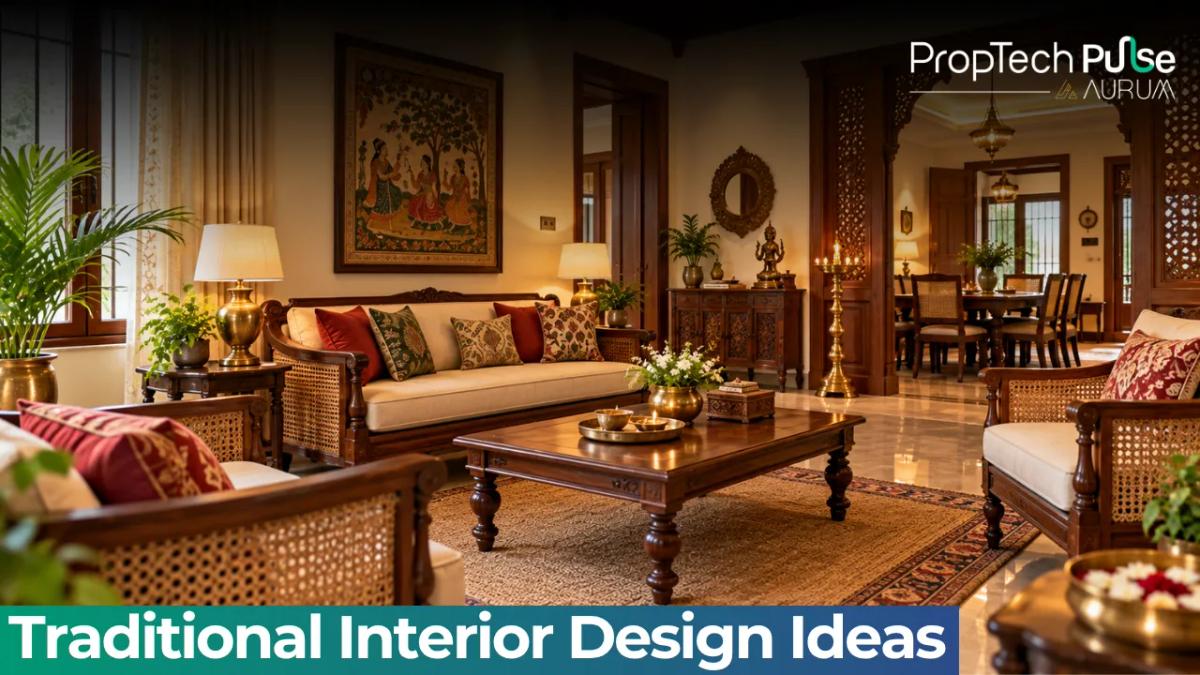
Traditional interiors feel warm because they are built from craft: carved wood, brass, handloom fabric and earthy colour. The risk is that a room tries to do everything at once and ends up heavy and dark.
This guide to traditional interior design covers colours, materials, furniture, lighting and decor, with a cost comparison for one carved wooden accent wall.
Traditional design in short
Quick answer
Use warm earthy colours, natural wood, brass or copper accents and handloom textiles. Choose a few craft pieces, such as a carved door or wall panel, and keep the rest simple. Add soft warm lighting and leave open floor space so the room does not feel heavy.
Traditional interior design in India is not one style. It changes with region, climate and local craft, so start by choosing a reference that fits your family and your city.
Good traditional interior design then picks two or three signature elements. A room works better with a few strong crafted pieces than with ten competing ones.
Regional styles to draw from
| Style | Signature elements | Mood |
|---|---|---|
| Kerala | Sloping roofs, carved wooden pillars, brass uruli and lamps | Calm, earthy and airy |
| Rajasthani | Jaali panels, jharokha niches, mirror work, bold textiles | Rich and colourful |
| Chettinad | Teak columns, patterned tiles, wide verandahs | Grand and warm |
| Mughal-inspired | Arches, inlay work, soft motifs, deep jewel tones | Formal and elegant |
| South Indian temple style | Carved wood doors, brass fittings, oil lamps | Devotional and traditional |
Source: author's summary of common regional design cues.
You do not need to copy a style fully. Take one or two cues, such as a jaali screen or a brass lamp, and fit them to a modern flat.
Ideas by element
| Element | Idea | Why it works |
|---|---|---|
| Doors | Carved wooden main door with brass details | Sets the tone at the entrance |
| Walls | Earthy paint with one wood-panelled or jaali accent wall | Adds depth without heavy decor |
| Furniture | Solid wood sofa frame, carved chest, low seating | Brings craft and warmth |
| Flooring | Oxide, Kota stone, patterned tiles or wood | Gives a grounded and cool surface |
| Textiles | Handloom cushions, cotton or silk drapes, dhurries | Adds colour and softness |
| Lighting | Brass pendants, lamps and warm bulbs | Creates a gentle, welcoming glow |
| Decor | Brass urns, paintings, a swing or jhula | Adds character with few items |
Source: author's suggestions; adjust to your region and family tradition.
For wood finishes on doors, read the Pulse guide on wooden colour paint for doors. For the floor, see granite flooring designs and how to select tiles.
Ceilings can carry the look too. The note on false ceiling design and cost covers wooden and cove styles that suit warm interiors.
A cost comparison for one accent wall
Take an accent wall that is 15 ft wide and 9 ft high, which is 135 sq ft. Compare plain paint with carved wooden panelling.
At an assumed ₹25 per sq ft, paint costs 135 × 25, or ₹3,375. At an assumed ₹350 per sq ft, panelling costs 135 × 350, or ₹47,250.
The difference is 47,250 minus 3,375, which is ₹43,875. If that is too much, panel only the wall behind the sofa or use a smaller carved frame.
These figures show the method. Real rates change with wood, design and city.
Light, colour and balance
Dark wood and deep colours absorb light. Keep walls light or mid-tone, and use rich shades on one wall or in textiles.
Choose warm bulbs of about 2700K to 3000K, which suit brass and wood. Layer lamps at different heights instead of one bright ceiling light.
Let in daylight where you can. Light curtains and a glass-friendly window layout help, and the window glass design guide shows options.
Leave floor space empty. Traditional rooms feel graceful when there is room to sit on the floor, walk and breathe.
Mixing traditional and modern
Many Indian families blend the two. Keep the base modern, with clean sofas and simple walls, and add traditional pieces as accents.
A carved chest beside a slim sofa works. So does a brass lamp on a minimalist console.
Festivals show how this works in practice. The Pulse notes on Onam interior design show how seasonal decor adds a traditional layer to a home.
Vastu guides some families on placement. The Vastu note explains common ideas, which you can confirm with your own consultant.
Common mistakes
Overloading the room is the first one. Too many carved pieces, idols, lamps and frames make the space feel cluttered.
Another is dark wood on every surface. Without light walls or good lighting, the room feels heavy.
Buying mass-made imitations also backfires. Veneer pieces that copy carving often look flat, so spend on a few real crafted items instead.
People also ignore scale. A huge carved sofa in a small hall leaves no space to move. The interior design guide covers how to plan a home in order.
How to decide
Decision rule: choose one regional reference, spend on two or three real craft pieces, and keep walls and floor light and simple. If the budget is tight, start with the main door and one accent wall.
If you want help with the plan, the interior design service page shows what Pulse offers, and the AR/VR page lets you preview a room before you build.
Frequently asked questions
What is traditional interior design in India?
It is a style rooted in regional craft: carved wood, brass and copper accents, rich fabrics, handloom textiles and warm earthy colours. It varies by region, from Kerala's wooden homes to Rajasthani jaali work and Chettinad pillars. The common thread is craft and warmth.
Which colours suit a traditional Indian home?
Warm shades such as ochre, maroon, deep green, cream and terracotta suit this style, along with natural wood tones. Use one or two rich colours and keep the rest neutral so the room does not feel heavy.
Is traditional design too expensive?
It can be, since carved wood and handcrafted pieces cost more. Control the budget by using real craft in a few places, such as a door or a wall unit. Keep the rest simple.
Can I mix traditional and modern styles?
Yes. Pair a carved wooden chest or brass lamps with clean-lined sofas and a simple colour palette. Keep one style as the base and use the other for accents, so the room feels planned rather than cluttered.
Which wood is best for traditional furniture?
Teak, sheesham and rosewood are common because they are strong and take carving well. Availability and price vary by region and grade, so check the source and treatment.
Sources
- Bureau of Indian Standards: National Building Code and standards for timber, plywood and paints [VERIFY: current standard for the material you buy] (accessed October 2026)
- Author's calculations: accent wall cost comparison using assumed wall size and rates.
Enjoyed this blog article? Visit PropTech Pulse for more interesting blogs.



Ask Pulse Ai anything about real estate

Unlock the Latest in Real Estate
News, Infographics, Blogs & More! Delivered to your inbox.