New Launch - India Real Estate Report 2026.

Services
Knowledge Hub
Resources
Tools

Ask Pulse Ai
©PropTech Pulse 2025, All rights reserved.


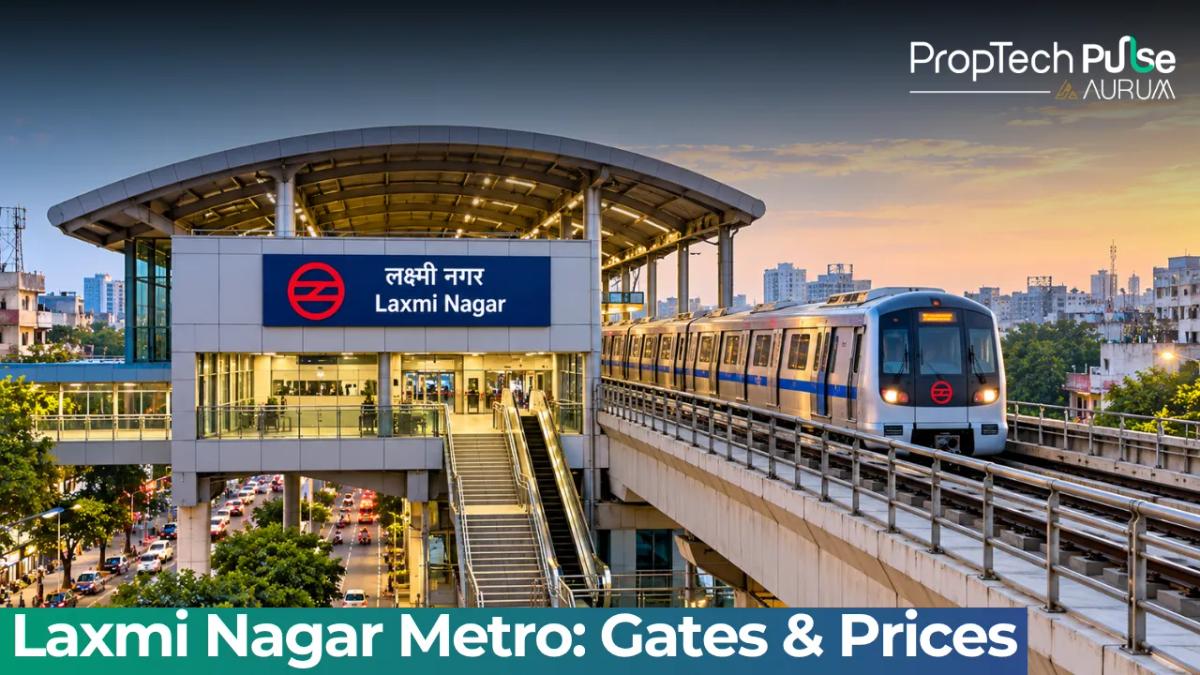
Navigating East Delhi efficiently starts with understanding the layout of Laxmi Nagar metro station, especially if you are commuting daily or evaluating a property buy.
Every metre counts when you are carrying groceries or racing against a departing train. Knowing exactly which exit gate drops you closest to your destination matters more than glancing at a generic transit map.
Most guides stop at basic operating hours and vague price brackets. This post maps every exit gate to its immediate street landmark, from Patel Hospital to the local shops, and breaks down housing costs using per-square-foot metrics rather than total caps.
These ground-level details explain the layout of Laxmi Nagar Delhi. Whether you are commuting to an office in Central Delhi or evaluating rental yields in Geeta Colony, the specifics clarify what living near this station actually entails.
Where is Laxmi Nagar Metro Station Located?
Quick answer
Laxmi Nagar metro station operates on the Blue Line in East Delhi, connecting Dwarka Sector 21 and Vaishali. First trains depart at 05:55 AM, and the last train leaves around 11:20 PM. Exit Gate 2 leads directly to Laxmi Nagar market, while Gate 3 provides immediate access to Patel Hospital.
The station anchors the centre of Laxmi Nagar Delhi, right next to the sprawling Laxmi Nagar Market. Built on raised tracks above the road, the Blue Line station connects the western suburbs like Rajouri Garden and Dwarka directly to the eastern terminals.
The station was inaugurated on 6 January 2010 and handles significant foot traffic throughout the day.
Lines, Nearest Stations, and Connectivity
On the Blue Line network, Laxmi Nagar metro sits between Yamuna Bank on the western approach and Nirman Vihar on the eastern stretch.
Traveling west towards the city center, the next major interchange hubs are Rajouri Garden and Dhaula Kuan before reaching the Dwarka Sector 21 terminus. Heading east, passengers reach Shakti Nagar and finally Vaishali.
This positioning makes it a highly functional midpoint for commuters crossing the entire breadth of the capital.
Laxmi Nagar Metro Train Timings (First and Last Train)
Commuters planning their journeys need precise departure times because the first and last trains run in opposite directions depending on whether you are heading west or east. While aggregated schedules sometimes vary slightly across aggregator platforms, official Delhi Metro Rail Corporation operations typically follow this structure:
| Direction | First Train Departure | Last Train Departure |
|---|---|---|
| Towards Dwarka Sector 21 | 05:55 AM | 11:20 PM |
| Towards Vaishali | 05:57 AM | 11:25 PM |
To catch the last connection during evening shifts, verify the exact departure time against the live DMRC app. Seasonal schedule adjustments happen often enough to require a quick check before heading out.
How to Reach Laxmi Nagar Market and Key Landmarks (Exit Gate Guide)
Walking the ground level at this station requires paying attention to the numbered exits.
Every gate drops you at a different street corner, hospital, or commercial block. Using the wrong gate can add extra walking time or put you at the far end of the busy commercial strip.
Gate 1: Reaching D Block and CGHS Dispensary
Gate 1 drops you directly into D Block, putting the CGHS Dispensary and surrounding residential lanes right at your doorstep. This is the cleanest route if you are visiting residents in the northern portion of the market area or heading towards the Shakarpur side via the main road.
Gate 2: Heading to Shakarpur and Laxmi Nagar Market
This exit faces the densest part of the commercial belt known locally as Laxmi Nagar market.
If your destination involves shopping at the stalls, accessing local eateries, or grabbing a taxi to Shakarpur, Gate 2 provides the shortest path straight onto the main shopping strip. You will find the flow of shoppers peaking here well past noon.
Gate 3 & 4: Getting to Patel Hospital and Educational Institutes
Patel Hospital, a major private medical facility serving East Delhi, is accessible via Gate 3. If you are dealing with an emergency or carrying patients to consultations, this is the only exit that matters. Gate 4 often sees heavy foot traffic from students visiting the cluster of educational institutes located along the connecting lanes.
Laxmi Nagar Metro Station Facilities
The station is equipped with standard modern amenities required for a high-capacity hub.
Smart card ticketing systems handle automated purchases, while ATMs sit near Gate 5 for commuters withdrawing cash before tapping in. Wheelchair accessibility works smoothly with elevators covering the vertical distance between the street and the concourse levels.
Separate sections cover dedicated washrooms and waiting areas to manage the peak rush hour crowds. Drivers can park vehicles in designated slots outside the compound walls.
Residential Localities Near Laxmi Nagar Metro
Investors seeking homes accessible via Laxmi Nagar metro focus on three adjacent neighbourhoods: Priyadarshini Vihar, Shakarpur, and Geeta Colony.
Priyadarshini Vihar mixes flat complexes with row houses at moderate price points. The value here sits in the proximity to the metro without the noise pollution of the main market road.
Shakarpur is the higher-density residential zone. Newer high-rises join older bungalows, keeping market rates steady. Rental demand stays strong due to working professionals seeking short commutes.
Geeta Colony lies roughly three kilometres east of the station but falls within the broader catchment. The market has matured significantly here. Buyers should check the carpet area of units, as older buildings often carry higher super-built-up ratios.
You can track shifting market values using our rates and trends tool to compare current listings against historical averages in these specific lanes.
Evaluating the cost of living near transit? Our guide on how proximity to a metro station affects apartment pricing outlines the premium buyers typically pay.
Check out the Yamuna Viyar area guide or the Nirman Vihar locality guide to see how adjacent stations are developing in tandem.
Before You Commit or Commute Daily
Deciding to live near Laxmi Nagar depends entirely on whether you prioritise commercial convenience over absolute quiet.
If your routine relies on stepping out of the metro and walking to work within five minutes, the location delivers perfectly.
For pure residential investment, older properties in Priyadarshini Vihar offer steadier rental floors, while Geeta Colony commands higher resale ceilings.
Pick a lane, verify the encumbrance records early, and anchor your decision to verified floor-space rates rather than total project costs.
Frequently asked questions
What is the first and last metro time at Laxmi Nagar?
Trains towards Dwarka Sector 21 begin at 05:55 AM and conclude at 11:20 PM, while services running towards Vaishali start slightly later at 05:57 AM and finish at 11:25 PM. Because these times shift seasonally or during special events, always confirm the latest schedule through the official DMRC mobile application before your morning commute or late-night return trip.
Which gate at Laxmi Nagar metro leads to Patel Hospital?
Gate 3 is the direct and fastest exit for anyone needing to reach Patel Hospital quickly. The ramp and elevator from this specific gate deposit you almost directly onto the hospital driveway, which saves considerable walking distance compared to exiting at Gate 2 or Gate 1. If you are transporting someone who requires a wheelchair, request assistance from the station staff at Gate 3 beforehand to ensure the lift is operational.
Is there paid parking at Laxmi Nagar metro station?
Yes, the station management has allocated designated spots for cars and two-wheelers just outside the main boundary walls. These slots operate on a paid basis, with rates set according to current urban transit authority guidelines. You should arrive slightly earlier during peak festival seasons when the adjacent market draws heavy traffic, as those outer parking zones tend to fill up rapidly by late afternoon.
How far is Laxmi Nagar metro from Connaught Place?
You can reach the central business district in approximately forty to fifty minutes, starting with a twenty-five-minute ride on the Blue Line towards Rajouri Garden. From there, transferring to the Red or Purple Line adds another fifteen to twenty minutes until you arrive at the CP Metro station. Rush hour congestion at major intersections can occasionally stretch this timeline, so plan your meeting buffer accordingly.
What amenities are available inside the station concourse?
Passengers will find fully functional smart card readers and token vending machines to purchase tickets instantly. ATMs stand ready near Gate 5 for cash withdrawals before tapping in, while dedicated washrooms and seating areas help manage crowds during the busiest morning and evening peaks. Elevators provide full wheelchair access, making the walk up to the upper platform completely barrier-free for everyone traveling through this busy East Delhi node.
Sources
- Delhi Metro Rail Corporation: Operating year and station connectivity details (accessed October 2026).
Enjoyed this blog article? Visit PropTech Pulse for more interesting blogs.





Ask Pulse Ai anything about real estate

Unlock the Latest in Real Estate
News, Infographics, Blogs & More! Delivered to your inbox.

