New Launch - India Real Estate Report 2026.

Services
Knowledge Hub
Resources
Tools

Ask Pulse Ai
©PropTech Pulse 2025, All rights reserved.


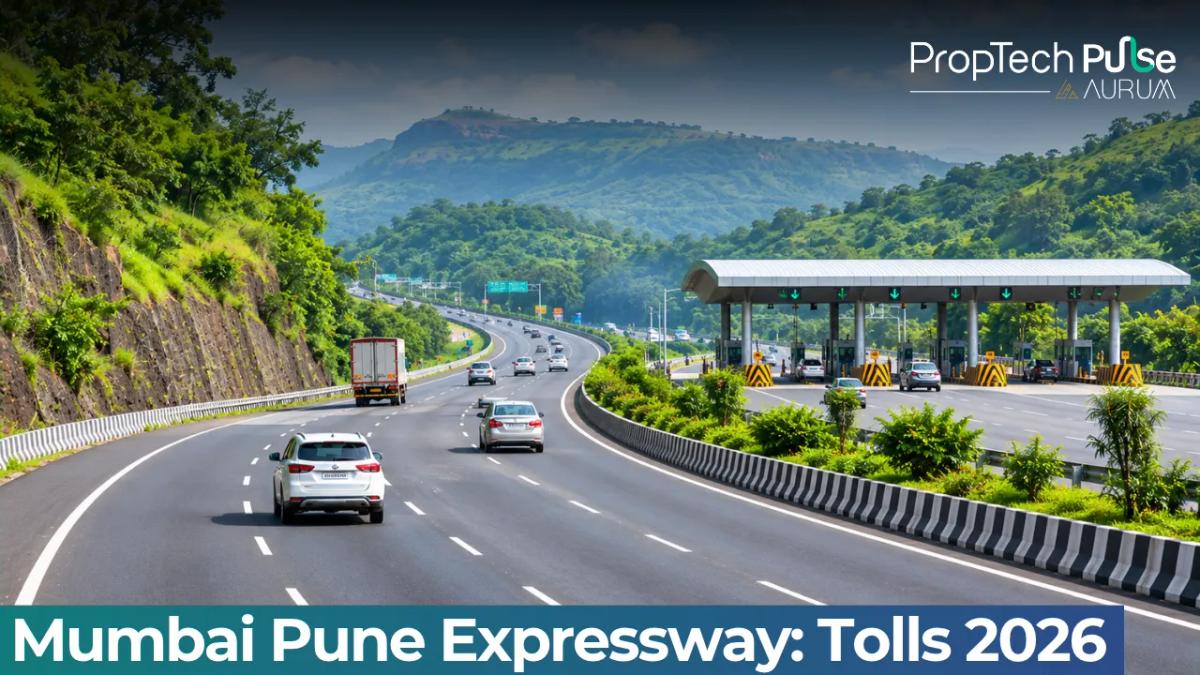
In Maharashtra, the Mumbai Pune Expressway shaves nearly two hours off a trip that used to crawl along the old Pune-Mumbai Highway.
But if you are planning the drive, the real question isn't just the distance. It is how much you will pay at the gates and where the toll actually splits.
A standard four-wheeler pays ₹320 one-way today. The rate stays locked until April 2030, keeping your commute cost predictable.
Talegaon and Khalapur plazas handle your FASTag deductions, while we cover the extra costs waiting once you exit into Navi Mumbai or mainland Pune.
Mumbai Pune Expressway Route Map and Key Landmarks
Quick answer
The Mumbai Pune Expressway runs 94.5 km from Kiwale in Pune to Kalamboli in Navi Mumbai. A standard car pays ₹320 one-way, split across the Talegaon and Khalapur plazas. Travel time averages 90 minutes without traffic.
State-owned Maharashtra State Road Development Corporation built the six-lane corridor to ease congestion on National Highway 48.
The alignment connects the Pune district to the Raigad district, threading through the Western Ghats before flattening out towards the Thane district boundary.
Most commuters enter at Kiwale on the Pune side, just past the Lonavala exit of the old highway.
The southern end terminates at Kalamboli, placing you roughly forty kilometres away from central Mumbai. If you are tracking long-term logistics on the Mumbai Pune Expressway, knowing the exact entry and exit points saves unnecessary backtracking on approach roads.
Start and End Points: From Kiwale to Kalamboli
Kiwale sits near the Rajgurunagar intersection. Traffic flows smoothly onto the expressway here, with wide shoulders designed for heavy trucks. Exiting at Kalamboli drops you onto the Eastern Peripheral Expressway interchange. Direct links lead toward Sector 27 in Navi Mumbai. We have covered how the missing link project changes regional connectivity in a separate guide, explaining why Kalamboli remains a preferred logistics hub for businesses.
Kilometre-by-Kilometre Landmarks and Ghat Section
The ghat section is where driving conditions shift the most. Rain or fog can reduce visibility quickly on the curves between Lonavala and Khandala. Rest areas at Khopoli, Lavasa junction, and Lonavala offer basic amenities.
| Kilometre | Location | Landmark / Facility |
|---|---|---|
| 0.0 | Kiwale (Pune) | Main entry point, fuel station nearby |
| 23.5 | Lonavala | Rest stop, food courts |
| 40.0 | Khandala | Amrutanjan Point (tourist stop) |
| 62.8 | Lavasa Junction | Exit ramp, emergency phone |
| 80.5 | Khopoli | Traffic signal junction, retail outlet |
| 94.5 | Kalamboli (Navi Mumbai) | Main exit, EPE interchange |
Drivers use the table above to track major junctions where they typically slow down or look for breaks.
Note that the expressway does not run directly through Lonavala town center. Instead, it skirts the eastern edge. That layout prevents heavy tourist traffic from gridlocking the main lanes.
Breaking Down the Mumbai Pune Expressway Toll
Understanding how the fee works stops surprises when your FASTag balance dips. The toll structure follows a straightforward per-kilometre logic, adjusted for vehicle class and axle count.
How Much Does It Cost? The ₹320 Car Toll Explained
Indian Expressways typically charge between ₹12 and ₹15 per kilometre for passenger cars. On this stretch, the base fare landed at ₹320 during the last tariff revision cycle.
The Maharashtra government approves a six percent annual increase. However, the tariff caps growth at eighteen percent over any rolling three-year period. This cap guarantees your cost stays flat until April 2030.
You can verify the current tariff schedule on the state infrastructure portal. If you are calculating monthly commute expenses, multiply ₹320 by your round-trip frequency to get a baseline figure before adding parking or fuel.
Fuel Tip: Keep your tank topped up before entering the ghat section. Prices drop sharply once you cross past the Kalamboli exit ramp.
Khalapur Toll Charges: What You Pay Near Navi Mumbai
The Khalapur plaza sits roughly ten kilometres before the Kalamboli exit ramp. Most full-journey vehicles pass through this gate heading south, while northbound cars pass through it on their way to the city.
For a complete Mumbai-to-Pune run, Khalapur deducts roughly ₹180 to ₹190 from your FASTag card. Rounding errors occasionally push the final tally to ₹320 or ₹325.
This happens because fractional rupee values round up at intermediate sensors. The backend system balances everything overnight, but your alert shows the rounded figure first.
Talegaon Toll Plaza: Costs and FASTag Splits on the Pune Side
Talegaon plaza, located near Urase, handles the northern collection point on the Pune approach.
When a car enters from Kiwale and travels all the way to Kalamboli, the Talegaon gate records the initial scan. The backend billing engine aggregates the data with Khalapur and releases a single consolidated charge to your tag provider.
This consolidation means you do not see two separate messages pinging your phone for a straight transit. However, partial journeys work differently.
If you enter at Lonavala and exit early, Talegaon and Khalapur each calculate independent fractions based on your segment distance.
| Toll Plaza Name | Approximate Deduction Share | Primary Direction Capture |
|---|---|---|
| Talegaon / Urase (Pune end) | ₹130 – ₹140 | Northbound entry scans |
| Khalapur (Raigad end) | ₹180 – ₹190 | Southbound and Northbound egress |
| Total One-Way Fare | ₹320 | Consolidated bill released within 24 hours |
The exact fraction shifts slightly depending on axle verification and tag type. Commercial operators running multi-axle trailers often face different slabs entirely. Passenger vehicle owners simply need enough balance loaded to cover the full ₹320 upfront.
Partial Journeys and Exit Ramps: Does Your Cost Change?
Dropping off passengers mid-route or diverting to Kolhapur saves money, but only if you exit before hitting the full-journey trigger zones.
Each plaza has designated bypass ramps for shorter hops. These ramps feed directly into the older NH 48 network.
We recommend checking a guide to localities around the Khalapur toll road if you plan to visit residential developments near the exit points. Local builders there frequently advertise properties positioned right outside the bypass lanes.
If you take an earlier exit on the Mumbai Pune Expressway, remember that a small non-toll approach fee applies at certain intersections.
Vashi handles the biggest one, costing roughly ₹45 for passenger cars. We will cover that detail shortly.
Travel Time, Speed Limits and Practical Driving Tips
Speed limits on this stretch are enforced strictly via automated cameras mounted on gantries. Pushing over one hundred kilometres per hour invites hefty fines and possible vehicle impoundment.
The posted limit sits at one hundred kilometres per hour for cars and eighty kilometres per hour for commercial vehicles.
Average Drive Times and Peak Traffic Patterns
Under normal conditions, the ninety-four kilometre run takes anywhere between seventy-five and ninety minutes.
Morning peaks leaving Pune around eight o'clock routinely add twenty minutes to that window. Evening rush hour heading back to Navi Mumbai tends to build up slowly near the Lonavala curve rather than spiking suddenly.
Heavy goods vehicles dominate the evening lanes. Keeping a safe following distance matters more here than on wider metropolitan highways. Tailgating increases wear on your brakes, especially before descending the ghat slopes.
Extending Into Mumbai: The Vashi Approach Toll
Once you cross Kalamboli and merge onto the approach corridors leading towards mainland Mumbai, you will encounter the Vashi Flyover toll barrier.
This plaza collects roughly ₹45 for cars travelling eastward toward the Swami Vivekananda Bridge. Trucks pay double the passenger rate.
This fee exists separately from the expressway fare. Drivers who forget to budget for it often face awkward pauses at the booth if their FASTag balance sits too close to zero. Loading an extra fifty rupees covers the transition comfortably.
Keeping your travel budget tight on the Mumbai Pune Expressway means planning for these transition costs. Reading a comprehensive property due diligence checklist helps buyers weigh location convenience against long-term maintenance fees in emerging pockets like Khopoli or Urse.
Before You Drive: Choosing Your Departure Window
For weekend travelers chasing clear skies over Panchgani, leave by seven in the morning. Daily commuters benefit most from the six-percent growth freeze.
Keep your account funded ahead of April so your expense stays static through next spring. If you prioritize absolute predictability, load your FASTag with sufficient credit on Friday evening and avoid the Sunday night rebound surge.
Frequently asked questions
How much is the toll for a car on the Mumbai-Pune Expressway?
A standard four-wheeled passenger car pays exactly ₹320 for a full one-way journey. This rate covers the entire distance from Kiwale to Kalamboli. The tariff includes a guaranteed freeze through April 2030, meaning you will not see a sudden hike next financial year despite inflation adjustments.
Is there a round-trip ticket discount on the Mumbai-Pune Expressway?
Currently, the toll operator does not offer bundled round-trip passes. You pay the full ₹320 each way regardless of vehicle type. Drivers attempting to save money by staying overnight in the region must still clear both entry and exit gates separately at the standard rates.
Which toll plaza is on the Pune side of the Mumbai-Pune Expressway?
The Talegaon plaza, situated near the Urase village junction, handles the main Pune-side collection. This facility registers initial scans for vehicles entering from the southern approach. The system merges this data with the northern terminal to release one unified bill to your FASTag provider.
How long does it take to drive from Mumbai to Pune via the expressway?
Normal traffic conditions require between seventy-five and ninety minutes to complete the ninety-four kilometre stretch. Morning departures around eight o'clock often add twenty minutes to that baseline. Heavy rain or fog in the ghats can slow speeds significantly, pushing total duration past two hours.
Do I need cash if my FASTag fails on the expressway?
Yes, carrying a few hundred rupees in smaller denominations remains essential. While the expressway relies heavily on electronic clearance, manual booths exist solely for fallback scenarios. Keeping cash prevents long queues and avoids potential tow-away notices for unauthorized lane usage.
Sources
- Maharashtra Government Infrastructure Portal: Tariff structures and speed limit enforcement norms (accessed November 2026)
- National Highways Authority of India: Regional highway length and classification statistics (accessed November 2026)
- Reserve Bank of India: Payment aggregators and FASTag transaction processing guidelines (accessed November 2026)
Enjoyed this blog article? Visit PropTech Pulse for more interesting blogs.




Ask Pulse Ai anything about real estate

Unlock the Latest in Real Estate
News, Infographics, Blogs & More! Delivered to your inbox.

