New Launch - India Real Estate Report 2026.

Services
Knowledge Hub
Resources
Tools

Ask Pulse Ai
©PropTech Pulse 2025, All rights reserved.


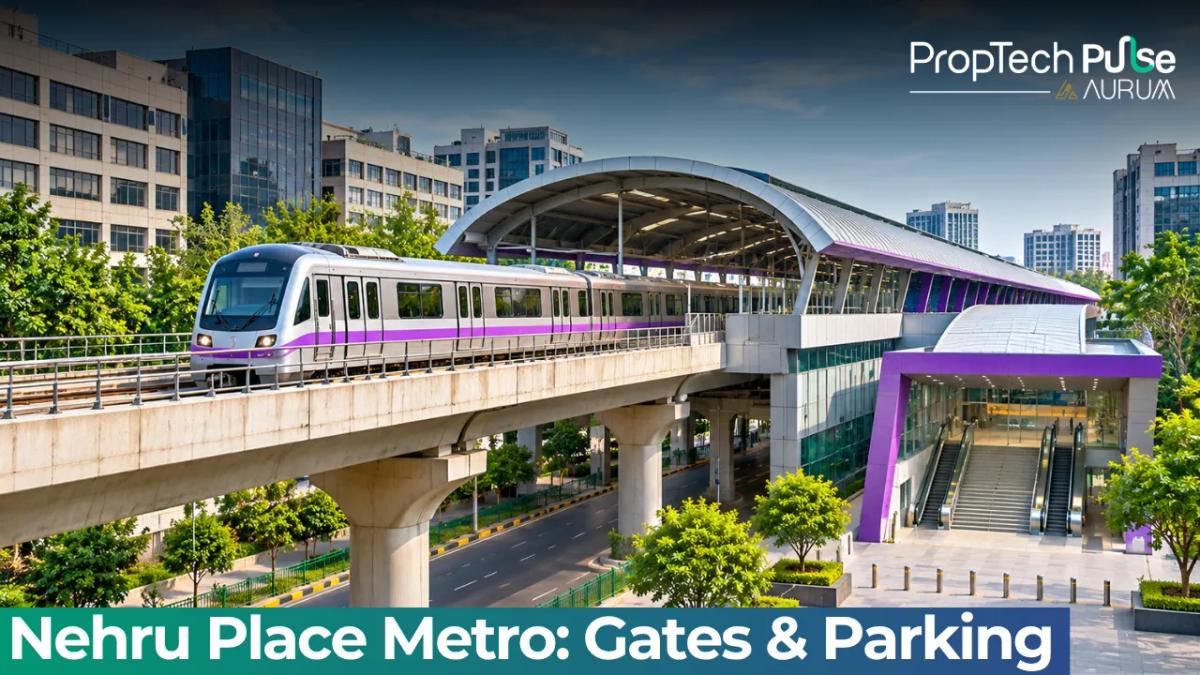
Commuters heading to the Nehru Place metro station usually want two things: the fastest exit to the electronics market or the quietest walk toward the residential sectors.
The station handles both flows differently depending on which gate you use.
Situated 17.4 kilometres from Kashmere Gate on the Violet Line, it acts as the main transit node for one of India’s largest commercial clusters.
Property buyers know the name too. Flats facing Nehru Enclave command a premium because they sit within walking distance of this exact stop.
Knowing how the station opens onto the ground, when the last train runs back to Ghazipur, and what the parking slabs currently cost saves hours of lost time and guesswork. Here is exactly how to navigate it.
Getting Around Nehru Place Metro Station
Quick answer
Nehru Place metro station sits on the Violet Line, 17.4 km from Kashmere Gate. Exit Gate 1 for Eros Corporate Tower and the TDI Building. Take Gate 2 to reach the Nehru Place market and the bus terminal. Trains run regularly throughout the day, with service ending between 11:14 PM and 11:48 PM depending on the direction.
Foot traffic splits cleanly at the station. Downstairs, the fare gates feed into a concrete corridor that widens into two separate street exits.
The division exists by design, keeping corporate commuters and market shoppers from clashing during evening rush hour.
Gate 1 sits closer to the Eros Corporate Tower and the TDI Building.
Use this exit when you are heading straight for a corporate office or the IT hardware shops on Ring Road. The stairway puts you directly onto the pavement outside the commercial towers.
Exit Gate 2 drops you near the Nehru Place Bus Terminal and the maze of shops that make up the famous Nehru Place market.
If you are visiting electronics retailers, small offices, or heading toward the residential streets of Nehru Enclave, take this side. The pathway connects smoothly to the local bus bay, so connecting by DTC bus is faster than trying to cross the road at the signal.
Station Layout & Gate Directions
The split happens at the bottom of the stairs. Gate 1 leads straight to the Eros Corporate complex and the TDI Nehru Place building. Gate 2 points toward the bus terminus and the dense web of showrooms that form the core shopping area.
Pick the correct gate before you descend the escalator, because crossing the busy Ring Road intersection takes fifteen minutes even at night.
Nearest Interchange Stations & Connectivity
Nehru Place functions solely as a Violet Line stop. There is no internal transfer tunnel connecting it to other lines. You must travel to adjacent stations to switch tracks.
For cross-city routes, hop on the Magenta Line at Kalkaji Mandir, located just south of the neighbourhood. It runs directly past the eastern edge of the commercial hub.
The Pink Line at Lajpat Nagar offers faster links to Chandni Chowk in the north and Majlis Park in the northwest. Both connections add roughly twenty minutes to your commute.
Delhi Metro Timings for Nehru Place
Frequency is the real advantage of this stop. Trains arrive every five to ten minutes during peak hours, which cuts waiting time significantly compared to older sections of the network.
The system starts early, roughly around 5:30 AM on most lines, giving business owners a window to move stock or reach distant suburbs before the morning gridlock sets in.
Always check the running boards on the platform screens or the official DMRC app before heading back. Schedules sometimes shift by ten minutes after large events at nearby venues.
| Direction | First Train | Last Train |
|---|---|---|
| Towards Kashmere Gate | Approx 06:00 AM | 11:14 PM |
| Towards Badarpur Border / Bhootkali | Approx 05:45 AM | 11:48 PM |
| Note | Timings vary slightly on weekends and holidays. Confirm via the official DMRC app. | |
Parking Availability & Charges
Parking at Nehru Place metro station fills quickly during peak trading hours. The dedicated zone handles over a thousand two-wheelers and several hundred four-wheelers in a structured arrangement.
The rates follow standard Delhi Metro tariffs, though city councils occasionally update slab charges, so carrying smaller notes helps when paying at automated kiosks.
| Vehicle Type | Up to 6 Hours | Above 6 Hours / Daily Cap |
|---|---|---|
| Two-Wheeler | ₹30 | ₹60 |
| Four-Wheeler (Car) | ₹30 | ₹120 |
| Monthly Pass (Estimate) | Cars: ₹1,200 | Two-wheelers: ₹300 | |
If you drive past lunchtime, plan extra time looking for a slot. Commercial vehicle operators often circle the perimeter hoping for a drop. For long-term stays linked to market visits, using the metro itself removes the stress entirely.
Key Landmarks and Amenities Near Nehru Place Metro
Stepping out of the Nehru Place metro station places you right at the centre of South Delhi's commercial pulse. A short walk from Gate 2 opens onto the Epicuria Food Court, a three-storey mall that hosts nearly a hundred food outlets.
It operates more like a massive canteen than a high-end dining strip, pulling crowds during lunch and dinner because prices stay competitive against standalone restaurants.
Further down the ring road, the architecture shifts from showrooms to mid-rise apartments.
Nehru Enclave offers some of the oldest and most established housing societies in the area. Buyers looking at these flats immediately weigh their noise levels against the convenience factor, since a direct metro connection adds measurable resale demand.
For routine tasks, ATMs, currency exchange counters for foreign technicians visiting the IT hubs, and basic grocery stores cluster tightly around Gate 2. Everything essential for a half-day site visit lives within a four-minute walk.
Residential and Commercial Impact of the Station
Transit-oriented development around the Nehru Place metro station has quietly reshaped ground-floor rents here.
Shoppes that face the widened pedestrian paths pay higher premiums than older lanes tucked behind them.
Investors tracking yield patterns see a clear spike in rental appetite from young professionals working in the adjoining IT parks, who prioritize commute times over square footage.
Residential properties within a five-minute walk command tighter vacancy rates, but older buildings require careful structural checks.
The Delhi Development Authority expanded pedestrian plazas and improved drainage in phases, reducing waterlogging during heavy monsoons. That infrastructure push made adjacent plots more attractive for redevelopment applications.
When evaluating a buy, verify project approvals properly. A registered listing makes due diligence straightforward. Read more about checking property registration details on our guide to Delhi RERA compliance. You can also review our locality overview for Nehru Place to see broader price movements.
Distance to transit always affects valuation curves. Read our detailed analysis on how metro proximity impacts apartment pricing before locking in a budget.
Before You Head Out or Book
Use Gate 1 for corporate routes, Gate 2 for markets and buses, and plan your return train using the official display boards rather than guessing schedules.
If you are buying nearby, prioritise buildings constructed after 2005 or those with fresh structural certifications, since the age premium shows up clearly in maintenance costs. Ground-floor commercial units trade at a discount unless they front the new pedestrian plaza.
Frequently asked questions
Is Nehru Place metro an interchange station?
No. It is a direct stop on the Violet Line. Commuters switching lines must travel to Kalkaji Mandir for the Magenta Line or Lajpat Nagar for the Pink Line. Both connections add roughly twenty minutes to your journey, making them convenient for cross-city travel but unnecessary for local market visits.
What is the gate number for Nehru Place market?
Exit Gate 2 feeds directly into the shopping belts and the bus terminus. Gate 1 points toward the Eros Corporate Tower and the TDI Building on Ring Road. Using the correct gate saves fifteen minutes of crossing traffic at the main signal.
How many gates are there in Nehru Place metro?
The station provides two physical street exits. Gate 1 serves the corporate and commercial towers, while Gate 2 connects shoppers to the Nehru Place market and the surrounding residential pockets of Nehru Enclave. A wide pedestrian bridge separates the two flows underground.
What are the parking charges at Nehru Place metro station?
Daily fees follow standard Delhi Metro tariffs. Four-wheelers typically pay ₹30 for up to six hours and ₹120 for the full day. Two-wheelers charge ₹30 for short trips and ₹60 for longer parking. Monthly passes remain affordable at approximately ₹1,200 for cars and ₹300 for bikes.
Where can I catch the last train to Kashmere Gate?
Look for the digital display boards above the platform doors. These screens update live and show the exact departure time for the final rake heading north. Schedules occasionally shift by ten minutes on festival days or public holidays.
Sources
- Delhi Metro Rail Corporation (delhimetrorail.com): Route distances, station codes, and typical fare structure (accessed October 2026)
- Delhi Development Authority (dda.gov.in): Pedestrian infrastructure revamp timelines and budget allocations for Nehru Place surroundings (accessed October 2026)
Enjoyed this blog article? Visit PropTech Pulse for more interesting blogs.




Ask Pulse Ai anything about real estate

Unlock the Latest in Real Estate
News, Infographics, Blogs & More! Delivered to your inbox.

