New Launch - India Real Estate Report 2026.

Services
Knowledge Hub
Resources
Tools

Ask Pulse Ai
©PropTech Pulse 2025, All rights reserved.


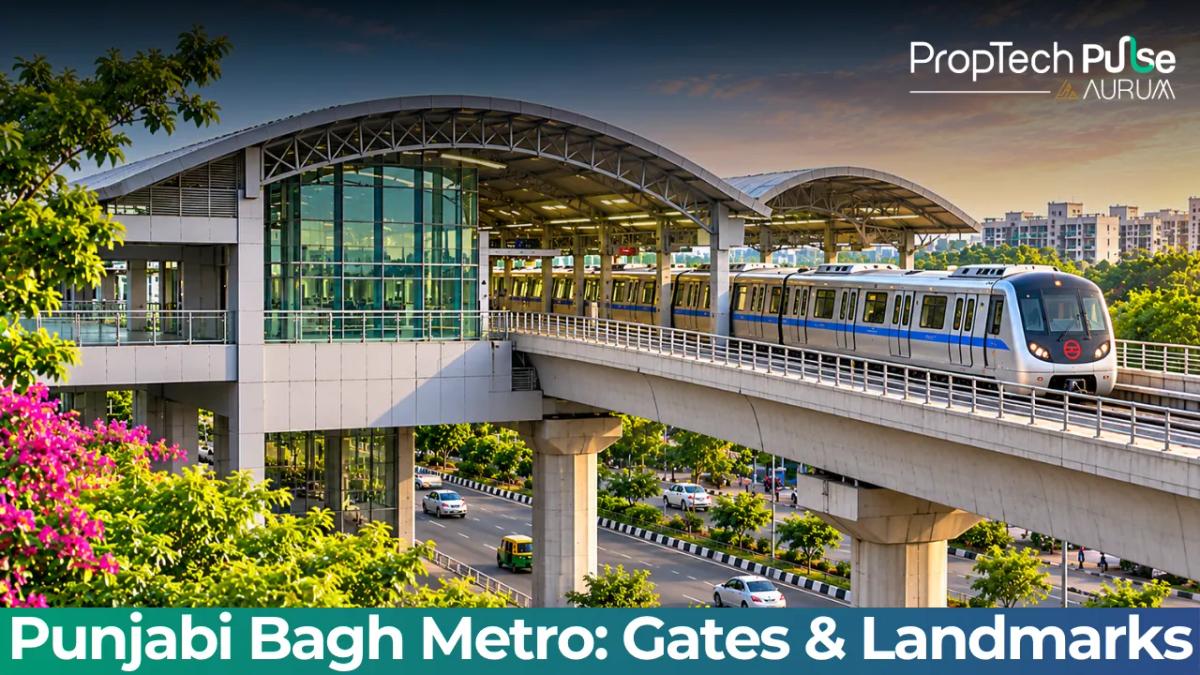
The station sits on Rohtak Road in Railway Colony, East Punjabi Bagh. It opened in April 2010 as a raised Green Line stop with two side platforms. Mixing up the adjacent locations wastes time and costs twenty minutes on a wrong footpath.
Station Location & Basics
Quick answer
Punjabi Bagh metro station (codes PBGA / PBBGA) is a raised Green Line stop on Rohtak Road in East Punjabi Bagh, New Delhi – 110026, opened on 2 April 2010. It is not an interchange station itself. To switch to the Pink Line, walk across the road to the separate Punjabi Bagh West station, which operates as the actual interchange.
The station covers the Sikandarpur to Billadpur stretch of the network.
Platform 1 heads towards Brigadier Hoshiyar Singh, while Platform 2 loops back toward Kirti Nagar and Inderlok. Dual codes PBGA and PBBGA exist because the station sits right next to its interchange counterpart, a layout that trips up first-time commuters.
| Feature | Details |
|---|---|
| Station Name | Punjabi Bagh Metro Station | Station Codes | PBGA / PBBGA | Line | Green Line | Platform Type | Raised, 2 side platforms | Inauguration Date | 2 April 2010 | Address & PIN Code | Rohtak Rd, Railway Colony, East Punjabi Bagh, New Delhi – 110026 |
Exit gates and how to find them
East Punjabi Bagh has two main exits. Understanding which gate to use saves time, especially if you are heading straight to the local bus terminal or a specific residential colony.
Gate 1 – Hospital & Residential Colony Route
Exit through Gate 1 for Maharaja Aggarsen Hospital or the Traffic Training Park. The staircase drops you directly onto the pavement beside the hospital main block. These stairs align with the primary residential lanes of East Punjabi Bagh. Most daily commuters living in older colony structures use this path.
Gate 2 – Bus Terminal & Commercial Hub Route
Gate 2 handles passengers transferring to the Punjabi Bagh Bus Terminal. Stepping out here places you near commercial activity and provides a wide pedestrian pathway to the transport hub. Catch a feeder bus into deeper West Delhi from here.
Direction Tip: Both gates lead to the same ground-level street (Rohtak Road). The difference is purely where the staircase meets the pavement. If you need the Pink Line connection, use either gate; you simply cross the road afterward.
Punjabi Bagh vs Punjabi Bagh West: Using the Pink Line Interchange
This is where most navigation guides fail. Punjabi Bagh (Green Line) and Punjabi Bagh West (Pink Line) sit in separate buildings on opposite sides of Rohtak Road.
They share the same zone, but lack indoor physical connection. You must exit the Green Line station and cross the street to enter the Pink Line station.
Punjabi Bagh West opened on 14 March 2018 as a critical Pink Line node.
Arrive at Punjabi Bagh on the Green Line, collect your ticket, exit the fare barriers, and walk straight across Rohtak Road into the opposite building. The transfer takes roughly five minutes.
The physical separation changes daily routines. A Green Line side flat adds six minutes to your walk if your office sits off the Pink Line. Check how proximity to a metro station affects apartment pricing. Short walking distances shift market rates in micro-markets like this one.
Fares, Timings & Passenger Amenities on the Green Line
Daily Commute Costs & Ticketing Rules
Standard fares start at ₹10 for short hops and cap at ₹60 for longer network journeys. Distance-based calculations apply when you travel past Punjabi Bagh into South Delhi.
Cross multiple zones and the fare climbs accordingly. A Delhi Metro Express card reads cleanly on both lines, removing the need for new tokens. Tap through the separate fare gates twice during the cross-road transfer.
First and last train timings change seasonally and vary by direction. Always check the live DMRC timetable PDF before a late-evening return trip.
ATMs, Parking, Restrooms & Accessibility Features
Passenger facilities at Punjabi Bagh Green Line station match mature North-Delhi corridors.
Dual ATMs run by HDFC Bank and Canara Bank sit just outside the fare gates. The station provides CCTV surveillance, clean washrooms, and dedicated Divyang-friendly ramps at both platforms.
Parking availability stays limited to hourly slots near the station.
Drive up early and expect the hourly charge once your vehicle enters the lot. Space fills quickly between 8:30 AM and 10:00 AM. Daily commuters usually arrive on foot or cycle from their colonies.
Key Landmarks Within Walking Distance
- Maharaja Aggarsen Hospital (Gate 1 direct access)
- Punjabi Bagh Transport Centre / Bus Terminal (Gate 2 adjacent)
- Nearby government schools and senior secondary institutes in Railway Colony
- Dense residential society clusters along Durga Enclave and D Block
These landmarks anchor the immediate micro-market. The density of hospitals, transport hubs, and established colonies keeps foot traffic steady throughout the day. Ground floor retail facing the metro approach thrives on that volume.
| Landmark | Distance / Walk Time |
|---|---|
| Maharaja Aggarsen Hospital | Direct at Gate 1 |
| Punjabi Bagh Bus Terminal | Direct at Gate 2 |
| Punjabi Bagh West (Pink Line Interchange) | ~5 minutes across Rohtak Road |
| Rajouri Garden Main Market | ~15 to 20 minutes |
| Anand Vihar Terminal (via Metro) | Approx 45 minutes ride |
Why This Metro Corridor Drives Rental Demand in West Delhi
Punjabi Bagh consistently performs above average for rental yields compared to other West Delhi pockets. Transit choke points like this Green Line and Pink Line junction drive the metric. Tenants paying premium rents want guaranteed last-mile coverage to employment centres in Connaught Place, Karol Bagh, and RK Puram.
Properties inside an 800-meter radius pull higher per-square-foot prices than peripheral lanes. Original construction caps the premium because builders cannot expand here. Investors push money into renovation-heavy units instead. This focus keeps existing stock liquid. See our property buying guide for West Delhi for a full breakdown on weighing these assets.
Before you decide on a property near this station
Employers on the Pink Line south of Majnu ka Tilla, or east on the Green Line, make Punjabi Bagh a smart financial bet. The location guarantees easy transit access across both networks.
However, if your routine rarely touches these lines, the inflated entry price won't pay off unless you hold long-term. Test your actual travel path using the Delhi Metro route planner before committing funds.
Frequently asked questions
Is Punjabi Bagh metro station an interchange station?
No. Punjabi Bagh on the Green Line is not an interchange station. It stands alone on Rohtak Road. The Pink Line interchange facility exists separately as Punjabi Bagh West, located on the opposite side of the road. You exit the Green Line station, cross Rohtak Road, and enter the Pink Line building to make the transfer. Both stations share the same fare zone.
Which gate of Punjabi Bagh metro is closer to Maharaja Agarsen Hospital?
Gate 1 is the closest exit to Maharaja Aggarsen Hospital. The staircase drops you directly onto the pavement level where the hospital main block faces the metro approach. Gate 2 pushes you further toward the bus terminal and commercial roads, adding roughly ten minutes of walking if you need medical assistance at the hospital.
How to reach Pink Line metro from Punjabi Bagh station?
To transfer from the Green Line to the Pink Line at this junction, collect your ticket, walk out through any gate to the pavement level, and cross Rohtak Road safely. On the opposite corner stands the Punjabi Bagh West Metro Station. Walk down the stairs there to reach the Pink Line platforms. The entire transfer takes about five minutes.
What are the operating hours of Punjabi Bagh metro Delhi?
The first trains generally leave from Punjabi Bagh around 5:30 AM, heading in both directions. Last trains typically depart between 10:45 PM and 11:15 PM depending on your platform and the current seasonal timetable. These times vary slightly by direction. Always verify the exact departure hour on the live Delhi Metro Rail Corporation timetable website or app before your evening return.
Sources
- Government of National Capital Territory of Delhi: General administrative data regarding Punjabi Bagh locality (accessed October 2026)
- National Data and Analytics Platform (NITI Aayog): Regional transit accessibility metrics informing micro-market analysis (accessed October 2026)
Enjoyed this blog article? Visit PropTech Pulse for more interesting blogs.


Ask Pulse Ai anything about real estate

Unlock the Latest in Real Estate
News, Infographics, Blogs & More! Delivered to your inbox.

