New Launch - India Real Estate Report 2026.

Services
Knowledge Hub
Resources
Tools

Ask Pulse Ai
©PropTech Pulse 2025, All rights reserved.


Commuting out of North Delhi requires precise timing, especially when getting through the morning rush toward Kashmere Gate or heading west via Inderlok.
Living or working around Shastri Nagar makes daily travel predictable. Knowing exactly which gate to use and when trains run saves twenty minutes in the Delhi heat every single morning.
Station location and red line positioning
Quick answer
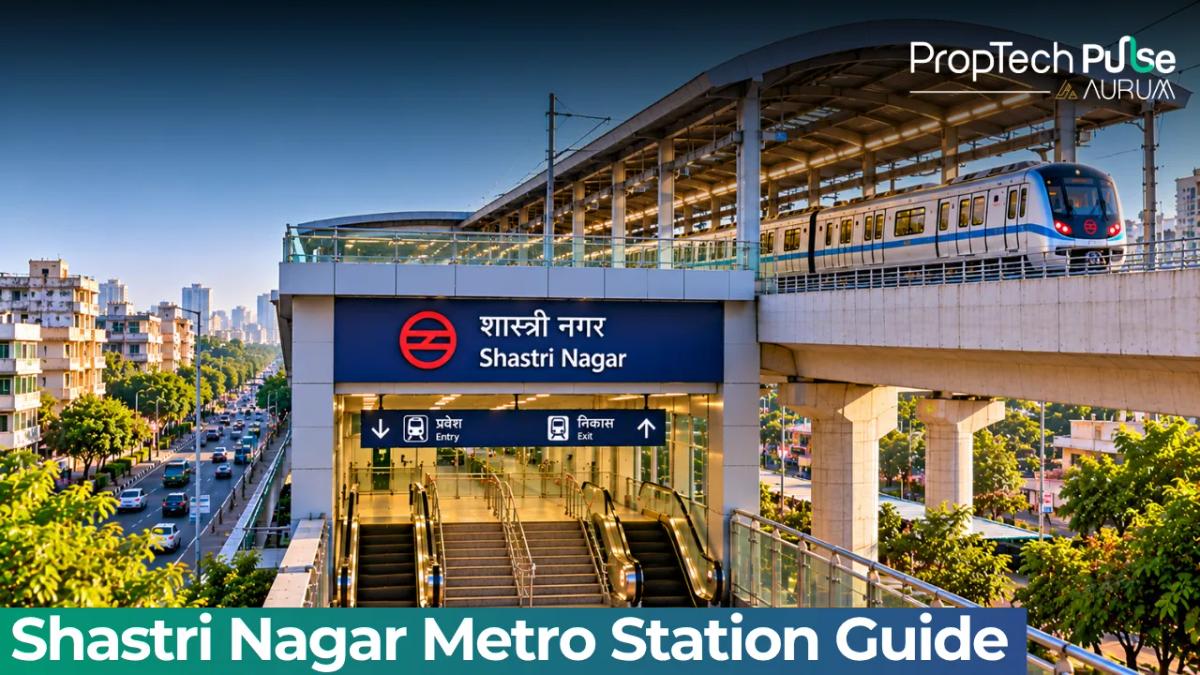
Shastri Nagar metro station is an above-ground stop on the Delhi Metro Red Line (Line 1), located in Block C, Subhadra Colony, Shastri Nagar, Delhi, 110052. It operates daily between roughly 05:15 AM and 11:55 PM, connecting commuters to key interchanges at Kashmere Gate and Inderlok.
Located squarely in Block C of Subhadra Colony, Shastri Nagar metro station serves as a critical node for the Red Line network.
The stop sits between Shahdara and Inderlok, acting as a primary transit point for thousands of residents in the eastern part of New Delhi.
The layout follows the standard DMRC model, featuring ground-level entry plazas, an upper concourse for ticketing and security checks, and side platforms for boarding.
The stop sits directly inside older, high-density housing pockets. Residents usually walk straight to the turnstile without needing feeder buses. Understanding how direct access boosts asset values matters here, so check our guide on how metro proximity affects apartment pricing before buying.
Train timings and fare calculator
Morning ridership at Shastri Nagar spikes significantly between 8:30 AM and 9:30 AM, with evening peaks occurring around 6:30 PM to 7:30 PM.
Planning your arrival around these windows reduces waiting time and platform crowding. The directional nature of the Red Line means you will catch different schedules depending on whether you are heading north-west toward Rithala or south-east toward Shaheed Sthal.
| Direction | Destination | First Train | Last Train |
|---|---|---|---|
| West / North-West | Rithala | 05:58 AM | 11:55 PM |
| East | Dilshad Garden | 05:57 AM | 11:50 PM |
| South-East | Shaheed Sthal | 05:47 AM | 11:45 PM |
These times serve as reliable baselines, but DMRC occasionally adjusts last-train departures by a few minutes during maintenance weeks or special events. Always verify the same-day schedule through the mobile app before planning a late-night return.
For everyday commuters, DMRC's unified payment systems mean you rarely need to stand in line at the counter. You can purchase and store smart tickets directly via WhatsApp using UPI and QR codes, making entry incredibly fast even during peak hour congestion.
Weekend travel tip Trains run on slightly relaxed schedules on Sundays and national holidays, with fewer frequency intervals between cars. Expect a marginally longer wait if you are travelling midday on a Sunday.
Shastri nagar metro gates and walk-out directions
The station features two main ground-level exits that serve completely different neighbourhoods. Choosing the wrong gate can force you into a long, sun-exposed walk across busy roads to reach your destination.
Gate 1: The Rail and Housing Exit
Walking out of Gate 1 places you directly adjacent to the approach roads of Sarai Rohilla Railway Station. This is the fastest route for residents staying in Subhadra Colony and Anand Parvat.
Commuters transferring from the Western Railway line usually head straight here to catch the escalators up to the underground metro platforms at the railway station.
Gate 2: The Market and Hospital Exit
Stepping out of Gate 2 drops you right into the active lanes of Shastri Nagar Market and the Gulabi Bagh area. N.K.S. Hospital is easily reachable on foot from this side.
Grocery vendors, fruit shops, and daily necessity stores cluster along the immediate perimeter, making this the preferred exit for locals finishing their evening errands.
Interchange connections: reaching west, central, and noida
Delhi Metro’s Red Line carries heavy daily traffic, which is why mastering your early transfer points cuts down wait times significantly. You have two viable interchange options starting from Shastri Nagar, each opening up a different half of the city.
Merging onto the Green Line at Inderlok
Inderlok is just one stop away heading towards Rithala. Transferring here connects you instantly to the Green Line.
This is the quickest path to Dwarka Sector 21, Rajouri Garden, and Central Delhi landmarks like Karol Bagh and Patel Chowk. If your office or college is in West Delhi, skip the entire stretch to Kashmere Gate and swap lines immediately at Inderlok.
Connecting to Yellow and Violet Lines at Kashmere Gate
Heading toward Shaheed Sthal, Kashmere Gate is two stops down. It acts as the massive hub for the Yellow Line (toward Noida and Gurugram) and the Violet Line (toward Rajouri Garden and Vishwa Vidyalaya).
While Kashmere Gate is chaotic, it remains the absolute best gateway if you need to switch to the Airport Express Line or head further east into Greater Noida.
Residential demand driven by metro connectivity
Units situated within a five hundred to eight hundred metre walking radius of Shastri Nagar consistently show stronger rental absorption than other North Delhi pockets. Tenants prioritize the elimination of last-mile commute friction, which keeps occupancy levels steady throughout the year.
Areas like Old Seema Puri and Bhili Bhulaiyan benefit directly from this footfall. Landlords find it easier to secure long-term leases here because families value the ability to walk kids to school in the mornings and access the market in the evenings. You can explore specific locality trends for surrounding plots. Check the data for delhi block a shastri nagar delhi, delhi block b shastri nagar delhi, and delhi block d shastri nagar delhi.
Capital appreciation in these zones tends to move in tandem with Delhi Metro expansion announcements and general urban upgrading.
Because the area relies heavily on existing infrastructure rather than new land conversion, price growth is usually steadier and less prone to speculative bubbles compared to developing fringe corridors.
Before you book or commute
If you are commuting, always exit through Gate 1 for railway transfers and housing colonies, and use Gate 2 exclusively for hospital visits and market runs to avoid crossing the main road.
For buyers and investors, prioritize units that sit closest to Gate 2 if you plan to rent to young professionals and daily market workers, as walkability drives premium rental rates in this corridor.
Frequently asked questions
Frequently asked questions
How many gates are there at Shastri Nagar metro station?
The station features two main ground-level exits known as Gate 1 and Gate 2. Gate 1 faces the side leading toward Sarai Rohilla Railway Station and Subhadra Colony. Gate 2 opens directly into Shastri Nagar Market, covering Gulabi Bagh and offering quick access to N.K.S. Hospital. Selecting the correct gate prevents unnecessary cross-road walking in heavy traffic.
What time does the first metro leave from Shastri Nagar?
Trains start running in the early morning, typically beginning around 05:15 AM. From Shastri Nagar specifically, the first train heading toward Shaheed Sthal departs at approximately 05:47 AM, the first toward Dilshad Garden leaves near 05:57 AM, and the first service bound for Rithala starts at roughly 05:58 AM.
Is Shastri Nagar metro station accessible for disabled passengers?
Yes, the station is designed to be fully divyang-friendly. Elevators provide smooth vertical transport between the ground entrance, the middle concourse level, and the elevated platforms. You will also find tactile paving paths for visually impaired travellers, wide automatic doors at the ticket barriers, and dedicated space on every train car to accommodate wheelchairs safely.
Which metro line is Shastri Nagar station on?
It sits on the Red Line, officially designated as Line 1 of the Delhi Metro network. The line runs from Shaheed Sthal in the south-east to Rithala in the north-west, passing through highly populated central and northern zones of the National Capital Region.
Where can I park at Shastri Nagar metro station?
Designated parking spaces are available on-site at the station premises. Vehicles can be parked at the outer plaza near the entry gates. DMRC charges an hourly fee based on vehicle type, with daily caps applying for longer stays. Two-wheelers and four-wheelers usually share dedicated segregated zones for safety.
Sources
- Delhi Metro Rail Corporation: Station details, operational hours, and accessibility features (accessed October 2026)
Enjoyed this blog article? Visit PropTech Pulse for more interesting blogs.




Ask Pulse Ai anything about real estate

Unlock the Latest in Real Estate
News, Infographics, Blogs & More! Delivered to your inbox.

