New Launch - India Real Estate Report 2026.

Services
Knowledge Hub
Resources
Tools

Ask Pulse Ai
©PropTech Pulse 2025, All rights reserved.


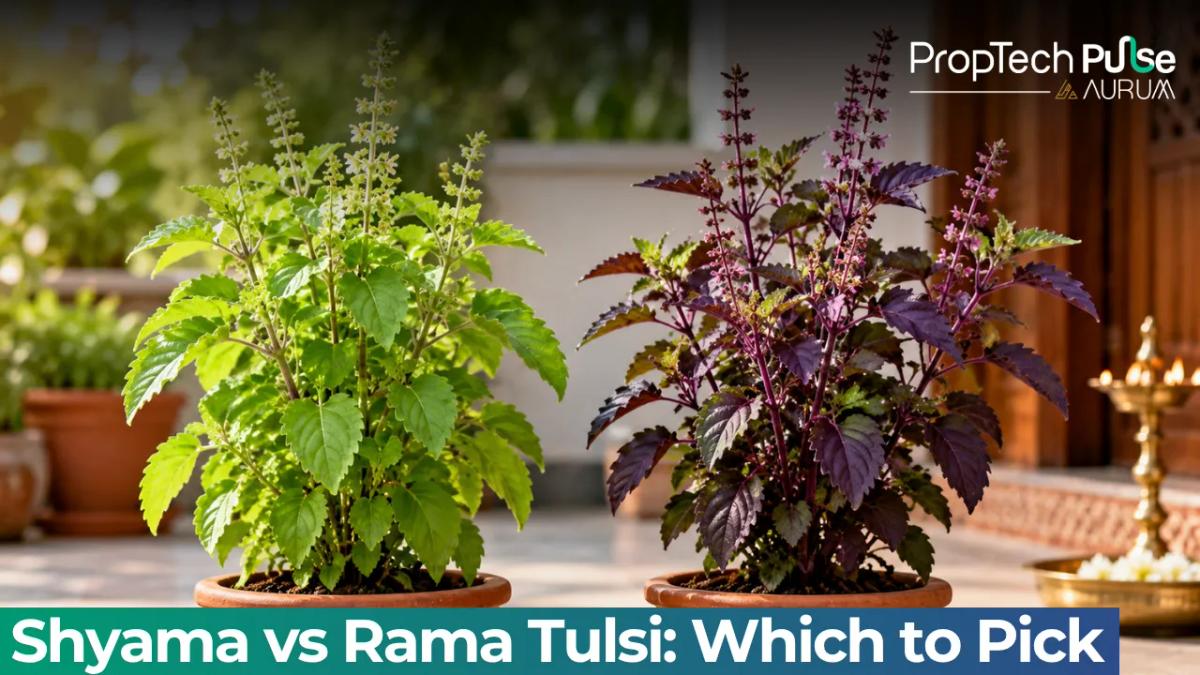
Bright green Rama Tulsi sits on the prayer shelf in almost every Indian house. Reliable. Familiar. Easy to find. But when the winter chill sets in or humidity spikes, that bright green plant simply cannot keep up.
Shyama Tulsi—often called Krishna Tulsi carries dark veins and a sharp, peppery scent. Gardeners frequently overlook it, yet its medicinal punch outstrips Rama’s. Both plants serve valid purposes. You just need to match them to how your household actually lives.
Getting both right means matching each plant to your actual daily needs instead of buying whatever the local nursery stocks.
What is Shyama Tulsi?
Quick answer
Shyama Tulsi is a dark-leafed, sharp-aroma variety of holy basil (Ocimum tenuiflorum) prized for its high medicinal potency, particularly against respiratory illnesses and cold weather symptoms. Unlike the common Rama Tulsi used for daily worship, Shyama delivers stronger adaptogenic benefits but requires direct sunlight and consistent moisture to thrive indoors.
The family tree for Shyama Tulsi runs through Ocimum tenuiflorum alongside Rama. Where Rama aims for calm, Shyama pushes intensity. Leaves hug the stem tightly. Veins bleed a deep purple-black.
Crush one and you get a sharp, peppery hit. Ayurveda classifies this as Rajasic energy. Because of that drive, temples usually reserve formal puja spaces for lighter varieties.
Herbalists reach for Shyama first during winter prep. The elevated rosmarinic acid and eugenol levels turn it into a respiratory powerhouse. Check your balcony exposure before potting it though. Partial shade guarantees leaf burn.
Consult the Vastu Shastra principles for real estate early. Sun alignment with your plot’s orientation matters before you place the pot.
Shyama Tulsi vs Rama Tulsi: Key Differences at a Glance
| Feature | Shyama Tulsi | Rama Tulsi |
|---|---|---|
| Leaf Colour | Dark green with prominent purple-black veins | Bright, uniform green |
| Aroma Profile | Sharp, peppery, intense | Mild, floral, sweet |
| Nature (Guna) | Rajasic (active, warming) | Sattvic (calm, cooling) |
| Associated Deity | Lord Krishna | Lord Vishnu / Satyanarayan |
| Primary Use Case | Respiratory medicine, immunity building, winter care | Daily prayer, digestion, summer relaxation |
| Tolerance to Partial Shade | Poor; requires full sun exposure | Moderate; survives in filtered light |
Which Tulsi Is Best For Home? Deciding Between Rama And Shyama
Space permits it, run both plants. They pull different duties. Rama anchors the spiritual side, while Shyama handles the medicine kit.
Weather shifts trigger coughs and congestion fast. Crush two fresh leaves with raw honey to clear bronchial passages quickly. Apartment dwellers should pick based on regional weather. Damp northern winters demand Shyama. Hot southern coasts favour Rama.
Review the first-time homebuyer guide to see how indoor air quality shapes long-term comfort.
Tulsi Vastu: Exact Directions, Timings, and Prohibitions
Where Should You Place It?
Cardinal directions map directly to elemental forces in Vastu. The Northeast stands for water and purity, locking it in as the ideal spot for sacred foliage. East or North work well as alternatives. South clashes hard with the plant's energy, so skip it entirely.
Rooftop placement sounds logical for sunlight, but it backfires. Baking afternoon heat dries the root mat instantly and triggers fungal rot on lower branches. Move pots indoors or onto shaded balconies where morning rays hit for exactly four hours.
When to Plant Tulsi?
Kartik month drives the strongest planting success, especially Thursday. Skipping strict lunar dates works fine if you catch early spring or late summer moisture. Focus on the monsoon shoulder instead, when soil stays moist without rotting.
Water thoroughly once planted, then cut back until the topsoil feels dry to the touch. Plants drown easier than they starve in containers.
Taboos to Avoid
Prickly companions disrupt energy flow immediately. Keep cactus, aloe, and roses two feet away from the base. The sharp geometry clashes with the plant's smooth growth pattern.
Dead foliage clears faster than you think. Leave withered leaves attached beyond three days and airflow stops completely. Snip them off weekly using sterilized shears. Dispose of older plants through river immersion or deep compost burial. Throwing dry stems into municipal bins breaks tradition while bringing unwanted insects inside.
Pruning Rule: Never trim Tulsi branches after sunset. Evening cuts seal slowly in high humidity, inviting grey mould that ruins the entire batch within forty-eight hours.
Medicinal Benefits: Why Shyama Tulsi Is Essential For Cold & Cough Season
Rama Tulsi cools the body. Shyama warms it. This physiological split dictates how you use each during illness. During autumn cold snaps, Shyama acts as a thermogenic agent. Two crushed leaves steeped in black tea pull congestion from the bronchial tubes faster than generic herbal teas.
Eugenol acts as a direct expectorant. Phlegm loosens naturally. No syrup haze follows.
Platelet counts rise slightly during extended fevers. Recovery speeds up noticeably compared to standard herbal teas. Rama handles digestion and gut flora. Shyama owns the respiratory track. Pair this herb with daily movement to maximize winter oxygen intake.
For automation tips, see our guide on smart home devices in India. Automated watering and air monitoring keep the plants alive without extra effort.
Caring for Your Tulsi Plant in an Apartment vs Independent House
Soil composition decides survival more than sunlight. Use loam mixed with one part sand and dried cow dung or vermicompost. Standard garden soil compacts rapidly in pots, choking the root mat within six weeks. Repot every eighteen months.
Watering frequency depends entirely on your floor level. Ground-floor units soak up ambient moisture, requiring watering twice weekly. Third-floor balconies evaporate moisture quickly; daily misting becomes mandatory. If you travel for work, install a simple drip timer. Manual neglect causes ninety percent of indoor plant deaths in high-rise towers.
Final Verdict: The Decision Rule
Pick Shyama Tulsi if your priority shifts from daily ritual to practical health defense. It handles severe seasonal shifts better and delivers quicker relief during chest infections.
Stick with Rama Tulsi if your goal is spiritual continuity, digestive support, and low-maintenance peace. Ideal setups feature both. Place Rama near the puja area for morning devotion. Position Shyama on the sunniest balcony for evening medicinal extraction. Match the plant to your actual routine, not the label at the garden centre.
Frequently asked questions
What is the difference between Rama Tulsi and Shyama Tulsi?
Rama Tulsi features bright green leaves with a sweet, mild aroma, making it gentle enough for daily prayers and digestion. Shyama Tulsi grows dark purple-veined foliage that smells sharply peppery. While Rama provides cooling effects suited for summer and spiritual routines, Shyama carries stronger warming properties designed to combat winter respiratory issues. They serve different biological and spiritual roles inside the home.
Which tulsi is best for home Vastu?
Vastu Shastra traditionally places holy basil in the Northeast corner, representing purity and water elements. Both varieties thrive there, though Shyama prefers slightly warmer microclimates near the East wall if Northeast lacks direct morning sun. Avoid South-facing placements entirely, as the intense afternoon heat clashes with the plant’s cooling symbolism. Proper positioning ensures steady growth without triggering structural imbalances in the room’s energy flow.
Can we keep Shyama Tulsi and Rama Tulsi together?
Keeping both varieties side-by-side works perfectly well and actually strengthens the household’s overall air quality. Place the Rama plant closer to the prayer area for ritual focus, while situating Shyama on a brighter balcony for medicinal harvesting. Just ensure neither receives thorny companions like cactus within a three-foot radius, as conflicting plant energies disrupt their respective growth cycles. Separate watering schedules apply based on individual soil needs.
How should you dispose of a dead Tulsi plant?
Discarding wilted stems in the municipal trash bin violates traditional custom and attracts rodents indoors. Instead, carefully remove the entire root system and immerse it in a flowing river or large bucket of rainwater overnight. Burying the decomposing organic matter beneath a mature tree serves as an acceptable alternative. This respectful removal prevents stagnant energy buildup and protects your remaining plants from fungal contamination.
Does Tulsi purify indoor air effectively?
Yes, the plant actively absorbs common volatile organic compounds like formaldehyde and benzene from indoor environments. Each leaf functions like a microscopic filter, releasing oxygen at night while pulling particulate matter from stagnant room air. Placing multiple pots around sleeping quarters improves breathing quality significantly during peak heating season. Regular pruning encourages new leaf growth, maintaining maximum absorption capacity throughout the year.
Sources
- Department of Ayush, Ministry of AYUSH, Govt of India: Guidelines on Tulsi cultivation, traditional medicinal applications, and safe preparation of leaf extracts (accessed October 2026).
Enjoyed this blog article? Visit PropTech Pulse for more interesting blogs.





Ask Pulse Ai anything about real estate

Unlock the Latest in Real Estate
News, Infographics, Blogs & More! Delivered to your inbox.

