

©PropTech Pulse 2025, All rights reserved.

What is a Bridge Loan?
A Bridge Loan: A Short-Term Solution for Immediate Capital
A Bridge Loan is a short-term financing option that assists in covering immediate capital needs—often bridging gaps until permanent financing becomes available or a sale concludes. Businesses or individuals use it to secure new assets, pay off obligations, or manage temporary cash flow shortages without finalizing a long-term loan.
Key Points:
- High Interest: Typically bears elevated rates because of condensed repayment timelines.
- Collateral: Lenders may demand security such as property pledges.
- Flexibility: Allows swift transactions while awaiting funds from other sources.
- Risk-Reward: Helps expedite expansions or purchases, yet can be costly if the borrower faces unexpected delays.
Ultimately, bridge loans provide agility for those confident in near-future liquidity events—like receiving a large payment or finalizing a major sale—thus avoiding missed opportunities.
Insight Pulse
Uncategorized
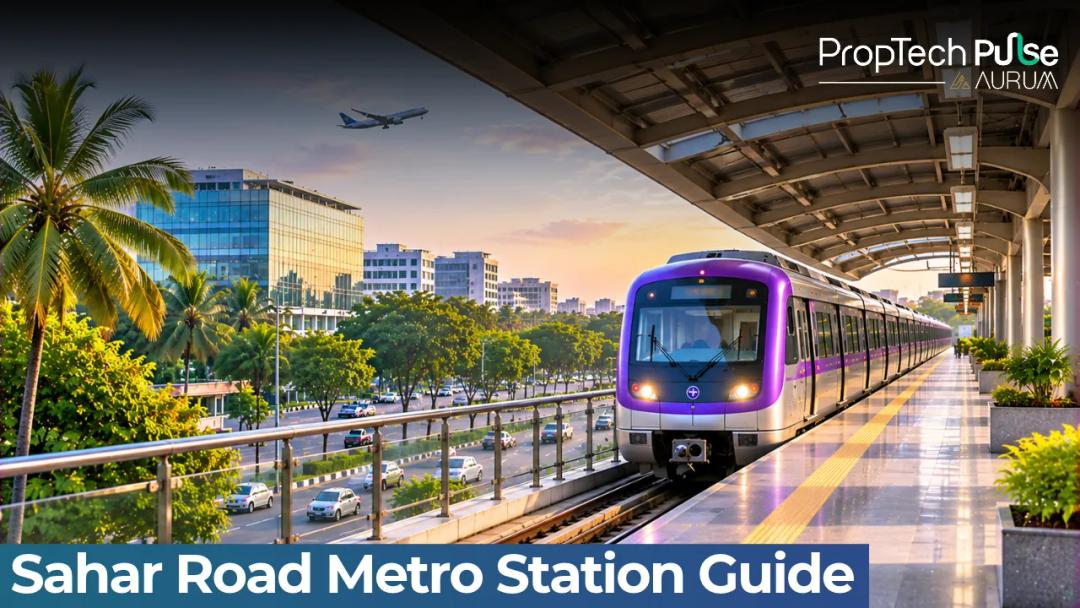
Sahar Road Metro Station: Timings, Route Map & Fares
In Andheri East, the Sahar Road Metro Station has cut commute times to Bandra-Kurla Complex, Wockhardt Hospital, and Worli. Opened in October 2024, this busy underground hub handles everything from cargo staff moving through SEEPZ to software engineers living in JB Nagar. Leasing closer to the domestic terminal saves daily travel time. Renting in Sahar Village now carries a premium tied to the new interchange. This guide gives exact platform schedules, exit maps, and fare breakdowns. In this guide Location and line overview Sahar road metro station route Sahar road metro station timings Exit map: gates and landmarks Fares, payment and facility notes Micro-market impact: why the sahar road metro matters Before you commit to a lease or purchase Frequently asked questions Location and line overview Quick answer The Sahar road metro station sits directly beneath the Western Express Highway intersection near the Domestic Terminal cargo zone. It serves as a key interchange on Mumbai Metro Line 3, operating from early morning until shortly after midnight with trains running every four to twelve minutes depending on rush hour. The station forms part of Mumbai Metro Line 3, a thirty-three-point-five-kilometre corridor stretching from Cuffe Parade to Aarey. Maharashtra Metro Rail Corporation Limited built the tunnel network, while Delhi Metro Rail Corporation now runs daily operations under a joint agreement. That switch boosted passenger flow and fixed earlier digital sign glitches along the whole route. Aviation buffer zones and tight airport logistics dictate the station layout. Engineers chose a single island platform, so northbound commuters heading to Aarey and southbound riders aiming for Cuffe Parade share one continuous deck. A glass divider separates the tracks. Street-level stairwells bring everyone to the same concourse floor, cutting navigation confusion during heavy peaks. Your updated mumbai metro line 3 status route stations guide confirms that Sahar uses this simpler mechanical design shared by only three western corridor stations. Sahar road metro station route Knowing directional flow helps you plan morning departures and evening returns. Trains pushing north toward Aarey follow the Western Express Highway trench until reaching Vikhroli. Early stops serve dense housing at Chandivali, Powai, and Oshiwara before hitting the DEOC maintenance yard. These northern sections fill quickly during midday factory shifts. Southbound trains connect tighter to existing rail networks. After leaving Andheri West residential blocks, the tunnel dips to cross under the Eastern Harbour Railway, placing riders directly on the Harbour and Western Line platforms at the Andheri interchange. Routes continue through Dharavi and Vashi Bridge before dropping beneath Thane Creek. Services reach Nerul, Sanpada, and CBD Belapur, finishing at Nariman Point and Cuffe Parade. This direct connection changes how people commute. Professionals who previously fought gridlocked intersections now ride climate-controlled carriages with overhead racks. Property managers near the southern end list walkable distances to finance hubs in their ads. Checking your property investment in mumbai 2026 timeline requires factoring in that Line 3 continuity removes old traffic delays across the island. Sahar road metro station timings Headway controls crowding more than overall station size does. Regular service starts near 05:45 AM and runs until just past midnight. Morning peaks pack trains between 08:15 AM and 10:30 AM, with arrivals dropping to four-minute intervals at maximum load. Evening crowds mirror this pressure between 06:00 PM and 08:30 PM when offices empty out. Midday gaps widen from noon till 04:45 PM. You wait ten to twelve minutes during these off-peak windows. Night service keeps twelve-minute spacing until cleaning crews sweep tracks thirty minutes before the last run. Final trains differ by direction, with northern shuttles leaving Aarey around 11:15 PM and southern cars pulling out near 11:00 PM. Weekends settle into eight-minute cycles through daylight. Fewer corporate commuters flatten the usual peak curve, making boardings smoother at transfer points. Monsoon rains occasionally cause two-minute rolling delays when drainage slows tunnel maintenance teams. Check live platform boards before waiting if automatic signals reroute holding cars. Peak Hour Warning: Boarding between 08:30 and 09:45 AM heading south means standing room only on the first two cars. Move toward the centre or rear carriages for a better shot at seats before reaching Andheri. Exit map: gates and landmarks Getting from the concourse to street level depends on picking the right turnstile. The terrain around the station splits pedestrian traffic into separate corridors tied to specific areas. Gate assignments keep cargo workers, corporate shuttles, and local residents apart to stop stairwell bottlenecks. Sahar road metro station gate assignments and nearby destinations (October 2026) Gate Designation Primary Destination Cluster Nearby Landmarks & Housing Types A1 Western Engineering Hub Budget hotels, airline staff quarters, short-term leases A2 / A3 Sahar Cargo Complex Freight warehouses, logistics offices, MIDC canteens A4 / A5 JB Nagar & Marol Naka Mid-rise apartments, co-living facilities, student housing B1 Secondary Cargo Outlet Feeder bus stands, light goods vehicle parking lots Turnstile A1 leads straight onto Sahar Road carriageway. Pedestrians walking out reach engineering staff accommodation blocks popular with cabin crew and ground handlers chasing quick rosters. Stepping toward gates A2 and A3 drops you right in the middle of the Sahar Cargo ecosystem. Warehouse supervisors coordinating night deliveries love the direct highway visibility from this exit. Stairs A4 and A5 channel residents straight into the upper blocks of JB Nagar and Marol Naka. Thousands of IT park employees live in these neighbourhoods. Ready-to-move two-bedroom flats here work well for families wanting to skip long walks during sudden rain. Gate B1 runs alongside the main cargo stretch but branches toward bus routes servicing peripheral industrial estates. Fares, payment and facility notes Metro fares follow strict distance slabs designed to keep rides cheap while paying off construction costs. Entry tariffs start low at ten rupees for segments covering roughly three kilometres. Charges climb steadily as passengers move toward central hubs, with mid-corridor hops costing twenty-five rupees. Trips past Vashi Bridge hit forty rupees, while journeys across the full thirty-three-kilometre route cap at eighty rupees. Students get fifty percent off with valid academic IDs turned in at staffed counters. Senior citizens qualify for similar discounts when age documents match national guidelines on registration cards. Payment methods expanded quickly after system upgrades. Touch-N-Go smartcards require balance topped up at dedicated concourse kiosks, while smartphones enable instant taps using NFC readers next to biometric gates. Cash tokens still sit at legacy machines for visitors used to paper passes. Station amenities include twin lifts per direction, wheelchair ramps, drinking water stations across from shops, and covered bike parking beside the escalators. Micro-market impact: why the sahar road metro matters Rapid transit placement changes how developers price carpet area and how tenants handle rent hikes inside a half-kilometre ring. Builders in JB Nagar now treat Aqua Line closeness as standard, not a luxury perk. Valuation patterns mirror established transit corridors in Bangalore where railway anchoring pushed developers to justify higher floor space indices against glass exteriors. Flats near Gate A4 charge six to eight percent more than identical units half a kilometre away. Tenants accept the gap because it removes unpredictable cab surge pricing. Private driver costs hit roughly twenty-five hundred rupees monthly during monsoons for cross-highway trips. Dropping that expense easily covers a slightly higher base rent tied to fixed train departures. Resale values climbed gradually instead of spiking overnight. Tight supply halted new inventory releases, stopping the usual developer price hikes. Existing plots and older society conversions simply rose in step with newer zoning rules. Municipal frameworks recently rolled out Transit Oriented Development limits, raising permissible floor space indices near active station rings. Logistics operators watching middle-mile shipping noticed shifted tenant mixes too. Warehouse supervisors preferring Sahar Cargo proximity now lease small admin offices near Gate A3 instead of distant branch offices. Quick staff rotations help during urgent freight moves. Mixed-use zoning gets faster approval under this new demand pattern. Before you commit to a lease or purchase Set clear criteria when weighing properties near this station against scattered eastern suburb options. Late-night jobs requiring commutes past midnight benefit most from being close to Gate A3. Walking distance removes ride-hailing shortages during heavy rain and guarantees seats on evening shuttles. Pick acoustic insulation over raw proximity if highway noise ruins sleep. Check occupancy certificates and fire clearances before handing over booking money. Drop brochure transit marketing pitches when verifying construction compliance. Walk the actual route during peak hours instead of trusting map distances. Ground reality always beats renderings when placing capital into city housing. Frequently asked questions What are the first and last train timings at Sahar Road metro station? Service typically begins around 05:45 AM daily. Morning trains depart frequently, but evening frequencies stretch to twelve-minute gaps after 09:30 PM. Final departures heading toward Cuffe Parade leave near 11:00 PM, while northern-bound trains continue until approximately 11:15 PM. Always watch platform announcement boards because seasonal schedule adjustments occasionally shave fifteen minutes from closing times. Is Sahar Road metro station underground? Yes. The entire station sits completely beneath the Western Express Highway surface due to aviation buffer restrictions and dense cargo infrastructure overhead. Passengers descend stairs or elevators from street grates into a fully enclosed concourse level before reaching the isolated island platform below. This subterranean design protects sensitive equipment from heat exposure while maximising land utilisation above ground. How many stations are on the Sahar road metro route? Line 3 encompasses twenty-four operational stations connecting Cuffe Parade to Aarey JVLR. Between these endpoints lies a mixture of deeply buried tunnels crossing under sea beds and elevated viaducts threading through suburban colonies. Transfer opportunities appear at four key junctions allowing cross-linking with Harbour, Western, and Central rail divisions. Where can I catch a taxi or auto near Sahar Road metro? Designated rank queues operate outside gates A2 and A3 specifically servicing cargo workers requiring reliable transport home after shift rotations. Private cab aggregators park along the widened shoulders near gate A1 for quicker passenger pickup during lunch hours. Autorickshaw operators cluster primarily near gate B1 where fare meters display updated district commission rates applicable to eastern Andheri boundaries. Sources Mumbai Metropolitan Regional Development Authority (Mahametro): Line designation, route terminals, and station location details (accessed November 2026) Mumbai Metro One Operations Limited: Fare structure classifications and accepted digital payment modalities (accessed November 2026) Enjoyed this blog article? Visit PropTech Pulse for more interesting blogs.

PropTech Pulse Editorial
23rd November 2026

Uncategorized
Market Value in Andhra Pradesh: Check 2026 Guideline Rates
If you own a plot or plan to build a home in Andhra Pradesh, tracking property prices is essential. The amount a developer asks rarely matches the government's recorded figure. Every legal transaction in the state relies on a strict benchmark. This baseline acts as a statutory floor set directly by the Sub-Registrar's office. Knowing the accurate market value in Andhra Pradesh saves buyers from unexpected tax bills. As of November 2026, the state government enforced updated guidelines following its annual budget review. Most zones saw increases between five and ten percent. Newly designated high-growth corridors experienced sharper hikes of up to twenty percent. Understanding exactly how these revisions impact your registration costs prevents financial surprises for anyone researching the market value in Andhra Pradesh. You cannot negotiate the stamp duty base below this notified figure. Let us walk through how these values work, how to verify them online, and what you should expect when signing an agreement in FY 2026. In this guide What Is the Market Value of Land? Understanding the Feb 2026 IGRS AP Revisions How to Check Current Land Value in AP Online Approximate Land Value Ranges in Major Districts How Guideline Value Dictates Your Stamp Duty Bill Frequently asked questions What Is the Market value in Andhra Pradesh? Quick answer The legal market value of land in Andhra Pradesh is defined by the guideline value published by the Director of Registrations and Stamps. It acts as the statutory minimum. When you register a deed, you pay stamp duty on whichever figure is higher: your actual agreed price, or the government's notified chart rate. Investors frequently confuse commercial asking rates with legal worth. The law calls this benchmark the guideline value or circle rate. District committees calculate these numbers carefully. They weigh recent sales data, road connectivity improvements, and local infrastructure growth within a specific Mandal. Your bank also uses this exact figure to sanction home loans. Lenders typically finance up to eighty percent of the guideline value. They completely ignore the full commercial price quoted by sellers. To learn how professionals estimate true worth beyond official notices, read our guide on 3 easy methods to calculate the market value of a property. Understanding the Feb 2026 IGRS AP Revisions The landscape of AP property valuation shifted noticeably in early 2026. Following state budget proposals aimed at boosting tax revenues, the Department of Registration and Stamps updated rates across 26 districts. The goal remained simple. Bring notified values closer to actual commercial transaction prices. These prices had widened apart due to rapid infrastructure expansion across the state. Buyers and sellers must track these hikes closely. Avoiding surprises at the registrar office requires checking the latest circulars before meeting a seller. The increases applied based on distinct location tiers: General Residential and Commercial Zones: Established city limits like Vijayawada and Guntur saw guideline values rise by five to ten percent. High Growth Corridors: Emerging hubs, satellite towns near proposed SEZs, and new district headquarters received sharper hikes ranging from fifteen to twenty percent. This tiered approach reflects uneven demand across the state. Older town centers have stabilized their pricing models. Meanwhile, speculative interest in fringe areas forced quick adjustments. These measures prevent undervaluation on standard forms. Amaravato Exclusion: If you are purchasing property specifically within the designated Amaravato capital region, note that it was entirely excluded from this specific 2026 revision cycle. The previous rates remain temporarily active there until further notification. How to Check Current Land Value in AP Online You do not need to visit a government clerk to find your survey number's value. The Integrated Government Registry Services portal lets anyone look up guideline values instantly. Verify a plot in Anantapur or a flat site in Vizag using these precise steps. Navigate directly to the official tool on registration.ap.gov.in. Select "Search Guidelines" from the menu. Choose "Land Value Search" to begin. Accuracy here depends entirely on picking the correct land use classification. You must toggle between "Agricultural" and "Non-Agricultural" (Non-Ag). Picking agricultural by mistake returns outdated historical rates. Using Non-Ag for farming land gives inflated commercial prices. Both errors distort the true market value in Andhra Pradesh. Once selected, enter these mandatory identifiers: District name Mandal or City area Village or Ward number Survey Number The portal displays the current rate per square yard or gaj immediately. Cross-reference this value by checking the unique "D" number on the screen. Ensure you pay taxes on the correct boundary lines. For your full documentation, also verify Encumbrance Certificates and check market value on the AP portal together to confirm clear ownership history. Approximate Land Value Ranges in Major Districts While exact rates fluctuate down to the individual street or block, reviewing broad ranges for key commercial hubs gives you a solid baseline. The table below reflects approximate non-agricultural guideline value ranges updated post-February 2026 for major plots. Estimated Guideline Value (Land Value) Ranges in Selected AP Localities – Post-Feb 2026 Update District / Locality Type Premium Central Areas (per sq yd) Developing Residential Suburbs (per sq yd) Visakhapatnam (Main City) ₹11,000 – ₹16,000+ ₹6,500 – ₹9,000 Vijayawada (Urban Core) ₹10,000 – ₹14,500+ ₹6,000 – ₹8,500 Guntur / Mangalagiri Corridor ₹8,500 – ₹11,000+ ₹4,500 – ₹6,200 Tirupati (City Limits) ₹7,500 – ₹10,000+ ₹4,000 – ₹5,500 These figures act as the absolute floor for tax purposes. Developers marketing new township projects in developing subdivisions will invariably ask for amounts significantly above these baseline numbers. Your stamp duty calculation remains tethered strictly to the government's chart. Ignore the developer's brochure when calculating your closing costs. How Guideline Value Dictates Your Stamp Duty Bill This is where first-time buyers lose cash unexpectedly. Under the Transfer of Property Act and the AP Stamp Act, the Sub Registrar does not negotiate the tax basis. They pull the highest applicable value from two primary sources: the consideration clause in your sale deed, or the notified guideline value for your specific plot. Walk through a practical example involving a resale flat in Guntur. Assume you agree to buy a 1,200 sq ft apartment for ₹80 lakhs. The seller drafts the agreement at a discounted price to lower capital gains tax. It sits just beneath the locality threshold. Log into the IGRS AP portal now. Enter the ward number carefully. Discover the revised 2026 guideline value places the minimum permissible market value of the apartment at ₹90 lakhs. The Sub Registrar ignores your ₹80 lakh contract immediately. The government treats the taxable base as ₹90 lakhs instead. You pay the applicable stamp duty percentage on the ₹90 lakh mark. You effectively pay more in notional value than what you actually transferred to the seller. Calculating your acquisition budget requires patience and arithmetic. The government dictates the stamp duty portion completely. Control the negotiation side carefully. Before handing over token amounts, study the Andhra Pradesh stamp duty and registration charges 2025 structures clearly. Do not underestimate the liquid cash needed for execution. Before You Sign the Sale Agreement Negotiating price is only half the battle. Understand how the taxman views the asset first. Run your prospective purchase price through the online IGRS calculator prior to signing any binding agreement. If the government value exceeds your initial budget, renegotiate terms with the seller to account for the extra tax burden. Shift your search toward localities where the new guideline values align closer to your desired pricing model. Always verify the Completion Certificate status independently before finalizing any deal. Protect your capital by respecting the baseline numbers. Frequently asked questions What happens if my sale agreement value is lower than the government market value? If your recorded sale consideration is less than the notified guideline value, the State Government disregards your lower figure completely. The Sub Registrar legally mandates you to pay stamp duty and registration fees on the higher of the two amounts. In simple terms, you cannot pay tax based on a negotiated discount that falls below the government's floor price. How do I check the land value of a specific plot in my Mandal? You need the plot's Survey Number, Village or Ward number, and the specific Mandal. Visit the 'Land Value Search' option on the IGRS Andhra Pradesh website. Enter the data carefully, ensuring you have selected either 'Agricultural' or 'Non-Agricultural' based on the actual land use recorded in your documents. The system will instantly display the current per-square-yard rate. Why did the government increase market values across certain AP districts? The revisions aim to bridge the massive gap between government benchmarks and actual commercial transaction prices, which have surged due to new highway access and industrial expansions. By raising these figures, the state captures more accurate revenue from registrations. It also forces informal under-reporting of property prices to stop, protecting official property registries. Are rural areas outside major cities included in the 2026 rate hikes? Most rural areas and remote villages saw negligible to zero changes in this revision cycle. The substantial 15% to 20% hikes targeted high-growth corridors, newly formed district headquarters, and peri-urban zones experiencing sudden residential boom. Purely agricultural farmlands located deep in inland mandals generally retained their existing rates to prevent burdening local farmers. Sources Department of Registration and Stamps, Government of Andhra Pradesh (registration.ap.gov.in): Official portal for accessing current 2026 guideline values, Mandal-level charts, and D-number verification tools (accessed November 2026). Government of Andhra Pradesh Main Portal (ap.nic.in): Official press releases regarding the 1 February 2026 budget implementation and district committee revaluation notifications (accessed November 2026). Enjoyed this blog article? Visit PropTech Pulse for more interesting blogs.
PropTech Pulse Editorial
23rd November 2026
Uncategorized
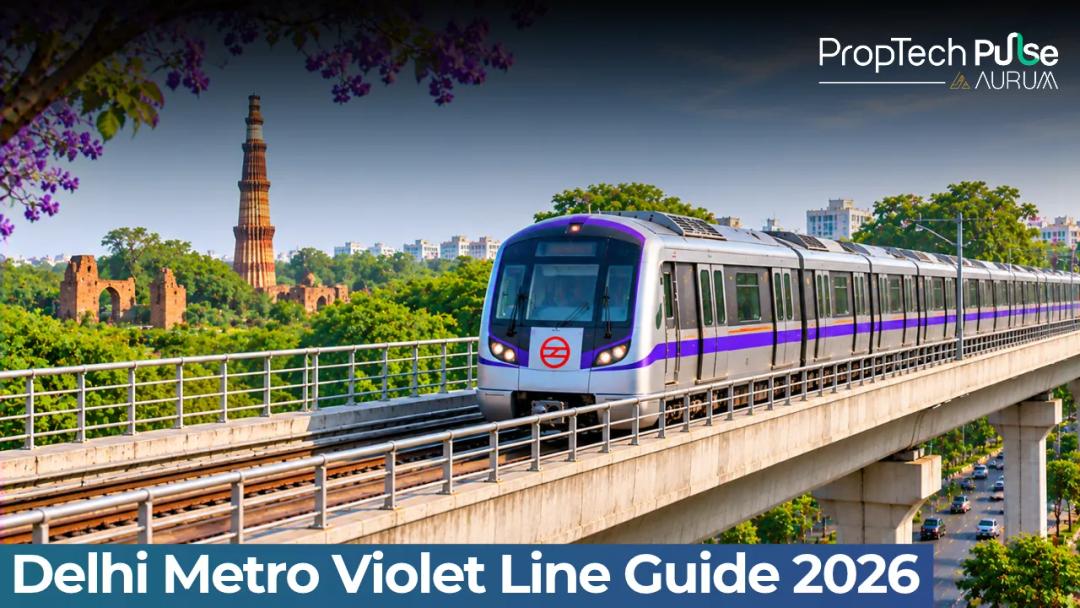
Delhi Metro Violet Line: Route, Stations, Fares & Property
A daily commute from Faridabad to North Delhi traditionally eats two hours. The Delhi Metro Violet Line cuts that round trip down to about ninety minutes. That shift in travel time is what drives property prices along the corridor, turning former bedroom communities into high-demand investment zones. Whether you are mapping a daily journey or evaluating a purchase price, understanding the full route is the first step. In this guide Delhi Metro Violet Line Route: Kashmere Gate to Raja Nahar Singh Complete List of Metro Violet Line Stations with Facilities Ticket Pricing, Peak Hours and Last Train Timings 2026 Real Estate Impact Along the Violet Line Corridor Final Verdict: Who Should Invest Near the Violet Line? Frequently asked questions Delhi Metro Violet Line Route: Kashmere Gate to Raja Nahar Singh Quick answer The Delhi Metro Violet Line connects Kashmere Gate in North Delhi to Raja Nahar Singh in Faridabad, spanning 46.34 kilometres with 34 operational stations. The route crosses three major corridors, historical Old Delhi, central commercial hubs, and residential South Delhi before crossing the state border into Haryana. Peak fares run between ₹60 and ₹70, covering the entire stretch in roughly 75 minutes. This north-south corridor diverges from the main line early in New Delhi. It then winds through dense commercial clusters before reaching residential areas in southern Delhi and eastern Faridabad. Most riders use the line to bridge the gap between the National Capital Region's northern industrial belts and its southern IT corridors. The line also feeds directly into the city's oldest transport nodes, making it a critical artery for tourists and daily commuters alike. Key Interchange Stations and Connections Passengers can connect to four other heavy rail lines via interchange stations. These nodes act as pressure valves that either concentrate foot traffic or divert it toward peripheral areas. Kashmere Gate: Interchange with the Red Line and ISBT. Handles the highest passenger volume on the entire metro system. ITO: Direct link to the Blue Line and the old financial district. Ideal for professionals moving between government offices and private firms. Jhandewalan: Connects to the Blue Line near Ajmeri Gate and historic markets. Useful for merchants and wholesale traders. Pratap Nagar: Crosses the Pink Line. Provides access to western Delhis residential pockets without entering central Delhi. Khan Market: Interchange with the Magenta Line. Sits atop a premium retail and dining precinct used heavily by corporate staff. Jangpura: Second Magenta Line junction. Future integration with the Regional Rapid Transit System (RRTS) planned at this node will cut Gurugram-to-Jangpura travel to twenty minutes. Chandrayaan Colony: Junction with the Yellow Line heading toward Sadhrawa. Critical for cross-town transfers between Gurgaon and East Delhi. Nehru Place: Fourth interchange point, linking to the Yellow Line at one of Asias largest electronics market hubs. Note for investors: Stations closer to interchange points command higher rental premiums. A one-bedroom apartment within 800 metres of Khan Market typically yields twelve to eighteen percent more rent than identical units further down the line. Complete List of Metro Violet Line Stations with Facilities The metro violet line stations span forty-six kilometres, starting at Kashmere Gate and ending at Raja Nahar Singh in Ballabhgarh. Each station varies in age, crowd density, and facility quality. Stations built in the early 2010s rarely have dedicated EV charging bays. Newer stops from the past five years, however, feature solar canopies and wheelchair lifts that meet strict accessibility rules. Zone 1 to Zone 5 Breakdown Dividing the route into five geographic zones helps clarify why property rates fluctuate so sharply over short distances. Travelers moving southward will notice the transition from heritage commerce zones to planned corporate grids and finally to affordable suburban towns. Violet Line Zones: Geography, Property Profile and Commute Metrics Zone Coverage Typical Apartment Price Range Target Buyer Profile Zone 1 Kashmere Gate to Shakti Nagar (Old and North Delhi) ₹8,500 – ₹11,000 per sq ft Business owners, long-standing residents, commercial lessees Zone 2 Jhandewalan to Hauz Khas (Central Delhi) ₹12,000 – ₹18,500 per sq ft Middle-income families seeking heritage proximity Zone 3 Minto Road to Greater Kailash (South Delhi) ₹15,000 – ₹22,000 per sq ft Corporate tenants, young professionals, short-term investors Zone 4 Malviya Nagar to Saket and NHOC ₹13,000 – ₹17,000 per sq ft End-users prioritising lifestyle amenities over prime addresses Zone 5 Badkal Lake to Raja Nahar Singh (Faridabad) ₹6,500 – ₹9,500 per sq ft First-time buyers, budget investors, daily commuters to Gurugram When evaluating listings in Zone 1 and Zone 2, pay close attention to whether the brochure advertises super built-up area rather than carpet area. A quoted size that includes shared lobby space and stairwells can shrink the actual usable floor area by fifteen to twenty percent. Understanding the difference between built up area vs carpet area protects buyers from inflated valuations that do not reflect genuine living space. Ticket Pricing, Peak Hours and Last Train Timings 2026 Fare structures on the Delhi Metro use a distance-based slab system. The minimum ticket cost starts at ten rupees, designed to make basic transit affordable. The maximum fare for riding the entire length from Kashmere Gate to Raja Nahar Singh generally falls between sixty and seventy rupees, depending on exact boarding and alighting gates. Commuter Summary: Key Stops, Duration and Approximate Fares Route Segment Distance Travel Duration Estimated Fare Kashmere Gate to ITO 3.8 km 6 minutes ₹10 Khan Market to Nehru Place 8.4 km 14 minutes ₹30 Central Secretariat to Jangpura 6.1 km 10 minutes ₹20 Kashmere Gate to Raja Nahar Singh 46.3 km 74 minutes ₹65 Peak hours run from eight o'clock to ten o'clock in the morning and again from six o'clock to nine thirty at night. Trains become extremely crowded between Nehru Place and Khan Market during these windows, especially on weekdays. Salaried workers prefer departing slightly earlier or later to avoid shoulder-to-shoulder conditions. Last trains usually depart terminal stations around eleven-fifteen to eleven-thirty at night. During winter months and exam seasons, services sometimes extend past midnight near exam hubs like JNU and South Extension, but this remains an exception rather than the rule. Always allow an extra fifteen minutes for walk-back time if you plan to grab dinner in Saket before boarding the return train. Real Estate Impact Along the Violet Line Corridor Property values rarely move in isolation from transit improvements. When a rail corridor upgrades from surface buses to grade-separated rail transit, adjacent land prices adjust within six to eighteen months. The Violet Line accelerated that cycle across multiple tiers of the National Capital Region. Old Delhi and Commercial Hub Connectivity Zone 1 hosts some of the oldest commercial structures in India. Recent municipal redevelopment efforts alongside the metro stations have improved pedestrian safety and widened footpaths. Short-term lets targeting foreign tourists and business travellers remain profitable here, provided the building passes fire safety norms and offers reliable water storage. Investors buying heritage conversions should budget extra for structural reinforcement. South Delhi Corporate Belts (Khan Market, Nehru Place) South Delhi commands the highest rents on the line due to its concentration of multinational offices and luxury retail zones. Apartments near Khan Market and Hazrat Nizamuddin attract senior management and visiting clients willing to pay premium monthly fees. Landlords in this segment frequently offer fully furnished layouts equipped with modular kitchens and dedicated co-working desks. Rental agreements typically run for eleven months, with annual escalation clauses capped at five percent to maintain tenant stability. If you are comparing mortgage terms for a purchase in this tier, running the numbers through a home loan emi calculator helps isolate the true monthly cash flow impact. Interest rates fluctuate with repo policy shifts, and locking a fixed-rate tenure during a buyer market can save substantial interest over a twenty-year payout schedule. Faridabad and Ballabhgarh Affordable Housing Demand Zone 5 serves as the primary affordable housing engine for the region. Properties here sell for roughly forty to fifty percent less than comparable units in South Delhi, yet rental demand stays strong thanks to IT professionals working in Sector 18 Gurugram and Cyber City. Daily commuters tolerate longer travel times in exchange for larger apartment sizes and fresh construction quality. Before committing capital in Haryana, verify that the builder holds a valid registration certificate. Checking RERA registered projects in Delhi sets the benchmark for compliance standards, and Haryana follows a parallel regulatory framework that mandates escrow accounts for eighty-five percent of collected funds. You should also factor regional levies into your acquisition budget. Calculating stamp duty in Delhi gives you a baseline, but Haryana imposes distinct circle rates and documentation fees that change quarterly. Final Verdict: Who Should Invest Near the Violet Line? Match the station to your financial goal. Buyers chasing capital appreciation should target Zones 2 and 3, where corporate expansion restricts supply and keeps resale demand high. Investors focused on monthly rent rather than asset growth will find better yields in Zone 5, where entry prices are low and occupancy stays near ninety-two percent. Avoid impulse bookings based solely on distance claims. You must verify road connectivity, check flood history for ground-floor units, and confirm power backup reliability before signing any agreement. Frequently asked questions How many stations are on the Delhi Metro Violet Line? The Violet Line operates thirty-four stations stretching from Kashmere Gate in North Delhi to Raja Nahar Singh in Faridabad. Additional tracks extend toward Shaheed Sthal in parts of the Faridabad district, increasing the total track length beyond the core forty-six kilometre span listed by operators. What is the maximum fare from Kashmere Gate to Raja Nahar Singh? A single adult ticket covering the full route between the northern and southern terminals costs approximately sixty-five to seventy rupees as of late 2026. Children under three feet tall travel free, while senior citizens receive a twenty percent concession on regular fares using their special metro cards. Does the Violet Line intersect with the RRTS? Direct integration happens at Jangpura station, where the Violet Line crosses the Magenta Line platform level. Construction crews are currently coordinating track alignments for a dedicated RRTS corridor that will funnel passengers from Meerut directly into this intersection, expected to open in stages over the next twenty-four months. What are the peak hour timings for the Violet Line? Morning congestion begins around seven-thirty and peaks between eight and ten in the morning, driven largely by office commuters heading toward Khan Market and Nehru Place. Evening crowds surge again from six-thirty until nine-thirty when staff return toward residential districts in Saket and Faridabad. Is parking available at Violet Line metro stations? Most stations provide designated bicycle racks and limited two-wheeler slots that fill quickly before sunrise. Car parking exists only at select suburban terminals like NHOC and Raja Nahar Singh, where spaces are allocated on a first-come basis. EV charging points remain concentrated at newer builds outside central Delhi. Enjoyed this blog article? Visit PropTech Pulse for more interesting blogs.
PropTech Pulse Editorial
23rd November 2026
Uncategorized
Sahar Road Metro Station: Timings, Route Map & Fares
In Andheri East, the Sahar Road Metro Station has cut commute times to Bandra-Kurla Complex, Wockhardt Hospital, and Worli. Opened in October 2024, this busy underground hub handles everything from cargo staff moving through SEEPZ to software engineers living in JB Nagar. Leasing closer to the domestic terminal saves daily travel time. Renting in Sahar Village now carries a premium tied to the new interchange. This guide gives exact platform schedules, exit maps, and fare breakdowns. In this guide Location and line overview Sahar road metro station route Sahar road metro station timings Exit map: gates and landmarks Fares, payment and facility notes Micro-market impact: why the sahar road metro matters Before you commit to a lease or purchase Frequently asked questions Location and line overview Quick answer The Sahar road metro station sits directly beneath the Western Express Highway intersection near the Domestic Terminal cargo zone. It serves as a key interchange on Mumbai Metro Line 3, operating from early morning until shortly after midnight with trains running every four to twelve minutes depending on rush hour. The station forms part of Mumbai Metro Line 3, a thirty-three-point-five-kilometre corridor stretching from Cuffe Parade to Aarey. Maharashtra Metro Rail Corporation Limited built the tunnel network, while Delhi Metro Rail Corporation now runs daily operations under a joint agreement. That switch boosted passenger flow and fixed earlier digital sign glitches along the whole route. Aviation buffer zones and tight airport logistics dictate the station layout. Engineers chose a single island platform, so northbound commuters heading to Aarey and southbound riders aiming for Cuffe Parade share one continuous deck. A glass divider separates the tracks. Street-level stairwells bring everyone to the same concourse floor, cutting navigation confusion during heavy peaks. Your updated mumbai metro line 3 status route stations guide confirms that Sahar uses this simpler mechanical design shared by only three western corridor stations. Sahar road metro station route Knowing directional flow helps you plan morning departures and evening returns. Trains pushing north toward Aarey follow the Western Express Highway trench until reaching Vikhroli. Early stops serve dense housing at Chandivali, Powai, and Oshiwara before hitting the DEOC maintenance yard. These northern sections fill quickly during midday factory shifts. Southbound trains connect tighter to existing rail networks. After leaving Andheri West residential blocks, the tunnel dips to cross under the Eastern Harbour Railway, placing riders directly on the Harbour and Western Line platforms at the Andheri interchange. Routes continue through Dharavi and Vashi Bridge before dropping beneath Thane Creek. Services reach Nerul, Sanpada, and CBD Belapur, finishing at Nariman Point and Cuffe Parade. This direct connection changes how people commute. Professionals who previously fought gridlocked intersections now ride climate-controlled carriages with overhead racks. Property managers near the southern end list walkable distances to finance hubs in their ads. Checking your property investment in mumbai 2026 timeline requires factoring in that Line 3 continuity removes old traffic delays across the island. Sahar road metro station timings Headway controls crowding more than overall station size does. Regular service starts near 05:45 AM and runs until just past midnight. Morning peaks pack trains between 08:15 AM and 10:30 AM, with arrivals dropping to four-minute intervals at maximum load. Evening crowds mirror this pressure between 06:00 PM and 08:30 PM when offices empty out. Midday gaps widen from noon till 04:45 PM. You wait ten to twelve minutes during these off-peak windows. Night service keeps twelve-minute spacing until cleaning crews sweep tracks thirty minutes before the last run. Final trains differ by direction, with northern shuttles leaving Aarey around 11:15 PM and southern cars pulling out near 11:00 PM. Weekends settle into eight-minute cycles through daylight. Fewer corporate commuters flatten the usual peak curve, making boardings smoother at transfer points. Monsoon rains occasionally cause two-minute rolling delays when drainage slows tunnel maintenance teams. Check live platform boards before waiting if automatic signals reroute holding cars. Peak Hour Warning: Boarding between 08:30 and 09:45 AM heading south means standing room only on the first two cars. Move toward the centre or rear carriages for a better shot at seats before reaching Andheri. Exit map: gates and landmarks Getting from the concourse to street level depends on picking the right turnstile. The terrain around the station splits pedestrian traffic into separate corridors tied to specific areas. Gate assignments keep cargo workers, corporate shuttles, and local residents apart to stop stairwell bottlenecks. Sahar road metro station gate assignments and nearby destinations (October 2026) Gate Designation Primary Destination Cluster Nearby Landmarks & Housing Types A1 Western Engineering Hub Budget hotels, airline staff quarters, short-term leases A2 / A3 Sahar Cargo Complex Freight warehouses, logistics offices, MIDC canteens A4 / A5 JB Nagar & Marol Naka Mid-rise apartments, co-living facilities, student housing B1 Secondary Cargo Outlet Feeder bus stands, light goods vehicle parking lots Turnstile A1 leads straight onto Sahar Road carriageway. Pedestrians walking out reach engineering staff accommodation blocks popular with cabin crew and ground handlers chasing quick rosters. Stepping toward gates A2 and A3 drops you right in the middle of the Sahar Cargo ecosystem. Warehouse supervisors coordinating night deliveries love the direct highway visibility from this exit. Stairs A4 and A5 channel residents straight into the upper blocks of JB Nagar and Marol Naka. Thousands of IT park employees live in these neighbourhoods. Ready-to-move two-bedroom flats here work well for families wanting to skip long walks during sudden rain. Gate B1 runs alongside the main cargo stretch but branches toward bus routes servicing peripheral industrial estates. Fares, payment and facility notes Metro fares follow strict distance slabs designed to keep rides cheap while paying off construction costs. Entry tariffs start low at ten rupees for segments covering roughly three kilometres. Charges climb steadily as passengers move toward central hubs, with mid-corridor hops costing twenty-five rupees. Trips past Vashi Bridge hit forty rupees, while journeys across the full thirty-three-kilometre route cap at eighty rupees. Students get fifty percent off with valid academic IDs turned in at staffed counters. Senior citizens qualify for similar discounts when age documents match national guidelines on registration cards. Payment methods expanded quickly after system upgrades. Touch-N-Go smartcards require balance topped up at dedicated concourse kiosks, while smartphones enable instant taps using NFC readers next to biometric gates. Cash tokens still sit at legacy machines for visitors used to paper passes. Station amenities include twin lifts per direction, wheelchair ramps, drinking water stations across from shops, and covered bike parking beside the escalators. Micro-market impact: why the sahar road metro matters Rapid transit placement changes how developers price carpet area and how tenants handle rent hikes inside a half-kilometre ring. Builders in JB Nagar now treat Aqua Line closeness as standard, not a luxury perk. Valuation patterns mirror established transit corridors in Bangalore where railway anchoring pushed developers to justify higher floor space indices against glass exteriors. Flats near Gate A4 charge six to eight percent more than identical units half a kilometre away. Tenants accept the gap because it removes unpredictable cab surge pricing. Private driver costs hit roughly twenty-five hundred rupees monthly during monsoons for cross-highway trips. Dropping that expense easily covers a slightly higher base rent tied to fixed train departures. Resale values climbed gradually instead of spiking overnight. Tight supply halted new inventory releases, stopping the usual developer price hikes. Existing plots and older society conversions simply rose in step with newer zoning rules. Municipal frameworks recently rolled out Transit Oriented Development limits, raising permissible floor space indices near active station rings. Logistics operators watching middle-mile shipping noticed shifted tenant mixes too. Warehouse supervisors preferring Sahar Cargo proximity now lease small admin offices near Gate A3 instead of distant branch offices. Quick staff rotations help during urgent freight moves. Mixed-use zoning gets faster approval under this new demand pattern. Before you commit to a lease or purchase Set clear criteria when weighing properties near this station against scattered eastern suburb options. Late-night jobs requiring commutes past midnight benefit most from being close to Gate A3. Walking distance removes ride-hailing shortages during heavy rain and guarantees seats on evening shuttles. Pick acoustic insulation over raw proximity if highway noise ruins sleep. Check occupancy certificates and fire clearances before handing over booking money. Drop brochure transit marketing pitches when verifying construction compliance. Walk the actual route during peak hours instead of trusting map distances. Ground reality always beats renderings when placing capital into city housing. Frequently asked questions What are the first and last train timings at Sahar Road metro station? Service typically begins around 05:45 AM daily. Morning trains depart frequently, but evening frequencies stretch to twelve-minute gaps after 09:30 PM. Final departures heading toward Cuffe Parade leave near 11:00 PM, while northern-bound trains continue until approximately 11:15 PM. Always watch platform announcement boards because seasonal schedule adjustments occasionally shave fifteen minutes from closing times. Is Sahar Road metro station underground? Yes. The entire station sits completely beneath the Western Express Highway surface due to aviation buffer restrictions and dense cargo infrastructure overhead. Passengers descend stairs or elevators from street grates into a fully enclosed concourse level before reaching the isolated island platform below. This subterranean design protects sensitive equipment from heat exposure while maximising land utilisation above ground. How many stations are on the Sahar road metro route? Line 3 encompasses twenty-four operational stations connecting Cuffe Parade to Aarey JVLR. Between these endpoints lies a mixture of deeply buried tunnels crossing under sea beds and elevated viaducts threading through suburban colonies. Transfer opportunities appear at four key junctions allowing cross-linking with Harbour, Western, and Central rail divisions. Where can I catch a taxi or auto near Sahar Road metro? Designated rank queues operate outside gates A2 and A3 specifically servicing cargo workers requiring reliable transport home after shift rotations. Private cab aggregators park along the widened shoulders near gate A1 for quicker passenger pickup during lunch hours. Autorickshaw operators cluster primarily near gate B1 where fare meters display updated district commission rates applicable to eastern Andheri boundaries. Sources Mumbai Metropolitan Regional Development Authority (Mahametro): Line designation, route terminals, and station location details (accessed November 2026) Mumbai Metro One Operations Limited: Fare structure classifications and accepted digital payment modalities (accessed November 2026) Enjoyed this blog article? Visit PropTech Pulse for more interesting blogs.
PropTech Pulse Editorial
23rd November 2026
Uncategorized
Market Value in Andhra Pradesh: Check 2026 Guideline Rates
If you own a plot or plan to build a home in Andhra Pradesh, tracking property prices is essential. The amount a developer asks rarely matches the government's recorded figure. Every legal transaction in the state relies on a strict benchmark. This baseline acts as a statutory floor set directly by the Sub-Registrar's office. Knowing the accurate market value in Andhra Pradesh saves buyers from unexpected tax bills. As of November 2026, the state government enforced updated guidelines following its annual budget review. Most zones saw increases between five and ten percent. Newly designated high-growth corridors experienced sharper hikes of up to twenty percent. Understanding exactly how these revisions impact your registration costs prevents financial surprises for anyone researching the market value in Andhra Pradesh. You cannot negotiate the stamp duty base below this notified figure. Let us walk through how these values work, how to verify them online, and what you should expect when signing an agreement in FY 2026. In this guide What Is the Market Value of Land? Understanding the Feb 2026 IGRS AP Revisions How to Check Current Land Value in AP Online Approximate Land Value Ranges in Major Districts How Guideline Value Dictates Your Stamp Duty Bill Frequently asked questions What Is the Market value in Andhra Pradesh? Quick answer The legal market value of land in Andhra Pradesh is defined by the guideline value published by the Director of Registrations and Stamps. It acts as the statutory minimum. When you register a deed, you pay stamp duty on whichever figure is higher: your actual agreed price, or the government's notified chart rate. Investors frequently confuse commercial asking rates with legal worth. The law calls this benchmark the guideline value or circle rate. District committees calculate these numbers carefully. They weigh recent sales data, road connectivity improvements, and local infrastructure growth within a specific Mandal. Your bank also uses this exact figure to sanction home loans. Lenders typically finance up to eighty percent of the guideline value. They completely ignore the full commercial price quoted by sellers. To learn how professionals estimate true worth beyond official notices, read our guide on 3 easy methods to calculate the market value of a property. Understanding the Feb 2026 IGRS AP Revisions The landscape of AP property valuation shifted noticeably in early 2026. Following state budget proposals aimed at boosting tax revenues, the Department of Registration and Stamps updated rates across 26 districts. The goal remained simple. Bring notified values closer to actual commercial transaction prices. These prices had widened apart due to rapid infrastructure expansion across the state. Buyers and sellers must track these hikes closely. Avoiding surprises at the registrar office requires checking the latest circulars before meeting a seller. The increases applied based on distinct location tiers: General Residential and Commercial Zones: Established city limits like Vijayawada and Guntur saw guideline values rise by five to ten percent. High Growth Corridors: Emerging hubs, satellite towns near proposed SEZs, and new district headquarters received sharper hikes ranging from fifteen to twenty percent. This tiered approach reflects uneven demand across the state. Older town centers have stabilized their pricing models. Meanwhile, speculative interest in fringe areas forced quick adjustments. These measures prevent undervaluation on standard forms. Amaravato Exclusion: If you are purchasing property specifically within the designated Amaravato capital region, note that it was entirely excluded from this specific 2026 revision cycle. The previous rates remain temporarily active there until further notification. How to Check Current Land Value in AP Online You do not need to visit a government clerk to find your survey number's value. The Integrated Government Registry Services portal lets anyone look up guideline values instantly. Verify a plot in Anantapur or a flat site in Vizag using these precise steps. Navigate directly to the official tool on registration.ap.gov.in. Select "Search Guidelines" from the menu. Choose "Land Value Search" to begin. Accuracy here depends entirely on picking the correct land use classification. You must toggle between "Agricultural" and "Non-Agricultural" (Non-Ag). Picking agricultural by mistake returns outdated historical rates. Using Non-Ag for farming land gives inflated commercial prices. Both errors distort the true market value in Andhra Pradesh. Once selected, enter these mandatory identifiers: District name Mandal or City area Village or Ward number Survey Number The portal displays the current rate per square yard or gaj immediately. Cross-reference this value by checking the unique "D" number on the screen. Ensure you pay taxes on the correct boundary lines. For your full documentation, also verify Encumbrance Certificates and check market value on the AP portal together to confirm clear ownership history. Approximate Land Value Ranges in Major Districts While exact rates fluctuate down to the individual street or block, reviewing broad ranges for key commercial hubs gives you a solid baseline. The table below reflects approximate non-agricultural guideline value ranges updated post-February 2026 for major plots. Estimated Guideline Value (Land Value) Ranges in Selected AP Localities – Post-Feb 2026 Update District / Locality Type Premium Central Areas (per sq yd) Developing Residential Suburbs (per sq yd) Visakhapatnam (Main City) ₹11,000 – ₹16,000+ ₹6,500 – ₹9,000 Vijayawada (Urban Core) ₹10,000 – ₹14,500+ ₹6,000 – ₹8,500 Guntur / Mangalagiri Corridor ₹8,500 – ₹11,000+ ₹4,500 – ₹6,200 Tirupati (City Limits) ₹7,500 – ₹10,000+ ₹4,000 – ₹5,500 These figures act as the absolute floor for tax purposes. Developers marketing new township projects in developing subdivisions will invariably ask for amounts significantly above these baseline numbers. Your stamp duty calculation remains tethered strictly to the government's chart. Ignore the developer's brochure when calculating your closing costs. How Guideline Value Dictates Your Stamp Duty Bill This is where first-time buyers lose cash unexpectedly. Under the Transfer of Property Act and the AP Stamp Act, the Sub Registrar does not negotiate the tax basis. They pull the highest applicable value from two primary sources: the consideration clause in your sale deed, or the notified guideline value for your specific plot. Walk through a practical example involving a resale flat in Guntur. Assume you agree to buy a 1,200 sq ft apartment for ₹80 lakhs. The seller drafts the agreement at a discounted price to lower capital gains tax. It sits just beneath the locality threshold. Log into the IGRS AP portal now. Enter the ward number carefully. Discover the revised 2026 guideline value places the minimum permissible market value of the apartment at ₹90 lakhs. The Sub Registrar ignores your ₹80 lakh contract immediately. The government treats the taxable base as ₹90 lakhs instead. You pay the applicable stamp duty percentage on the ₹90 lakh mark. You effectively pay more in notional value than what you actually transferred to the seller. Calculating your acquisition budget requires patience and arithmetic. The government dictates the stamp duty portion completely. Control the negotiation side carefully. Before handing over token amounts, study the Andhra Pradesh stamp duty and registration charges 2025 structures clearly. Do not underestimate the liquid cash needed for execution. Before You Sign the Sale Agreement Negotiating price is only half the battle. Understand how the taxman views the asset first. Run your prospective purchase price through the online IGRS calculator prior to signing any binding agreement. If the government value exceeds your initial budget, renegotiate terms with the seller to account for the extra tax burden. Shift your search toward localities where the new guideline values align closer to your desired pricing model. Always verify the Completion Certificate status independently before finalizing any deal. Protect your capital by respecting the baseline numbers. Frequently asked questions What happens if my sale agreement value is lower than the government market value? If your recorded sale consideration is less than the notified guideline value, the State Government disregards your lower figure completely. The Sub Registrar legally mandates you to pay stamp duty and registration fees on the higher of the two amounts. In simple terms, you cannot pay tax based on a negotiated discount that falls below the government's floor price. How do I check the land value of a specific plot in my Mandal? You need the plot's Survey Number, Village or Ward number, and the specific Mandal. Visit the 'Land Value Search' option on the IGRS Andhra Pradesh website. Enter the data carefully, ensuring you have selected either 'Agricultural' or 'Non-Agricultural' based on the actual land use recorded in your documents. The system will instantly display the current per-square-yard rate. Why did the government increase market values across certain AP districts? The revisions aim to bridge the massive gap between government benchmarks and actual commercial transaction prices, which have surged due to new highway access and industrial expansions. By raising these figures, the state captures more accurate revenue from registrations. It also forces informal under-reporting of property prices to stop, protecting official property registries. Are rural areas outside major cities included in the 2026 rate hikes? Most rural areas and remote villages saw negligible to zero changes in this revision cycle. The substantial 15% to 20% hikes targeted high-growth corridors, newly formed district headquarters, and peri-urban zones experiencing sudden residential boom. Purely agricultural farmlands located deep in inland mandals generally retained their existing rates to prevent burdening local farmers. Sources Department of Registration and Stamps, Government of Andhra Pradesh (registration.ap.gov.in): Official portal for accessing current 2026 guideline values, Mandal-level charts, and D-number verification tools (accessed November 2026). Government of Andhra Pradesh Main Portal (ap.nic.in): Official press releases regarding the 1 February 2026 budget implementation and district committee revaluation notifications (accessed November 2026). Enjoyed this blog article? Visit PropTech Pulse for more interesting blogs.
PropTech Pulse Editorial
23rd November 2026

Ask Pulse Ai anything about real estate

Unlock the Latest in Real Estate
News, Infographics, Blogs & More! Delivered to your inbox.

