New Launch - India Real Estate Report 2026.

Services
Knowledge Hub
Resources
Tools

Ask Pulse Ai
©PropTech Pulse 2025, All rights reserved.


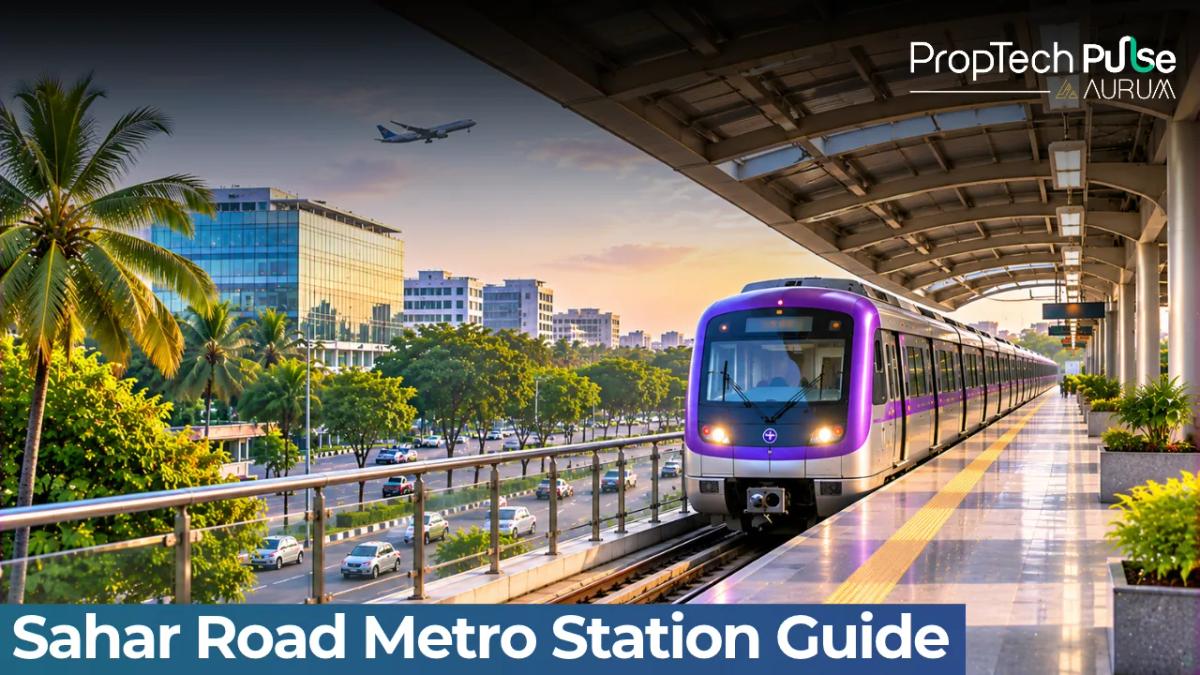
In Andheri East, the Sahar Road Metro Station has cut commute times to Bandra-Kurla Complex, Wockhardt Hospital, and Worli. Opened in October 2024, this busy underground hub handles everything from cargo staff moving through SEEPZ to software engineers living in JB Nagar. Leasing closer to the domestic terminal saves daily travel time. Renting in Sahar Village now carries a premium tied to the new interchange. This guide gives exact platform schedules, exit maps, and fare breakdowns.
Location and line overview
Quick answer
The Sahar road metro station sits directly beneath the Western Express Highway intersection near the Domestic Terminal cargo zone. It serves as a key interchange on Mumbai Metro Line 3, operating from early morning until shortly after midnight with trains running every four to twelve minutes depending on rush hour.
The station forms part of Mumbai Metro Line 3, a thirty-three-point-five-kilometre corridor stretching from Cuffe Parade to Aarey. Maharashtra Metro Rail Corporation Limited built the tunnel network, while Delhi Metro Rail Corporation now runs daily operations under a joint agreement. That switch boosted passenger flow and fixed earlier digital sign glitches along the whole route.
Aviation buffer zones and tight airport logistics dictate the station layout. Engineers chose a single island platform, so northbound commuters heading to Aarey and southbound riders aiming for Cuffe Parade share one continuous deck. A glass divider separates the tracks. Street-level stairwells bring everyone to the same concourse floor, cutting navigation confusion during heavy peaks. Your updated mumbai metro line 3 status route stations guide confirms that Sahar uses this simpler mechanical design shared by only three western corridor stations.
Sahar road metro station route
Knowing directional flow helps you plan morning departures and evening returns. Trains pushing north toward Aarey follow the Western Express Highway trench until reaching Vikhroli. Early stops serve dense housing at Chandivali, Powai, and Oshiwara before hitting the DEOC maintenance yard. These northern sections fill quickly during midday factory shifts.
Southbound trains connect tighter to existing rail networks. After leaving Andheri West residential blocks, the tunnel dips to cross under the Eastern Harbour Railway, placing riders directly on the Harbour and Western Line platforms at the Andheri interchange. Routes continue through Dharavi and Vashi Bridge before dropping beneath Thane Creek. Services reach Nerul, Sanpada, and CBD Belapur, finishing at Nariman Point and Cuffe Parade.
This direct connection changes how people commute. Professionals who previously fought gridlocked intersections now ride climate-controlled carriages with overhead racks. Property managers near the southern end list walkable distances to finance hubs in their ads. Checking your property investment in mumbai 2026 timeline requires factoring in that Line 3 continuity removes old traffic delays across the island.
Sahar road metro station timings
Headway controls crowding more than overall station size does. Regular service starts near 05:45 AM and runs until just past midnight. Morning peaks pack trains between 08:15 AM and 10:30 AM, with arrivals dropping to four-minute intervals at maximum load. Evening crowds mirror this pressure between 06:00 PM and 08:30 PM when offices empty out.
Midday gaps widen from noon till 04:45 PM. You wait ten to twelve minutes during these off-peak windows. Night service keeps twelve-minute spacing until cleaning crews sweep tracks thirty minutes before the last run. Final trains differ by direction, with northern shuttles leaving Aarey around 11:15 PM and southern cars pulling out near 11:00 PM.
Weekends settle into eight-minute cycles through daylight. Fewer corporate commuters flatten the usual peak curve, making boardings smoother at transfer points. Monsoon rains occasionally cause two-minute rolling delays when drainage slows tunnel maintenance teams. Check live platform boards before waiting if automatic signals reroute holding cars.
Peak Hour Warning: Boarding between 08:30 and 09:45 AM heading south means standing room only on the first two cars. Move toward the centre or rear carriages for a better shot at seats before reaching Andheri.
Exit map: gates and landmarks
Getting from the concourse to street level depends on picking the right turnstile. The terrain around the station splits pedestrian traffic into separate corridors tied to specific areas. Gate assignments keep cargo workers, corporate shuttles, and local residents apart to stop stairwell bottlenecks.
| Gate Designation | Primary Destination Cluster | Nearby Landmarks & Housing Types |
|---|---|---|
| A1 | Western Engineering Hub | Budget hotels, airline staff quarters, short-term leases |
| A2 / A3 | Sahar Cargo Complex | Freight warehouses, logistics offices, MIDC canteens |
| A4 / A5 | JB Nagar & Marol Naka | Mid-rise apartments, co-living facilities, student housing |
| B1 | Secondary Cargo Outlet | Feeder bus stands, light goods vehicle parking lots |
Turnstile A1 leads straight onto Sahar Road carriageway. Pedestrians walking out reach engineering staff accommodation blocks popular with cabin crew and ground handlers chasing quick rosters. Stepping toward gates A2 and A3 drops you right in the middle of the Sahar Cargo ecosystem. Warehouse supervisors coordinating night deliveries love the direct highway visibility from this exit.
Stairs A4 and A5 channel residents straight into the upper blocks of JB Nagar and Marol Naka. Thousands of IT park employees live in these neighbourhoods. Ready-to-move two-bedroom flats here work well for families wanting to skip long walks during sudden rain. Gate B1 runs alongside the main cargo stretch but branches toward bus routes servicing peripheral industrial estates.
Fares, payment and facility notes
Metro fares follow strict distance slabs designed to keep rides cheap while paying off construction costs. Entry tariffs start low at ten rupees for segments covering roughly three kilometres. Charges climb steadily as passengers move toward central hubs, with mid-corridor hops costing twenty-five rupees. Trips past Vashi Bridge hit forty rupees, while journeys across the full thirty-three-kilometre route cap at eighty rupees.
Students get fifty percent off with valid academic IDs turned in at staffed counters. Senior citizens qualify for similar discounts when age documents match national guidelines on registration cards.
Payment methods expanded quickly after system upgrades. Touch-N-Go smartcards require balance topped up at dedicated concourse kiosks, while smartphones enable instant taps using NFC readers next to biometric gates. Cash tokens still sit at legacy machines for visitors used to paper passes. Station amenities include twin lifts per direction, wheelchair ramps, drinking water stations across from shops, and covered bike parking beside the escalators.
Micro-market impact: why the sahar road metro matters
Rapid transit placement changes how developers price carpet area and how tenants handle rent hikes inside a half-kilometre ring. Builders in JB Nagar now treat Aqua Line closeness as standard, not a luxury perk. Valuation patterns mirror established transit corridors in Bangalore where railway anchoring pushed developers to justify higher floor space indices against glass exteriors.
Flats near Gate A4 charge six to eight percent more than identical units half a kilometre away. Tenants accept the gap because it removes unpredictable cab surge pricing. Private driver costs hit roughly twenty-five hundred rupees monthly during monsoons for cross-highway trips. Dropping that expense easily covers a slightly higher base rent tied to fixed train departures.
Resale values climbed gradually instead of spiking overnight. Tight supply halted new inventory releases, stopping the usual developer price hikes. Existing plots and older society conversions simply rose in step with newer zoning rules. Municipal frameworks recently rolled out Transit Oriented Development limits, raising permissible floor space indices near active station rings.
Logistics operators watching middle-mile shipping noticed shifted tenant mixes too. Warehouse supervisors preferring Sahar Cargo proximity now lease small admin offices near Gate A3 instead of distant branch offices. Quick staff rotations help during urgent freight moves. Mixed-use zoning gets faster approval under this new demand pattern.
Before you commit to a lease or purchase
Set clear criteria when weighing properties near this station against scattered eastern suburb options. Late-night jobs requiring commutes past midnight benefit most from being close to Gate A3. Walking distance removes ride-hailing shortages during heavy rain and guarantees seats on evening shuttles. Pick acoustic insulation over raw proximity if highway noise ruins sleep.
Check occupancy certificates and fire clearances before handing over booking money. Drop brochure transit marketing pitches when verifying construction compliance. Walk the actual route during peak hours instead of trusting map distances. Ground reality always beats renderings when placing capital into city housing.
Frequently asked questions
What are the first and last train timings at Sahar Road metro station?
Service typically begins around 05:45 AM daily. Morning trains depart frequently, but evening frequencies stretch to twelve-minute gaps after 09:30 PM. Final departures heading toward Cuffe Parade leave near 11:00 PM, while northern-bound trains continue until approximately 11:15 PM. Always watch platform announcement boards because seasonal schedule adjustments occasionally shave fifteen minutes from closing times.
Is Sahar Road metro station underground?
Yes. The entire station sits completely beneath the Western Express Highway surface due to aviation buffer restrictions and dense cargo infrastructure overhead. Passengers descend stairs or elevators from street grates into a fully enclosed concourse level before reaching the isolated island platform below. This subterranean design protects sensitive equipment from heat exposure while maximising land utilisation above ground.
How many stations are on the Sahar road metro route?
Line 3 encompasses twenty-four operational stations connecting Cuffe Parade to Aarey JVLR. Between these endpoints lies a mixture of deeply buried tunnels crossing under sea beds and elevated viaducts threading through suburban colonies. Transfer opportunities appear at four key junctions allowing cross-linking with Harbour, Western, and Central rail divisions.
Where can I catch a taxi or auto near Sahar Road metro?
Designated rank queues operate outside gates A2 and A3 specifically servicing cargo workers requiring reliable transport home after shift rotations. Private cab aggregators park along the widened shoulders near gate A1 for quicker passenger pickup during lunch hours. Autorickshaw operators cluster primarily near gate B1 where fare meters display updated district commission rates applicable to eastern Andheri boundaries.
Sources
- Mumbai Metropolitan Regional Development Authority (Mahametro): Line designation, route terminals, and station location details (accessed November 2026)
- Mumbai Metro One Operations Limited: Fare structure classifications and accepted digital payment modalities (accessed November 2026)
Enjoyed this blog article? Visit PropTech Pulse for more interesting blogs.



Ask Pulse Ai anything about real estate

Unlock the Latest in Real Estate
News, Infographics, Blogs & More! Delivered to your inbox.

