

©PropTech Pulse 2025, All rights reserved.

What is Fair market value?
Fair market value denotes the likely price at which a well-informed buyer and a willing seller exchange an item under normal conditions, absent coercion. It reflects objective equilibrium between supply, demand, and inherent attributes—like location or condition. Buyers draw on comparable sales, economic indicators, and expert insights to gauge if a proposed figure meets this standard.
Key Points:
- No Unusual Pressure: Neither side is forced to transact or given skewed information.
- Comparable Data: Often involves analyzing recent deals for analogous assets.
- Objective Benchmark: Used by insurers, lenders, and tax authorities to confirm valuations.
- Fluctuations: Market cycles or external events can push fair value up or down.
Fair market value underscores rational pricing, keeping negotiations aligned with realistic expectations and preventing unfair overpricing or undervaluation.
Recent Glossary
What is the yield gap between offices and warehouses?
What is the YEIDA Sector 22D plot scheme?
What is Yamuna Expressway industrial city?
What is the yield spread over G-Secs for REITs?
What is the year-over-year vacancy trend in coworking?
View More...
Recent FAQs
What are the red flags to watch for in a new project brochure?
What are the processing fees and other charges on a home loan?
Can I earn while learning through Pulse University and how is it tracked?
How does age affect the eligibility result in a home loan calculator?
How does the learn and earn model at Pulse University work?
View More...
Insight Pulse
Uncategorized
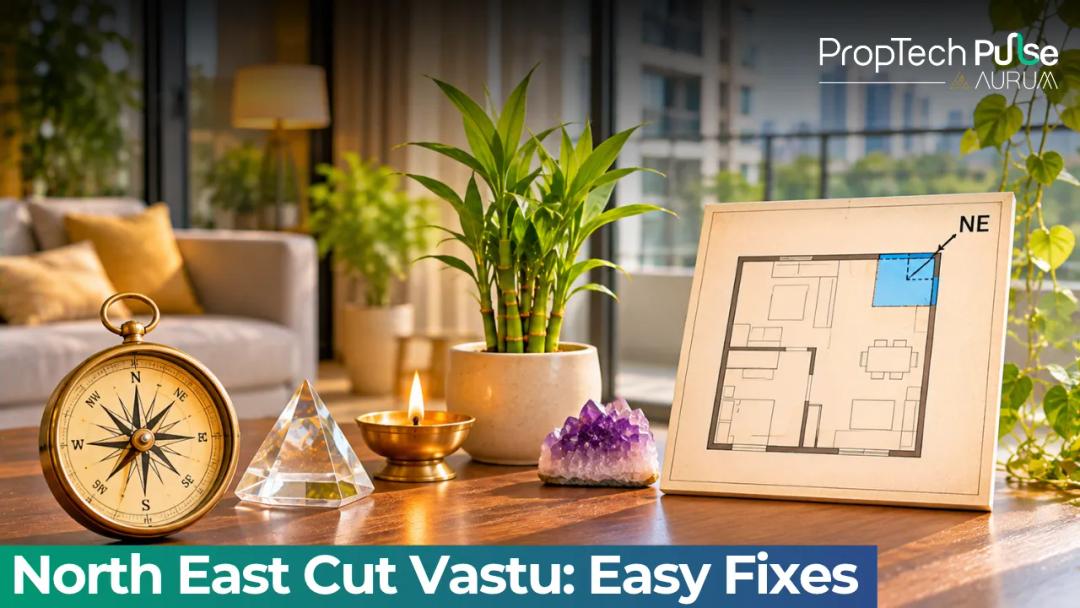
North East Cut Vastu Remedies: Practical Fixes for Flats
You pull up the architect’s floor plan or walk onto the plot and notice something immediately off. The northeast corner is either stepped back, completely missing, or shoved into a small stairwell. Buyers spot this gap first because tradition values that quadrant above all others. Ignoring a truncated sector means leaving energy behind. Applying reliable north east cut vastu remedies early prevents costly compromises. Here is how to measure whether the gap qualifies as a defect, and which fixes actually work for independent plots and apartments. In this guide What exactly is a northeast cut? Cut corner vastu remedies for independent plots Extended corner vastu and balancing additions Irregular shape flat vastu: correcting boundaries you cannot touch When your corner defect calls for deeper analysis Frequently asked questions What exactly is a northeast cut? Quick answer A genuine northeast cut removes more than 10 percent of the quadrant. Minor recesses caused by balconies or standard setbacks usually do not require correction. For independent plots, marking the missing boundary restores the square. For flats, shifting furniture and using reflective surfaces balances the gap. Measuring a missing corner sounds simple until you look at modern elevations. Many developers pull back the facade slightly to allow airflow or comply with local setback by-laws. That slight indentation might read as a flaw on paper, but tradition only flags significant cuts. You need to measure from the central axis of the home toward the outer wall. If the northeast quadrant loses more than ten percent of its intended area, then it counts as a structural gap worth addressing. Measuring the cut against standard setbacks and balconies Draw a straight imaginary line connecting the two nearest inner corners to form a perfect rectangle over the missing wedge. If the removed area exceeds roughly ten percent of the quadrant's footprint, treat it as a cut. Balconies that step inward gradually are usually intentional setbacks designed for ventilation and light. These rarely trigger deep corrections unless they swallow the entire zone. Measure the corner from the central axis of the home outward. A shallow dip close to the core differs entirely from a deep notch at the far perimeter. Why tradition treats the missing north east corner as sensitive The northeast direction holds two distinct roles in classical layouts. It is the zone for morning light and the traditional placement of water elements, which both represent clarity and new beginnings. Block that space heavily with storage rooms, or leave it permanently truncated, and you lose the balance between receiving light and maintaining stability. Fixing the defect is less about fear and more about reclaiming spatial harmony. Independent Plot vs Apartment: Corner Defect Correction Summary Feature Independent Plot Remedy Apartment Remedy Boundary Extension Stakes, gravel paths, or painted lines on the lawn Not possible externally; use interior visual cues Zone Purpose Open garden, tulsi planting, light outdoor water feature Tidy living corner, pale blue or white wall paint Counter-weight Placement Heavier solid structures placed firmly in the southwest corner Heavy wardrobes or study tables anchored to the southwest wall Before jumping to corrections, run a property due diligence india checklist. Verify that lot lines are legally sound before adjusting the layout. A broader vastu shastra real estate overview helps separate genuine geometric flaws from stylistic architectural choices. Cut corner vastu remedies for independent plots Fixing a cut corner on a standalone house involves extending the energetic boundary rather than rebuilding concrete. You already own the land; you just need to treat the missing wedge as an active space. Start by driving stakes or placing stones along the invisible diagonal that completes the perfect rectangle. Paint a subtle boundary line on the lawn or lay down gravel in that triangular wedge. These north east cut vastu remedies work best when applied early, before permanent fixtures lock the layout into place. Marking the complete rectangle externally Once the external boundary is established, assign a purpose that respects the water-light association. An uncluttered garden bed works better than a parked vehicle or stacked construction debris. Even a narrow path with ground-level LED strips guides energy inward. Reserve the missing corner for walking, planting tulsi, or placing a small outdoor water feature. Shifting room usage and treating the cut land well Inside the remaining structure, move heavy wardrobes away from the northeast wall. Heavy objects sink energy; lighter, airy furniture keeps it moving. Keep the walls in this quarter free of clutter so sunlight hits them during dawn. Check how different 2 bhk house plan guide layouts naturally shift master bedrooms toward the southwest to stabilize a corner-heavy plot. Extended corner vastu and balancing additions Sometimes a property suffers from a protrusion rather than a missing corner. An extended corner pushes outward, creating a sharp angle that disrupts the overall flow. This scenario falls under extended corner vastu corrections, where the goal is neutralizing excess momentum instead of filling a void. The approach aligns with broader north east cut vastu remedies focused on balancing energies. Note on Extended Corner Vastu: An extended corner pushes outward beyond the main rectangular footprint, creating sharp angles that gather excessive morning sun and disrupt spatial flow. Corrective strategies focus on softening those protrusions with landscaping and offsetting the momentum by adding physical weight to the southwest side of the structure. How an extension differs from a cut A protruding northeast wing gathers too much morning sun and creates glare inside living spaces. While a missing corner starves a home of potential, an extra wing overwhelms it. You do not demolish the extension to fix this. Instead, soften the sharp angles. Plant tall, dense shrubs outside the protruding line to break the direct wind and solar impact. Inside, use curved furniture or place a large leafy plant to diffuse the geometry. Managing protrusions that push past the main rectangle If the extension hosts a bedroom or study, balance it by adding physical weight to the southwest side of the house. Stack heavier materials, like brick piles or thick wooden wardrobes, on that opposite edge to ground the layout. Do not turn the protrusion into a toilet or septic tank location. Moisture clashes violently with the natural openness of that direction. Irregular shape flat vastu: correcting boundaries you cannot touch Apartment living restricts exterior modifications. You cannot stake a boundary on a shared balcony or ask society management to pour concrete for a missing corner. With an irregular shape flat vastu situation, you work strictly within the four walls. Standard cut corner vastu remedies need adaptation here, relying on atmosphere rather than masonry. The remedy shifts from architecture to atmosphere, using colour, light, and object placement to simulate completeness. Using colour, lighting, and internal mirrors Start by painting the northeast walls in very pale blue or crisp white tones. These shades mimic open sky and still water, tricking the eye into seeing the quadrant as full. Increase ambient brightness in that corner with warm yellow lighting. Avoid dark, moody paints near the northeast entry points of the flat. A strategically placed mirror on a perpendicular wall can visually double the available space. Position it so the reflection catches bright light or healthy plants, never a staircase or a bathroom door. Pointing a mirror directly at the cut corner bounces weak energy back into the center of the living area. Adding weight to the south-west and clearing the northeast Because you cannot fill the northeast physically, you must strengthen the opposing corner. Anchor a sturdy study table or heavy sofa against the southwest wall. Remove unused items, loose wires, and decorative clutter from the northeast corner. Tidy space compensates for the architectural shortfall. Consider pooja room design for home ideas layouts and cost, keeping this zone clear for quiet reflection. When your corner defect calls for deeper analysis Most minor cuts resolve easily with the steps above. A deeply truncated corner that leaves less than half the quadrant intact often requires a site-specific assessment. Roofs sloping sharply downward or steep stairs cutting into the northeast elevation change the calculus entirely. When multiple structural defects stack up, general fixes sometimes fall short. If the imbalance persists despite layout tweaks, reach out to a qualified specialist for a detailed floor survey. Frequently asked questions Is a missing northeast corner bad for home? Tradition views the northeast as the primary source of morning light and water energy, which supports clarity and new beginnings. A severely truncated corner deprives the layout of this stabilising influence, but it does not inherently cause harm. Minor setbacks or shallow balconies rarely require intervention. Assess the depth of the cut against the main quadrant first before assuming a structural defect exists. Can we fix a cut corner in a flat without construction? Yes. Flat owners cannot modify exterior facades, so the correction relies entirely on interior atmosphere and visual balance. Painting the affected walls in pale blue or white mimics open sky and water. Using mirrors on adjacent walls to reflect greenery or light effectively doubles the perceived space. Clearing the corner of clutter and anchoring heavy furniture in the southwest completes the energetic rectangle without touching the walls. What happens if the kitchen is in the north east? Fire energy clashes with the traditional water-light association of the northeast quadrant. Placing a stove or heavy cooktop in this direction creates friction that unsettles the home's rhythm. Relocate the cooking station to the southeast if possible. If the layout forces the kitchen northeast, install a red-coloured mat under the stove base to ground the fire element and mitigate the clash while you explore longer-term structural options. How to reduce negative effect of northeast cut? Daily habits play a massive role in mitigating the impact of a geometric flaw. Keep windows on the northeast side fully open in the early morning to draw fresh air across the incomplete quadrant. Avoid storing heavy boxes, broken furniture, or electrical wiring in that specific corner. Run a soft hum or play calming audio softly in that sector during the day. Consistent airflow and deliberate tidiness signal to the space that it remains a priority, counteracting the physical deficit. Enjoyed this blog article? Visit PropTech Pulse for more interesting blogs.

PropTech Pulse Editorial
16th November 2026
Uncategorized
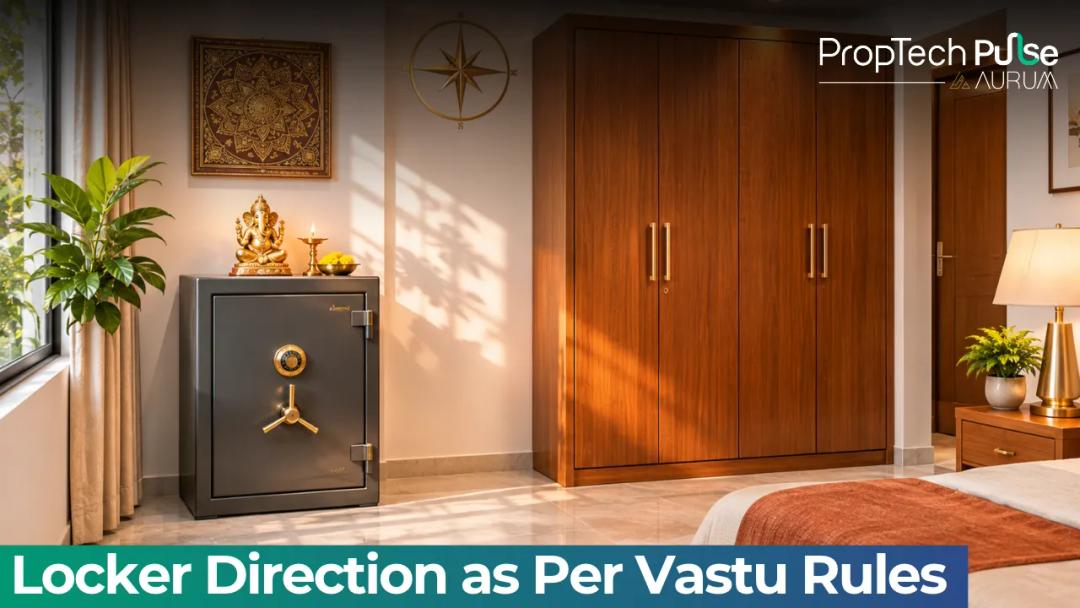
Locker Direction as Per Vastu: Where to Place Your Safe
Purchasing a heavy steel safe usually happens right after handover or during initial budgeting. Most buyers toss it in any empty corner and hope it fits. Traditional approaches to locker direction as per vastu cut through that guesswork, anchoring valuables where generations felt energy stayed steady. If you are renovating a second-hand flat in Bangalore or planning your master bedroom layout in Pune, understanding orientation saves hours of frustration later. Moving a 100-kilogram safe during the finishing stage is messy and expensive. Getting the basic geometry right on the floor plan avoids both. In this guide The Universal Rule: Back Wall vs. Opening Direction Safe Placement Vastu for Modern Indian Flats Inside the Locker: Arranging Energy, Currency, and Valuables Practical Adaptations When You Cannot Move the Locker A Simple Decision Rule for Your Home Frequently asked questions The Universal Rule: Back Wall vs. Opening Direction Quick answer Back the safe against the South or East wall, but open the door toward the North or East. Leave a few inches of breathing space from corners to keep energy flowing smoothly. This setup anchors your valuables on solid ground while inviting wealth inward during daily use. Most confusion stems from mixing up location and door swing. Place the heavy unit in the South or East quadrant for a solid foundation. Open the door toward the North or East instead, drawing energy inward instead of pushing it out. Why South, But Not the South-West Corner? Classical Vastu Shastra actually treats the corner as the safest spot for long-term storage. Pressing the metal unit flush against the joint causes friction, so leave four inches of breathing space to retain grounding benefits. This keeps wealth stable without triggering energetic clashes. A practical observation from practicing architects is to orient the lock slightly away from guest sightlines. While this leans more on personal comfort than cosmic alignment, hiding your primary savings cabinet behind a wardrobe or in a recessed niche keeps high-value items out of casual view. That psychological reassurance reduces daily anxiety about security. Safe Placement Vastu for Modern Indian Flats Traditional advice assumes independent bungalows with sprawling master suites. Today, a standard 2 BHK or 3 BHK unit in Gurgaon or Chennai offers barely enough wall space for a king-sized bed and a dressing table. Trying to force a large locker into a strict grid often sacrifices essential storage. Almirah direction vastu follows the same logic. Treat any tall cupboard holding jewellery or deeds as a vertical vault, facing the hinged doors North or East while keeping the heavy base in the South or West half of the wall. When room size forces compromises, accept the East wall if that is all you have. Smooth operation matters more than microscopic compass precision in tight apartments. Our 1 BHK interior design ideas layout and cost guide covers similar spatial tricks for tighter footprints. Inside the Locker: Arranging Energy, Currency, and Valuables Direction solves ninety percent of the problem. What remains inside the door determines whether that positive geometry stays active or turns stagnant. A cluttered, dust-collecting vault negates the effort spent aligning the exterior correctly. Start by lining the inner bottom shelf with a thick red cloth. Follow this by keeping bright yellow accents visible, such as a fabric insert or a shallow decorative bowl resting near the hinge. Yellow traditionally attracts abundance energy in domestic setups. Remove torn currency notes immediately. Old, ripped money trapped inside a locked box symbolizes broken flow and ruins the mental habit of careful management. Toss the damaged bills, replace them, and reset the ledger. Group physical items logically. Keep property deeds in sealed files, gold in silk pouches, and backup drives outside the room. Never install mirrors opposite the safe door, since they bounce inward energy back against itself. Vacuum the shelves quarterly and watch for grinding tumblers. Sticky hinges generate daily micro-stress that undermines the placement benefits. Clean metals and quiet movements signal a disciplined household. Practical Adaptations When You Cannot Move the Locker Sometimes load-bearing columns, plumbing chases, or pre-existing ventilation ducts dictate exactly where the steel unit must live. You cannot demolish a structural pillar to satisfy a traditional reading. Do not panic. Every ancient system includes workarounds when the original vision meets concrete building limits. If your locker inevitably ends up facing South or West due to floor plans, place a small bronze pyramid directly above the door frame or on the ceiling nearby. Pyramids redistribute stagnant pockets of air and light. Alternatively, lay an extra layer of unbroken red cloth underneath the feet of the safe. Building a complete approach to vastu for money means looking past furniture. Declutter regularly and keep the corridor from your front door to the bedroom clear. These habits build a routine that backs up traditional rules. During finishing phases, choose durable surfaces so heavy fixtures rest on stable flooring. Our guide on how to select tiles for living room helps with surface choice. Integrating classical proportion with modern restraint, our interior design guide 2025 india bridges heritage wisdom with current engineering standards. A Simple Decision Rule for Your Home Run these three quick checks before approving blueprints. Verify the door opens outward without scraping walls, and back the heavy unit firmly against the South or East wall. Access contents comfortably during daylight without moving furniture. If you answered yes to all three, you have secured solid foundational alignment. Fine-tuning crystal positions or swapping interior lining can safely wait. Book Pulse Vastu’s Live Vastu Check before handing over construction deposits to catch hidden friction points early. Frequently asked questions Best direction for cash locker in bedroom? The most reliable direction involves backing the safe against the South or East wall while ensuring the door opens toward the North or East. The physical weight rests on stable ground, but the daily motion of retrieving documents pulls energy inward. Always leave a few inches of space from the corner joints to prevent energy friction. Should the locker door open towards north or east? Yes, swinging the door toward the North or East is the ideal setup. This orientation invites resources into the living space rather than pushing them away. If your room layout restricts you, aim for any direction that allows unhindered movement, because smooth operation matters far more than perfect compass readings in tight apartments. Can I keep a locker in the north-east corner? Traditional guidelines generally advise against heavy metal structures in the North-East quadrant, which represents lightness and water elements. Placing a dense safe there can dampen the airy quality of that zone. If structural constraints force you to position it nearby, balance it with fresh plants and bright lighting to maintain a positive environment. Which colour is best for the outside of a safe? Earthy tones like browns, warm greys, or muted yellows align well with traditional preferences, as they harmonize with the stability of the vault. However, modern finishes like brushed steel or black stainless steel are perfectly acceptable today. What matters significantly more than surface color is keeping the metal free of rust, dirt, and grime. Why does money drain quickly despite following proper savings habits? Financial leaks often stem from environmental neglect rather than directional errors. Cluttered cabinets, torn currency left inside the vault, or jammed locks create subconscious stress that disrupts spending discipline. Clearing expired documents, repairing sticky mechanisms, and maintaining a tidy bedroom environment usually restore a much steadier sense of financial control. Enjoyed this blog article? Visit PropTech Pulse for more interesting blogs.
PropTech Pulse Editorial
16th November 2026

Uncategorized
Vastu Plants for Home: Directions, Benefits & What to Avoid
Getting the right vastu plants for home arrangement changes how a space feels. Traditional building science treats directional greenery as a living filter. Sunlit corners gather warmth. Shadowed halls breed stagnation. You don't need expensive furniture to fix energy flow. Basic placement does the heavy lifting. Most flat owners buy a money vine blindly. Some hang cacti by the bedroom door. Both mistakes happen because nobody explains the why. We cover what works, what fails, and how to adapt these rules for modern high-rises. In this guide Top lucky plants as per Vastu for your home Essential houseplants for peace and air quality Plants to avoid as per Vastu (And Why) Placing plants in a modern apartment Final thoughts on creating a harmonious space Frequently asked questions Top lucky plants as per Vastu for your home Quick answer For vastu plants for home, place a money vine in the South-East corner to boost growth and prosperity. Position Tulsi near the North-East wall to encourage spiritual calm. These species deliver the strongest positive signals in typical Indian flats, given basic sunlight care. Money plant (Wealth and continuous growth) Money vines thrive indoors, making them the go-to choice for anyone exploring money plant direction vastu. Place it in the South-East zone, which matches the fire element. Keep soil lightly moist. Trim yellowing leaves immediately. Stagnation kills momentum fast. Support climbing varieties with a small trellis so vines reach upward rather than dragging across floors. Tulsi plant (Spirituality and air purification) Sacred basil thrives near entrances or prayer areas. For precise tulsi plant direction, aim for the North-East or East walls where gentle early light mimics a courtyard setting. Structural limits often block strict North-East access, so use a bright East-facing window instead. Pair this setup with pooja room design for home ideas layouts and cost planning for a cohesive devotional corner. Lucky bamboo and Jade plant (Desk-friendly options) Lucky bamboo survives in water-filled jars without soil. Put three or seven slender stalks on a desk facing South or West to stabilise focus during work hours. Its rounded leaves suggest smooth financial transitions rather than rapid spikes. Keep both out of direct noon scorch. Jade rounds out the wealth trio. Its thick leaves store moisture beautifully. Position on a West-facing balcony ledge. It handles neglect well. Perfect for buyers who travel frequently. Essential houseplants for peace and air quality Snake plants scrub carbon dioxide overnight, acting as practical sleep aids. Peace lilies absorb common irritants while staying visually soft. All three tolerate lower light levels than Tulsi or money vines, making them perfect for inner bedrooms. Spider plants shed aerial roots that drape gracefully over bookshelves. These hanging specimens clean airborne dust effectively. Share your space with pets? Check toxicity first. Snake plants and Jade plants cause mild stomach upset if chewed, so move sensitive pots to high shelves where animals cannot reach them. Balance aesthetics with safety, especially in shared households. Leaf cleaning matters more than placement. Household dust blocks photosynthesis. Wipe broad surfaces weekly with a damp cloth. Clean leaves channel better airflow through your flat. Quick comparison of Vastu-aligned indoor plants and their primary functions Plant Name Vastu Direction Primary Benefit Money Plant South-East Wealth and growth trajectory Tulsi North-East or East Spiritual purity and air quality Lucky Bamboo Study desk (South/West) Focus and mental clarity Total recommended species - Core function summary A quick note on plastic plants: Fake foliage looks tidy and never sheds pollen, but Vastu treats artificial greenery as lifeless. Plastic substitutes deliver zero magnetic shift. Choose real pots even if they require minimal watering, and swap them out only when they truly expire. Plants to avoid as per Vastu (And Why) Thorny varieties like cacti generate disruptive energy known as Vithishula. Keeping them near seating areas encourages restless sleep. Reserve these resilient succulents for outdoor terraces only. Bonsai trees represent stunted growth by definition, yet collectors admire their sculpted shapes. Bringing miniature trees indoors contradicts expansion goals. Prune regularly or replace specimens that lose colour. Dead foliage is the worst offender. Withered stems drain vitality faster than any misplaced potted herb. Bag dying plants separately before tossing them. Never leave brown leaves clinging to living branches. Cotton plants carry funerary associations in several regional traditions and are generally avoided in active living zones. When clearing unwanted inventory, dispose of sick pots far from your main gate. Rotting roots attract pests quickly. Explore broader concepts in why Vastu compliance in residential design matters before discarding old pots impulsively. Seasonal shedding happens normally. Differentiate between natural dormancy and neglect. Adjust watering schedules accordingly. Placing plants in a modern apartment Most urban buyers inherit fixed layouts with shallow balconies. Window sills serve as excellent micro-gardens if you rotate pots weekly to prevent uneven leaning. Fill unused corridors with low-maintenance Sansevieria or Pothos to break up long painted walls. Air conditioning dries out indoor humidity rapidly. Run a small ultrasonic humidifier near dense foliage clusters. Dry air causes tip burn regardless of directional luck. Fish lovers often pair botanicals with aquatic displays for complete elemental balance. Learning the Vastu fish for home direction species placement rules alongside greenery ensures neither living system fights for dominance. Proper zoning keeps the dynamic stable. Test your local water quality first. Tap water treated with chlorine stunts root growth slowly. Leave buckets of municipal supply standing overnight before watering sensitive species. Chlorine evaporates naturally. Plants respond within days. Housebound readers should treat indoor humidity as a non-negotiable variable. Indoor greenery directions only work when baseline health is maintained. Final thoughts on creating a harmonious space Greenery improves mood regardless of placement, but intentional positioning removes guesswork. Start small with one money vine or a potted Tulsi sapling. Healthy growth confirms you selected the right corner after two weeks. Most guides overcomplicate choosing vastu plants for home. If your full property layout feels misaligned, booking a personal Live Vastu Check with Pulse Vastu helps. Tailored adjustments fit your exact floor plan precisely. Plant placement vastu rewards patience. Rotate slower than expected. Observe leaf orientation. Your flat will stabilize naturally. Frequently asked questions Which plant brings good luck in house according to Vastu? The most widely accepted lucky species for indoor harmony is the money vine, placed deliberately in the South-East corner to invite steady progress. Sacred Tulsi held in the North-East or Eastern walls promotes mental clarity and spiritual grounding. Both require regular pruning and adequate daylight to sustain positive momentum throughout the living space. Where to keep money plant at home as per Vastu? Direct the South-East wall or adjacent window zone where early morning sunlight hits directly. That direction aligns with the fire element and encourages continuous upward growth. Position the pot on a sturdy shelf or hanging stand away from heavy foot traffic. Remove yellowing leaves promptly so stagnant foliage does not counteract the intended benefit. Can we keep cactus at home as per Vastu? Traditional guidance strongly discourages thorny cacti inside living quarters or bedrooms. Sharp spines create energetic friction linked to frequent arguments and restless sleep patterns. Reserve these resilient varieties for outdoor terraces or boundary walls where nobody sits closely. Moving them indoors reverses the calming atmosphere you built with softer leafy greenery. Are plastic plants good for Vastu? Artificial foliage remains visually tidy but fails completely in classical architecture models. Because the practice centres on living biological systems that interact with environmental energy, lifeless plastic carries zero magnetic influence. Select hardy real plants instead, water them consistently, and replace specimens only after they genuinely cease growing despite optimal conditions. Best plants for northeast direction in home? Bright East-facing window ledges work exceptionally well for Tulsi saplings and small flowering herbs. If a dedicated North-East corner exists, reserve that prime spot exclusively for quiet meditation accessories or holy basil rather than cluttering it with bulky planters. Gentle morning rays fuel healthy root development without scorching delicate leaf structures. Enjoyed this blog article? Visit PropTech Pulse for more interesting blogs.
PropTech Pulse Editorial
16th November 2026
Uncategorized
North East Cut Vastu Remedies: Practical Fixes for Flats
You pull up the architect’s floor plan or walk onto the plot and notice something immediately off. The northeast corner is either stepped back, completely missing, or shoved into a small stairwell. Buyers spot this gap first because tradition values that quadrant above all others. Ignoring a truncated sector means leaving energy behind. Applying reliable north east cut vastu remedies early prevents costly compromises. Here is how to measure whether the gap qualifies as a defect, and which fixes actually work for independent plots and apartments. In this guide What exactly is a northeast cut? Cut corner vastu remedies for independent plots Extended corner vastu and balancing additions Irregular shape flat vastu: correcting boundaries you cannot touch When your corner defect calls for deeper analysis Frequently asked questions What exactly is a northeast cut? Quick answer A genuine northeast cut removes more than 10 percent of the quadrant. Minor recesses caused by balconies or standard setbacks usually do not require correction. For independent plots, marking the missing boundary restores the square. For flats, shifting furniture and using reflective surfaces balances the gap. Measuring a missing corner sounds simple until you look at modern elevations. Many developers pull back the facade slightly to allow airflow or comply with local setback by-laws. That slight indentation might read as a flaw on paper, but tradition only flags significant cuts. You need to measure from the central axis of the home toward the outer wall. If the northeast quadrant loses more than ten percent of its intended area, then it counts as a structural gap worth addressing. Measuring the cut against standard setbacks and balconies Draw a straight imaginary line connecting the two nearest inner corners to form a perfect rectangle over the missing wedge. If the removed area exceeds roughly ten percent of the quadrant's footprint, treat it as a cut. Balconies that step inward gradually are usually intentional setbacks designed for ventilation and light. These rarely trigger deep corrections unless they swallow the entire zone. Measure the corner from the central axis of the home outward. A shallow dip close to the core differs entirely from a deep notch at the far perimeter. Why tradition treats the missing north east corner as sensitive The northeast direction holds two distinct roles in classical layouts. It is the zone for morning light and the traditional placement of water elements, which both represent clarity and new beginnings. Block that space heavily with storage rooms, or leave it permanently truncated, and you lose the balance between receiving light and maintaining stability. Fixing the defect is less about fear and more about reclaiming spatial harmony. Independent Plot vs Apartment: Corner Defect Correction Summary Feature Independent Plot Remedy Apartment Remedy Boundary Extension Stakes, gravel paths, or painted lines on the lawn Not possible externally; use interior visual cues Zone Purpose Open garden, tulsi planting, light outdoor water feature Tidy living corner, pale blue or white wall paint Counter-weight Placement Heavier solid structures placed firmly in the southwest corner Heavy wardrobes or study tables anchored to the southwest wall Before jumping to corrections, run a property due diligence india checklist. Verify that lot lines are legally sound before adjusting the layout. A broader vastu shastra real estate overview helps separate genuine geometric flaws from stylistic architectural choices. Cut corner vastu remedies for independent plots Fixing a cut corner on a standalone house involves extending the energetic boundary rather than rebuilding concrete. You already own the land; you just need to treat the missing wedge as an active space. Start by driving stakes or placing stones along the invisible diagonal that completes the perfect rectangle. Paint a subtle boundary line on the lawn or lay down gravel in that triangular wedge. These north east cut vastu remedies work best when applied early, before permanent fixtures lock the layout into place. Marking the complete rectangle externally Once the external boundary is established, assign a purpose that respects the water-light association. An uncluttered garden bed works better than a parked vehicle or stacked construction debris. Even a narrow path with ground-level LED strips guides energy inward. Reserve the missing corner for walking, planting tulsi, or placing a small outdoor water feature. Shifting room usage and treating the cut land well Inside the remaining structure, move heavy wardrobes away from the northeast wall. Heavy objects sink energy; lighter, airy furniture keeps it moving. Keep the walls in this quarter free of clutter so sunlight hits them during dawn. Check how different 2 bhk house plan guide layouts naturally shift master bedrooms toward the southwest to stabilize a corner-heavy plot. Extended corner vastu and balancing additions Sometimes a property suffers from a protrusion rather than a missing corner. An extended corner pushes outward, creating a sharp angle that disrupts the overall flow. This scenario falls under extended corner vastu corrections, where the goal is neutralizing excess momentum instead of filling a void. The approach aligns with broader north east cut vastu remedies focused on balancing energies. Note on Extended Corner Vastu: An extended corner pushes outward beyond the main rectangular footprint, creating sharp angles that gather excessive morning sun and disrupt spatial flow. Corrective strategies focus on softening those protrusions with landscaping and offsetting the momentum by adding physical weight to the southwest side of the structure. How an extension differs from a cut A protruding northeast wing gathers too much morning sun and creates glare inside living spaces. While a missing corner starves a home of potential, an extra wing overwhelms it. You do not demolish the extension to fix this. Instead, soften the sharp angles. Plant tall, dense shrubs outside the protruding line to break the direct wind and solar impact. Inside, use curved furniture or place a large leafy plant to diffuse the geometry. Managing protrusions that push past the main rectangle If the extension hosts a bedroom or study, balance it by adding physical weight to the southwest side of the house. Stack heavier materials, like brick piles or thick wooden wardrobes, on that opposite edge to ground the layout. Do not turn the protrusion into a toilet or septic tank location. Moisture clashes violently with the natural openness of that direction. Irregular shape flat vastu: correcting boundaries you cannot touch Apartment living restricts exterior modifications. You cannot stake a boundary on a shared balcony or ask society management to pour concrete for a missing corner. With an irregular shape flat vastu situation, you work strictly within the four walls. Standard cut corner vastu remedies need adaptation here, relying on atmosphere rather than masonry. The remedy shifts from architecture to atmosphere, using colour, light, and object placement to simulate completeness. Using colour, lighting, and internal mirrors Start by painting the northeast walls in very pale blue or crisp white tones. These shades mimic open sky and still water, tricking the eye into seeing the quadrant as full. Increase ambient brightness in that corner with warm yellow lighting. Avoid dark, moody paints near the northeast entry points of the flat. A strategically placed mirror on a perpendicular wall can visually double the available space. Position it so the reflection catches bright light or healthy plants, never a staircase or a bathroom door. Pointing a mirror directly at the cut corner bounces weak energy back into the center of the living area. Adding weight to the south-west and clearing the northeast Because you cannot fill the northeast physically, you must strengthen the opposing corner. Anchor a sturdy study table or heavy sofa against the southwest wall. Remove unused items, loose wires, and decorative clutter from the northeast corner. Tidy space compensates for the architectural shortfall. Consider pooja room design for home ideas layouts and cost, keeping this zone clear for quiet reflection. When your corner defect calls for deeper analysis Most minor cuts resolve easily with the steps above. A deeply truncated corner that leaves less than half the quadrant intact often requires a site-specific assessment. Roofs sloping sharply downward or steep stairs cutting into the northeast elevation change the calculus entirely. When multiple structural defects stack up, general fixes sometimes fall short. If the imbalance persists despite layout tweaks, reach out to a qualified specialist for a detailed floor survey. Frequently asked questions Is a missing northeast corner bad for home? Tradition views the northeast as the primary source of morning light and water energy, which supports clarity and new beginnings. A severely truncated corner deprives the layout of this stabilising influence, but it does not inherently cause harm. Minor setbacks or shallow balconies rarely require intervention. Assess the depth of the cut against the main quadrant first before assuming a structural defect exists. Can we fix a cut corner in a flat without construction? Yes. Flat owners cannot modify exterior facades, so the correction relies entirely on interior atmosphere and visual balance. Painting the affected walls in pale blue or white mimics open sky and water. Using mirrors on adjacent walls to reflect greenery or light effectively doubles the perceived space. Clearing the corner of clutter and anchoring heavy furniture in the southwest completes the energetic rectangle without touching the walls. What happens if the kitchen is in the north east? Fire energy clashes with the traditional water-light association of the northeast quadrant. Placing a stove or heavy cooktop in this direction creates friction that unsettles the home's rhythm. Relocate the cooking station to the southeast if possible. If the layout forces the kitchen northeast, install a red-coloured mat under the stove base to ground the fire element and mitigate the clash while you explore longer-term structural options. How to reduce negative effect of northeast cut? Daily habits play a massive role in mitigating the impact of a geometric flaw. Keep windows on the northeast side fully open in the early morning to draw fresh air across the incomplete quadrant. Avoid storing heavy boxes, broken furniture, or electrical wiring in that specific corner. Run a soft hum or play calming audio softly in that sector during the day. Consistent airflow and deliberate tidiness signal to the space that it remains a priority, counteracting the physical deficit. Enjoyed this blog article? Visit PropTech Pulse for more interesting blogs.
PropTech Pulse Editorial
16th November 2026
Uncategorized
Locker Direction as Per Vastu: Where to Place Your Safe
Purchasing a heavy steel safe usually happens right after handover or during initial budgeting. Most buyers toss it in any empty corner and hope it fits. Traditional approaches to locker direction as per vastu cut through that guesswork, anchoring valuables where generations felt energy stayed steady. If you are renovating a second-hand flat in Bangalore or planning your master bedroom layout in Pune, understanding orientation saves hours of frustration later. Moving a 100-kilogram safe during the finishing stage is messy and expensive. Getting the basic geometry right on the floor plan avoids both. In this guide The Universal Rule: Back Wall vs. Opening Direction Safe Placement Vastu for Modern Indian Flats Inside the Locker: Arranging Energy, Currency, and Valuables Practical Adaptations When You Cannot Move the Locker A Simple Decision Rule for Your Home Frequently asked questions The Universal Rule: Back Wall vs. Opening Direction Quick answer Back the safe against the South or East wall, but open the door toward the North or East. Leave a few inches of breathing space from corners to keep energy flowing smoothly. This setup anchors your valuables on solid ground while inviting wealth inward during daily use. Most confusion stems from mixing up location and door swing. Place the heavy unit in the South or East quadrant for a solid foundation. Open the door toward the North or East instead, drawing energy inward instead of pushing it out. Why South, But Not the South-West Corner? Classical Vastu Shastra actually treats the corner as the safest spot for long-term storage. Pressing the metal unit flush against the joint causes friction, so leave four inches of breathing space to retain grounding benefits. This keeps wealth stable without triggering energetic clashes. A practical observation from practicing architects is to orient the lock slightly away from guest sightlines. While this leans more on personal comfort than cosmic alignment, hiding your primary savings cabinet behind a wardrobe or in a recessed niche keeps high-value items out of casual view. That psychological reassurance reduces daily anxiety about security. Safe Placement Vastu for Modern Indian Flats Traditional advice assumes independent bungalows with sprawling master suites. Today, a standard 2 BHK or 3 BHK unit in Gurgaon or Chennai offers barely enough wall space for a king-sized bed and a dressing table. Trying to force a large locker into a strict grid often sacrifices essential storage. Almirah direction vastu follows the same logic. Treat any tall cupboard holding jewellery or deeds as a vertical vault, facing the hinged doors North or East while keeping the heavy base in the South or West half of the wall. When room size forces compromises, accept the East wall if that is all you have. Smooth operation matters more than microscopic compass precision in tight apartments. Our 1 BHK interior design ideas layout and cost guide covers similar spatial tricks for tighter footprints. Inside the Locker: Arranging Energy, Currency, and Valuables Direction solves ninety percent of the problem. What remains inside the door determines whether that positive geometry stays active or turns stagnant. A cluttered, dust-collecting vault negates the effort spent aligning the exterior correctly. Start by lining the inner bottom shelf with a thick red cloth. Follow this by keeping bright yellow accents visible, such as a fabric insert or a shallow decorative bowl resting near the hinge. Yellow traditionally attracts abundance energy in domestic setups. Remove torn currency notes immediately. Old, ripped money trapped inside a locked box symbolizes broken flow and ruins the mental habit of careful management. Toss the damaged bills, replace them, and reset the ledger. Group physical items logically. Keep property deeds in sealed files, gold in silk pouches, and backup drives outside the room. Never install mirrors opposite the safe door, since they bounce inward energy back against itself. Vacuum the shelves quarterly and watch for grinding tumblers. Sticky hinges generate daily micro-stress that undermines the placement benefits. Clean metals and quiet movements signal a disciplined household. Practical Adaptations When You Cannot Move the Locker Sometimes load-bearing columns, plumbing chases, or pre-existing ventilation ducts dictate exactly where the steel unit must live. You cannot demolish a structural pillar to satisfy a traditional reading. Do not panic. Every ancient system includes workarounds when the original vision meets concrete building limits. If your locker inevitably ends up facing South or West due to floor plans, place a small bronze pyramid directly above the door frame or on the ceiling nearby. Pyramids redistribute stagnant pockets of air and light. Alternatively, lay an extra layer of unbroken red cloth underneath the feet of the safe. Building a complete approach to vastu for money means looking past furniture. Declutter regularly and keep the corridor from your front door to the bedroom clear. These habits build a routine that backs up traditional rules. During finishing phases, choose durable surfaces so heavy fixtures rest on stable flooring. Our guide on how to select tiles for living room helps with surface choice. Integrating classical proportion with modern restraint, our interior design guide 2025 india bridges heritage wisdom with current engineering standards. A Simple Decision Rule for Your Home Run these three quick checks before approving blueprints. Verify the door opens outward without scraping walls, and back the heavy unit firmly against the South or East wall. Access contents comfortably during daylight without moving furniture. If you answered yes to all three, you have secured solid foundational alignment. Fine-tuning crystal positions or swapping interior lining can safely wait. Book Pulse Vastu’s Live Vastu Check before handing over construction deposits to catch hidden friction points early. Frequently asked questions Best direction for cash locker in bedroom? The most reliable direction involves backing the safe against the South or East wall while ensuring the door opens toward the North or East. The physical weight rests on stable ground, but the daily motion of retrieving documents pulls energy inward. Always leave a few inches of space from the corner joints to prevent energy friction. Should the locker door open towards north or east? Yes, swinging the door toward the North or East is the ideal setup. This orientation invites resources into the living space rather than pushing them away. If your room layout restricts you, aim for any direction that allows unhindered movement, because smooth operation matters far more than perfect compass readings in tight apartments. Can I keep a locker in the north-east corner? Traditional guidelines generally advise against heavy metal structures in the North-East quadrant, which represents lightness and water elements. Placing a dense safe there can dampen the airy quality of that zone. If structural constraints force you to position it nearby, balance it with fresh plants and bright lighting to maintain a positive environment. Which colour is best for the outside of a safe? Earthy tones like browns, warm greys, or muted yellows align well with traditional preferences, as they harmonize with the stability of the vault. However, modern finishes like brushed steel or black stainless steel are perfectly acceptable today. What matters significantly more than surface color is keeping the metal free of rust, dirt, and grime. Why does money drain quickly despite following proper savings habits? Financial leaks often stem from environmental neglect rather than directional errors. Cluttered cabinets, torn currency left inside the vault, or jammed locks create subconscious stress that disrupts spending discipline. Clearing expired documents, repairing sticky mechanisms, and maintaining a tidy bedroom environment usually restore a much steadier sense of financial control. Enjoyed this blog article? Visit PropTech Pulse for more interesting blogs.
PropTech Pulse Editorial
16th November 2026

Ask Pulse Ai anything about real estate

Unlock the Latest in Real Estate
News, Infographics, Blogs & More! Delivered to your inbox.

