

©PropTech Pulse 2025, All rights reserved.

What is Quantitative Property Valuation?
Quantitative Property Valuation uses numeric data and statistical modeling to determine an asset’s worth. Methods include sales comparisons, income approaches, and regression analysis, minimizing human bias.
- Data-Driven: Relies on historical sales, rental records, and economic indicators.
- Mathematical Precision: Offers consistent, objective calculations.
- Predictive Analysis: AI tools enhance projection accuracy.
- Market Comparisons: Contrasts property attributes with similar assets.
Quantitative valuation reduces guesswork, ensuring transparent, evidence-based property assessments.
Insight Pulse

Uncategorized
Cost of Living in Ahmedabad 2026: Rent, Utilities & Budget
Understanding the cost of living in Ahmedabad before moving reveals massive savings compared to Mumbai or Delhi rentals. A single professional budgeting ₹18,000 on room rent can stretch that allocation twice as far in central Gujarat. Families regularly locate three-bedroom units within budgets that previously secured one-bedrooms in tier-one cities. The practical reality depends entirely on matching your desired lifestyle to actual utility tariffs, transit pass prices, and locality pricing rings across the Sabarmati basin. In this guide Housing Costs: Room Rent in Ahmedabad and Apartment Pricing Utilities and Essentials: Tariffs, Groceries and Lifestyle Spend Getting Around: Transit Costs and Proximity to Railway Hubs Rent Versus Buy: When an Apartment Makes Financial Sense Locality Cost Tiers: Where Your Money Goes Farthest Final Decision Rule Before Signing or Booking Frequently asked questions What a Typical Ahmedabad Household Spends Monthly Quick answer A typical family of four in Ahmedabad spends between ₹24,000 and ₹38,000 monthly covering a modest two-bedroom rental, standard electricity and water, groceries, and public transit passes. Single professionals managing shared flats or paying guest setups can comfortably live on ₹12,000 to ₹18,000 per month, leaving substantial headroom compared to tier-one metropolitan cities. That baseline number shifts noticeably once you factor in the exact zone you choose, seasonal power consumption, and whether you own a vehicle or rely on city transit. Understanding the full arithmetic prevents budget shocks during the first twelve months. Housing Costs: Room Rent in Ahmedabad and Full Apartment Pricing Bachelor options, PGs and shared flats vs independent units Shared accommodations and paying guest setups near GIFT City, Naroda industrial zones, and the university belt remain the cheapest entry point for newcomers. A bachelor seeking food-inclusive PG accommodation typically pays between ₹6,000 and ₹12,000 per month. Pricing tightens close to corporate parks during hiring peaks. Independent floors and one-bedroom flats in areas like Thaltej, Bodakdev, or Memnagar usually start around ₹10,000 and climb toward ₹22,000. Premium villas in Prahlad Nagar or SG Highway extensions demand upwards of ₹60,000. A well-equipped apartment in Ahmedabad in emerging hubs like Gota, Sola, or Science Circle ranges from ₹18,000 to ₹35,000 monthly. Security deposits, brokerage norms and hidden lease fees Landlords commonly request two months of rent as a refundable security deposit. Brokerage fees average one month of the monthly rent. Direct owner channels reduce that friction significantly. Maintenance charges for gated societies generally sit between ₹1.50 and ₹2.50 per square foot. This covers common area upkeep, security staff, and waste management. Always verify upfront whether the quoted rent includes municipal taxes and society maintenance before executing the lease. Utilities and Essentials: Tariffs, Groceries and Lifestyle Spend Electricity and water billing in Gujarat Household power bills depend heavily on seasonal usage and appliance efficiency. Continuous air conditioning during peak summer drives the bill up significantly. Residential tariffs follow a progressive slab system under state distribution schedules. A moderate household consuming 150 to 300 units per month typically sees bills between ₹2,000 and ₹3,500. Heavy users crossing 500 units routinely face amounts exceeding ₹5,000. Water billing cycles operate quarterly through municipal services. Normal domestic consumption remains low, often keeping quarterly bills under ₹300 unless extensive gardening requires heavy watering. Internet, groceries and maintenance levies Fibre internet connections in the city offer competitive consumer plans ranging from ₹699 to ₹1,499 per month. These speeds suit remote work and media streaming perfectly. Groceries follow stable market rates. Daily staples cost roughly ₹3,000 to ₹4,500 monthly for a family of four. Imported foods and premium beverages push the figure upward rapidly. Local vegetable vendors and wholesale markets located outside central business districts consistently beat mall supermarket pricing. Grasping the true cost of living in Ahmedabad requires tracking these variable monthly outflows accurately. Getting Around: Transit Costs and Proximity to Railway Hubs Metro Blue/Green line corridors, BRTS fares and AMTS passes Public transport relies on a coordinated mix of BRTS rapid transit, AMTS city buses, and the expanding metro network. Monthly bus passes usually range between ₹800 and ₹1,200 for unlimited travel. Single ride bus fares stay strictly under ₹15. Metro operations function on distance-based pricing. Fares start around ₹10 for short hops and cap at roughly ₹50 for longer cross-city journeys. Daily commuters covering eight to ten kilometres round trip typically spend less than ₹1,000 monthly on public transit. Kalupur Railway Station proximity and daily commute math Major intercity rail movement centers around historic and modern terminals scattered across the basin. Kalupur Railway Station handles intense interstate freight and passenger traffic. It acts as a critical logistical pivot for commuters working in Old Ahmedabad or accessing GIFT City via scheduled trains. Living within easy walking distance of active rail nodes cuts daily commute friction dramatically. Car owners must calculate fuel expenses independently. Petrol and diesel prices adjust daily. Vehicles easily surpass ₹4,000 monthly when accounting for parking and highway tolls. Factor this into your total budget before commuting. Rent Versus Buy: When an Apartment Makes Financial Sense Entry-level pricing, stamp duty and registration loads Purchasing property demands awareness of upfront government levies beyond the developer base price. Average ready-to-move apartment rates hover between ₹5,500 and ₹7,500 per square foot across mainstream residential corridors. New launch projects frequently command pricing premiums near ₹8,500 per square foot. Buyers must reserve dedicated capital for state levies calculated on circle rates or transaction value. Registration fees add another mandatory layer to closing costs. Review current guidelines on stamp duty and registration in Ahmedabad thoroughly before submitting any booking amount to ensure accurate cash-in-hand calculations. Maintenance, vacancy risk and the break-even calculator Ownership transforms variable monthly rental exposure into structured loan repayments and sinking fund contributions. A purchaser acquiring an ₹80 lakh asset with a standard twenty percent down payment encounters fundamentally different cash flow dynamics than leasing a comparable unit. Home loan interest rates currently position between 8.35% and 8.75% for eligible salaried applicants. Lenders measure borrowing capacity against monthly income multiples rather than asset valuations alone. Model your repayment schedule using a reliable home loan EMI calculator before locking capital. Owning shields you from aggressive landlord rent escalations but restricts liquidity access. Weigh opportunity costs carefully using our breakdown of rent versus buy scenarios. Locality Cost Tiers: Where Your Money Goes Farthest Budget-conscious renters and investors thrive in developing nodes along the eastern ring road and southern Ahmedabad. Older infrastructure naturally suppresses rental growth here. Mid-tier families prioritizing hospital access and educational institutions gravitate toward Satellite, Navrangpura, and Bopal. They willingly accept smaller floor plates for superior street connectivity. High-net-worth buyers chase planned gated communities in Prahlad Nagar, SG Highway southern extensions, and Dholka Road. They pay substantial premiums for wide arterial roads, underground drainage, and round-the-clock security. Proximity to corporate employment centers invariably carries a locational tax. It inflates rents by thirty percent over peripheral residential belts. Typical monthly living costs for a family of four in Ahmedabad, 2026 estimates Expense Category Monthly Budget (Basic) Monthly Budget (Comfort) Monthly Budget (Premium) 2 BHK Rent ₹18,000 ₹28,000 ₹55,000+ Electricity ₹1,500 ₹2,500 ₹5,000+ Groceries ₹3,000 ₹4,500 ₹8,000+ Transport Passes / Fuel Share ₹1,000 ₹2,500 ₹6,000+ Internet & Mobile ₹800 ₹1,200 ₹1,500+ Total Estimated Outflow ₹24,300 ₹38,700 ₹75,500+ Rental Agreement Tip: Always execute a registered rent agreement if the lease tenure crosses eleven months. Unregistered contracts hold zero legal weight in Gujaratan courts for security deposit disputes or notice period enforcement under the Transfer of Property Act. Final Decision Rule Before Signing or Booking Track your total monthly outflow across twelve consecutive calendar months before classifying relocation expenses as permanent. Include every irregular drain: health insurance premiums, school tuition support, vehicle servicing, and peak-season air conditioning spikes. Leasing stops producing better returns only when inventory in your target zone compresses enough to generate gross rental yields above five percent. Job stability must also guarantee seven uninterrupted years at the same workplace until then. Maintain optionality and protect your liquid capital. Follow the arithmetic. Frequently asked questions Is Ahmedabad expensive to live in compared to Mumbai or Delhi? Ahmedabad delivers noticeably lower household expenses than tier-one metros. Rental entry points remain steeply discounted, and staple grocery costs fall below national averages driven by strong regional agriculture. A family comfortably sustaining a ₹50,000 monthly lifestyle in central Mumbai routinely stretches that allocation into premium housing and reputable private schooling here. You accept wider geographic distances between offices and shopping clusters, and slightly delayed transit saturation in exchange for massive cost reductions. What is the average rent for a 2 BHK in Ahmedabad 2026? Standard two-bedroom units in established neighbourhoods like Satellite, Vastrapur, and Bodakdev command between ₹22,000 and ₹35,000 monthly. Corridors adjacent to SG Highway and Gota push asking prices toward ₹40,000 for contemporary developments featuring clubhouses and smart building systems. Legacy buildings lacking lifts or renovated interiors trade closer to the ₹18,000 threshold. Fully furnished packages reliably absorb a fifteen to twenty percent premium over vacant possession listings. How much does a family need to survive in Ahmedabad monthly? A conservative family of four utilizing public transit, neighborhood grocers, and mid-market rentals requires roughly ₹30,000 to ₹40,000 monthly for bare essentials. This baseline secures a decent flat, standard electricity and water, core nutrition, routine medical visits, and partial schooling support. Aspirational consumption involving foreign cuisines, elite international tuition tracks, and personal automobile maintenance instantly doubles that monthly requirement. Running tight spreadsheets during the initial half-year phase prevents structural cash shortfalls. Are utilities high in Ahmedabad? Utility expenditures align closely with typical Indian urban benchmarks, although extreme summer conditions inflate cooling loads. Average households drawing 200 to 300 monthly kilowatt-hours receive power statements hovering between ₹2,000 and ₹3,000. Municipal water billing stays remarkably cheap, seldom breaking ₹300 per quarter for standard domestic usage. Reliable fibre broadband subscriptions launch near ₹700 monthly, providing steady bandwidth for remote work and educational streaming without congestive throttling. Should I rent or buy property in Ahmedabad right now? Purchasing generates positive mathematics exclusively when you anchor your employment location for seven years minimum. Real estate ownership immobilizes liquidity while transforming mortgage principal reduction into forced wealth accumulation. Frequent job-hoppers preserve optionality through leasing, keeping funds deployable across business ventures or different high-growth corridors. Evaluate total transition burdens against projected appreciation timelines before exchanging hard cash for deeds and titles. Sources Reserve Bank of India: Current benchmark repo rate influencing home loan pricing (accessed November 2026) Enjoyed this blog article? Visit PropTech Pulse for more interesting blogs.

PropTech Pulse Editorial
24th November 2026
Uncategorized
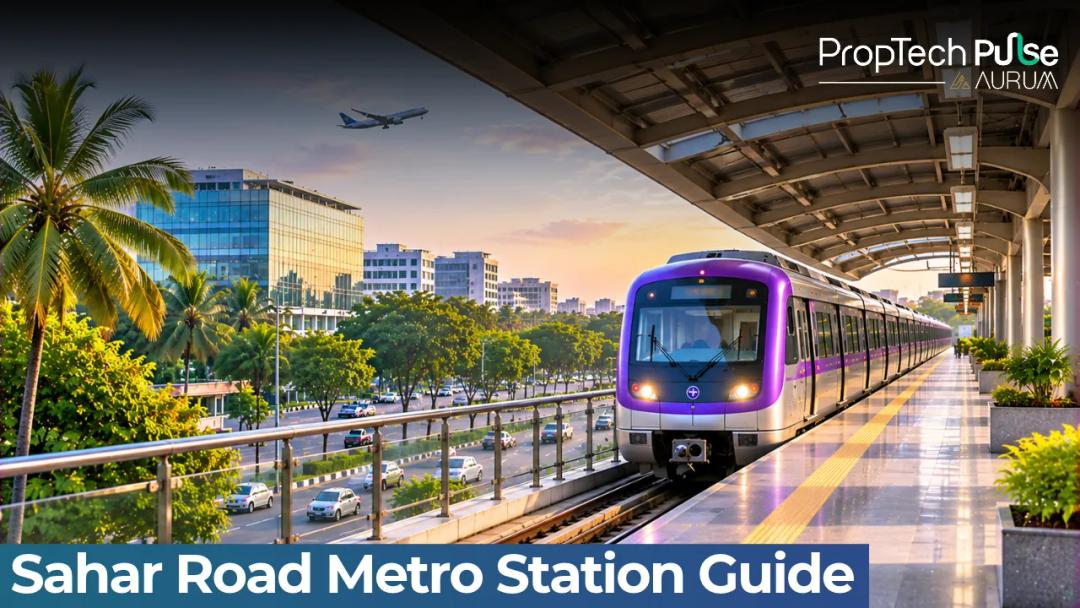
Sahar Road Metro Station: Timings, Route Map & Fares
In Andheri East, the Sahar Road Metro Station has cut commute times to Bandra-Kurla Complex, Wockhardt Hospital, and Worli. Opened in October 2024, this busy underground hub handles everything from cargo staff moving through SEEPZ to software engineers living in JB Nagar. Leasing closer to the domestic terminal saves daily travel time. Renting in Sahar Village now carries a premium tied to the new interchange. This guide gives exact platform schedules, exit maps, and fare breakdowns. In this guide Location and line overview Sahar road metro station route Sahar road metro station timings Exit map: gates and landmarks Fares, payment and facility notes Micro-market impact: why the sahar road metro matters Before you commit to a lease or purchase Frequently asked questions Location and line overview Quick answer The Sahar road metro station sits directly beneath the Western Express Highway intersection near the Domestic Terminal cargo zone. It serves as a key interchange on Mumbai Metro Line 3, operating from early morning until shortly after midnight with trains running every four to twelve minutes depending on rush hour. The station forms part of Mumbai Metro Line 3, a thirty-three-point-five-kilometre corridor stretching from Cuffe Parade to Aarey. Maharashtra Metro Rail Corporation Limited built the tunnel network, while Delhi Metro Rail Corporation now runs daily operations under a joint agreement. That switch boosted passenger flow and fixed earlier digital sign glitches along the whole route. Aviation buffer zones and tight airport logistics dictate the station layout. Engineers chose a single island platform, so northbound commuters heading to Aarey and southbound riders aiming for Cuffe Parade share one continuous deck. A glass divider separates the tracks. Street-level stairwells bring everyone to the same concourse floor, cutting navigation confusion during heavy peaks. Your updated mumbai metro line 3 status route stations guide confirms that Sahar uses this simpler mechanical design shared by only three western corridor stations. Sahar road metro station route Knowing directional flow helps you plan morning departures and evening returns. Trains pushing north toward Aarey follow the Western Express Highway trench until reaching Vikhroli. Early stops serve dense housing at Chandivali, Powai, and Oshiwara before hitting the DEOC maintenance yard. These northern sections fill quickly during midday factory shifts. Southbound trains connect tighter to existing rail networks. After leaving Andheri West residential blocks, the tunnel dips to cross under the Eastern Harbour Railway, placing riders directly on the Harbour and Western Line platforms at the Andheri interchange. Routes continue through Dharavi and Vashi Bridge before dropping beneath Thane Creek. Services reach Nerul, Sanpada, and CBD Belapur, finishing at Nariman Point and Cuffe Parade. This direct connection changes how people commute. Professionals who previously fought gridlocked intersections now ride climate-controlled carriages with overhead racks. Property managers near the southern end list walkable distances to finance hubs in their ads. Checking your property investment in mumbai 2026 timeline requires factoring in that Line 3 continuity removes old traffic delays across the island. Sahar road metro station timings Headway controls crowding more than overall station size does. Regular service starts near 05:45 AM and runs until just past midnight. Morning peaks pack trains between 08:15 AM and 10:30 AM, with arrivals dropping to four-minute intervals at maximum load. Evening crowds mirror this pressure between 06:00 PM and 08:30 PM when offices empty out. Midday gaps widen from noon till 04:45 PM. You wait ten to twelve minutes during these off-peak windows. Night service keeps twelve-minute spacing until cleaning crews sweep tracks thirty minutes before the last run. Final trains differ by direction, with northern shuttles leaving Aarey around 11:15 PM and southern cars pulling out near 11:00 PM. Weekends settle into eight-minute cycles through daylight. Fewer corporate commuters flatten the usual peak curve, making boardings smoother at transfer points. Monsoon rains occasionally cause two-minute rolling delays when drainage slows tunnel maintenance teams. Check live platform boards before waiting if automatic signals reroute holding cars. Peak Hour Warning: Boarding between 08:30 and 09:45 AM heading south means standing room only on the first two cars. Move toward the centre or rear carriages for a better shot at seats before reaching Andheri. Exit map: gates and landmarks Getting from the concourse to street level depends on picking the right turnstile. The terrain around the station splits pedestrian traffic into separate corridors tied to specific areas. Gate assignments keep cargo workers, corporate shuttles, and local residents apart to stop stairwell bottlenecks. Sahar road metro station gate assignments and nearby destinations (October 2026) Gate Designation Primary Destination Cluster Nearby Landmarks & Housing Types A1 Western Engineering Hub Budget hotels, airline staff quarters, short-term leases A2 / A3 Sahar Cargo Complex Freight warehouses, logistics offices, MIDC canteens A4 / A5 JB Nagar & Marol Naka Mid-rise apartments, co-living facilities, student housing B1 Secondary Cargo Outlet Feeder bus stands, light goods vehicle parking lots Turnstile A1 leads straight onto Sahar Road carriageway. Pedestrians walking out reach engineering staff accommodation blocks popular with cabin crew and ground handlers chasing quick rosters. Stepping toward gates A2 and A3 drops you right in the middle of the Sahar Cargo ecosystem. Warehouse supervisors coordinating night deliveries love the direct highway visibility from this exit. Stairs A4 and A5 channel residents straight into the upper blocks of JB Nagar and Marol Naka. Thousands of IT park employees live in these neighbourhoods. Ready-to-move two-bedroom flats here work well for families wanting to skip long walks during sudden rain. Gate B1 runs alongside the main cargo stretch but branches toward bus routes servicing peripheral industrial estates. Fares, payment and facility notes Metro fares follow strict distance slabs designed to keep rides cheap while paying off construction costs. Entry tariffs start low at ten rupees for segments covering roughly three kilometres. Charges climb steadily as passengers move toward central hubs, with mid-corridor hops costing twenty-five rupees. Trips past Vashi Bridge hit forty rupees, while journeys across the full thirty-three-kilometre route cap at eighty rupees. Students get fifty percent off with valid academic IDs turned in at staffed counters. Senior citizens qualify for similar discounts when age documents match national guidelines on registration cards. Payment methods expanded quickly after system upgrades. Touch-N-Go smartcards require balance topped up at dedicated concourse kiosks, while smartphones enable instant taps using NFC readers next to biometric gates. Cash tokens still sit at legacy machines for visitors used to paper passes. Station amenities include twin lifts per direction, wheelchair ramps, drinking water stations across from shops, and covered bike parking beside the escalators. Micro-market impact: why the sahar road metro matters Rapid transit placement changes how developers price carpet area and how tenants handle rent hikes inside a half-kilometre ring. Builders in JB Nagar now treat Aqua Line closeness as standard, not a luxury perk. Valuation patterns mirror established transit corridors in Bangalore where railway anchoring pushed developers to justify higher floor space indices against glass exteriors. Flats near Gate A4 charge six to eight percent more than identical units half a kilometre away. Tenants accept the gap because it removes unpredictable cab surge pricing. Private driver costs hit roughly twenty-five hundred rupees monthly during monsoons for cross-highway trips. Dropping that expense easily covers a slightly higher base rent tied to fixed train departures. Resale values climbed gradually instead of spiking overnight. Tight supply halted new inventory releases, stopping the usual developer price hikes. Existing plots and older society conversions simply rose in step with newer zoning rules. Municipal frameworks recently rolled out Transit Oriented Development limits, raising permissible floor space indices near active station rings. Logistics operators watching middle-mile shipping noticed shifted tenant mixes too. Warehouse supervisors preferring Sahar Cargo proximity now lease small admin offices near Gate A3 instead of distant branch offices. Quick staff rotations help during urgent freight moves. Mixed-use zoning gets faster approval under this new demand pattern. Before you commit to a lease or purchase Set clear criteria when weighing properties near this station against scattered eastern suburb options. Late-night jobs requiring commutes past midnight benefit most from being close to Gate A3. Walking distance removes ride-hailing shortages during heavy rain and guarantees seats on evening shuttles. Pick acoustic insulation over raw proximity if highway noise ruins sleep. Check occupancy certificates and fire clearances before handing over booking money. Drop brochure transit marketing pitches when verifying construction compliance. Walk the actual route during peak hours instead of trusting map distances. Ground reality always beats renderings when placing capital into city housing. Frequently asked questions What are the first and last train timings at Sahar Road metro station? Service typically begins around 05:45 AM daily. Morning trains depart frequently, but evening frequencies stretch to twelve-minute gaps after 09:30 PM. Final departures heading toward Cuffe Parade leave near 11:00 PM, while northern-bound trains continue until approximately 11:15 PM. Always watch platform announcement boards because seasonal schedule adjustments occasionally shave fifteen minutes from closing times. Is Sahar Road metro station underground? Yes. The entire station sits completely beneath the Western Express Highway surface due to aviation buffer restrictions and dense cargo infrastructure overhead. Passengers descend stairs or elevators from street grates into a fully enclosed concourse level before reaching the isolated island platform below. This subterranean design protects sensitive equipment from heat exposure while maximising land utilisation above ground. How many stations are on the Sahar road metro route? Line 3 encompasses twenty-four operational stations connecting Cuffe Parade to Aarey JVLR. Between these endpoints lies a mixture of deeply buried tunnels crossing under sea beds and elevated viaducts threading through suburban colonies. Transfer opportunities appear at four key junctions allowing cross-linking with Harbour, Western, and Central rail divisions. Where can I catch a taxi or auto near Sahar Road metro? Designated rank queues operate outside gates A2 and A3 specifically servicing cargo workers requiring reliable transport home after shift rotations. Private cab aggregators park along the widened shoulders near gate A1 for quicker passenger pickup during lunch hours. Autorickshaw operators cluster primarily near gate B1 where fare meters display updated district commission rates applicable to eastern Andheri boundaries. Sources Mumbai Metropolitan Regional Development Authority (Mahametro): Line designation, route terminals, and station location details (accessed November 2026) Mumbai Metro One Operations Limited: Fare structure classifications and accepted digital payment modalities (accessed November 2026) Enjoyed this blog article? Visit PropTech Pulse for more interesting blogs.
PropTech Pulse Editorial
24th November 2026
Uncategorized
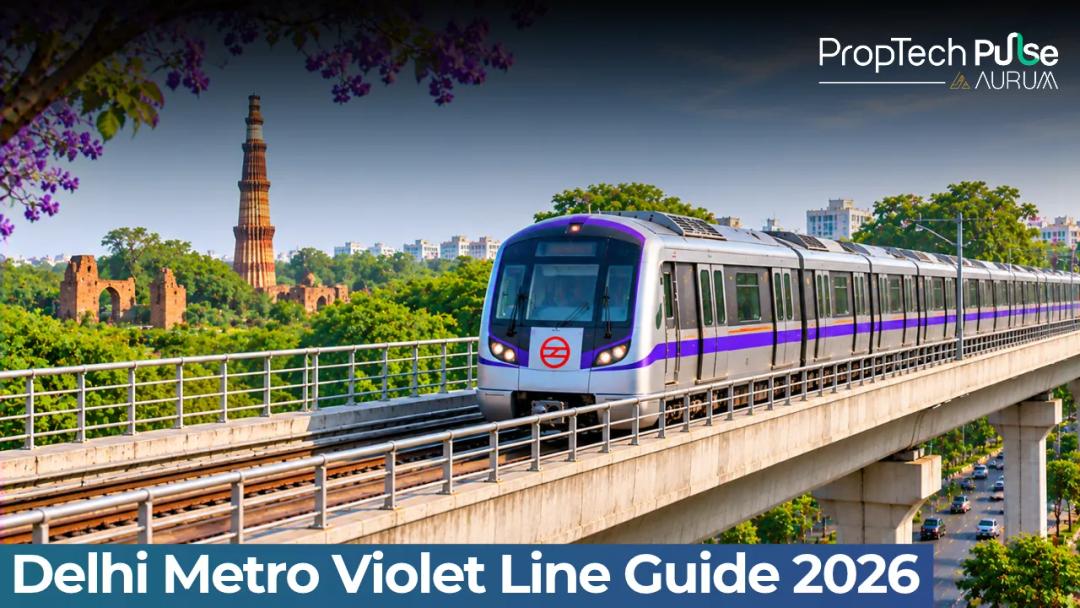
Delhi Metro Violet Line: Route, Stations, Fares & Property
A daily commute from Faridabad to North Delhi traditionally eats two hours. The Delhi Metro Violet Line cuts that round trip down to about ninety minutes. That shift in travel time is what drives property prices along the corridor, turning former bedroom communities into high-demand investment zones. Whether you are mapping a daily journey or evaluating a purchase price, understanding the full route is the first step. In this guide Delhi Metro Violet Line Route: Kashmere Gate to Raja Nahar Singh Complete List of Metro Violet Line Stations with Facilities Ticket Pricing, Peak Hours and Last Train Timings 2026 Real Estate Impact Along the Violet Line Corridor Final Verdict: Who Should Invest Near the Violet Line? Frequently asked questions Delhi Metro Violet Line Route: Kashmere Gate to Raja Nahar Singh Quick answer The Delhi Metro Violet Line connects Kashmere Gate in North Delhi to Raja Nahar Singh in Faridabad, spanning 46.34 kilometres with 34 operational stations. The route crosses three major corridors, historical Old Delhi, central commercial hubs, and residential South Delhi before crossing the state border into Haryana. Peak fares run between ₹60 and ₹70, covering the entire stretch in roughly 75 minutes. This north-south corridor diverges from the main line early in New Delhi. It then winds through dense commercial clusters before reaching residential areas in southern Delhi and eastern Faridabad. Most riders use the line to bridge the gap between the National Capital Region's northern industrial belts and its southern IT corridors. The line also feeds directly into the city's oldest transport nodes, making it a critical artery for tourists and daily commuters alike. Key Interchange Stations and Connections Passengers can connect to four other heavy rail lines via interchange stations. These nodes act as pressure valves that either concentrate foot traffic or divert it toward peripheral areas. Kashmere Gate: Interchange with the Red Line and ISBT. Handles the highest passenger volume on the entire metro system. ITO: Direct link to the Blue Line and the old financial district. Ideal for professionals moving between government offices and private firms. Jhandewalan: Connects to the Blue Line near Ajmeri Gate and historic markets. Useful for merchants and wholesale traders. Pratap Nagar: Crosses the Pink Line. Provides access to western Delhis residential pockets without entering central Delhi. Khan Market: Interchange with the Magenta Line. Sits atop a premium retail and dining precinct used heavily by corporate staff. Jangpura: Second Magenta Line junction. Future integration with the Regional Rapid Transit System (RRTS) planned at this node will cut Gurugram-to-Jangpura travel to twenty minutes. Chandrayaan Colony: Junction with the Yellow Line heading toward Sadhrawa. Critical for cross-town transfers between Gurgaon and East Delhi. Nehru Place: Fourth interchange point, linking to the Yellow Line at one of Asias largest electronics market hubs. Note for investors: Stations closer to interchange points command higher rental premiums. A one-bedroom apartment within 800 metres of Khan Market typically yields twelve to eighteen percent more rent than identical units further down the line. Complete List of Metro Violet Line Stations with Facilities The metro violet line stations span forty-six kilometres, starting at Kashmere Gate and ending at Raja Nahar Singh in Ballabhgarh. Each station varies in age, crowd density, and facility quality. Stations built in the early 2010s rarely have dedicated EV charging bays. Newer stops from the past five years, however, feature solar canopies and wheelchair lifts that meet strict accessibility rules. Zone 1 to Zone 5 Breakdown Dividing the route into five geographic zones helps clarify why property rates fluctuate so sharply over short distances. Travelers moving southward will notice the transition from heritage commerce zones to planned corporate grids and finally to affordable suburban towns. Violet Line Zones: Geography, Property Profile and Commute Metrics Zone Coverage Typical Apartment Price Range Target Buyer Profile Zone 1 Kashmere Gate to Shakti Nagar (Old and North Delhi) ₹8,500 – ₹11,000 per sq ft Business owners, long-standing residents, commercial lessees Zone 2 Jhandewalan to Hauz Khas (Central Delhi) ₹12,000 – ₹18,500 per sq ft Middle-income families seeking heritage proximity Zone 3 Minto Road to Greater Kailash (South Delhi) ₹15,000 – ₹22,000 per sq ft Corporate tenants, young professionals, short-term investors Zone 4 Malviya Nagar to Saket and NHOC ₹13,000 – ₹17,000 per sq ft End-users prioritising lifestyle amenities over prime addresses Zone 5 Badkal Lake to Raja Nahar Singh (Faridabad) ₹6,500 – ₹9,500 per sq ft First-time buyers, budget investors, daily commuters to Gurugram When evaluating listings in Zone 1 and Zone 2, pay close attention to whether the brochure advertises super built-up area rather than carpet area. A quoted size that includes shared lobby space and stairwells can shrink the actual usable floor area by fifteen to twenty percent. Understanding the difference between built up area vs carpet area protects buyers from inflated valuations that do not reflect genuine living space. Ticket Pricing, Peak Hours and Last Train Timings 2026 Fare structures on the Delhi Metro use a distance-based slab system. The minimum ticket cost starts at ten rupees, designed to make basic transit affordable. The maximum fare for riding the entire length from Kashmere Gate to Raja Nahar Singh generally falls between sixty and seventy rupees, depending on exact boarding and alighting gates. Commuter Summary: Key Stops, Duration and Approximate Fares Route Segment Distance Travel Duration Estimated Fare Kashmere Gate to ITO 3.8 km 6 minutes ₹10 Khan Market to Nehru Place 8.4 km 14 minutes ₹30 Central Secretariat to Jangpura 6.1 km 10 minutes ₹20 Kashmere Gate to Raja Nahar Singh 46.3 km 74 minutes ₹65 Peak hours run from eight o'clock to ten o'clock in the morning and again from six o'clock to nine thirty at night. Trains become extremely crowded between Nehru Place and Khan Market during these windows, especially on weekdays. Salaried workers prefer departing slightly earlier or later to avoid shoulder-to-shoulder conditions. Last trains usually depart terminal stations around eleven-fifteen to eleven-thirty at night. During winter months and exam seasons, services sometimes extend past midnight near exam hubs like JNU and South Extension, but this remains an exception rather than the rule. Always allow an extra fifteen minutes for walk-back time if you plan to grab dinner in Saket before boarding the return train. Real Estate Impact Along the Violet Line Corridor Property values rarely move in isolation from transit improvements. When a rail corridor upgrades from surface buses to grade-separated rail transit, adjacent land prices adjust within six to eighteen months. The Violet Line accelerated that cycle across multiple tiers of the National Capital Region. Old Delhi and Commercial Hub Connectivity Zone 1 hosts some of the oldest commercial structures in India. Recent municipal redevelopment efforts alongside the metro stations have improved pedestrian safety and widened footpaths. Short-term lets targeting foreign tourists and business travellers remain profitable here, provided the building passes fire safety norms and offers reliable water storage. Investors buying heritage conversions should budget extra for structural reinforcement. South Delhi Corporate Belts (Khan Market, Nehru Place) South Delhi commands the highest rents on the line due to its concentration of multinational offices and luxury retail zones. Apartments near Khan Market and Hazrat Nizamuddin attract senior management and visiting clients willing to pay premium monthly fees. Landlords in this segment frequently offer fully furnished layouts equipped with modular kitchens and dedicated co-working desks. Rental agreements typically run for eleven months, with annual escalation clauses capped at five percent to maintain tenant stability. If you are comparing mortgage terms for a purchase in this tier, running the numbers through a home loan emi calculator helps isolate the true monthly cash flow impact. Interest rates fluctuate with repo policy shifts, and locking a fixed-rate tenure during a buyer market can save substantial interest over a twenty-year payout schedule. Faridabad and Ballabhgarh Affordable Housing Demand Zone 5 serves as the primary affordable housing engine for the region. Properties here sell for roughly forty to fifty percent less than comparable units in South Delhi, yet rental demand stays strong thanks to IT professionals working in Sector 18 Gurugram and Cyber City. Daily commuters tolerate longer travel times in exchange for larger apartment sizes and fresh construction quality. Before committing capital in Haryana, verify that the builder holds a valid registration certificate. Checking RERA registered projects in Delhi sets the benchmark for compliance standards, and Haryana follows a parallel regulatory framework that mandates escrow accounts for eighty-five percent of collected funds. You should also factor regional levies into your acquisition budget. Calculating stamp duty in Delhi gives you a baseline, but Haryana imposes distinct circle rates and documentation fees that change quarterly. Final Verdict: Who Should Invest Near the Violet Line? Match the station to your financial goal. Buyers chasing capital appreciation should target Zones 2 and 3, where corporate expansion restricts supply and keeps resale demand high. Investors focused on monthly rent rather than asset growth will find better yields in Zone 5, where entry prices are low and occupancy stays near ninety-two percent. Avoid impulse bookings based solely on distance claims. You must verify road connectivity, check flood history for ground-floor units, and confirm power backup reliability before signing any agreement. Frequently asked questions How many stations are on the Delhi Metro Violet Line? The Violet Line operates thirty-four stations stretching from Kashmere Gate in North Delhi to Raja Nahar Singh in Faridabad. Additional tracks extend toward Shaheed Sthal in parts of the Faridabad district, increasing the total track length beyond the core forty-six kilometre span listed by operators. What is the maximum fare from Kashmere Gate to Raja Nahar Singh? A single adult ticket covering the full route between the northern and southern terminals costs approximately sixty-five to seventy rupees as of late 2026. Children under three feet tall travel free, while senior citizens receive a twenty percent concession on regular fares using their special metro cards. Does the Violet Line intersect with the RRTS? Direct integration happens at Jangpura station, where the Violet Line crosses the Magenta Line platform level. Construction crews are currently coordinating track alignments for a dedicated RRTS corridor that will funnel passengers from Meerut directly into this intersection, expected to open in stages over the next twenty-four months. What are the peak hour timings for the Violet Line? Morning congestion begins around seven-thirty and peaks between eight and ten in the morning, driven largely by office commuters heading toward Khan Market and Nehru Place. Evening crowds surge again from six-thirty until nine-thirty when staff return toward residential districts in Saket and Faridabad. Is parking available at Violet Line metro stations? Most stations provide designated bicycle racks and limited two-wheeler slots that fill quickly before sunrise. Car parking exists only at select suburban terminals like NHOC and Raja Nahar Singh, where spaces are allocated on a first-come basis. EV charging points remain concentrated at newer builds outside central Delhi. Enjoyed this blog article? Visit PropTech Pulse for more interesting blogs.
PropTech Pulse Editorial
24th November 2026
Uncategorized
Cost of Living in Ahmedabad 2026: Rent, Utilities & Budget
Understanding the cost of living in Ahmedabad before moving reveals massive savings compared to Mumbai or Delhi rentals. A single professional budgeting ₹18,000 on room rent can stretch that allocation twice as far in central Gujarat. Families regularly locate three-bedroom units within budgets that previously secured one-bedrooms in tier-one cities. The practical reality depends entirely on matching your desired lifestyle to actual utility tariffs, transit pass prices, and locality pricing rings across the Sabarmati basin. In this guide Housing Costs: Room Rent in Ahmedabad and Apartment Pricing Utilities and Essentials: Tariffs, Groceries and Lifestyle Spend Getting Around: Transit Costs and Proximity to Railway Hubs Rent Versus Buy: When an Apartment Makes Financial Sense Locality Cost Tiers: Where Your Money Goes Farthest Final Decision Rule Before Signing or Booking Frequently asked questions What a Typical Ahmedabad Household Spends Monthly Quick answer A typical family of four in Ahmedabad spends between ₹24,000 and ₹38,000 monthly covering a modest two-bedroom rental, standard electricity and water, groceries, and public transit passes. Single professionals managing shared flats or paying guest setups can comfortably live on ₹12,000 to ₹18,000 per month, leaving substantial headroom compared to tier-one metropolitan cities. That baseline number shifts noticeably once you factor in the exact zone you choose, seasonal power consumption, and whether you own a vehicle or rely on city transit. Understanding the full arithmetic prevents budget shocks during the first twelve months. Housing Costs: Room Rent in Ahmedabad and Full Apartment Pricing Bachelor options, PGs and shared flats vs independent units Shared accommodations and paying guest setups near GIFT City, Naroda industrial zones, and the university belt remain the cheapest entry point for newcomers. A bachelor seeking food-inclusive PG accommodation typically pays between ₹6,000 and ₹12,000 per month. Pricing tightens close to corporate parks during hiring peaks. Independent floors and one-bedroom flats in areas like Thaltej, Bodakdev, or Memnagar usually start around ₹10,000 and climb toward ₹22,000. Premium villas in Prahlad Nagar or SG Highway extensions demand upwards of ₹60,000. A well-equipped apartment in Ahmedabad in emerging hubs like Gota, Sola, or Science Circle ranges from ₹18,000 to ₹35,000 monthly. Security deposits, brokerage norms and hidden lease fees Landlords commonly request two months of rent as a refundable security deposit. Brokerage fees average one month of the monthly rent. Direct owner channels reduce that friction significantly. Maintenance charges for gated societies generally sit between ₹1.50 and ₹2.50 per square foot. This covers common area upkeep, security staff, and waste management. Always verify upfront whether the quoted rent includes municipal taxes and society maintenance before executing the lease. Utilities and Essentials: Tariffs, Groceries and Lifestyle Spend Electricity and water billing in Gujarat Household power bills depend heavily on seasonal usage and appliance efficiency. Continuous air conditioning during peak summer drives the bill up significantly. Residential tariffs follow a progressive slab system under state distribution schedules. A moderate household consuming 150 to 300 units per month typically sees bills between ₹2,000 and ₹3,500. Heavy users crossing 500 units routinely face amounts exceeding ₹5,000. Water billing cycles operate quarterly through municipal services. Normal domestic consumption remains low, often keeping quarterly bills under ₹300 unless extensive gardening requires heavy watering. Internet, groceries and maintenance levies Fibre internet connections in the city offer competitive consumer plans ranging from ₹699 to ₹1,499 per month. These speeds suit remote work and media streaming perfectly. Groceries follow stable market rates. Daily staples cost roughly ₹3,000 to ₹4,500 monthly for a family of four. Imported foods and premium beverages push the figure upward rapidly. Local vegetable vendors and wholesale markets located outside central business districts consistently beat mall supermarket pricing. Grasping the true cost of living in Ahmedabad requires tracking these variable monthly outflows accurately. Getting Around: Transit Costs and Proximity to Railway Hubs Metro Blue/Green line corridors, BRTS fares and AMTS passes Public transport relies on a coordinated mix of BRTS rapid transit, AMTS city buses, and the expanding metro network. Monthly bus passes usually range between ₹800 and ₹1,200 for unlimited travel. Single ride bus fares stay strictly under ₹15. Metro operations function on distance-based pricing. Fares start around ₹10 for short hops and cap at roughly ₹50 for longer cross-city journeys. Daily commuters covering eight to ten kilometres round trip typically spend less than ₹1,000 monthly on public transit. Kalupur Railway Station proximity and daily commute math Major intercity rail movement centers around historic and modern terminals scattered across the basin. Kalupur Railway Station handles intense interstate freight and passenger traffic. It acts as a critical logistical pivot for commuters working in Old Ahmedabad or accessing GIFT City via scheduled trains. Living within easy walking distance of active rail nodes cuts daily commute friction dramatically. Car owners must calculate fuel expenses independently. Petrol and diesel prices adjust daily. Vehicles easily surpass ₹4,000 monthly when accounting for parking and highway tolls. Factor this into your total budget before commuting. Rent Versus Buy: When an Apartment Makes Financial Sense Entry-level pricing, stamp duty and registration loads Purchasing property demands awareness of upfront government levies beyond the developer base price. Average ready-to-move apartment rates hover between ₹5,500 and ₹7,500 per square foot across mainstream residential corridors. New launch projects frequently command pricing premiums near ₹8,500 per square foot. Buyers must reserve dedicated capital for state levies calculated on circle rates or transaction value. Registration fees add another mandatory layer to closing costs. Review current guidelines on stamp duty and registration in Ahmedabad thoroughly before submitting any booking amount to ensure accurate cash-in-hand calculations. Maintenance, vacancy risk and the break-even calculator Ownership transforms variable monthly rental exposure into structured loan repayments and sinking fund contributions. A purchaser acquiring an ₹80 lakh asset with a standard twenty percent down payment encounters fundamentally different cash flow dynamics than leasing a comparable unit. Home loan interest rates currently position between 8.35% and 8.75% for eligible salaried applicants. Lenders measure borrowing capacity against monthly income multiples rather than asset valuations alone. Model your repayment schedule using a reliable home loan EMI calculator before locking capital. Owning shields you from aggressive landlord rent escalations but restricts liquidity access. Weigh opportunity costs carefully using our breakdown of rent versus buy scenarios. Locality Cost Tiers: Where Your Money Goes Farthest Budget-conscious renters and investors thrive in developing nodes along the eastern ring road and southern Ahmedabad. Older infrastructure naturally suppresses rental growth here. Mid-tier families prioritizing hospital access and educational institutions gravitate toward Satellite, Navrangpura, and Bopal. They willingly accept smaller floor plates for superior street connectivity. High-net-worth buyers chase planned gated communities in Prahlad Nagar, SG Highway southern extensions, and Dholka Road. They pay substantial premiums for wide arterial roads, underground drainage, and round-the-clock security. Proximity to corporate employment centers invariably carries a locational tax. It inflates rents by thirty percent over peripheral residential belts. Typical monthly living costs for a family of four in Ahmedabad, 2026 estimates Expense Category Monthly Budget (Basic) Monthly Budget (Comfort) Monthly Budget (Premium) 2 BHK Rent ₹18,000 ₹28,000 ₹55,000+ Electricity ₹1,500 ₹2,500 ₹5,000+ Groceries ₹3,000 ₹4,500 ₹8,000+ Transport Passes / Fuel Share ₹1,000 ₹2,500 ₹6,000+ Internet & Mobile ₹800 ₹1,200 ₹1,500+ Total Estimated Outflow ₹24,300 ₹38,700 ₹75,500+ Rental Agreement Tip: Always execute a registered rent agreement if the lease tenure crosses eleven months. Unregistered contracts hold zero legal weight in Gujaratan courts for security deposit disputes or notice period enforcement under the Transfer of Property Act. Final Decision Rule Before Signing or Booking Track your total monthly outflow across twelve consecutive calendar months before classifying relocation expenses as permanent. Include every irregular drain: health insurance premiums, school tuition support, vehicle servicing, and peak-season air conditioning spikes. Leasing stops producing better returns only when inventory in your target zone compresses enough to generate gross rental yields above five percent. Job stability must also guarantee seven uninterrupted years at the same workplace until then. Maintain optionality and protect your liquid capital. Follow the arithmetic. Frequently asked questions Is Ahmedabad expensive to live in compared to Mumbai or Delhi? Ahmedabad delivers noticeably lower household expenses than tier-one metros. Rental entry points remain steeply discounted, and staple grocery costs fall below national averages driven by strong regional agriculture. A family comfortably sustaining a ₹50,000 monthly lifestyle in central Mumbai routinely stretches that allocation into premium housing and reputable private schooling here. You accept wider geographic distances between offices and shopping clusters, and slightly delayed transit saturation in exchange for massive cost reductions. What is the average rent for a 2 BHK in Ahmedabad 2026? Standard two-bedroom units in established neighbourhoods like Satellite, Vastrapur, and Bodakdev command between ₹22,000 and ₹35,000 monthly. Corridors adjacent to SG Highway and Gota push asking prices toward ₹40,000 for contemporary developments featuring clubhouses and smart building systems. Legacy buildings lacking lifts or renovated interiors trade closer to the ₹18,000 threshold. Fully furnished packages reliably absorb a fifteen to twenty percent premium over vacant possession listings. How much does a family need to survive in Ahmedabad monthly? A conservative family of four utilizing public transit, neighborhood grocers, and mid-market rentals requires roughly ₹30,000 to ₹40,000 monthly for bare essentials. This baseline secures a decent flat, standard electricity and water, core nutrition, routine medical visits, and partial schooling support. Aspirational consumption involving foreign cuisines, elite international tuition tracks, and personal automobile maintenance instantly doubles that monthly requirement. Running tight spreadsheets during the initial half-year phase prevents structural cash shortfalls. Are utilities high in Ahmedabad? Utility expenditures align closely with typical Indian urban benchmarks, although extreme summer conditions inflate cooling loads. Average households drawing 200 to 300 monthly kilowatt-hours receive power statements hovering between ₹2,000 and ₹3,000. Municipal water billing stays remarkably cheap, seldom breaking ₹300 per quarter for standard domestic usage. Reliable fibre broadband subscriptions launch near ₹700 monthly, providing steady bandwidth for remote work and educational streaming without congestive throttling. Should I rent or buy property in Ahmedabad right now? Purchasing generates positive mathematics exclusively when you anchor your employment location for seven years minimum. Real estate ownership immobilizes liquidity while transforming mortgage principal reduction into forced wealth accumulation. Frequent job-hoppers preserve optionality through leasing, keeping funds deployable across business ventures or different high-growth corridors. Evaluate total transition burdens against projected appreciation timelines before exchanging hard cash for deeds and titles. Sources Reserve Bank of India: Current benchmark repo rate influencing home loan pricing (accessed November 2026) Enjoyed this blog article? Visit PropTech Pulse for more interesting blogs.
PropTech Pulse Editorial
24th November 2026
Uncategorized
Sahar Road Metro Station: Timings, Route Map & Fares
In Andheri East, the Sahar Road Metro Station has cut commute times to Bandra-Kurla Complex, Wockhardt Hospital, and Worli. Opened in October 2024, this busy underground hub handles everything from cargo staff moving through SEEPZ to software engineers living in JB Nagar. Leasing closer to the domestic terminal saves daily travel time. Renting in Sahar Village now carries a premium tied to the new interchange. This guide gives exact platform schedules, exit maps, and fare breakdowns. In this guide Location and line overview Sahar road metro station route Sahar road metro station timings Exit map: gates and landmarks Fares, payment and facility notes Micro-market impact: why the sahar road metro matters Before you commit to a lease or purchase Frequently asked questions Location and line overview Quick answer The Sahar road metro station sits directly beneath the Western Express Highway intersection near the Domestic Terminal cargo zone. It serves as a key interchange on Mumbai Metro Line 3, operating from early morning until shortly after midnight with trains running every four to twelve minutes depending on rush hour. The station forms part of Mumbai Metro Line 3, a thirty-three-point-five-kilometre corridor stretching from Cuffe Parade to Aarey. Maharashtra Metro Rail Corporation Limited built the tunnel network, while Delhi Metro Rail Corporation now runs daily operations under a joint agreement. That switch boosted passenger flow and fixed earlier digital sign glitches along the whole route. Aviation buffer zones and tight airport logistics dictate the station layout. Engineers chose a single island platform, so northbound commuters heading to Aarey and southbound riders aiming for Cuffe Parade share one continuous deck. A glass divider separates the tracks. Street-level stairwells bring everyone to the same concourse floor, cutting navigation confusion during heavy peaks. Your updated mumbai metro line 3 status route stations guide confirms that Sahar uses this simpler mechanical design shared by only three western corridor stations. Sahar road metro station route Knowing directional flow helps you plan morning departures and evening returns. Trains pushing north toward Aarey follow the Western Express Highway trench until reaching Vikhroli. Early stops serve dense housing at Chandivali, Powai, and Oshiwara before hitting the DEOC maintenance yard. These northern sections fill quickly during midday factory shifts. Southbound trains connect tighter to existing rail networks. After leaving Andheri West residential blocks, the tunnel dips to cross under the Eastern Harbour Railway, placing riders directly on the Harbour and Western Line platforms at the Andheri interchange. Routes continue through Dharavi and Vashi Bridge before dropping beneath Thane Creek. Services reach Nerul, Sanpada, and CBD Belapur, finishing at Nariman Point and Cuffe Parade. This direct connection changes how people commute. Professionals who previously fought gridlocked intersections now ride climate-controlled carriages with overhead racks. Property managers near the southern end list walkable distances to finance hubs in their ads. Checking your property investment in mumbai 2026 timeline requires factoring in that Line 3 continuity removes old traffic delays across the island. Sahar road metro station timings Headway controls crowding more than overall station size does. Regular service starts near 05:45 AM and runs until just past midnight. Morning peaks pack trains between 08:15 AM and 10:30 AM, with arrivals dropping to four-minute intervals at maximum load. Evening crowds mirror this pressure between 06:00 PM and 08:30 PM when offices empty out. Midday gaps widen from noon till 04:45 PM. You wait ten to twelve minutes during these off-peak windows. Night service keeps twelve-minute spacing until cleaning crews sweep tracks thirty minutes before the last run. Final trains differ by direction, with northern shuttles leaving Aarey around 11:15 PM and southern cars pulling out near 11:00 PM. Weekends settle into eight-minute cycles through daylight. Fewer corporate commuters flatten the usual peak curve, making boardings smoother at transfer points. Monsoon rains occasionally cause two-minute rolling delays when drainage slows tunnel maintenance teams. Check live platform boards before waiting if automatic signals reroute holding cars. Peak Hour Warning: Boarding between 08:30 and 09:45 AM heading south means standing room only on the first two cars. Move toward the centre or rear carriages for a better shot at seats before reaching Andheri. Exit map: gates and landmarks Getting from the concourse to street level depends on picking the right turnstile. The terrain around the station splits pedestrian traffic into separate corridors tied to specific areas. Gate assignments keep cargo workers, corporate shuttles, and local residents apart to stop stairwell bottlenecks. Sahar road metro station gate assignments and nearby destinations (October 2026) Gate Designation Primary Destination Cluster Nearby Landmarks & Housing Types A1 Western Engineering Hub Budget hotels, airline staff quarters, short-term leases A2 / A3 Sahar Cargo Complex Freight warehouses, logistics offices, MIDC canteens A4 / A5 JB Nagar & Marol Naka Mid-rise apartments, co-living facilities, student housing B1 Secondary Cargo Outlet Feeder bus stands, light goods vehicle parking lots Turnstile A1 leads straight onto Sahar Road carriageway. Pedestrians walking out reach engineering staff accommodation blocks popular with cabin crew and ground handlers chasing quick rosters. Stepping toward gates A2 and A3 drops you right in the middle of the Sahar Cargo ecosystem. Warehouse supervisors coordinating night deliveries love the direct highway visibility from this exit. Stairs A4 and A5 channel residents straight into the upper blocks of JB Nagar and Marol Naka. Thousands of IT park employees live in these neighbourhoods. Ready-to-move two-bedroom flats here work well for families wanting to skip long walks during sudden rain. Gate B1 runs alongside the main cargo stretch but branches toward bus routes servicing peripheral industrial estates. Fares, payment and facility notes Metro fares follow strict distance slabs designed to keep rides cheap while paying off construction costs. Entry tariffs start low at ten rupees for segments covering roughly three kilometres. Charges climb steadily as passengers move toward central hubs, with mid-corridor hops costing twenty-five rupees. Trips past Vashi Bridge hit forty rupees, while journeys across the full thirty-three-kilometre route cap at eighty rupees. Students get fifty percent off with valid academic IDs turned in at staffed counters. Senior citizens qualify for similar discounts when age documents match national guidelines on registration cards. Payment methods expanded quickly after system upgrades. Touch-N-Go smartcards require balance topped up at dedicated concourse kiosks, while smartphones enable instant taps using NFC readers next to biometric gates. Cash tokens still sit at legacy machines for visitors used to paper passes. Station amenities include twin lifts per direction, wheelchair ramps, drinking water stations across from shops, and covered bike parking beside the escalators. Micro-market impact: why the sahar road metro matters Rapid transit placement changes how developers price carpet area and how tenants handle rent hikes inside a half-kilometre ring. Builders in JB Nagar now treat Aqua Line closeness as standard, not a luxury perk. Valuation patterns mirror established transit corridors in Bangalore where railway anchoring pushed developers to justify higher floor space indices against glass exteriors. Flats near Gate A4 charge six to eight percent more than identical units half a kilometre away. Tenants accept the gap because it removes unpredictable cab surge pricing. Private driver costs hit roughly twenty-five hundred rupees monthly during monsoons for cross-highway trips. Dropping that expense easily covers a slightly higher base rent tied to fixed train departures. Resale values climbed gradually instead of spiking overnight. Tight supply halted new inventory releases, stopping the usual developer price hikes. Existing plots and older society conversions simply rose in step with newer zoning rules. Municipal frameworks recently rolled out Transit Oriented Development limits, raising permissible floor space indices near active station rings. Logistics operators watching middle-mile shipping noticed shifted tenant mixes too. Warehouse supervisors preferring Sahar Cargo proximity now lease small admin offices near Gate A3 instead of distant branch offices. Quick staff rotations help during urgent freight moves. Mixed-use zoning gets faster approval under this new demand pattern. Before you commit to a lease or purchase Set clear criteria when weighing properties near this station against scattered eastern suburb options. Late-night jobs requiring commutes past midnight benefit most from being close to Gate A3. Walking distance removes ride-hailing shortages during heavy rain and guarantees seats on evening shuttles. Pick acoustic insulation over raw proximity if highway noise ruins sleep. Check occupancy certificates and fire clearances before handing over booking money. Drop brochure transit marketing pitches when verifying construction compliance. Walk the actual route during peak hours instead of trusting map distances. Ground reality always beats renderings when placing capital into city housing. Frequently asked questions What are the first and last train timings at Sahar Road metro station? Service typically begins around 05:45 AM daily. Morning trains depart frequently, but evening frequencies stretch to twelve-minute gaps after 09:30 PM. Final departures heading toward Cuffe Parade leave near 11:00 PM, while northern-bound trains continue until approximately 11:15 PM. Always watch platform announcement boards because seasonal schedule adjustments occasionally shave fifteen minutes from closing times. Is Sahar Road metro station underground? Yes. The entire station sits completely beneath the Western Express Highway surface due to aviation buffer restrictions and dense cargo infrastructure overhead. Passengers descend stairs or elevators from street grates into a fully enclosed concourse level before reaching the isolated island platform below. This subterranean design protects sensitive equipment from heat exposure while maximising land utilisation above ground. How many stations are on the Sahar road metro route? Line 3 encompasses twenty-four operational stations connecting Cuffe Parade to Aarey JVLR. Between these endpoints lies a mixture of deeply buried tunnels crossing under sea beds and elevated viaducts threading through suburban colonies. Transfer opportunities appear at four key junctions allowing cross-linking with Harbour, Western, and Central rail divisions. Where can I catch a taxi or auto near Sahar Road metro? Designated rank queues operate outside gates A2 and A3 specifically servicing cargo workers requiring reliable transport home after shift rotations. Private cab aggregators park along the widened shoulders near gate A1 for quicker passenger pickup during lunch hours. Autorickshaw operators cluster primarily near gate B1 where fare meters display updated district commission rates applicable to eastern Andheri boundaries. Sources Mumbai Metropolitan Regional Development Authority (Mahametro): Line designation, route terminals, and station location details (accessed November 2026) Mumbai Metro One Operations Limited: Fare structure classifications and accepted digital payment modalities (accessed November 2026) Enjoyed this blog article? Visit PropTech Pulse for more interesting blogs.
PropTech Pulse Editorial
24th November 2026

Ask Pulse Ai anything about real estate

Unlock the Latest in Real Estate
News, Infographics, Blogs & More! Delivered to your inbox.

