

©PropTech Pulse 2025, All rights reserved.

What is Rental Management Software?
Rental Management Software
Rental Management Software centralizes tasks for owners or managers overseeing occupant-based assets. These platforms track leases, automate billing, handle occupant requests, and compile reports. By using a digital interface, staff can monitor revenue, address maintenance tickets, and minimize manual paperwork. Occupants often appreciate streamlined communication channels for paying rent or submitting repairs.
Key Points:
- Document Organization: Stores occupant records, payment logs, or lease addendums.
- Payment Automation: Minimizes late fees or manual collection tasks.
- Occupant Portal: A direct line for occupant-liaison queries or facility bookings.
- Analytics: Tracks vacancy rates, operational outlays, and cost optimization.
Rental management software speeds up daily workflow, improves occupant satisfaction, and fosters data-driven decisions—ideal for small or large-scale multi-occupant portfolios.
Insight Pulse
Uncategorized
Gated Communities in Hyderabad: Costs, Zones & Rules
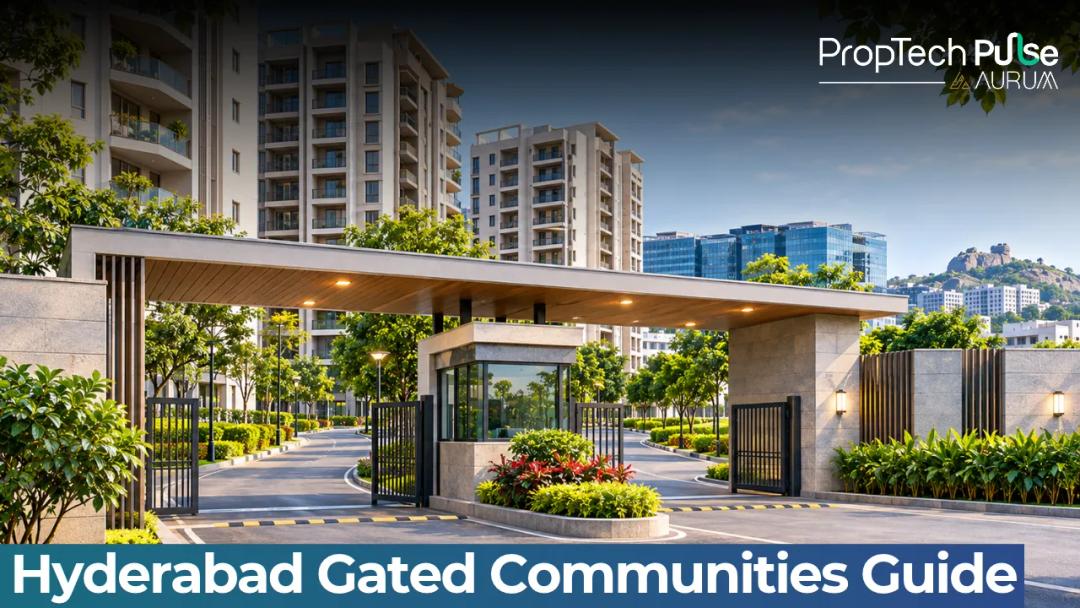
When searching for gated communities in Hyderabad, buyers often focus on renderings instead of the monthly maintenance bill. Paying for a secure perimeter, a swimming pool, and round-the-clock guards sounds ideal until you see the actual invoice. Buying into one works well when the infrastructure scales right. It fails fast when too many families share limited open space. This guide cuts past the brochure photos. You will see exactly how maintenance compounds, when GST applies to your society bills, and the exact steps to verify a project before handing over a single rupee. In this guide What makes a gated community different from a standalone building? Where to find the best gated societies in Hyderabad What gated living actually costs per month Two things buyers forget to ask: Density and Land Share Pre-booking checklist: RERA verification and approvals Making the final choice Frequently asked questions What makes a gated community different from a standalone building? Quick answer A gated society controls access, maintains shared infrastructure like driveways, clubhouses, and stormwater drains, and funds these through monthly fees paid by residents. A standalone apartment block sits within the municipal boundary but usually lacks controlled entry, dedicated recreational space, or a formal resident welfare association to manage common assets. The physical difference is obvious. Steel gates, CCTV networks, and security booths separate the development from the surrounding streets. The legal difference matters more. Every residential enclave in Telangana operates under a Residents Welfare Association formed by the buyer agreement. That entity holds the title deeds to common areas. It appoints the caretaker staff and pays the electricity and water charges for shared zones. Standalone mid-sized buildings often skip this structure entirely. Informal committees left to manage maintenance struggle with vendor payments and long-term sinking fund accounting. You will also notice architectural choices shaped by the gated model. Developers design wider internal roads to accommodate fire engine access. They allocate higher percentages of the plot for ground-floor parking. Amenity clusters get placed away from traffic-heavy boundaries to protect livability once the population hits forty households. Where to find the best gated societies in Hyderabad Hyderabad sprawls along distinct growth corridors. The price you pay for security and shared facilities shifts dramatically depending on the axis you choose. Your commute distance will anchor most decisions. The monthly carrying costs tell another story. The western corridor around Gachibowli, Kondapur, and Financial District commands premium rates because of IT park proximity. Newer developments here cluster at twenty-two to twenty-five storeys with minimal vertical setbacks. Maintenance charges run higher, usually between ₹3.50 and ₹5.50 per square foot. This reflects the heavy cost of maintaining elevator banks, high-pressure water pumps, and large mechanical rooms. The upside remains walkable access to dining and metro stations once the infrastructure matures. Look north toward Kompally, Bachupally, and Shadnagar highway stretches to encounter flatter terrain with larger base plots. Villa segments and low-rise podium structures dominate this belt. Buyers seeking a check Telangana RERA project registration in these Hyderabad gated communities expect wider internal lanes and larger clubhouses relative to unit count. Maintenance brackets sit closer to ₹2.00–₹3.00 per square foot here. Parking tends to be less congested early in the day. Daily commute times to Cyberabad spike during peak hours though. The eastern and southern fringes along NH-65 and ORR extensions remain active development zones. Plotted developments and hybrid township models mix independent houses with row-house blocks. Security protocols vary because some layouts still operate under phased handover agreements with municipal water boards. Entry pricing stays competitive. This makes the area suitable for investors who prefer longer hold periods while infrastructure upgrades roll out. When people type gated communities near me into their phones, the map pin rarely captures the noise footprint of Hyderabad gated communities. It misses the road width behind the main gate. Drive the route at 7 pm on a weekday before signing anything. Listen for construction equipment, commercial truck routes, and railway crossings that sit outside the development boundary but still affect quiet hours. What gated living actually costs per month Maintenance is never a flat rate across a complex. It scales directly with built-up area and floor level for elevator and water pumping loads. The breadth of amenities matters too. A twelve hundred square foot flat in a mid-tier society pays noticeably less than a two thousand square foot corner unit. Both residents use the same gym. The cost difference adds up quickly over the year. Mapped monthly maintenance expectations for a 1,200 sq ft flat across typical Hyderabad society tiers Society tier Rate per sq ft (approx.) Base monthly amount Common amenities covered Entry level ₹2.00 – ₹2.50 ₹2,400 – ₹3,000 Lobby cleaning, garden upkeep, perimeter lighting, basic security Mid range ₹3.00 – ₹3.50 ₹3,600 – ₹4,200 Pool filtration, clubhouse staff, two lifts, power backup for common areas Premium ₹4.50 – ₹5.50 ₹5,400 – ₹6,600 Multiple lifts, concierge desk, indoor games hall, advanced HVAC for lobby Total annual outflow (mid-range example) ₹43,200 Excludes society advance corpus and sinking fund contributions Corpus advances hit you at booking or possession. Builders typically demand fifteen days of estimated maintenance as an upfront deposit. Sinking funds accumulate yearly to handle roof waterproofing and lift motor replacements. Façade repairs follow five to seven years down the line. Never overlook these line items when calculating affordability. They sit outside your monthly cash flow plan and arrive precisely when major wear sets in. Tax exposure enters the conversation only after a certain threshold. The central government levies eighteen percent GST on maintenance services when the monthly invoice exceeds ₹7,500 per family. The housing society’s annual aggregated turnover must also cross twenty lakh rupees. Most mid-sized complexes cross this turnover threshold quickly once occupancy reaches sixty percent. Lower-income or sparsely populated developments stay below the taxable limit for several years. Always request the society treasurer to confirm whether the association has registered for GST services on CBIC. Unregistered societies collecting GST violate service tax guidelines. This exposes residents to compliance risk. Two things buyers forget to ask: Density and Land Share A fifty-acre plot divided among eight towers holding two hundred flats produces completely different daily routines than the same plot hosting four towers with eighty units. The term you need to track is Undivided Share of Land. It dictates how much green space, walking tracks, and playground area translates to per household. A understand UDS in real estate baseline helps you forecast crowding at the clubhouse terrace. It also reveals pressure drops in evening shower hours and lift waiting times after office hour returns. High density forces developers to stack amenities vertically rather than spread them horizontally. Rooftop jogging tracks replace ground-level parks. Children play spaces get split into smaller multi-use courts. These compromises work fine until maintenance budgets tighten. Shared surfaces degrade faster then. If you value open lawns, tree-lined walks, and uncluttered parking, prioritize projects capping floors above thirty-seven stories or explicitly marketing low-rise podium configurations. Conversely, high-density schemes often win on transaction speed. Resale liquidity stays strong in western corridors because younger professionals accept crowded amenities in exchange for shorter commutes and busy street-side retail. Decide which trade-off matches your life stage. Families with young children usually sacrifice some commute time for lower vertical density. Singles and dual-income couples lean toward high-rise convenience. Pre-booking checklist: RERA verification and approvals Before you sign a booking form or transfer tokens, run a strict approval audit. Hyderabadi developments have historically faced delays in Environmental Impact Assessment clearances. GHMC building plan sanctions and HMDA layout conversions face similar bottlenecks. Missing paperwork stalls Occupancy Certificates. This locks resale potential immediately. Verify title chain. Confirm the developer holds a clear sale deed with no encumbrances, mortgages, or pending litigation. Cross-check the parent deed and mutation records at the local registrar office. Search RERA registration. Type the project name into the official state portal at rera.telangana.gov.in. Ensure the listing shows current status, approved carpet areas, and registered agent details. Match the flat numbering schedule against the sanctioned plan. Confirm GHMC or HMDA plan approval. High-rise constructions require strict structural stability certificates submitted by licensed architects. Request copies before advancing beyond the token stage. Review utility agreements. Telangana State Power Distribution Company (TSPDCL) sanction letters and Greater Hyderabad Municipal Water Board connections must reference the development plot, not adjacent parcels. Assemble a due diligence packet. Keep scanned copies of every document, meeting minutes regarding maintenance caps, and builder promises written into the agreement. A complete property due diligence checklist prevents last-minute discovery of zoning mismatches. Registration costs in Telangana hover around six percent of the declared market value. This splits into roughly four percent stamp duty and two percent registration fees. Women buyers often qualify for reduced stamp duty slabs in select districts. Policy updates shift frequently though. Track current rates through the state treasury portal at igrtresury.telangana.gov.in before finalizing your payment schedule. Making the final choice Match your daily movement patterns against the physical layout, not the renderings. Calculate drive times to your workplace during actual rush hours. Run a ten-day estimate of monthly maintenance plus corpus reserves against your take-home pay. Verify that the plot accommodates the number of vehicles you expect within five years. Walk the perimeter road at dusk to gauge street lighting quality. When those variables align, the gate works as intended. Stretch the details too thin, and no amount of landscaping fixes the friction. Frequently asked questions What is the average maintenance charge for gated societies in Hyderabad? Most societies bill between two and five rupees per square foot of carpet area. Mid-range developments with standard amenities typically settle around three rupees per square foot, translating to roughly thirty-six hundred to forty-two hundred rupees monthly for a standard flat. Premium towers offering multiple lifts, concierge desks, and climate-controlled lobbies push toward four to five point five rupees. Corpus advances and sinking fund contributions sit outside this base rate and arrive annually or at possession. How do I check if a gated community is RERA registered in Telangana? Visit the state authority website at rera.telangana.gov.in and enter either the project name or the developer company name. Valid listings display the registration certificate number, approved floor plans, registered agents, and complaint filing options. Compare the advertised flat sizes against the sanctioned carpet areas in the database. Mismatches indicate unauthorized modifications. Always download the public report PDF before visiting sales offices. What is the difference between a gated community and a standalone apartment? Controlled access defines the practical distinction. Gated developments maintain steel entry points, perimeter fencing, and dedicated security staffing funded through a formal resident association. Standalone blocks sit within municipal limits but rarely install restricted entry systems or pooled facility budgets. Standalone properties rely on individual owners for exterior maintenance, whereas gated societies hire contracted vendors for drainage, electrical distribution, and common-area cleaning under a unified management contract. Does GST apply to monthly maintenance in gated societies? Eighteen percent GST activates only when two conditions meet simultaneously. The individual monthly maintenance invoice must exceed seven thousand five hundred rupees, and the total annual turnover collected by the housing society must surpass twenty lakh rupees. Smaller complexes or newly launched projects with low occupancy typically remain below the taxable threshold for several years. Registered societies must issue proper tax invoices showing HSN codes and center of supply details. Why does plot size matter more than the number of amenities? A sprawling base plot distributes foot traffic across wider walking paths, larger lawns, and decentralized play zones. High-density towers cram the same resident population onto compact terraces and rooftop decks, accelerating wear on shared surfaces and creating bottleneck congestion during peak usage hours. Plot dimensions dictate the undivided land share per household, which directly influences long-term maintenance stress and outdoor air quality. Amenities count little when the space to host them disappears. Sources Central Board of Indirect Taxes and Customs: GST notification on construction and maintenance services, threshold criteria for residential associations (accessed November 2026) Real Estate Regulatory Authority Telangana: Project registration search tool and compliance reporting format (accessed November 2026) Enjoyed this blog article? Visit PropTech Pulse for more interesting blogs.

PropTech Pulse Editorial
23rd November 2026
Uncategorized
Huskur Road Metro Station Guide: Timings, Fares & Routes
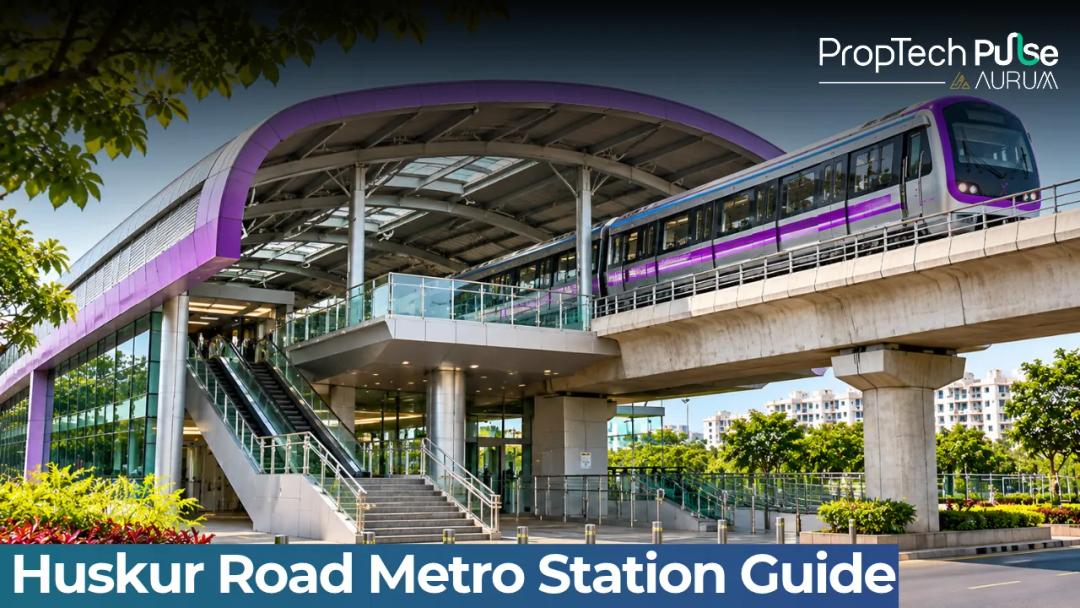
Knowing exactly where the station sits relative to Huskur Gate removes the guesswork from daily commutes. You also need to track peak fares and pick the right platform direction. This guide strips out the generic neighbourhood listings. It covers only the operational details commuters use after the August 2025 inauguration. In this guide Location & Yellow Line Status Navigating Huskur Gate and Nearby Areas Yellow Line Timings & Frequency Metro Fares & Journey Times to Key Hubs Station Layout & Platform Instructions Route Changes & Last-Mile Connectivity Frequently asked questions Location & Yellow Line Status Quick answer Huskur Road metro station sits on the Yellow Line of Namma Metro, positioned near Veerasandra in Electronic City, Bengaluru. Opened on 10 August 2025, it connects South Bangalore residents directly to the central business districts. The station operates daily from early morning until late night with trains running at regular intervals throughout peak and off-peak hours. The station occupies a strategic position along the North-South Corridor, serving the rapidly densifying outskirts of Electronic City. It sits between Infosys Foundation Konappana Agrahara to the north and Biocon Hebbagodi to the south. Being part of Phase 3 expansion, the stop was designed to absorb the commute surge created by new residential projects and tech parks spreading beyond the traditional IT corridors. Start by pulling up the Bangalore Huskur pin code if you are scouting rentals nearby. The immediate catchment holds several layouts and townships sitting outside the main IT hub. Rail access becomes a genuine differentiator for evening commutes when bus networks choke up. Transit expansion shifts long-term asset values, so readers eyeing similar corridors should check the Phase 3 route impact guide before signing leases. Navigating Huskur Gate and Nearby Areas Huskur Gate functions as the primary landmark and road intersection for anyone approaching from the main arterial route. The distance from the junction to the station entrance measures roughly 303 metres, which translates to a five-minute walk at a normal pace. You enter through the designated feeder path rather than cutting across open plots, and the route stays shaded under mature canopy trees for most of the stretch. Follow these steps to reach the entry gates cleanly: Head east from the Huskur Gate signal towards the newly constructed commercial blocks. Turn right onto the paved access road marked with directional signage pointing toward the metro depot. Continue past the bus bay on your left. The ticket counter and turnstiles appear immediately after the second lamp post. During monsoon months, the walk remains serviceable because drainage channels were upgraded alongside the station construction. Water pooling stays rare, though puddles can form near the bus halt. Ride-sharing vehicles drop passengers at the bus bay, not directly at the turnstile. Expect a short stroll regardless of your chosen last-mile option. Independent villas and low-rise apartments dot the wider huskur road corridor. Traffic slows down noticeably the moment you step away from the main gate. Vendors line the eastern edge of the commercial plaza, offering cheap tea and snacks before you head underground. Footpaths stay wide enough for pedestrians to share space with cycle rickshaws, but keep to the centre lane during rush hour to avoid bottlenecks. Yellow Line Timings & Frequency Namma Metro maintains consistent operating windows across the network. Trains depart from Huskur Road metro station starting at 06:00 on weekdays. Monday services launch slightly earlier at 05:05 to accommodate industrial shift changes at corporate campuses further north. Last trains head toward the northern terminus at 23:55. Headways shrink to around eight minutes during weekday mornings and evenings. Off-peak gaps widen to twelve to fifteen minutes, keeping wait times manageable. Weekend services follow a relaxed schedule but rarely dip below twenty-minute intervals. Frequency adjustments happen seasonally and typically coincide with exam periods at nearby colleges or major festival weeks. Watch official BMC announcements before planning large family visits home. Weekend special trips sometimes alter the standard departure grid. Metro Fares & Journey Times to Key Hubs Jakarta-style distance-based pricing does not apply here. Bengaluru uses a zone model combined with base fares that scale according to the number of interchanges. Token counters issue single-journey passes calculated automatically based on your destination. Smart cards carry a recharge discount and reduce per-ride costs for frequent users. Journey duration and estimated token fare from Huskur Road to major Bengaluru employment centres Destination Hub Est. Travel Time Token Fare (Approx.) Smart Card Discount Majestic (Sampige Road) 45 mins ₹70–₹80 Up to 10% off-peak MG Road (Central Business District) 40 mins ₹60–₹70 Standard concession applies Koramangala (Blue Line Interchange) 35 mins ₹50–₹60 5% peak / 10% off-peak Vijayanagar (West End Hub) 50 mins ₹90–₹100 Discount tier varies Average monthly pass estimate (22 rides) ₹1,400–₹1,600 with smart card loading Fares scale up gradually as you cross into higher-count zones, relying on travel distance rather than flat city-wide rates. Student concessions apply with valid institutional IDs, and senior citizens get reduced tariffs off-peak. Always validate your smart card before swiping through the gates, since scanners instantly reject expired or underloaded passes. Smart card tip: Load value only during non-peak hours if your employer offers flexible timings. The extra percentage saved compounds quickly over a full financial year, especially for daily cross-city travel. Station Layout & Platform Instructions Across Phase 3 stops, the design mirrors standard overground layouts. Escalators and staircases open straight onto a mezzanine floor housing ticket counters and security screening. Biometric verification happens at the turnstiles before riders descend via lifts or stairs to reach the single island platform. The platform runs perpendicular to the main approach road. Door directions indicate train orientation clearly enough. When facing the tracks from the stairs, northernbound carriages arrive on the right while southernbound sets pull in from the left. Digital screens update arrival countdowns every two minutes. Speakers then broadcast station names in Kannada, Hindi, Tamil, Telugu, and English right before the doors seal. Two-wheeler parking fills the designated zones near the feeder road. Four-wheeler slots simply do not exist here due to tight land limits. Covered racks sit right beside the exit gates for cyclists combining short rides with train travel. Accessibility lifts run non-stop between street level and the platform, so ask for staff help ahead of time if heavy crowds make the ramp confusing. Route Changes & Last-Mile Connectivity Direct travel suits most professionals until routes cross the central belt. Interchange points multiply past that mark. Swapping lines runs smoothest at Majestic or Kempegowda Airport Terminal 2, saving you from climbing extra flights. Stick to the lifts even when the concourse feels quiet, as rolling suitcases fight spiral staircases. Municipal bus feeds work reasonably well outside morning and evening peaks. Operators push shuttles from big residential hubs straight to the station forecourt. Train departure times never quite match these road schedules though. Walking wins over waiting if your building sits within six hundred metres of the gates, though predictable flat-rate autos wait along the eastern curb for longer hops. Rail stays the only consistent escape route for north-south commutes when NH 48 alternatives choke up. Road widening projects inch forward slowly, leaving daily gridlock untouched. Property prices react fast to these reliability gaps. Buyers mapping longer-term holds must cross-reference transit blueprints with upcoming highway upgrades, since rental ceilings tend to jump the moment trial runs begin. Before You Commit to a Lease or Purchase Use this checklist when weighing locations near the station. Confirm whether the building sits inside the noise buffer zone. Ground-floor units facing the track experience vibration during freight windows. Verify parking availability for your specific vehicle type since four-wheeler space never materialises at this stop. Test the actual walk from your prospective doorstep during evening rush hour rather than relying on map distances. Finally, calculate your effective commute cost including last-mile auto fares, because token prices represent only half the picture. Frequently asked questions Which line is Huskur Road metro station on? The stop belongs to the Yellow Line, officially designated as the North-South Corridor in Bengaluru Phase 3 expansion. It bridges the northern tech corridors with the southern manufacturing belt, functioning as a critical transfer node for commuters crossing the city diagonal rather than following perimeter ring routes. What are the first and last train timings at Huskur Road? Trains depart daily starting at 06:00, with Monday services launching slightly earlier at 05:05 to accommodate industrial shift changes. Evening departures continue until 23:55. Network-wide timetable updates roll out periodically, so verify current windows on the operator portal before booking fixed return trips home. How far is Huskur Gate from the metro station? Measuring roughly 303 metres, the junction to the turnstile represents a straightforward five-minute walk. Signage directs pedestrians along a dedicated paved corridor, bypassing open construction patches and keeping you clear of vehicular traffic throughout the approach. Can I park four-wheelers at Huskur Road metro station? Two-wheeler coverage exists behind the mezzanine level, but car parking slots were never allocated due to limited land acquisition near the feeder road. Cyclists can utilise sheltered racks beside the exit, while ride-hailing drivers drop passengers exclusively at the external bus bay zone. How do I change lines from Huskur Road metro? Cross-platform transfers occur smoothly at Majestic and Kempegowda Terminal 2, where both lines share intersecting corridors. Navigate using colour-coded floor arrows, prioritise wheelchair-accessible lifts for heavy luggage, and allow ten extra minutes during weekday transitions to avoid concourse bottlenecks. Enjoyed this blog article? Visit PropTech Pulse for more interesting blogs.
PropTech Pulse Editorial
23rd November 2026
Uncategorized
PSPCL Bill Payment Online: Official Steps, Fees & Scheme
Punjab residents rely on the Punjab State Power Corporation Ltd (PSPCL) for electricity. Settling dues takes more than opening the first app on your phone. Walkthrough guides often skip over PEBX tariff shifts. They bury payment deadlines. Hidden gateway fees eat into every transaction. A careful approach to pspcl bill payment online keeps your supply running. It shields your credit score. It unlocks policy benefits most users never see. This map covers every authorized route. We break down exact aggregator fees. You will learn how to deploy advance payments to earn interest instead of parking cash. Rent single apartments or manage dozens across Ludhiana and Amritsar. These steps turn a monthly chore into a documented financial win. In this guide How to Pay PSPCL Bill Online Step-by-Step Fees, Penalties & Due Dates The PSPCL Advance Payment Scheme: Earn 1% Monthly Resolving Disputes & Checking Bill Status Which Payment Method Should You Choose? Frequently asked questions How to Pay PSPCL Bill Online Step-by-Step Quick answer Use the official PSPCL portal, the UMANG app, or any registered BBPS provider like PhonePe or your bank app. Enter your ten-digit Consumer ID. Select the billing cycle. Verify the taxed total. Finish via UPI or net banking. You get a digital receipt immediately. Via PSPCL Official Portal & Mobile App The clearest path runs through the designated PSPCL interface. Wallet apps sometimes delay settlement slips. Sub-agents quietly strip portions of your transaction fee. The official portal guarantees instant credit to your PEBX ledger. Open the website or install the verified PSPCL app from your store. Find the consumer login or bill enquiry tab. Both desktop and mobile versions place it front and center. Type your ten-digit Consumer ID. Hunt past invoices, SMS alerts, or the brass plate on your distribution board. Confirm your mobile number with the OTP. This ties the session to you. Select View Current Bill. The system fetches the meter reading. It stacks slab charges, fixed demand fees, and current power purchase rates. Scan the invoice. Spot Total Amount Payable at the base. Pick UPI, card, or internet banking. UPI clears fastest and skips interchange tolls. Grab the transaction ID after redirection. Save the confirmation screen. Closing a resale property demands a clear utility handover. Verify transfer deposits before ink hits the sale deed. Standard connection protocols shave weeks off the move. Read our first time home buyer guide india 2026 for the complete paper trail. Via Bharat Bill Pay System (BBPS) & UMANG City and suburban users prefer aggregator apps for daily spending. These platforms hook straight into PSPCL databases via the RBI-mandated BBPS rail. Initiate a transaction on PhonePe, Google Pay, or your banking app. The request hits BBPS first. BBPS enforces a hard validation rule. Funds stay put until PSPCL verifies the Consumer ID. Clearance triggers a unique reference number. Ledger updates usually finish within a day. Some apps flash provisional success to keep users smiling. UMANG works similarly. It acts as the consolidated government super-app. Open the tool. Search Electricity Bill Payment. Input your Consumer ID and amount. Authenticate with Aadhaar OTP or bank redirect. UMANG intentionally drops convenience fees. It positions itself as the neutral citizen corridor. Fees, Penalties & Due Dates Tracking attachment points prevents surprise deductions. Cash flow stays predictable. PSPCL levies zero taxes on certified banking channels. Commercial gateways layer their own margins on top. PSPCL bill payment channel comparison and typical fee exposure Channel Processing Time Fee Exposure Mobile/Desktop Access Official PSPCL Portal Instant Zero gateway markup Desktop & Mobile UMANG Government App Up to 2 hours Zero Mobile only BBPS Aggregator Apps 2 to 24 hours Up to 2% incl. taxes Mobile & Desktop Authorized Cash Agents Immediate physical recording Varies by outlet policy In-person counters Average settlement across digital routes Under 24 hours Zero to 2% N/A Convenience Charges Explained Processors view electricity settlements as high-volume, low-margin work. They pass infrastructure and dispute costs to the payer. RBI caps BBPS fee collection near two percent including taxes. Domestic users typically see one percent. Corporate feeders pay slightly more. Large settlements trigger tiered pricing. Summer peaks push bills past fifteen thousand rupees. Review the confirmation screen before authorizing. The official portal wins on big numbers by cutting out middlemen. Portfolio managers tracking margins cannot afford to ignore these slivers. Audit similar overheads in our property management india guide. Late Payment & Penalty Rules Deadlines wake up auto-interest. PSPCL prints a firm cutoff on every invoice. Windows span seventeen to twenty-one days. A seven-day buffer follows. Miss it, and the default clause clicks on. A two percent monthly rate attaches to unpaid principal. Interest compounds monthly. Non-payment breeds suspension warnings. Staff alert your handset first. Hard copies follow within two days. Disconnection waits a full thirty days past that first warning. Cut reconnection demands a flat admin recovery fee. Every payment reset triggers it again. Note the exact cutoff time at the bottom right. Moving out? Review our home renting for rookies surviving your first flat hunt sheet to map responsibility transfers. The PSPCL Advance Payment Scheme: Earn 1% Monthly Zero-interest accounts bleed opportunity. Parking cash against your meter earns steady returns. The advance framework flips deposited funds into a creditor position. PSPCL pays you to hold the money. One percent monthly interest rolls into advance balances. Annualized yield hits twelve percent. Credit happens quarterly against upcoming invoices. Net unit cost drops. Liquidity stays intact for leaks or seasonal appliances. Run a quick math check. Deposit fifty thousand rupees in late October. Winter heating buffers the balance. Six months later, interest approaches three thousand rupees. June AC usage drives consumption into top slabs. Credited interest offsets the spike. Burn rate falls. Savings remain untouched. Distinguish advance postings from prepaid tokens. Tokens sell pure revenue. They vanish if unused. Advances never expire. They compound until exhausted. Ask for receipts stamped Advance Against Dues. Prepaid Consumption labels skip the interest tag entirely. Resolving Disputes & Checking Bill Status How to View Payment History & Download Receipts The portal hoards transaction archives for five fiscal years. Hit the history dashboard. Filter by month. Export stamped PDF proofs. Authorized hashes satisfy accounting software and tax auditors. Banks muddle merchant codes. Electricity payments land under generic services tags. Expense trackers choke on the noise. GST input credit matching fractures for registered traders. Clean receipts stop reconciliation chaos. Back files to separate clouds. Device swaps lose nothing. Handling Double Bills or Average Adjustment Errors Smart collectors miss pulses. Radio interference kills signals. SIM cards degrade. Power surges interrupt feeds. Telemetry failure forces fallback averaging. Engines pull six-month baselines. Sudden spikes inflate fast. Weather swings accelerate the damage. Check the kilowatt-hour display against your physical dial. Ten percent variance demands action. File the flag through the portal complaint window. Snap the meter face. Tag the serial number. Describe the fault. Engineers audit escalations in four business days. Suspension pauses during active disputes. Fraud Warning: Fake Smart Meter Upgrades Criminal rings target suburban and rural bases with fake upgrade calls. Genuine PSPCL installations happen only at Area Offices or scheduled colony drives. Staff wear printed municipal IDs and branded vests. Never hand over OTPs to strangers promising free swaps. Report suspicious contacts to the helpline listed on your latest statement. Which Payment Method Should You Choose? Your winner hinges on fee tolerance versus reconciliation precision. Homeowners wanting zero-cost settlement stick to the PSPCL portal or UMANG. Landlords juggling portfolios lean toward aggregate dashboards. Nominal BBPS markups buy automated reconciliation reports. Chase promotions sparingly. Advance balances lock in twelve percent annual returns. Future consumption shocks hit softer when strategy beats luck. Frequently asked questions How can I check my PSPCL bill payment status? Log into the official PSPCL customer portal using your registered credentials. Navigate to the transaction history dashboard located beneath the main menu. Filter results by the relevant month and look for entries marked 'Settled' or 'Credit Posted'. Alternatively, check your registered email inbox for the automated remittance confirmation containing your acknowledgment hash. BBPS transactions may take up to twenty-four hours to reflect fully on the distributor ledger. Is it safe to pay PSPCL bill online? Yes, provided you route payments through verified channels. The official PSPCL portal and UMAPP operate on encrypted government-grade infrastructures. Commercial aggregators function under strict RBI oversight through the national BBPS rail, which mandates source-account validation before fund movement. Avoid sharing passwords or OTPs with unverified links. Stick to applications downloaded directly from official storefronts to neutralize interception risks. What is PSPCL's advance payment scheme? The advance scheme allows subscribers to deposit surplus funds directly against their electricity ledger. Unlike expired prepaid tokens, these balances roll forward indefinitely while earning one percent monthly interest compounded quarterly. The credited amounts automatically reduce your subsequent invoice totals. This mechanism functions as a high-yield buffer strategy, effectively lowering average monthly expenditure during peak consumption seasons without depleting liquid personal reserves. Can we pay electricity bill in installments in Punjab? Standard residential accounts require full settlement by the printed cutoff date to avoid triggering penalty clauses. PSPCL does not offer revolving installment plans for ordinary domestic consumers. However, parties facing extraordinary hardship or suspended connections can apply for structured settlement arrangements at the local Area Office. Approval hinges on submitting a written request detailing the financial constraint and proposing a clear four-part repayment schedule. What happens if my PSPCL bill payment fails? If your bank deducts funds but the portal displays an error, do not attempt duplicate payments immediately. Contact your financial institution first to trace the transaction identifier. BBPS rules place resolution liability on the service provider, guaranteeing refund or auto-posting within seventy-two hours. Simultaneously open a dispute ticket via the customer portal attachment section. Manual reconciliation clears automatically once the originating bank confirms the original debit direction. Sources Reserve Bank of India: Bharat Bill Pay System operational guidelines and convenience fee cap frameworks (accessed November 2026) RBI Circulars: BBPS grievance redressal timelines and transaction validation protocols (accessed November 2026) Enjoyed this blog article? Visit PropTech Pulse for more interesting blogs.
PropTech Pulse Editorial
23rd November 2026
Uncategorized
Gated Communities in Hyderabad: Costs, Zones & Rules
When searching for gated communities in Hyderabad, buyers often focus on renderings instead of the monthly maintenance bill. Paying for a secure perimeter, a swimming pool, and round-the-clock guards sounds ideal until you see the actual invoice. Buying into one works well when the infrastructure scales right. It fails fast when too many families share limited open space. This guide cuts past the brochure photos. You will see exactly how maintenance compounds, when GST applies to your society bills, and the exact steps to verify a project before handing over a single rupee. In this guide What makes a gated community different from a standalone building? Where to find the best gated societies in Hyderabad What gated living actually costs per month Two things buyers forget to ask: Density and Land Share Pre-booking checklist: RERA verification and approvals Making the final choice Frequently asked questions What makes a gated community different from a standalone building? Quick answer A gated society controls access, maintains shared infrastructure like driveways, clubhouses, and stormwater drains, and funds these through monthly fees paid by residents. A standalone apartment block sits within the municipal boundary but usually lacks controlled entry, dedicated recreational space, or a formal resident welfare association to manage common assets. The physical difference is obvious. Steel gates, CCTV networks, and security booths separate the development from the surrounding streets. The legal difference matters more. Every residential enclave in Telangana operates under a Residents Welfare Association formed by the buyer agreement. That entity holds the title deeds to common areas. It appoints the caretaker staff and pays the electricity and water charges for shared zones. Standalone mid-sized buildings often skip this structure entirely. Informal committees left to manage maintenance struggle with vendor payments and long-term sinking fund accounting. You will also notice architectural choices shaped by the gated model. Developers design wider internal roads to accommodate fire engine access. They allocate higher percentages of the plot for ground-floor parking. Amenity clusters get placed away from traffic-heavy boundaries to protect livability once the population hits forty households. Where to find the best gated societies in Hyderabad Hyderabad sprawls along distinct growth corridors. The price you pay for security and shared facilities shifts dramatically depending on the axis you choose. Your commute distance will anchor most decisions. The monthly carrying costs tell another story. The western corridor around Gachibowli, Kondapur, and Financial District commands premium rates because of IT park proximity. Newer developments here cluster at twenty-two to twenty-five storeys with minimal vertical setbacks. Maintenance charges run higher, usually between ₹3.50 and ₹5.50 per square foot. This reflects the heavy cost of maintaining elevator banks, high-pressure water pumps, and large mechanical rooms. The upside remains walkable access to dining and metro stations once the infrastructure matures. Look north toward Kompally, Bachupally, and Shadnagar highway stretches to encounter flatter terrain with larger base plots. Villa segments and low-rise podium structures dominate this belt. Buyers seeking a check Telangana RERA project registration in these Hyderabad gated communities expect wider internal lanes and larger clubhouses relative to unit count. Maintenance brackets sit closer to ₹2.00–₹3.00 per square foot here. Parking tends to be less congested early in the day. Daily commute times to Cyberabad spike during peak hours though. The eastern and southern fringes along NH-65 and ORR extensions remain active development zones. Plotted developments and hybrid township models mix independent houses with row-house blocks. Security protocols vary because some layouts still operate under phased handover agreements with municipal water boards. Entry pricing stays competitive. This makes the area suitable for investors who prefer longer hold periods while infrastructure upgrades roll out. When people type gated communities near me into their phones, the map pin rarely captures the noise footprint of Hyderabad gated communities. It misses the road width behind the main gate. Drive the route at 7 pm on a weekday before signing anything. Listen for construction equipment, commercial truck routes, and railway crossings that sit outside the development boundary but still affect quiet hours. What gated living actually costs per month Maintenance is never a flat rate across a complex. It scales directly with built-up area and floor level for elevator and water pumping loads. The breadth of amenities matters too. A twelve hundred square foot flat in a mid-tier society pays noticeably less than a two thousand square foot corner unit. Both residents use the same gym. The cost difference adds up quickly over the year. Mapped monthly maintenance expectations for a 1,200 sq ft flat across typical Hyderabad society tiers Society tier Rate per sq ft (approx.) Base monthly amount Common amenities covered Entry level ₹2.00 – ₹2.50 ₹2,400 – ₹3,000 Lobby cleaning, garden upkeep, perimeter lighting, basic security Mid range ₹3.00 – ₹3.50 ₹3,600 – ₹4,200 Pool filtration, clubhouse staff, two lifts, power backup for common areas Premium ₹4.50 – ₹5.50 ₹5,400 – ₹6,600 Multiple lifts, concierge desk, indoor games hall, advanced HVAC for lobby Total annual outflow (mid-range example) ₹43,200 Excludes society advance corpus and sinking fund contributions Corpus advances hit you at booking or possession. Builders typically demand fifteen days of estimated maintenance as an upfront deposit. Sinking funds accumulate yearly to handle roof waterproofing and lift motor replacements. Façade repairs follow five to seven years down the line. Never overlook these line items when calculating affordability. They sit outside your monthly cash flow plan and arrive precisely when major wear sets in. Tax exposure enters the conversation only after a certain threshold. The central government levies eighteen percent GST on maintenance services when the monthly invoice exceeds ₹7,500 per family. The housing society’s annual aggregated turnover must also cross twenty lakh rupees. Most mid-sized complexes cross this turnover threshold quickly once occupancy reaches sixty percent. Lower-income or sparsely populated developments stay below the taxable limit for several years. Always request the society treasurer to confirm whether the association has registered for GST services on CBIC. Unregistered societies collecting GST violate service tax guidelines. This exposes residents to compliance risk. Two things buyers forget to ask: Density and Land Share A fifty-acre plot divided among eight towers holding two hundred flats produces completely different daily routines than the same plot hosting four towers with eighty units. The term you need to track is Undivided Share of Land. It dictates how much green space, walking tracks, and playground area translates to per household. A understand UDS in real estate baseline helps you forecast crowding at the clubhouse terrace. It also reveals pressure drops in evening shower hours and lift waiting times after office hour returns. High density forces developers to stack amenities vertically rather than spread them horizontally. Rooftop jogging tracks replace ground-level parks. Children play spaces get split into smaller multi-use courts. These compromises work fine until maintenance budgets tighten. Shared surfaces degrade faster then. If you value open lawns, tree-lined walks, and uncluttered parking, prioritize projects capping floors above thirty-seven stories or explicitly marketing low-rise podium configurations. Conversely, high-density schemes often win on transaction speed. Resale liquidity stays strong in western corridors because younger professionals accept crowded amenities in exchange for shorter commutes and busy street-side retail. Decide which trade-off matches your life stage. Families with young children usually sacrifice some commute time for lower vertical density. Singles and dual-income couples lean toward high-rise convenience. Pre-booking checklist: RERA verification and approvals Before you sign a booking form or transfer tokens, run a strict approval audit. Hyderabadi developments have historically faced delays in Environmental Impact Assessment clearances. GHMC building plan sanctions and HMDA layout conversions face similar bottlenecks. Missing paperwork stalls Occupancy Certificates. This locks resale potential immediately. Verify title chain. Confirm the developer holds a clear sale deed with no encumbrances, mortgages, or pending litigation. Cross-check the parent deed and mutation records at the local registrar office. Search RERA registration. Type the project name into the official state portal at rera.telangana.gov.in. Ensure the listing shows current status, approved carpet areas, and registered agent details. Match the flat numbering schedule against the sanctioned plan. Confirm GHMC or HMDA plan approval. High-rise constructions require strict structural stability certificates submitted by licensed architects. Request copies before advancing beyond the token stage. Review utility agreements. Telangana State Power Distribution Company (TSPDCL) sanction letters and Greater Hyderabad Municipal Water Board connections must reference the development plot, not adjacent parcels. Assemble a due diligence packet. Keep scanned copies of every document, meeting minutes regarding maintenance caps, and builder promises written into the agreement. A complete property due diligence checklist prevents last-minute discovery of zoning mismatches. Registration costs in Telangana hover around six percent of the declared market value. This splits into roughly four percent stamp duty and two percent registration fees. Women buyers often qualify for reduced stamp duty slabs in select districts. Policy updates shift frequently though. Track current rates through the state treasury portal at igrtresury.telangana.gov.in before finalizing your payment schedule. Making the final choice Match your daily movement patterns against the physical layout, not the renderings. Calculate drive times to your workplace during actual rush hours. Run a ten-day estimate of monthly maintenance plus corpus reserves against your take-home pay. Verify that the plot accommodates the number of vehicles you expect within five years. Walk the perimeter road at dusk to gauge street lighting quality. When those variables align, the gate works as intended. Stretch the details too thin, and no amount of landscaping fixes the friction. Frequently asked questions What is the average maintenance charge for gated societies in Hyderabad? Most societies bill between two and five rupees per square foot of carpet area. Mid-range developments with standard amenities typically settle around three rupees per square foot, translating to roughly thirty-six hundred to forty-two hundred rupees monthly for a standard flat. Premium towers offering multiple lifts, concierge desks, and climate-controlled lobbies push toward four to five point five rupees. Corpus advances and sinking fund contributions sit outside this base rate and arrive annually or at possession. How do I check if a gated community is RERA registered in Telangana? Visit the state authority website at rera.telangana.gov.in and enter either the project name or the developer company name. Valid listings display the registration certificate number, approved floor plans, registered agents, and complaint filing options. Compare the advertised flat sizes against the sanctioned carpet areas in the database. Mismatches indicate unauthorized modifications. Always download the public report PDF before visiting sales offices. What is the difference between a gated community and a standalone apartment? Controlled access defines the practical distinction. Gated developments maintain steel entry points, perimeter fencing, and dedicated security staffing funded through a formal resident association. Standalone blocks sit within municipal limits but rarely install restricted entry systems or pooled facility budgets. Standalone properties rely on individual owners for exterior maintenance, whereas gated societies hire contracted vendors for drainage, electrical distribution, and common-area cleaning under a unified management contract. Does GST apply to monthly maintenance in gated societies? Eighteen percent GST activates only when two conditions meet simultaneously. The individual monthly maintenance invoice must exceed seven thousand five hundred rupees, and the total annual turnover collected by the housing society must surpass twenty lakh rupees. Smaller complexes or newly launched projects with low occupancy typically remain below the taxable threshold for several years. Registered societies must issue proper tax invoices showing HSN codes and center of supply details. Why does plot size matter more than the number of amenities? A sprawling base plot distributes foot traffic across wider walking paths, larger lawns, and decentralized play zones. High-density towers cram the same resident population onto compact terraces and rooftop decks, accelerating wear on shared surfaces and creating bottleneck congestion during peak usage hours. Plot dimensions dictate the undivided land share per household, which directly influences long-term maintenance stress and outdoor air quality. Amenities count little when the space to host them disappears. Sources Central Board of Indirect Taxes and Customs: GST notification on construction and maintenance services, threshold criteria for residential associations (accessed November 2026) Real Estate Regulatory Authority Telangana: Project registration search tool and compliance reporting format (accessed November 2026) Enjoyed this blog article? Visit PropTech Pulse for more interesting blogs.
PropTech Pulse Editorial
23rd November 2026
Uncategorized
Huskur Road Metro Station Guide: Timings, Fares & Routes
Knowing exactly where the station sits relative to Huskur Gate removes the guesswork from daily commutes. You also need to track peak fares and pick the right platform direction. This guide strips out the generic neighbourhood listings. It covers only the operational details commuters use after the August 2025 inauguration. In this guide Location & Yellow Line Status Navigating Huskur Gate and Nearby Areas Yellow Line Timings & Frequency Metro Fares & Journey Times to Key Hubs Station Layout & Platform Instructions Route Changes & Last-Mile Connectivity Frequently asked questions Location & Yellow Line Status Quick answer Huskur Road metro station sits on the Yellow Line of Namma Metro, positioned near Veerasandra in Electronic City, Bengaluru. Opened on 10 August 2025, it connects South Bangalore residents directly to the central business districts. The station operates daily from early morning until late night with trains running at regular intervals throughout peak and off-peak hours. The station occupies a strategic position along the North-South Corridor, serving the rapidly densifying outskirts of Electronic City. It sits between Infosys Foundation Konappana Agrahara to the north and Biocon Hebbagodi to the south. Being part of Phase 3 expansion, the stop was designed to absorb the commute surge created by new residential projects and tech parks spreading beyond the traditional IT corridors. Start by pulling up the Bangalore Huskur pin code if you are scouting rentals nearby. The immediate catchment holds several layouts and townships sitting outside the main IT hub. Rail access becomes a genuine differentiator for evening commutes when bus networks choke up. Transit expansion shifts long-term asset values, so readers eyeing similar corridors should check the Phase 3 route impact guide before signing leases. Navigating Huskur Gate and Nearby Areas Huskur Gate functions as the primary landmark and road intersection for anyone approaching from the main arterial route. The distance from the junction to the station entrance measures roughly 303 metres, which translates to a five-minute walk at a normal pace. You enter through the designated feeder path rather than cutting across open plots, and the route stays shaded under mature canopy trees for most of the stretch. Follow these steps to reach the entry gates cleanly: Head east from the Huskur Gate signal towards the newly constructed commercial blocks. Turn right onto the paved access road marked with directional signage pointing toward the metro depot. Continue past the bus bay on your left. The ticket counter and turnstiles appear immediately after the second lamp post. During monsoon months, the walk remains serviceable because drainage channels were upgraded alongside the station construction. Water pooling stays rare, though puddles can form near the bus halt. Ride-sharing vehicles drop passengers at the bus bay, not directly at the turnstile. Expect a short stroll regardless of your chosen last-mile option. Independent villas and low-rise apartments dot the wider huskur road corridor. Traffic slows down noticeably the moment you step away from the main gate. Vendors line the eastern edge of the commercial plaza, offering cheap tea and snacks before you head underground. Footpaths stay wide enough for pedestrians to share space with cycle rickshaws, but keep to the centre lane during rush hour to avoid bottlenecks. Yellow Line Timings & Frequency Namma Metro maintains consistent operating windows across the network. Trains depart from Huskur Road metro station starting at 06:00 on weekdays. Monday services launch slightly earlier at 05:05 to accommodate industrial shift changes at corporate campuses further north. Last trains head toward the northern terminus at 23:55. Headways shrink to around eight minutes during weekday mornings and evenings. Off-peak gaps widen to twelve to fifteen minutes, keeping wait times manageable. Weekend services follow a relaxed schedule but rarely dip below twenty-minute intervals. Frequency adjustments happen seasonally and typically coincide with exam periods at nearby colleges or major festival weeks. Watch official BMC announcements before planning large family visits home. Weekend special trips sometimes alter the standard departure grid. Metro Fares & Journey Times to Key Hubs Jakarta-style distance-based pricing does not apply here. Bengaluru uses a zone model combined with base fares that scale according to the number of interchanges. Token counters issue single-journey passes calculated automatically based on your destination. Smart cards carry a recharge discount and reduce per-ride costs for frequent users. Journey duration and estimated token fare from Huskur Road to major Bengaluru employment centres Destination Hub Est. Travel Time Token Fare (Approx.) Smart Card Discount Majestic (Sampige Road) 45 mins ₹70–₹80 Up to 10% off-peak MG Road (Central Business District) 40 mins ₹60–₹70 Standard concession applies Koramangala (Blue Line Interchange) 35 mins ₹50–₹60 5% peak / 10% off-peak Vijayanagar (West End Hub) 50 mins ₹90–₹100 Discount tier varies Average monthly pass estimate (22 rides) ₹1,400–₹1,600 with smart card loading Fares scale up gradually as you cross into higher-count zones, relying on travel distance rather than flat city-wide rates. Student concessions apply with valid institutional IDs, and senior citizens get reduced tariffs off-peak. Always validate your smart card before swiping through the gates, since scanners instantly reject expired or underloaded passes. Smart card tip: Load value only during non-peak hours if your employer offers flexible timings. The extra percentage saved compounds quickly over a full financial year, especially for daily cross-city travel. Station Layout & Platform Instructions Across Phase 3 stops, the design mirrors standard overground layouts. Escalators and staircases open straight onto a mezzanine floor housing ticket counters and security screening. Biometric verification happens at the turnstiles before riders descend via lifts or stairs to reach the single island platform. The platform runs perpendicular to the main approach road. Door directions indicate train orientation clearly enough. When facing the tracks from the stairs, northernbound carriages arrive on the right while southernbound sets pull in from the left. Digital screens update arrival countdowns every two minutes. Speakers then broadcast station names in Kannada, Hindi, Tamil, Telugu, and English right before the doors seal. Two-wheeler parking fills the designated zones near the feeder road. Four-wheeler slots simply do not exist here due to tight land limits. Covered racks sit right beside the exit gates for cyclists combining short rides with train travel. Accessibility lifts run non-stop between street level and the platform, so ask for staff help ahead of time if heavy crowds make the ramp confusing. Route Changes & Last-Mile Connectivity Direct travel suits most professionals until routes cross the central belt. Interchange points multiply past that mark. Swapping lines runs smoothest at Majestic or Kempegowda Airport Terminal 2, saving you from climbing extra flights. Stick to the lifts even when the concourse feels quiet, as rolling suitcases fight spiral staircases. Municipal bus feeds work reasonably well outside morning and evening peaks. Operators push shuttles from big residential hubs straight to the station forecourt. Train departure times never quite match these road schedules though. Walking wins over waiting if your building sits within six hundred metres of the gates, though predictable flat-rate autos wait along the eastern curb for longer hops. Rail stays the only consistent escape route for north-south commutes when NH 48 alternatives choke up. Road widening projects inch forward slowly, leaving daily gridlock untouched. Property prices react fast to these reliability gaps. Buyers mapping longer-term holds must cross-reference transit blueprints with upcoming highway upgrades, since rental ceilings tend to jump the moment trial runs begin. Before You Commit to a Lease or Purchase Use this checklist when weighing locations near the station. Confirm whether the building sits inside the noise buffer zone. Ground-floor units facing the track experience vibration during freight windows. Verify parking availability for your specific vehicle type since four-wheeler space never materialises at this stop. Test the actual walk from your prospective doorstep during evening rush hour rather than relying on map distances. Finally, calculate your effective commute cost including last-mile auto fares, because token prices represent only half the picture. Frequently asked questions Which line is Huskur Road metro station on? The stop belongs to the Yellow Line, officially designated as the North-South Corridor in Bengaluru Phase 3 expansion. It bridges the northern tech corridors with the southern manufacturing belt, functioning as a critical transfer node for commuters crossing the city diagonal rather than following perimeter ring routes. What are the first and last train timings at Huskur Road? Trains depart daily starting at 06:00, with Monday services launching slightly earlier at 05:05 to accommodate industrial shift changes. Evening departures continue until 23:55. Network-wide timetable updates roll out periodically, so verify current windows on the operator portal before booking fixed return trips home. How far is Huskur Gate from the metro station? Measuring roughly 303 metres, the junction to the turnstile represents a straightforward five-minute walk. Signage directs pedestrians along a dedicated paved corridor, bypassing open construction patches and keeping you clear of vehicular traffic throughout the approach. Can I park four-wheelers at Huskur Road metro station? Two-wheeler coverage exists behind the mezzanine level, but car parking slots were never allocated due to limited land acquisition near the feeder road. Cyclists can utilise sheltered racks beside the exit, while ride-hailing drivers drop passengers exclusively at the external bus bay zone. How do I change lines from Huskur Road metro? Cross-platform transfers occur smoothly at Majestic and Kempegowda Terminal 2, where both lines share intersecting corridors. Navigate using colour-coded floor arrows, prioritise wheelchair-accessible lifts for heavy luggage, and allow ten extra minutes during weekday transitions to avoid concourse bottlenecks. Enjoyed this blog article? Visit PropTech Pulse for more interesting blogs.
PropTech Pulse Editorial
23rd November 2026

Ask Pulse Ai anything about real estate

Unlock the Latest in Real Estate
News, Infographics, Blogs & More! Delivered to your inbox.

