New Launch - India Real Estate Report 2026.

Services
Knowledge Hub
Resources
Tools

Ask Pulse Ai
©PropTech Pulse 2025, All rights reserved.


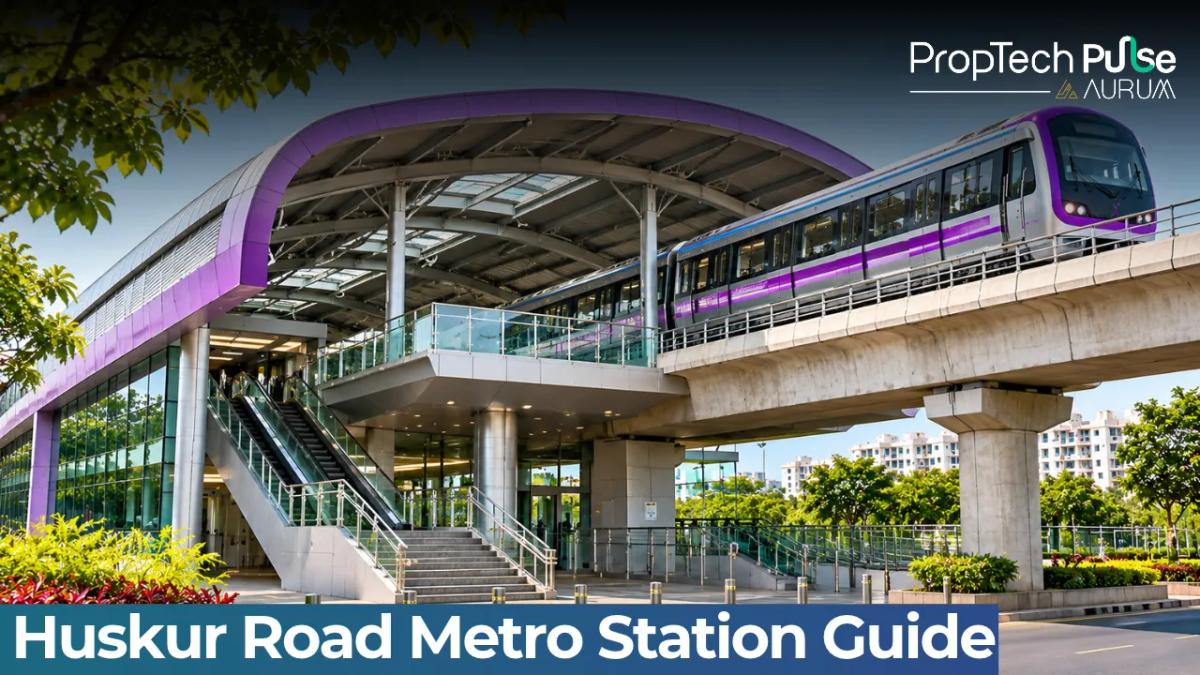
Knowing exactly where the station sits relative to Huskur Gate removes the guesswork from daily commutes. You also need to track peak fares and pick the right platform direction.
This guide strips out the generic neighbourhood listings. It covers only the operational details commuters use after the August 2025 inauguration.
Location & Yellow Line Status
Quick answer
Huskur Road metro station sits on the Yellow Line of Namma Metro, positioned near Veerasandra in Electronic City, Bengaluru. Opened on 10 August 2025, it connects South Bangalore residents directly to the central business districts. The station operates daily from early morning until late night with trains running at regular intervals throughout peak and off-peak hours.
The station occupies a strategic position along the North-South Corridor, serving the rapidly densifying outskirts of Electronic City. It sits between Infosys Foundation Konappana Agrahara to the north and Biocon Hebbagodi to the south.
Being part of Phase 3 expansion, the stop was designed to absorb the commute surge created by new residential projects and tech parks spreading beyond the traditional IT corridors.
Start by pulling up the Bangalore Huskur pin code if you are scouting rentals nearby. The immediate catchment holds several layouts and townships sitting outside the main IT hub. Rail access becomes a genuine differentiator for evening commutes when bus networks choke up.
Transit expansion shifts long-term asset values, so readers eyeing similar corridors should check the Phase 3 route impact guide before signing leases.
Navigating Huskur Gate and Nearby Areas
Huskur Gate functions as the primary landmark and road intersection for anyone approaching from the main arterial route. The distance from the junction to the station entrance measures roughly 303 metres, which translates to a five-minute walk at a normal pace.
You enter through the designated feeder path rather than cutting across open plots, and the route stays shaded under mature canopy trees for most of the stretch.
Follow these steps to reach the entry gates cleanly:
- Head east from the Huskur Gate signal towards the newly constructed commercial blocks.
- Turn right onto the paved access road marked with directional signage pointing toward the metro depot.
- Continue past the bus bay on your left. The ticket counter and turnstiles appear immediately after the second lamp post.
During monsoon months, the walk remains serviceable because drainage channels were upgraded alongside the station construction.
Water pooling stays rare, though puddles can form near the bus halt. Ride-sharing vehicles drop passengers at the bus bay, not directly at the turnstile. Expect a short stroll regardless of your chosen last-mile option.
Independent villas and low-rise apartments dot the wider huskur road corridor. Traffic slows down noticeably the moment you step away from the main gate.
Vendors line the eastern edge of the commercial plaza, offering cheap tea and snacks before you head underground.
Footpaths stay wide enough for pedestrians to share space with cycle rickshaws, but keep to the centre lane during rush hour to avoid bottlenecks.
Yellow Line Timings & Frequency
Namma Metro maintains consistent operating windows across the network. Trains depart from Huskur Road metro station starting at 06:00 on weekdays. Monday services launch slightly earlier at 05:05 to accommodate industrial shift changes at corporate campuses further north.
Last trains head toward the northern terminus at 23:55. Headways shrink to around eight minutes during weekday mornings and evenings.
Off-peak gaps widen to twelve to fifteen minutes, keeping wait times manageable. Weekend services follow a relaxed schedule but rarely dip below twenty-minute intervals.
Frequency adjustments happen seasonally and typically coincide with exam periods at nearby colleges or major festival weeks. Watch official BMC announcements before planning large family visits home. Weekend special trips sometimes alter the standard departure grid.
Metro Fares & Journey Times to Key Hubs
Jakarta-style distance-based pricing does not apply here. Bengaluru uses a zone model combined with base fares that scale according to the number of interchanges.
Token counters issue single-journey passes calculated automatically based on your destination. Smart cards carry a recharge discount and reduce per-ride costs for frequent users.
| Destination Hub | Est. Travel Time | Token Fare (Approx.) | Smart Card Discount |
|---|---|---|---|
| Majestic (Sampige Road) | 45 mins | ₹70–₹80 | Up to 10% off-peak |
| MG Road (Central Business District) | 40 mins | ₹60–₹70 | Standard concession applies |
| Koramangala (Blue Line Interchange) | 35 mins | ₹50–₹60 | 5% peak / 10% off-peak |
| Vijayanagar (West End Hub) | 50 mins | ₹90–₹100 | Discount tier varies |
| Average monthly pass estimate (22 rides) | ₹1,400–₹1,600 with smart card loading | ||
Fares scale up gradually as you cross into higher-count zones, relying on travel distance rather than flat city-wide rates. Student concessions apply with valid institutional IDs, and senior citizens get reduced tariffs off-peak.
Always validate your smart card before swiping through the gates, since scanners instantly reject expired or underloaded passes.
Smart card tip: Load value only during non-peak hours if your employer offers flexible timings. The extra percentage saved compounds quickly over a full financial year, especially for daily cross-city travel.
Station Layout & Platform Instructions
Across Phase 3 stops, the design mirrors standard overground layouts. Escalators and staircases open straight onto a mezzanine floor housing ticket counters and security screening. Biometric verification happens at the turnstiles before riders descend via lifts or stairs to reach the single island platform.
The platform runs perpendicular to the main approach road. Door directions indicate train orientation clearly enough.
When facing the tracks from the stairs, northernbound carriages arrive on the right while southernbound sets pull in from the left.
Digital screens update arrival countdowns every two minutes. Speakers then broadcast station names in Kannada, Hindi, Tamil, Telugu, and English right before the doors seal.
Two-wheeler parking fills the designated zones near the feeder road. Four-wheeler slots simply do not exist here due to tight land limits. Covered racks sit right beside the exit gates for cyclists combining short rides with train travel.
Accessibility lifts run non-stop between street level and the platform, so ask for staff help ahead of time if heavy crowds make the ramp confusing.
Route Changes & Last-Mile Connectivity
Direct travel suits most professionals until routes cross the central belt. Interchange points multiply past that mark. Swapping lines runs smoothest at Majestic or Kempegowda Airport Terminal 2, saving you from climbing extra flights.
Stick to the lifts even when the concourse feels quiet, as rolling suitcases fight spiral staircases.
Municipal bus feeds work reasonably well outside morning and evening peaks. Operators push shuttles from big residential hubs straight to the station forecourt.
Train departure times never quite match these road schedules though. Walking wins over waiting if your building sits within six hundred metres of the gates, though predictable flat-rate autos wait along the eastern curb for longer hops.
Rail stays the only consistent escape route for north-south commutes when NH 48 alternatives choke up. Road widening projects inch forward slowly, leaving daily gridlock untouched. Property prices react fast to these reliability gaps. Buyers mapping longer-term holds must cross-reference transit blueprints with upcoming highway upgrades, since rental ceilings tend to jump the moment trial runs begin.
Before You Commit to a Lease or Purchase
Use this checklist when weighing locations near the station. Confirm whether the building sits inside the noise buffer zone. Ground-floor units facing the track experience vibration during freight windows.
Verify parking availability for your specific vehicle type since four-wheeler space never materialises at this stop. Test the actual walk from your prospective doorstep during evening rush hour rather than relying on map distances.
Finally, calculate your effective commute cost including last-mile auto fares, because token prices represent only half the picture.
Frequently asked questions
Which line is Huskur Road metro station on?
The stop belongs to the Yellow Line, officially designated as the North-South Corridor in Bengaluru Phase 3 expansion. It bridges the northern tech corridors with the southern manufacturing belt, functioning as a critical transfer node for commuters crossing the city diagonal rather than following perimeter ring routes.
What are the first and last train timings at Huskur Road?
Trains depart daily starting at 06:00, with Monday services launching slightly earlier at 05:05 to accommodate industrial shift changes. Evening departures continue until 23:55. Network-wide timetable updates roll out periodically, so verify current windows on the operator portal before booking fixed return trips home.
How far is Huskur Gate from the metro station?
Measuring roughly 303 metres, the junction to the turnstile represents a straightforward five-minute walk. Signage directs pedestrians along a dedicated paved corridor, bypassing open construction patches and keeping you clear of vehicular traffic throughout the approach.
Can I park four-wheelers at Huskur Road metro station?
Two-wheeler coverage exists behind the mezzanine level, but car parking slots were never allocated due to limited land acquisition near the feeder road. Cyclists can utilise sheltered racks beside the exit, while ride-hailing drivers drop passengers exclusively at the external bus bay zone.
How do I change lines from Huskur Road metro?
Cross-platform transfers occur smoothly at Majestic and Kempegowda Terminal 2, where both lines share intersecting corridors. Navigate using colour-coded floor arrows, prioritise wheelchair-accessible lifts for heavy luggage, and allow ten extra minutes during weekday transitions to avoid concourse bottlenecks.
Enjoyed this blog article? Visit PropTech Pulse for more interesting blogs.


Ask Pulse Ai anything about real estate

Unlock the Latest in Real Estate
News, Infographics, Blogs & More! Delivered to your inbox.

