New Launch - India Real Estate Report 2026.











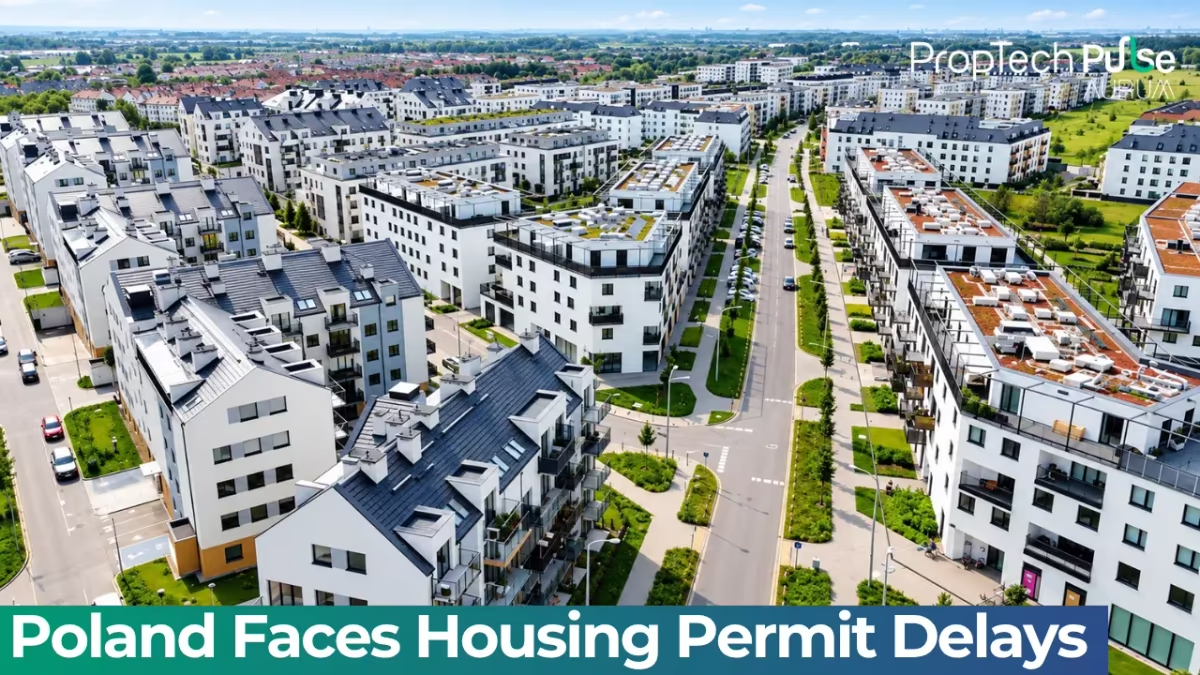
Poland's investment land market continues to be dominated by residential projects. Developers outside Warsaw are focusing mainly on Kraków, Wrocław and Gdańsk, followed by Poznań and Łódź, according to analysis by Walter Herz.
The analysis shows that land value is increasingly determined not only by location and development potential, but also by how efficiently the development process can be completed.
Building Permit Waiting Times Have Increased
Administrative procedures have become considerably longer over the past decade. Developers in Poland's largest regional cities currently wait an average of eight to fourteen months for a building permit for a multifamily residential project.
In Warsaw, the process takes around 18 months. Poznań has the longest waiting period among the analysed cities, at more than 14 months, followed by Gdynia at more than 10 months.
Average waiting times are 280 days in Łódź, 267 days in Kraków, 256 days in Wrocław and 231 days in Gdańsk. In 2016, the same process took between two and three and a half months in these cities.
Fewer Permits Issued in Several Cities
The number of building permits issued also declined in most analysed cities between 2024 and 2025. Gdańsk recorded a fall from 70 to 44 decisions, while Kraków declined from 107 to 91.
According to the analysis, the slowdown is therefore linked to longer administrative processes rather than an increase in application volumes.
For investors, longer waiting periods can keep capital tied up for longer and increase exposure to financing costs, material prices, construction costs and changing market conditions.
Planning Reform Adds Uncertainty
Poland's spatial planning reform is creating another layer of uncertainty.
More than 60% of municipalities have yet to adopt general plans, while existing local zoning plans cover around one-third of the country's territory.
From 1 September, municipalities without an adopted general plan will no longer be able to issue new planning decisions for undeveloped land, amend existing local zoning plans or process new Integrated Investment Plans, known as ZIPs.
As a result, plots with a clear planning status and a straightforward route to a building permit are becoming more sought after.
Also Read: Appeninn Expands Polish Property Portfolio to €290M
ZIPs Could Gain Greater Importance
Integrated Investment Plans are expected to play a larger role under the new planning system, replacing the Special Housing Act.
ZIPs could provide advantages for large projects through greater cooperation with municipalities and improved cost predictability.
However, their effective use depends on municipalities having general plans in place. Most municipalities have yet to adopt them.
Also Read: Cavatina Group Plans Planetarium in Bielsko-Biała
Developers Seek Faster Procedures
Developers are calling for greater digitalisation, standardised documentation requirements and fewer institutions involved in reviewing applications.
They argue that the key issue is not simply the amount of documentation but the unpredictability of the overall administrative process.
Walter Herz said limited development-ready land and rising administrative costs are affecting land and housing prices.
Developers are also becoming more selective, with projects facing less predictable timelines increasingly postponed or abandoned.
Enjoyed this update? Visit PropTech Pulse for more real estate news, investment insights and property market trends.