New Launch - India Real Estate Report 2026.

Services
Knowledge Hub
Resources
Tools

Ask Pulse Ai
©PropTech Pulse 2025, All rights reserved.


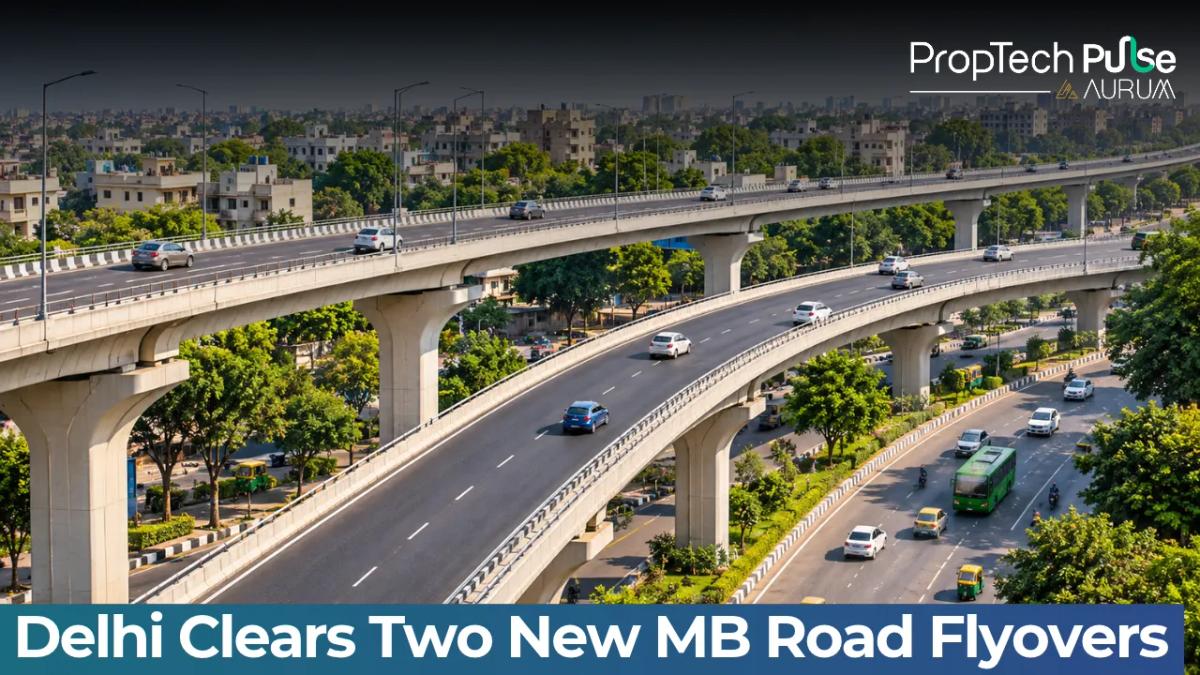
The Delhi government has approved two flyover projects along Mehrauli-Badarpur (MB) Road as part of a broader plan to develop an approximately 8 km elevated corridor in South Delhi.
The initiative is aimed at reducing traffic congestion and improving connectivity between Saket, Ambedkar Nagar, Khanpur, Sangam Vihar, Pul Prahladpur and Badarpur.
The Public Works Department (PWD) has received cabinet approval for the two sections, with a combined sanctioned amount of more than ₹1,471 crore.
The corridor is planned as a six-lane elevated road infrastructure project. The remaining two proposed sections are currently undergoing technical studies.
MB Road is an important arterial route in South Delhi and experiences significant traffic congestion. The proposed corridor is expected to improve vehicle movement and reduce travel time for commuters travelling between residential areas and other parts of the city.
Details of the Two Approved Flyover Projects
The first approved section is a 2.4 km flyover connecting Saket G-Block and Sangam Vihar. More than 50% of the construction work has been completed, according to officials.
The structure is being developed above an underground Metro line as an integrated infrastructure project executed by the Delhi Metro Rail Corporation (DMRC).
The second section covers approximately 2.5 km between Maa Anandmayee Marg and Pul Prahladpur. Construction has started and funds have been sanctioned.
However, the project has encountered land acquisition challenges. The PWD has approached the Delhi Development Authority (DDA), requesting the transfer of land parcels required for construction.
The two approved stretches form part of a larger four-section corridor:
- Saket G-Block to Sangam Vihar: Approximately 2.4 km; construction is more than 50% complete.
- Maa Anandmayee Marg to Pul Prahladpur: Approximately 2.5 km; construction has started.
- Sangam Vihar to Maa Anandmayee Marg: Approximately 2.7 km; detailed project studies are underway.
- Pul Prahladpur to Badarpur: Approximately 450 metres; detailed project studies are underway.
Also Read: NBCC to Build New Andhra Pradesh Bhavan in Delhi
Remaining Sections and Expected Project Timeline
The other two proposed stretches, covering Sangam Vihar to Maa Anandmayee Marg and Pul Prahladpur to Badarpur, have not yet received financial approval.
Consultants have been appointed to examine these sections, and detailed project reports (DPRs) are expected to be ready by January 2027. The reports will subsequently be submitted to the government for consideration and financial approval.
The government is also assessing the number of trees that may need to be removed to execute the remaining sections. Officials have directed the PWD to finalise the alignment of the proposed stretches towards Badarpur.
Once all four sections are completed, the elevated corridor is expected to provide improved connectivity along the MB Road stretch from Saket G-Block towards Badarpur.
It is also expected to benefit commuters travelling through Ambedkar Nagar, Khanpur, Sangam Vihar and Pul Prahladpur.
The project is part of Delhi's broader road infrastructure development effort.
However, the completion of the full corridor will depend on the progress of construction, land availability, environmental assessments and the government's approval of the remaining sections.
Also Read: Barapullah III: What It Means for Mayur Vihar and Noida
How the MB Road Flyover Project Could Impact South Delhi Real Estate
The proposed elevated corridor could influence residential and commercial real estate activity across South Delhi by improving road connectivity between Saket, Ambedkar Nagar, Khanpur, Sangam Vihar, Pul Prahladpur and Badarpur.
Reduced traffic congestion could make neighbourhoods along the corridor more accessible for residents, employees and businesses.
Saket could benefit from improved road access towards Sangam Vihar and surrounding locations.
For residential property owners, better connectivity may strengthen the area's appeal among homebuyers who depend on daily road travel. Improved access could also complement the locality's existing Metro and commercial infrastructure.
Sangam Vihar and Khanpur may see improved connectivity with other parts of South Delhi.
This could make residential properties in these neighbourhoods more convenient for people commuting towards Saket and nearby employment centres.
Areas around Pul Prahladpur and Badarpur could also benefit from smoother movement towards South Delhi and neighbouring NCR locations.
For commercial real estate, improved traffic movement could support accessibility for retail establishments, offices, local markets and service businesses along the corridor.
Better road connectivity may also influence rental preferences among people who prioritise commuting convenience.
However, the impact on property prices and rental values will depend on actual travel-time improvements, project completion, local infrastructure, housing demand and future development activity.
The flyover approvals do not establish any guaranteed property appreciation. The remaining corridor sections are still under study, and their implementation will require further approvals.
Enjoyed this update? Visit PropTech Pulse for more real estate news, investment insights and property market trends.


