New Launch - India Real Estate Report 2026.









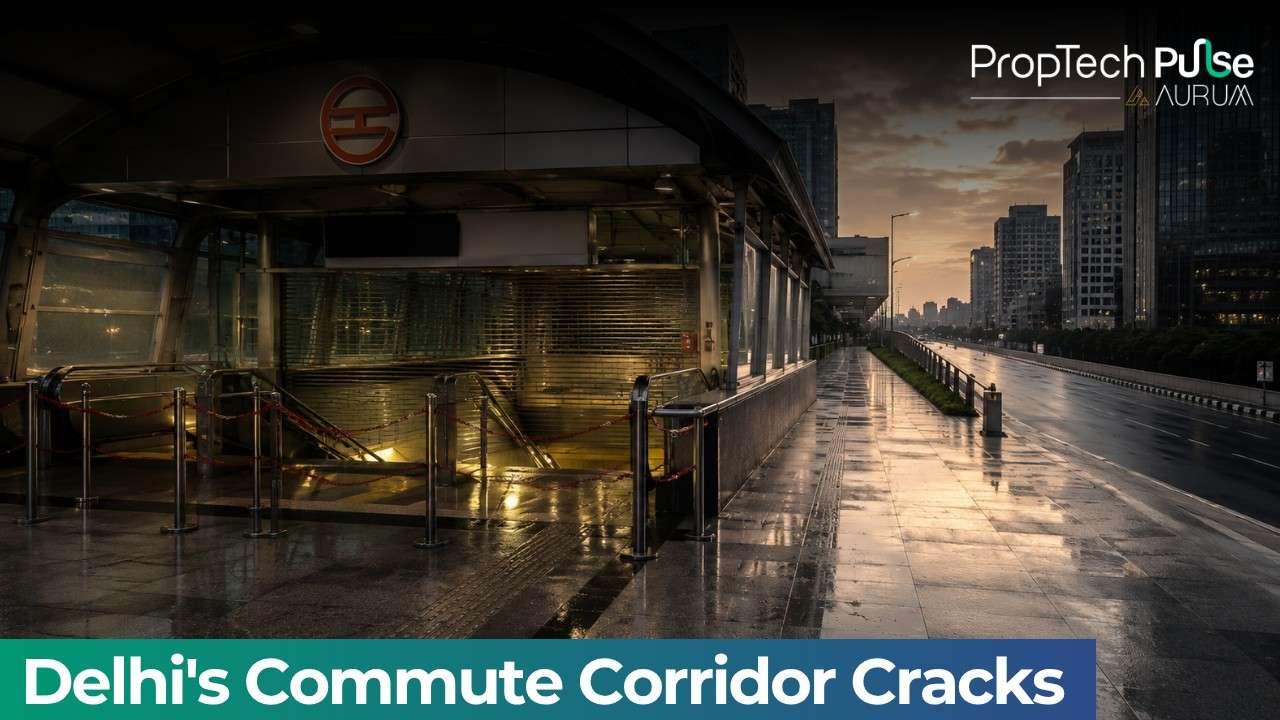
Half an hour. That's how long some commuters sat trapped inside Mandi House station this week, unable to exit, unable to reach offices barely a few hundred metres away. Sixteen Delhi Metro stations shut for security reasons, and the fallout wasn't really about the metro at all. It was about how much of central Delhi's office economy runs on an assumption that never usually gets tested: that the train will be there.
What happened when the stations closed
The Delhi Metro Rail Corporation shut sixteen stations, including Rajiv Chowk, Central Secretariat and Khan Market, until further notice. Interchange facilities stayed open at three of them. Everywhere else, exits were restricted and commuters were held inside station premises with no clear timeline for when normal movement would resume. One passenger's complaint cut straight to the point: my office is right here, and I still can't get to it. That's not a transit inconvenience. That's a workplace access failure, and it happened without a single road being physically closed.
Why office corridors built around metro access are structurally exposed
Central Delhi's commercial geography assumes metro reliability the way coastal cities assume the tide comes in. Khan Market, Barakhamba Road, the Central Secretariat belt, these aren't just addresses. They're office ecosystems built on the premise that thousands of employees can move in and out predictably every single day using rail transit as the primary channel. Pull that channel for even a few hours, and the corridor doesn't just get quieter. It stops functioning as designed. Employers don't build contingency plans for their entire workforce being physically unable to reach the building, because that scenario essentially never happens. Until it does.
The real estate lesson buried in a commuter complaint
Every office lease in a metro-anchored district carries an unstated assumption about transit continuity, and nobody prices that assumption because nobody has had to. This week is a small, sharp reminder that the assumption isn't guaranteed. A commercial district's value is partly a bet on infrastructure staying available, and that bet rarely gets stress-tested this directly. When it does, the gap between "highly reliable" and "always reliable" becomes very expensive very quickly, not in rent, but in lost working hours, missed meetings, and a workforce stuck standing inside a station asking who's responsible.
What comes next for transit-dependent commercial zones
Nobody is going to relocate an office over one disrupted week. But repeated disruption changes how occupiers think about location risk over a longer horizon. Businesses that depend on metro-fed footfall or metro-commuting staff will start asking questions they haven't needed to ask before: what's our exposure if this happens again, and for longer? That's the quiet shift worth watching here. Not a market correction, not a flight from central Delhi, just a slow recalibration of how much certainty transit-dependent office real estate can actually promise, and how much of that promise was always more assumed than guaranteed.
Enjoyed this update? Visit PropTech Pulse for more real estate news and market insights.