New Launch - India Real Estate Report 2026.

Services
Knowledge Hub
Resources
Tools

Ask Pulse Ai
Services
FOR BUYERS & RENTERS
FOR REAL ESTATE DEVELOPERS








Refer other Connectors &
Multiply IncomeRefer other Connectors
& Multiply Income
Refer KuberX & earn
commission on every
loan they get
disbursed.


Scan & Download
©PropTech Pulse 2025, All rights reserved.


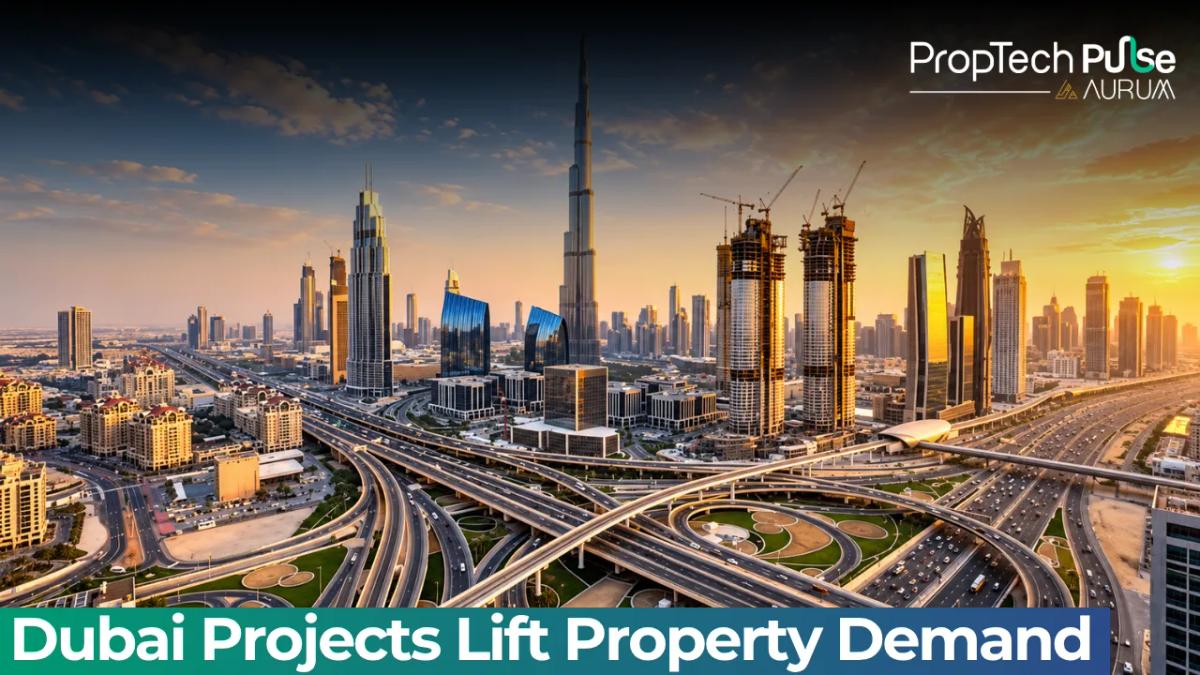
Major infrastructure projects worth billions of dirhams are expected to influence Dubai’s real estate market by improving connectivity, supporting urban expansion and increasing the appeal of emerging residential and commercial districts.
The assessment comes from a study by UAE brokerage W Capital Real Estate Brokerage.
The study identifies four major projects as potential drivers of property demand and investment across Dubai and the wider UAE.
These are the AED 128 billion ($34.9 billion) expansion of Al Maktoum International Airport, the AED 20.5 billion Dubai Metro Blue Line, the Fourth Federal Corridor and Etihad Rail.
According to projections by Dubai’s Roads and Transport Authority (RTA), property and land values around Dubai Metro Blue Line stations could rise by up to 25%.
The project is also expected to generate more than AED 56.5 billion in economic, social and environmental benefits by 2040.
Dubai Metro Blue Line May Support Property Demand
The Dubai Metro Blue Line will extend 30 kilometres and include 14 stations.
It will connect established and emerging districts, including Dubai Creek Harbour, Dubai Silicon Oasis, International City, Mirdif and Al Warqa.
The line is expected to serve communities with a combined population of more than one million people.
Daily ridership is projected to reach 200,000 passengers by 2030 and approximately 320,000 by 2040.
Historical data from property consultancy CBRE, cited in the study, showed that residential properties within a 15-minute walk of Dubai Metro Red Line stations recorded average price growth of 26.7% between 2010 and 2022.
This compared with 24.1% across Dubai’s wider residential market.
W Capital said better public transport access could support property values.
However, future performance will also depend on supply, demand, construction quality and the availability of community services.
Also Read: Dubai Islands to Upgrade 3km Shoreline by Q4 2027
Airport Expansion Puts Dubai South in Focus
The Al Maktoum International Airport expansion is another potential driver of long-term real estate demand, particularly in Dubai South and surrounding districts.
The AED 128 billion project is designed to accommodate up to 260 million passengers annually.
Its plans include five parallel runways and 400 aircraft gates.
The expansion is expected to strengthen Dubai’s position as an aviation and logistics hub.
This could support employment growth and demand for residential, commercial and mixed-use properties in nearby areas.
Also Read: Amwaj Development Completes First Dubai Project Handover
Infrastructure and Property Investment Decisions
The study highlights the growing role of transport connectivity in real estate investment decisions.
Developers and investors are increasingly looking beyond established property districts towards communities linked to new economic centres.
The Fourth Federal Corridor and Etihad Rail were also identified as potential contributors to infrastructure-led property demand.
Together, the four projects form part of the study’s assessment of how major infrastructure investment could influence real estate across Dubai and the wider UAE.
W Capital noted that infrastructure can improve an area's appeal, but property performance will continue to depend on market conditions and the quality of local amenities.
Enjoyed this update? Visit PropTech Pulse for more real estate news, investment insights and property market trends.


