New Launch - India Real Estate Report 2026.










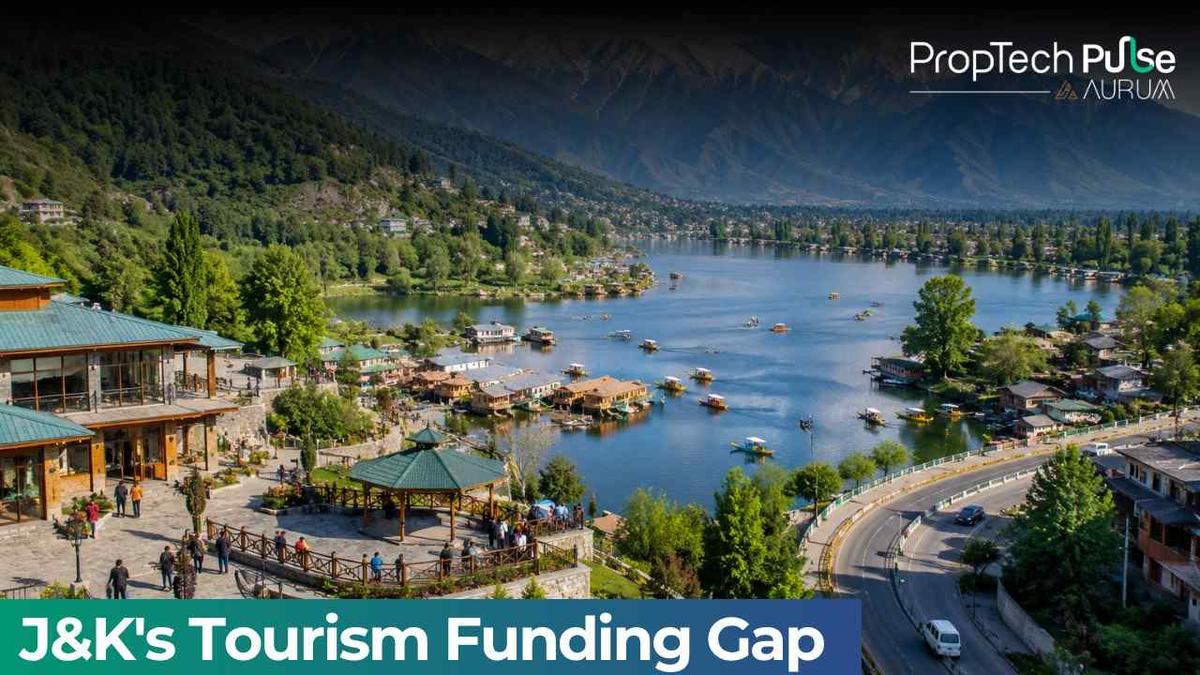
Seven projects. One region. Rs 564 crore in central funding, and a notable gap in what didn't make the list.
The Union Government has sanctioned tourism infrastructure funding for Jammu and Kashmir under two central schemes, Swadesh Darshan and PRASHAD, according to a written reply the Ministry of Tourism gave in the Lok Sabha. What's equally telling is what J&K didn't get: zero projects under Swadesh Darshan 2.0, the Challenge Based Destination Development scheme, or SASCI.
Where the Rs 564 crore is actually going
Six separate circuits and destinations have been sanctioned under Swadesh Darshan. The Jammu-Srinagar-Pahalgam-Bhagwati Nagar-Anantnag-Salamabad Uri-Kargil-Leh circuit gets Rs 77.33 crore. Tourist facilities across Jammu-Rajouri-Shopian-Pulwama get Rs 81.60 crore. Reconstruction of tourism assets damaged in the 2014 floods, funded under the Prime Minister's Development Package, gets Rs 90.43 crore. Mantalai and Sudhmahadev get Rs 91.99 crore for tourist facility development. The Anantnag-Pulwama-Kishtwar-Pahalgam-Zanskar Padum-Daksum-Ranjit Sagar Dam corridor gets Rs 86.39 crore. And Gulmarg-Baramulla-Kupwara-Kargil-Leh, arguably the most tourism-dense stretch on this list, gets the largest single allocation at Rs 96.75 crore.
Separately, under PRASHAD, the Hazratbal Shrine in Srinagar has been sanctioned Rs 40.46 crore, of which Rs 34.30 crore has already been released and utilised. That's a meaningfully high utilisation rate for a heritage and pilgrimage site project, and it suggests the shrine development is further along than most infrastructure allocations at this funding stage typically are.
Where The Rs 564 Crore Is Going
|
Rs 96.75 Cr |
Rs 91.99 Cr |
|
Rs 90.43 Cr |
Rs 86.39 Cr |
|
Rs 81.60 Cr |
Rs 77.33 Cr |
|
Rs 40.46 Cr |
|
Central Scheme Scorecard For J&K
|
Swadesh Darshan 6 projects funded |
PRASHAD 1 project funded |
|
Swadesh Darshan 2.0 0 projects |
CBDD / SASCI 0 projects |
The scheme gap is the real story here
Six projects funded under legacy schemes. Zero under the newer ones. That split isn't accidental, and it's worth sitting with for a second.
Swadesh Darshan 2.0, CBDD and SASCI represent the Centre's more recent tourism infrastructure funding architecture, designed with sharper criteria around destination readiness, sustainability metrics and competitive selection. J&K's absence from all three newer schemes while dominating the older Swadesh Darshan list suggests either a pipeline gap, projects not yet ready to compete under the newer, more rigorous frameworks, or a genuine missed opportunity in how the region is positioning its infrastructure proposals for the funding architecture the Centre is actually prioritising going forward.
Why this matters for tourism-linked real estate
Tourism infrastructure funding rarely stays confined to roads and visitor centres. Circuits like Gulmarg-Baramulla-Kupwara-Kargil-Leh and Jammu-Srinagar-Pahalgam typically see private hospitality and hospitality-adjacent real estate investment follow within a few years of public infrastructure landing, the same pattern that's played out in Ayodhya, Vrindavan and other pilgrimage and tourism corridors elsewhere in India. Rs 564 crore spread across seven named locations is a reasonably specific signal of where the Centre expects visitor volume to grow next, and that's exactly the kind of signal private developers and hospitality operators tend to move on early.
What the reply leaves unanswered
The parliamentary reply is refreshingly specific on where money has gone, but it's silent on timelines, completion status for any of the six Swadesh Darshan projects, or why J&K's newer-scheme pipeline stands empty. The Ministry's statement that primary responsibility for tourism development rests with state and Union Territory administrations puts the onus back on J&K to build a stronger case for the funding architecture that's actually shaping where India's tourism infrastructure money is headed next.
Enjoyed this update? Visit PropTech Pulse for more real estate news and market insights.