New Launch - India Real Estate Report 2026.

Services
Knowledge Hub
Resources
Tools

Ask Pulse Ai
©PropTech Pulse 2025, All rights reserved.


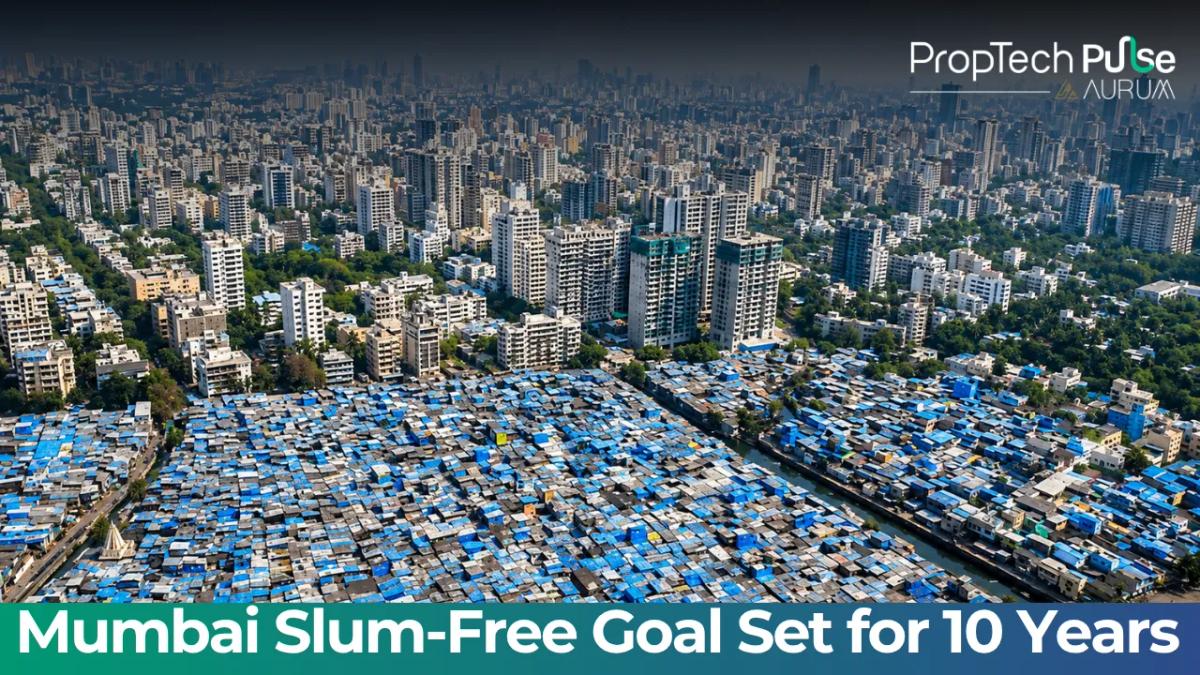
Maharashtra Chief Minister Devendra Fadnavis said on Thursday he is very confident of making Mumbai slum-free in the next 10 years.
He made the remarks at a conference of NAREDCO Maharashtra, the real estate apex body, in Mumbai.
Fadnavis said the government's broader plan centres on two elements.
One is the redevelopment of Dharavi, Asia's largest slum settlement. The other is a cluster-based approach to ageing settlements across the city.
He said Mumbai has been divided into several clusters. The government will use this approach to push redevelopment and make the city slum-free.
Fadnavis said the strategy would also let Mumbai's land resources be used more efficiently, while creating new opportunities for the real estate industry.
Redevelopment will not be limited to residential construction, he said. Plans include mixed-use developments on prime land, covering commercial spaces, museums, playgrounds, recreational areas and better transport infrastructure.
Dharavi's first phase targeted for 2029
Fadnavis set a specific deadline for Dharavi. He said the government aims to have 10,000 houses ready by early 2029.
He said he wants to bring the Prime Minister to hand over these rehabilitation houses at that time.
Fadnavis also highlighted plans for Mumbai's old depot lands. He said the government has prepared plans and reports for their transformation.
This redevelopment would create modern transport facilities, while unlocking valuable land for mixed-use development.
Also Read: Mumbai Slum Redevelopment: Three Giant Clusters Next
Mumbai 3.0: new urban centres and a major new port
Fadnavis positioned this redevelopment push within Maharashtra's larger urban growth strategy.
He said the Mumbai Metropolitan Region (MMR), Pune Metropolitan Region and Nagpur would be the major engines of the state's next phase of urbanisation.
He pointed to significant opportunities in real estate, data centres, advanced manufacturing and frontier technologies.
He said Maharashtra recorded 8.8 per cent growth in the first quarter, higher than India's 7.8 per cent over the same period.
Property registrations in Maharashtra crossed 1.06 million in the first eight months of the year, generating around Rs 9,365 crore in revenue for the government, he said.
Fadnavis also outlined his vision for Mumbai 3.0. He said new urban centres are already being developed around major infrastructure projects, including:
- A proposed offshore airport near Virar
- The Mumbai-Nagpur connectivity network
- The bullet train corridor
- A major new port
He said the proposed port would be significantly larger than Jawaharlal Nehru Port.
It could create employment opportunities for around one million people in Palghar district alone.
Fadnavis also urged developers to adopt newer construction technologies and artificial intelligence in approvals and construction, saying this could improve predictability and accountability.
Also Read: Dharavi Redevelopment: Where the Project Stands Right Now
MMR to become a $1.5 trillion economy by 2047
Fadnavis said MMR's economy will reach $1.5 trillion by 2047. He said urbanisation is inevitable in every growth story, and that it is important to manage it well as it happens.
He noted that MMR has already become a hub for data centres, hosting 60 per cent of India's data centre capacity.
He said the region is expected to become one of India's most populated and best-planned areas over the next decade.
Enjoyed this update? Visit PropTech Pulse for more real estate news, investment insights and property market trends.


