New Launch - India Real Estate Report 2026.











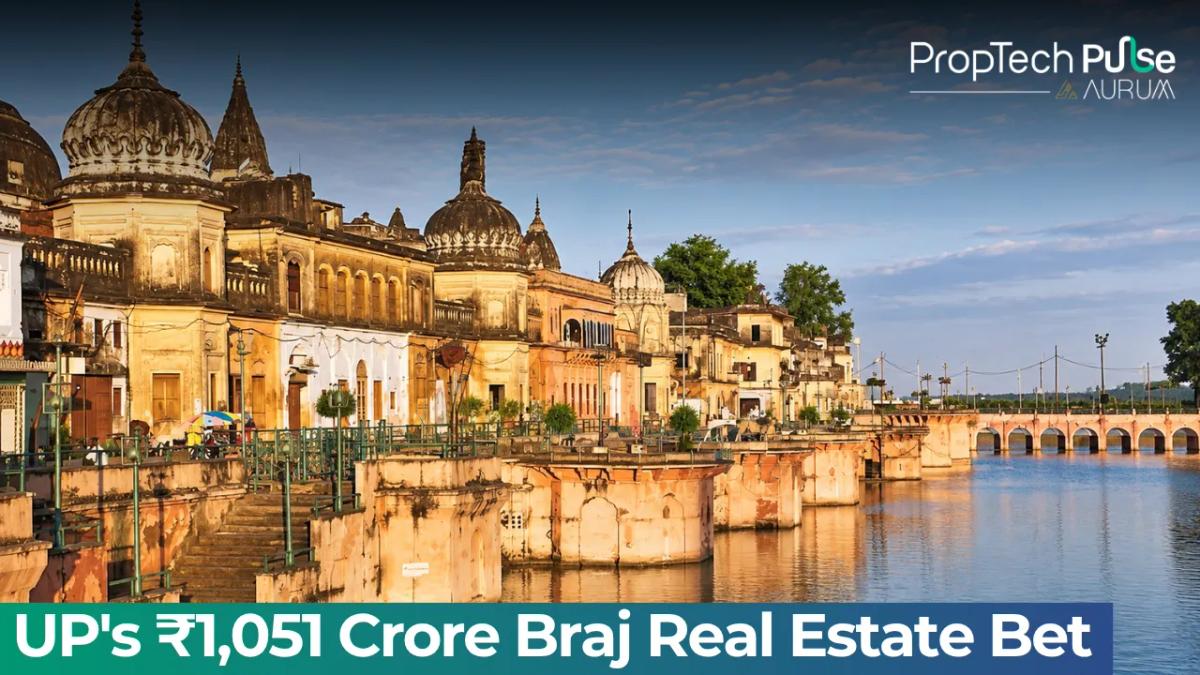
On Krishna Janmashtami, Chief Minister Yogi Adityanath launched 229 development projects worth ₹1,051 crore across Mathura and Vrindavan. Of these, 62 projects worth ₹540 crore were inaugurated immediately.
Another 167 projects worth over ₹437 crore had their foundation stones laid. A further ₹72 crore was transferred directly to beneficiaries under various housing schemes.
The push mirrors the scale and ambition of the Ayodhya transformation and the real estate market is already watching.
What Is Actually Being Built
The projects span connectivity, hospitality, civic training and urban beautification:
- ₹251 crore 4-lane highway: connects the Yamuna Expressway directly to Vrindavan, eliminating the bottleneck that delayed pilgrims on narrow access roads
- New Yamuna bridge: a 2-lane crossing linking rural areas to hospitals and markets in Mathura
- ₹47 crore 12-storey tourist hostel: built inside Nayara Police Lines to absorb festival crowds during Janmashtami, Holi and Radhashtami
- ₹31 crore civic training centre: equips municipal staff in Vrindavan to handle cleanliness, smart services and pilgrim management
- ₹86 crore 30-metre master-plan road in Chhata: designed to pull freight away from village lanes and open land for commercial use
- ₹44 crore flyover: eases chaos at the expressway link road and Mathura-Vrindavan highway junction
- ₹35 crore Chhatikara road beautification: landscaping, footpaths, cycle tracks and underground wiring on the main gateway into Vrindavan from NH-19
On the horizon: a new Vrindavan ropeway, mega parking projects, the Raya Urban Node, a Surdas Brajbhasha Academy and Saurabhi Van — a 400-acre city forest being positioned as Asia's largest.
Temples on the Scale of Ayodhya
Adityanath announced that Braj Bhoomi will receive grand temple complexes built on the same scale as Ayodhya and Kashi.
That is the headline the property market will remember. When the state builds religious infrastructure at this scale, land values follow.
Ayodhya proved it decisively hotel rooms now book months in advance and land near the Ram Mandir has soared in value since construction began.
Also Read: UP RERA Mandates IFMS Fund Transfer to RWAs at Handover
What the Infrastructure Means for Property
With the new highway and flyover network, Mathura and Vrindavan will sit barely two hours from Delhi, Noida and Greater Noida.
That is the connectivity threshold that tends to unlock second-home demand. Shorter travel times translate to more weekend visitors.
More visitors create demand for guest houses, service apartments and small hotels. Commercial roads like the Chhata master-plan stretch open the door for warehousing and retail development.
Ankit Aggarwal, Director at Devika Group, described the ₹1,051-crore push as a significant new phase in Braj's evolution, pointing to better connectivity, civic services, tourism infrastructure and cultural amenity as factors that can make Vrindavan more accessible, more liveable and more conducive to organised development.
He also flagged Vrindavan's growing appeal as a spiritual retirement and long-stay destination, and said the infrastructure investment could accelerate that trend from a trickle into something more substantial.
Also Read: UP Clears ₹24,000 Crore Ganga Expressway Expansion Plan
The Tightrope the State Has to Walk
Aggarwal also offered a word of caution. Vrindavan is not a blank canvas it is a living pilgrimage town with narrow lanes, ancient temples and a spiritual rhythm that draws visitors in the first place.
Development that dilutes that character risks undermining the very thing that makes the location attractive to investors and residents.
The objective, he said, should be a city that is modern in its infrastructure yet timeless in its character a balance that requires planned and responsible urbanisation focused on internal connectivity, parking, sanitation, water management, green spaces and heritage conservation.
Enjoyed this update? Visit PropTech Pulse for more real estate news, investment insights and property market trends.


