New Launch - India Real Estate Report 2026.











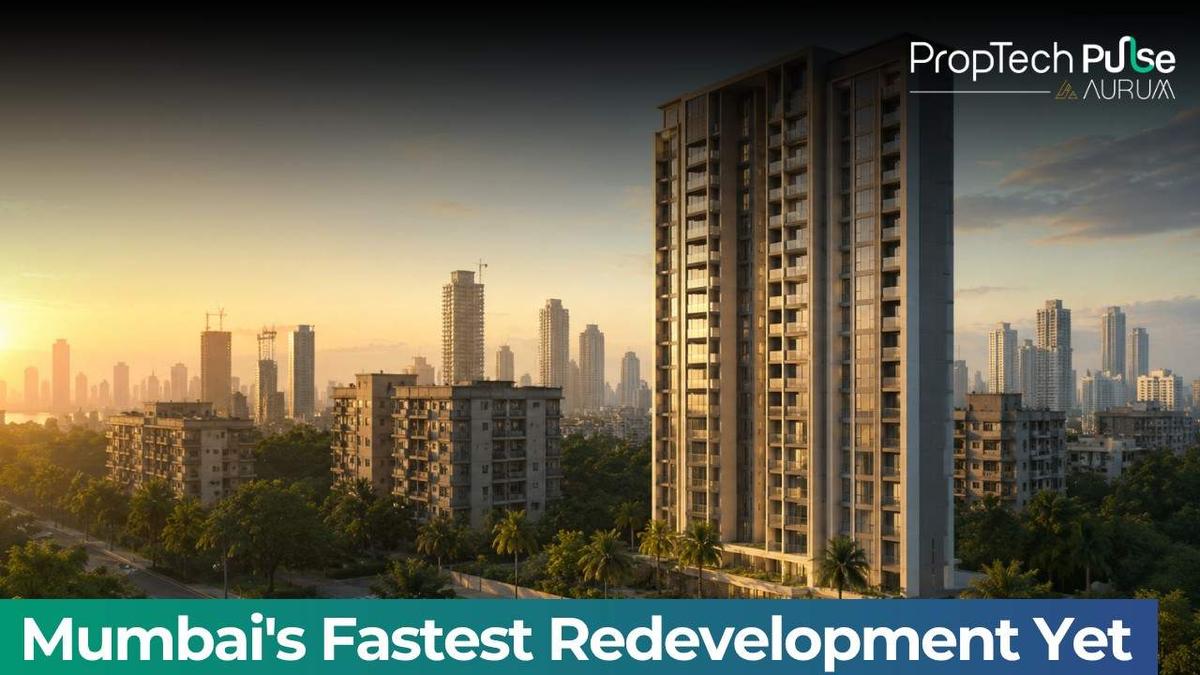
Sixteen months. That's the entire span between breaking ground and handing over keys for Meghna Infracon's Riviera redevelopment project in Goregaon West, Mumbai. In a city where redevelopment timelines routinely stretch past five years, this is the number worth paying attention to, not the amenities, not the square footage.
What actually got delivered
The project is a Ground+9 storey complex spanning 40,000 sq ft. More than 35 families have already taken possession, and the company secured its Occupation Certificate within that 16-month window, the regulatory sign-off that confirms a building is legally fit for people to move into. Promoter Vikram Lodha pointed to the milestone as proof of the firm's commitment to quality and timely delivery. Residents, for their part, have flagged the inclusion of extra amenities, a gymnasium among them, as a pleasant surprise on top of the speed.
Why 16 months is the real story here
Mumbai's redevelopment sector has a well-earned reputation for timelines that slip, and slip again. Society redevelopment projects routinely take four to six years from consent to completion, dragged out by consent disputes, funding gaps, contractor changes and regulatory back-and-forth. A Ground+9 project clearing all of that in under a year and a half isn't just fast. It's fast enough to function as a credibility signal in a market where "on time" is treated as an aspiration rather than an expectation.
That's what makes this a story worth watching beyond one building in Goregaon West. Execution speed of this kind tends to get noticed by exactly the audience that matters most for a redevelopment-focused developer: housing societies deciding who to trust with their own ageing buildings.
What this could mean for Meghna Infracon's pipeline
Redevelopment is a trust business before it's a construction business. Societies handing over their land and existing structure to a developer are making a multi-year bet on execution, and word travels fast in Mumbai's tightly networked co-operative housing circles. A verified 16-month delivery, backed by an actual Occupation Certificate rather than a marketing claim, is the kind of reference point that makes the next society's decision easier.
Whether Meghna Infracon can replicate this pace across its other ongoing projects is the real test. One fast delivery proves capability. A pattern of them proves a business model, and that's the gap between a good case study and a genuine competitive advantage in Mumbai's western suburbs redevelopment market.
The amenities detail that's easy to overlook
Buried in the resident feedback is a small but telling detail: extra amenities weren't just included, they were noticed and appreciated specifically because the fast timeline didn't come at the cost of finish quality. That combination, speed without a build-quality trade-off, is harder to pull off than either one alone, and it's precisely the reputation a redevelopment specialist needs if it wants premium projects to keep landing in its pipeline rather than going to slower, larger competitors instead.
Enjoyed this update? Visit PropTech Pulse for more real estate news and market insights.