New Launch - India Real Estate Report 2026.

Services
Knowledge Hub
Resources
Tools

Ask Pulse Ai
©PropTech Pulse 2025, All rights reserved.


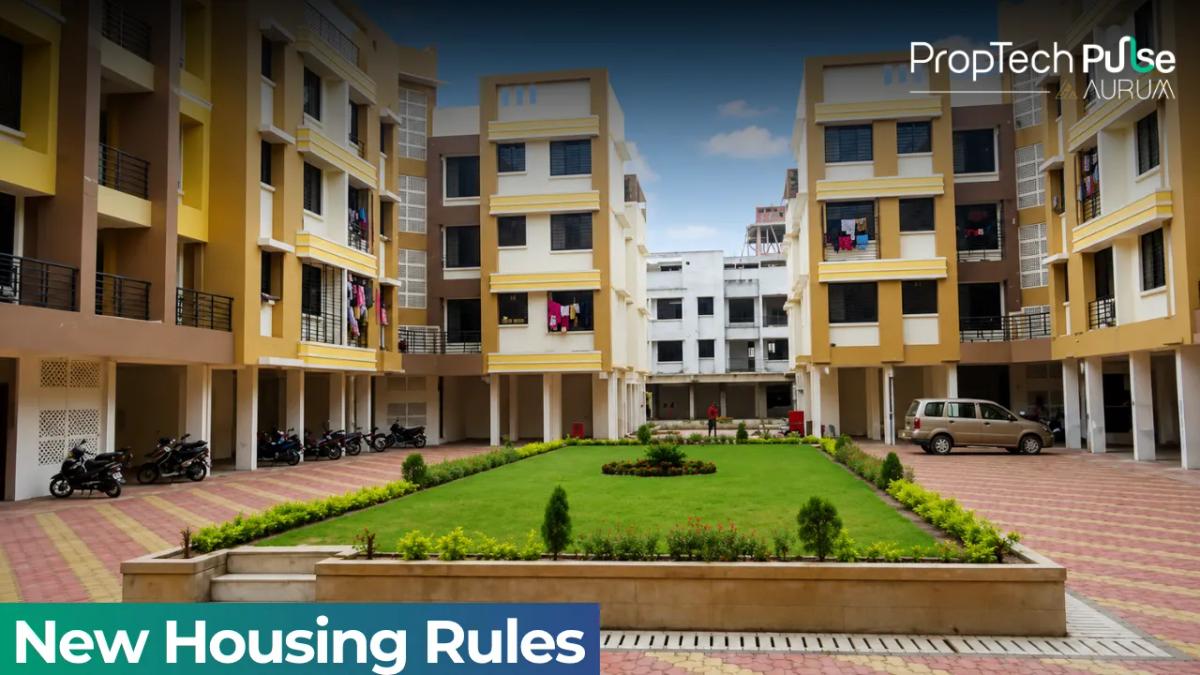
The Maharashtra government has notified amendments to the Maharashtra Co-operative Societies Rules, 1961, introducing a dedicated regulatory framework for cooperative housing societies across the state. The revised rules are aimed at improving governance, transparency and operational efficiency while addressing several long-pending concerns raised by apartment owners and housing societies. The amendments cover maintenance charges, membership, nominations, inheritance, redevelopment, financial management and digital governance, making them one of the most comprehensive reforms for cooperative housing societies in recent years.
The new framework is expected to benefit lakhs of residents by simplifying society administration, reducing disputes and providing greater clarity on the rights and responsibilities of both managing committees and apartment owners. Below are the five major changes that every flat owner in Maharashtra should know.
1. Online and Hybrid Society Meetings Allowed
Housing societies can now conduct Annual General Meetings (AGMs) and other meetings through virtual or hybrid modes in addition to physical meetings. This change is expected to improve participation by members who live outside their housing society, work in other cities or countries, or are unable to attend meetings due to age or health reasons. However, the prescribed quorum requirements continue to apply before decisions can be taken.
2. Interest on Maintenance Arrears Capped at 12%
The revised rules cap the interest charged on delayed maintenance payments at 12% per annum. Earlier, some societies imposed significantly higher penal interest on outstanding dues. In addition, non-occupancy charges have been capped at 10% of service charges, creating greater uniformity and protecting flat owners from excessive penalties.
3. Simpler Nomination and Inheritance Process
The amendments introduce a clearer process for nomination and succession after the death of a member. A nominee can apply for provisional membership by submitting the prescribed application along with an indemnity bond, enabling societies to manage ownership transfers more efficiently while safeguarding against future legal disputes. The revised framework is expected to reduce delays that previously affected many families during succession proceedings.
4. Easier Self-Redevelopment of Housing Societies
The government has simplified procedures for self-redevelopment, making it easier for cooperative housing societies to redevelop ageing buildings without depending entirely on private developers. The revised framework also provides greater clarity on financing, governance and redevelopment procedures, encouraging societies to undertake reconstruction projects more efficiently while maintaining transparency throughout the process.
5. Stronger Governance and Financial Management
The amended rules introduce clearer provisions relating to membership, maintenance charges, borrowing powers, society funds, model bye-laws and committee responsibilities. They also establish a more structured governance framework covering registration, management, education and training of committee members, financial administration and redevelopment procedures. These measures are intended to improve accountability and ensure more uniform functioning across cooperative housing societies in Maharashtra.
- Online and hybrid AGMs are now permitted.
- Maintenance arrears interest is capped at 12% annually.
- Non-occupancy charges are limited to 10% of service charges.
- Nomination and inheritance procedures have been simplified.
- Self-redevelopment and society governance have been strengthened.
What the New Rules Mean for Apartment Owners
The revised Cooperative Housing Society Rules modernise the way housing societies operate by encouraging digital participation, standardising financial practices and simplifying ownership-related procedures. Apartment owners are expected to benefit from lower financial penalties, smoother succession processes, greater transparency in society administration and a more practical framework for redeveloping ageing buildings. Together, these reforms are intended to improve governance while reducing disputes and administrative hurdles for cooperative housing societies across Maharashtra.
Enjoyed this update? Visit PropTech Pulse for more real estate news, investment insights, and property market trends.


