New Launch - India Real Estate Report 2026.











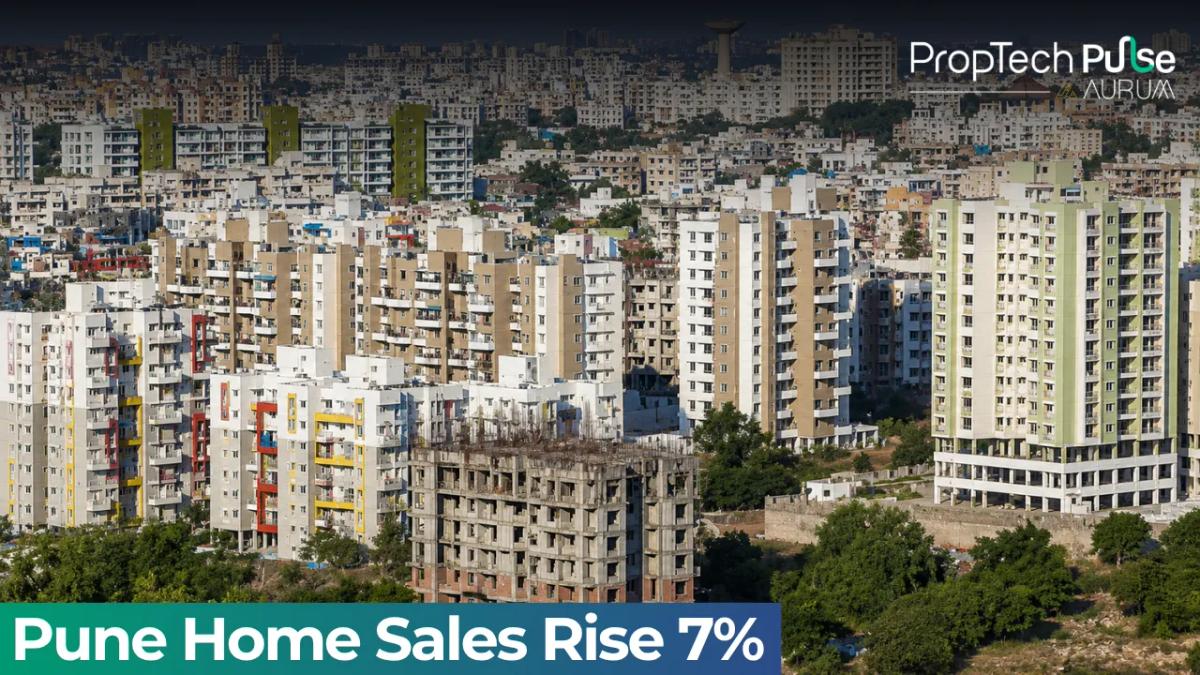
Pune's residential market has recorded its first annual sales recovery in four years, with housing sales rising 7% year-on-year during the 12 months ended June 2026. Sales climbed from 86,666 units in the preceding 12-month period to 92,341 units, according to Gera Developments' Pune Residential Realty Report. The turnaround comes not through price cuts but through a moderation in the pace of price increases, a distinction Rohit Gera, Managing Director of Gera Developments, described as significant for understanding where the market stands.
Supply Is Outrunning Demand
While the sales recovery is welcome, the supply side has responded with even greater speed. Residential launches rose 14% year-on-year to 1,01,085 units from 88,941 units in the same period, producing a replacement ratio of 1.09, meaning more homes entered the market than were sold. The inventory overhang consequently stretched to 11.3 months from 10.8 months a year earlier, and the value of unsold stock climbed 28% year-on-year to an all-time high of ₹92,110 crore, spread across 86,954 units in 2,925 active projects.
- Housing sales: 92,341 units, up 7% year-on-year
- New launches: 1,01,085 units, up 14% year-on-year
- Replacement ratio: 1.09
- Inventory overhang: 11.3 months, up from 10.8 months
- Unsold inventory value: ₹92,110 crore, an all-time high
Prices Rise, But at a Slower Pace
Average residential prices in Pune rose 4.8% to a record ₹7,082 per sq ft, compared with growth of 7.3% a year earlier. Gera noted that for the first time in five years, salary growth has outpaced home price increases, pulling the affordability index back below four times annual income. He cautioned, however, that construction costs remain elevated following recent input and commodity price pressures, and that some upward price adjustment may eventually be needed to keep projects viable for developers.
Also Read: Pune Widens Yerawada Road to Ease Eastern Suburb Crunch
Buyers Are Choosing Bigger Homes
A structural shift in buyer preferences is also reshaping the market. The average home size in Pune reached a record 1,275 sq ft, with demand gravitating steadily towards larger formats. Homes in the 1,401 to 1,600 sq ft bracket recorded a 33% increase in sales, while demand for compact homes in the 600 to 800 sq ft range declined 19%. Sales of all homes up to 1,000 sq ft have fallen sharply, pointing to a market increasingly driven by upgraders rather than first-time buyers seeking affordable entry points.
A Recovery Worth Watching Carefully
Gera described the inventory build-up as something the industry needs to monitor, even as the sales upturn provides grounds for measured optimism. He suggested the segments with the highest inventory could present buying opportunities for end-users, while cautioning that the financial strength and track record of the developer remain critical considerations. The divergence between a recovering demand picture and a rapidly expanding supply pipeline captures the central tension in Pune's residential market heading into the second half of 2026.
Enjoyed this update? Visit PropTech Pulse for more real estate news, investment insights, and property market trends.