New Launch - India Real Estate Report 2026.











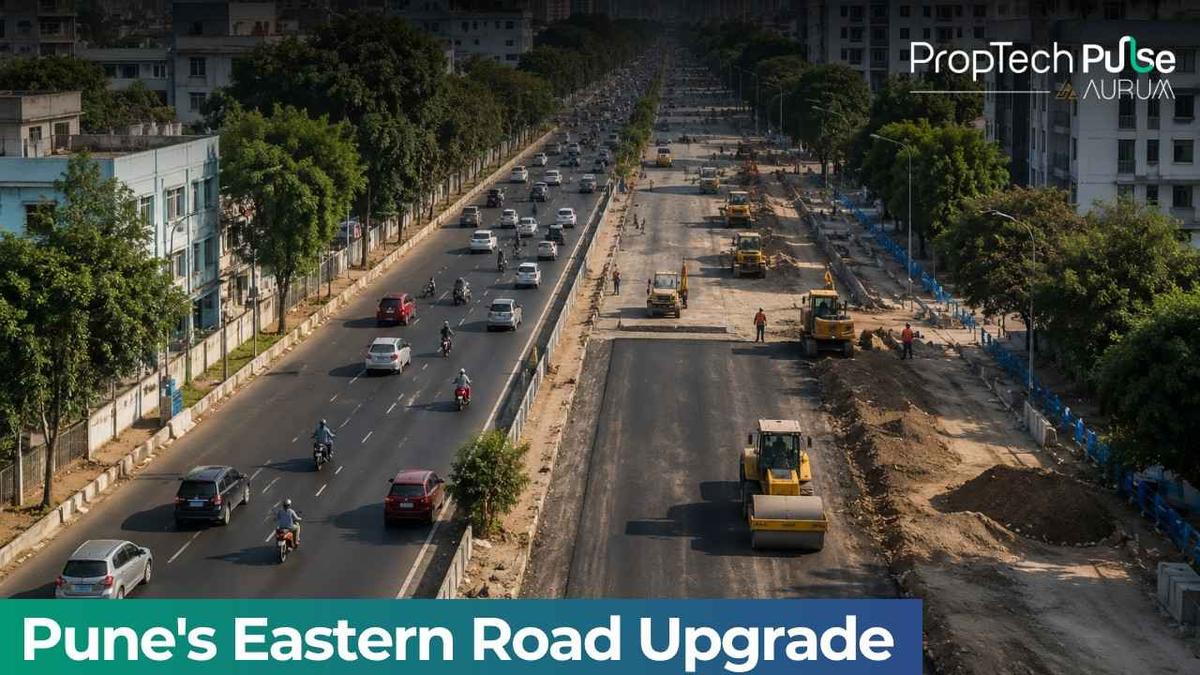
Eastern Pune has been waiting a long time for this. The Pune Municipal Corporation has approved widening the Bindumadhav Thackeray Chowk to Ambedkar Chowk corridor in Yerawada, increasing the proposed road width from the existing 20 to 25 metres up to 30 metres. The decision clears the way for a long-pending infrastructure project that connects Yerawada with Sangamwadi, Pune railway station, Viman Nagar and Nagar Road — a stretch that carries some of the heaviest daily commuter movement in the city's eastern belt.
Pune's Yerawada road widening: what has been approved
The PMC's approval follows the completion of a mandatory public consultation process, during which stakeholders submitted suggestions and objections. One objection came from an educational trust with land along the proposed alignment. After reviewing submissions, the civic administration concluded that the wider public interest and long-term mobility benefits outweighed the concerns raised, clearing the proposal for the next stage. The approval now enables the civic body to begin statutory procedures covering land acquisition, detailed project planning and execution of supporting infrastructure works. These stages will determine the actual implementation timeline while ensuring compliance with urban planning regulations.
More than road widening: the integrated infrastructure plan
Urban planners have consistently argued that expanding road capacity alone rarely resolves congestion sustainably unless it is accompanied by better street design. Civic officials have indicated that the Yerawada project will go further than a straightforward carriageway expansion. The additional width creates space to develop continuous footpaths, upgrade stormwater drainage systems, relocate underground utility networks and improve the overall streetscape. This kind of integrated approach — combining traffic capacity improvements with pedestrian infrastructure and drainage upgrades — is increasingly viewed as essential for building climate-resilient urban corridors capable of handling both growth and extreme weather events without repeated disruption.
What it means for eastern Pune's real estate
Connectivity improvements of this kind have a measurable impact on property values and demand patterns in the areas they serve. The Yerawada corridor links several of Pune's most active residential and commercial micro-markets, and chronic congestion along the stretch has historically been cited as a friction point for residents, businesses and developers. A wider, better-designed road with improved pedestrian infrastructure changes the liveability calculus for the surrounding neighbourhoods and tends to attract developer interest in parcels along or near the improved alignment. Viman Nagar and Nagar Road, already well-established residential and commercial destinations, stand to benefit from improved arterial connectivity that reduces travel times to the railway station and the city's western employment centres.
The pedestrian safety push alongside the road project
Running alongside the Yerawada project, the PMC has announced a citywide initiative to improve pedestrian safety ahead of the annual Palkhi processions and the Ganesh festival. Civic departments have been directed to repair damaged pavements, restore footpaths affected by utility works and clear encroachments near schools, hospitals, markets and public transport nodes. A GIS-based survey will be conducted to identify damaged and encroached pedestrian spaces across all ward offices, feeding into a broader footpath patrol programme. The combination of a major road project and a city-level pedestrian audit signals a more integrated approach to urban mobility planning — one that treats the quality of the walking environment as equally important as traffic throughput, which is the right framing for a city of Pune's scale and density.
Enjoyed this update? Visit PropTech Pulse for more real estate news and market insights.