New Launch - India Real Estate Report 2026.

Services
Knowledge Hub
Resources
Tools

Ask Pulse Ai
©PropTech Pulse 2025, All rights reserved.


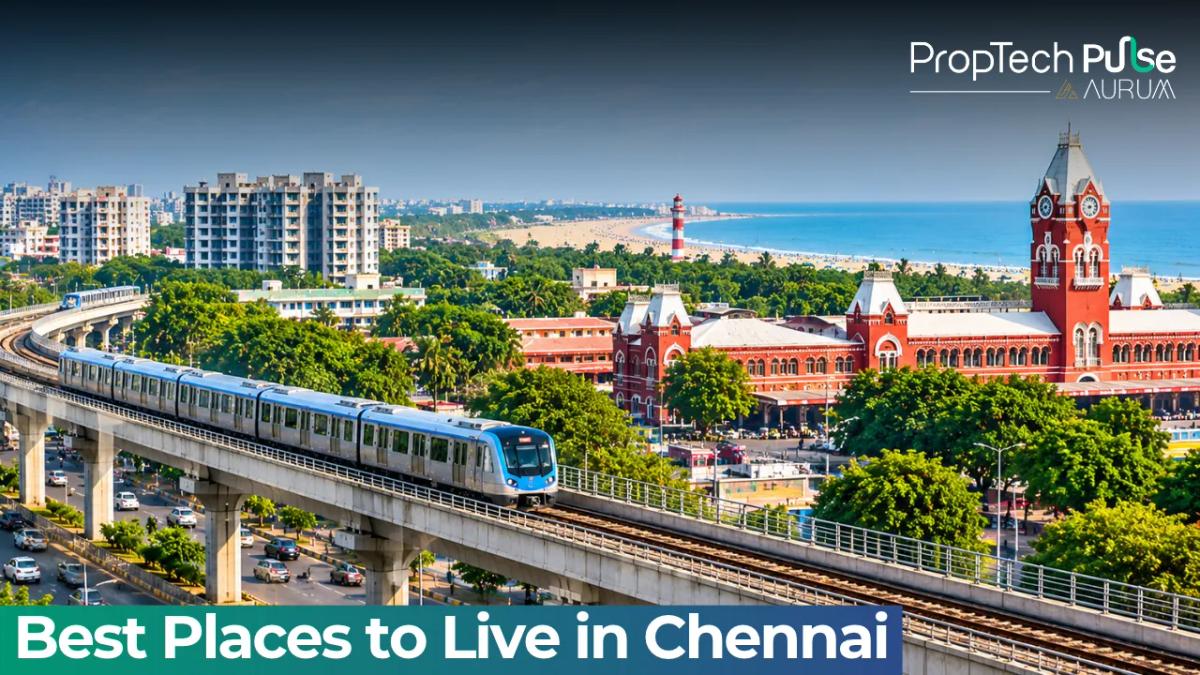
You do not choose a Chennai neighbourhood based on brochure renderings. You choose it based on survival rules: flooding risk, commute time, and water reliability. Finding the best places to live in chennai means trading generic lifestyle lists for these hard utility checks.
Where to Live in Chennai in 2026?
Quick answer
For most professionals, Velachery and Anna Nagar offer the best balance of established infrastructure, reliable public transit, and strong resale demand. Families prioritising independent schools and wider streets often prefer Alwarpet and Besant Nagar, while investors targeting rental yields focus on emerging nodes along the Outer Ring Road.
Chennai moves differently than Bangalore or Mumbai. The geography sits flat, so traffic funnels onto very few main arteries. Infrastructure projects also tend to run years behind their launch dates.
To find the best area to live in chennai, you have to balance three competing needs. Metro connectivity determines your daily freedom. Civic drainage defines your wet-season sanity. Monthly housing costs dictate what you actually spend on groceries and leisure.
How We Scored Livability
We measure livability through three hard metrics. First, we calculate the transit footprint by tracking operational metro lines against feeder bus frequency.
Second, we check civic water supply using Tamil Nadu State Board records to see which zones rely on tankers.
Third, we run commuter maths to find real travel times between hubs and employment centres like Tidel Park. We ignore theoretical straight-line distances that never reflect reality.
Central Premium Grid: Anna Nagar, Alwarpet & Besant Nagar
These areas form the historic premium arc of the city. Anna Nagar Chennai uses a strict grid layout that handles monsoon traffic better than winding coastal streets.
Stormwater drains rarely cross capacity here. Mature municipal pipelines easily support high-density populations. Redevelopment pace stays steady because plot sizes comfortably justify new vertical towers. Buyers can track current stock through available listings in Anna Nagar. Construction quality shifts sharply between older pre-2015 societies and modern RERA-compliant buildings.
Posh areas in chennai like Alwarpet and Besant Nagar sit closer to the Bay. They offer tree-lined streets, walkable shops, and elite educational institutions nearby.
Renting a full 3BHK here costs significantly above the city median. That financial hit buys peace, low population density, and strong evening security patrols. The trade-off is a slow commute since the coastal corridor lacks direct metro integration yet.
Sidebar: Coastal humidity affects flooring choice. If you settle near Besant Nagar, insist on vitrified tiles over wooden laminates to prevent warping during May heat spikes.
South Tech Corridors: Velachery, Sholinganallur & Madipakkam
Velachery sits right at the convergence of Phase 1 metro operations and heavy roads heading toward the OMR technology belt.
IT professionals gravitate here because the interchange station connects directly to corporate parks. You avoid bus stand chaos completely.
The area hosts a dense network of international schools and multiplexes. This cements its reputation as a fully self-contained urban pocket.
Saturation hits Velachery now. Traffic bottlenecks around the central junction and highly limited vacant plots mean new residential launches carry heavy loading factors. Common-area ratios are inflated across the board. Buyers interested in the southern tech belt should actively compare this against newer pockets like the Navalur buyer's guide. Land availability stays higher there while metro spurs are still in planning stages. Madipakkam provides a cheaper per-square-foot entry point, but internal drainage suffers historically during heavy downpours. Both sectors hold excellent school density, making them reliable fallbacks for growing families.
Value & Emerging Nodes: Porur, Tambaram & Outer Ring Road Spans
If the budget caps below the central premium bands, value nodes take over. Porur and Tambaram sit adjacent to the Golden Mile.
Properties here command lower stamp duty overheads and smaller token deposits. Many plots sit outside the densest municipal limits. Exact valuations shift constantly depending on the latest property due diligence checklist steps you follow.
The Outer Ring Road spans drive the investment logic for capital appreciation. Rental yield upside in these zones comes from IT employees who cannot afford Anna Nagar rents but still require a drivable commute to the southern corporate hubs.
Builders are aggressively pushing large gated communities with artificial lakes and clubs. Ground verification of builder OC status remains absolutely non-negotiable here.
Keep your eyes fixed on upcoming metro extensions feeding into these outer edges. Transit announcements instantly lock in future property values.
The Chennai Livability Checklist: Water Sources, Rainfall Drainage & Metro Distance
A quick rent calculation never captures the hidden friction of daily living. An apartment might appear perfectly affordable at ₹35,000 a month.
But add a ₹3,000 monthly tanker bill. Add ₹1,500 on collective generator maintenance. Factor in ₹500 extra in petrol for weekend errands when the main connector road floods. Every hidden cost eats directly into your actual disposable income.
Metro distance dictates long-term asset performance too. Areas within one kilometre of an operational Green Line station reliably see rental growth outpace the city average. Housing societies dependent on single-lane connectors rapidly lose resale value.
Run the total acquisition number using a home loan emi calculator to properly factor in the true carrying cost. Include maintenance buffers for unexpected civic repairs in that math.
Before signing any lease or booking a flat, run four basic checks yourself. Verify the active borewell depth and the latest water board connection letter from the developer or seller.
Walk to the nearest stormwater outflow point. Any house built directly over a drying nala becomes completely isolated during heavy rain. Measure the real radius for shared autos past 9pm.
If the nearest one requires dialling a dispatch number, daily convenience drops sharply. Finally, physically confirm the Occupancy Certificate exists on file. A building operating without one routinely bypasses modern fire safety norms entirely.
| Area | Avg Rent (monthly) | Indicative Buy Price (₹/sq ft) | Metro Status | Best For |
|---|---|---|---|---|
| Anna Nagar | ₹35,000–₹65,000 | ₹8,500–₹11,000 | Operational stations + Phase 2 tracks | Families seeking wide streets and schools |
| Alwarpet / Besant Nagar | ₹50,000–₹1,20,000 | ₹10,000–₹15,000+ | Not connected yet | High-net-worth individuals wanting coastal access |
| Velachery | ₹25,000–₹55,000 | ₹7,000–₹9,500 | Operational interchange station | IT professionals commuting to OMR |
| Madipakkam | ₹15,000–₹35,000 | ₹5,000–₹7,500 | Operational spur station | Young professionals on a tighter budget |
| Porur / Tambaram | ₹18,000–₹40,000 | ₹4,500–₹7,000 | Phase 1 terminal / Phase 2 under construction | Investors chasing rental yields |
| Total properties tracked for context | Data reflects 2026 asking rates | |||
Decision Rule: Match Your Hub Before You Sign
Do not pick a neighbourhood simply because it looks impressive on paper. Match your daily gravity. If your entire work life orbits corporate parks in Guindy or OMR, stay firmly inside the metro corridor.
Accept a smaller apartment or a longer lift ride instead. When scouting the best locations to live in Chennai, weight school catchments higher than walking proximity to night markets.
Use the infrastructure metrics above to score each shortlisted project systematically before locking any capital.
Frequently asked questions
What is the best area to live in chennai for families?
For families, Anna Nagar and Alwarpet usually make the strongest choice because they combine wide, flood-resistant streets with a dense cluster of top-tier schools. Both locations sit far from industrial smoke and coastal humidity, and they offer dependable power backup during summer heatwaves. Parents generally prefer the grid-like town planning here, which allows children to walk to tuitions safely without relying on chaotic auto-rickshaws.
Is Velachery good to live in for IT professionals?
Yes, because Velachery sits directly on the operational metro interchange line, putting Tidel Park and OMR corporate campuses within a 45-minute rail ride instead of a grueling two-hour road drive. The area supports a complete ecosystem of cafes, clinics, and weekly markets that cater specifically to shift workers. Just remember that late-night transport options thin out quickly after 11pm, so plan your return journeys accordingly.
Which are the most posh areas in chennai?
Historically, Alwarpet, Mylapore, and Besant Nagar hold the title for the most posh areas in Chennai, thanks to their heritage bungalows, massive tree canopies, and high-value commercial frontage. These zones attract wealthy residents who prioritize privacy, walking-distance access to boutiques, and strong social club networks. New luxury high-rises are quietly replacing old structures behind boundary walls, but street parking remains heavily restricted throughout these neighbourhoods.
Does Chennai face water shortage or flooding in new developments?
Chennai experiences severe seasonal swings, meaning new housing complexes without dedicated groundwater recharge pits or elevated plinths will flood during the November northeast monsoons. Municipal taps cut supply every March, forcing almost all middle-income societies to rely on expensive private tankers that drivers refuse to enter narrow lanes. Always verify that the builder completed separate stormwater drains before considering any new launch, regardless of marketing claims about modern living.
How much should I budget to rent or buy in Chennai 2026?
A standard two-bedroom flat in a respectable central area commands roughly ₹35,000 to ₹65,000 in monthly rent. Purchase prices range between ₹7,500 and ₹11,000 per square foot depending on the society's age. Outer ring locations drop these figures noticeably but require heavier daily spending on fuel and occasional vehicle maintenance. Factor in a baseline of ₹8 to 10 lakh for registration charges plus stamp duty before transferring ownership capital.
Sources
- BMRC: Station maps, Phase 1 operational status, and Phase 2 under-construction timelines (accessed November 2026)
- Census of India: Urban population profiles and growth rate baselines for Chennai Metropolitan Region (accessed November 2026)
Enjoyed this blog article? Visit PropTech Pulse for more interesting blogs.

Ask Pulse Ai anything about real estate

Unlock the Latest in Real Estate
News, Infographics, Blogs & More! Delivered to your inbox.

