New Launch - India Real Estate Report 2026.

Services
Knowledge Hub
Resources
Tools

Ask Pulse Ai
©PropTech Pulse 2025, All rights reserved.


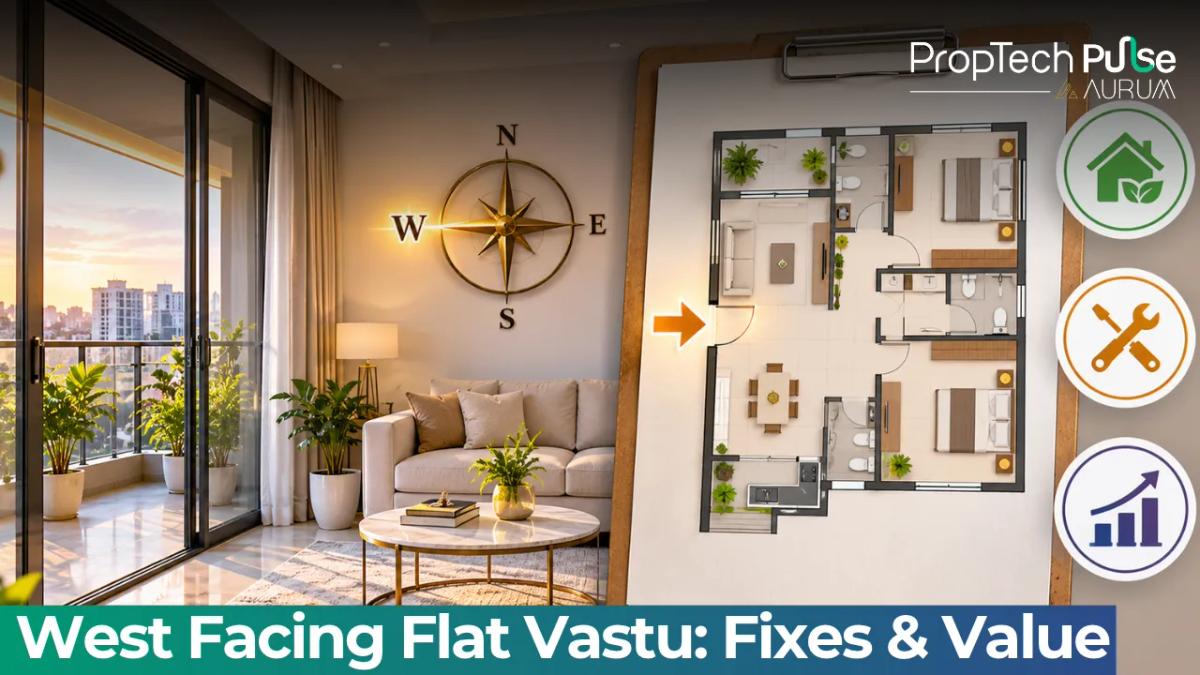
You found a beautiful unit with a wide west-facing balcony, but the broker whispered that west facing flat vastu brings bad luck. Before you walk away, let's separate the cultural warnings from the physical reality.
Most discussions focus on standalone homes, but these principles translate identically to high-rise units where compartmentalized rooms trap or release heat.
Adopting a structured approach to west facing flat vastu transforms what looks like a liability into a balanced, comfortable home.
It is simply a trade-off between strong afternoon sunlight and cooler morning breezes, both of which can be managed with the right layout and building materials.
Quick Answer: What "West Facing" Actually Means in a Flat
Quick answer
"West facing" refers exclusively to the direction of your main front door relative to the plot, not the orientation of the tower or the balcony. In Vastu, a west-facing entrance sits under the energy of Varuna, the deity of water and rain, making it a viable option rather than an absolute taboo. You just need to place heavy rooms like the kitchen in the North-West and keep the South-West corner light to balance the afternoon heat.
When buyers get confused, they usually mix up the building's overall tilt with the individual unit's entrance.
If you step through your main door and the wall to your left points true north, your home faces west. That specific angle determines how morning drafts enter and how evening radiation bounces off your interior surfaces.
The Real Question: West Facing Apartment Good or Bad?
To answer whether a west facing apartment good or bad depends entirely on three factors: the traditional geometry, your local climate, and the market price you are being offered.
Most anxiety around this direction comes from conflating spiritual beliefs with architectural physics, so let's look at each piece separately.
The Spiritual View: Varuna and Cosmic Order
In classical texts, every cardinal direction carries a presiding energy.
The East belongs to Indra, the South to Yama, and the West to Varuna. Varuna represents cosmic order and rainfall, which traditionally makes the western quadrant neutral rather than inherently negative.
A flat feels dark if the east side gets blocked, forcing morning light to bounce onto the western walls.
Vastu experts generally advise keeping the western perimeter uncluttered during the day so that sunlight can circulate freely through the living spaces before sunset. Clear pathways replace stagnant energy, regardless of the compass reading.
The Physical Reality: Afternoon Sun and Climate Impact
Post-2 pm heat spikes represent the genuine downside of western exposure. As the sun shifts toward the south and then west between 2 p.m.
and 5 p.m., the direct rays hit the façade hard. In hot-dry cities like Nagpur, Ahmedabad, and Jaipur, this can raise indoor temperatures by several degrees compared to an east-facing unit, increasing cooling costs in the peak summer months.
Cooler zones such as Mumbai or coastal Chennai experience this effect less intensely because humidity and sea breeze mitigate the heat spike.
If you live in a mid-rise where neighboring towers cast long shadows on the evening sun, the thermal penalty drops significantly.
Check the micro-climate Before signing, sit in the flat between 3 p.m. and 5 p.m. on a clear day. If the walls feel hot to the touch and there is no cross-ventilation, demand better glazing from the builder or renegotiate the price.
The Market Reality: Price Discounts vs Resale Demand
Market data shows that roughly 62% of Indian homebuyers factor Vastu alignment into their decision, with many actively seeking east or south entrances.
This higher preference for other orientations naturally creates softer demand for western units, allowing savvy buyers to negotiate steeper discounts at the time of booking.
A well-priced western flat offers genuine equity upside, especially in Tier-1 markets where inventory is tight and parking slots are scarce.
You are trading minor resale friction for immediate cash savings, which is a mathematically sound move if the unit suits your daily routine.
West Facing Flat Vastu Rules: Where to Place Key Rooms
Vastu is essentially a space-planning framework designed to maximize natural airflow and light.
When the main door opens to the west, specific rooms carry more weight than others because they align with shifting solar patterns and ancient wind directions.
Ideal Placements (Kitchen, Bedroom, Living, Toilets)
Culinary spaces belong in the North-West zone, governed by the fire element and evening winds.
Cooking during late afternoon hours is traditionally considered harmonious here, provided the cook does not face directly west while preparing meals.
Sleeping quarters work best in the South-West quadrant.
This corner anchors the dwelling and receives the heaviest structural support in many layouts, providing stability and cooler nights after the sun dips below the horizon.
Keep the living area open and connected to the western balcony or window.
Heavy wardrobes and storage units should occupy the eastern wall of the hall to prevent blocking morning light from entering the opposite side of the room.
| Room | Best Direction in West Flat | Why It Works |
|---|---|---|
| Main Door | West (preferably center or slightly North-West) | Aligns with Varuna; easy evening access |
| Kitchen | North-West | Matches evening cooking hours and fire element |
| Master Bedroom | South-West | Provides structural stability and cooler sleep environment |
| Guest / Puja Room | North or East | Captures morning sun for brighter rituals |
| Store / Utility | South-East or South | Uses corners effectively without impacting living comfort |
Common Layout Mistakes in High-Rise Towers
High-rise buildings rarely offer perfect grids, and developers often sacrifice Vastu compliance to maximize saleable square footage.
You will frequently encounter master bedrooms shoved into awkward North-East corners, or bathrooms placed in the centre of the flat. These mistakes disrupt airflow regardless of the main door direction.
Understanding how super built-up area inflates your actual usable space helps you spot inefficient cores. Always verify the RERA-certified carpet area before worrying about compass directions, because a perfectly aligned floor plan packed inside a poorly proportioned slab will still feel cramped.
See our guide on super built-up area in india meaning loading rera rights to decode those developer metrics.
Practical West Facing Flat Remedies That Work
If you inherit a layout where the kitchen sits south or the master bedroom leans north-east, you do not need to demolish walls.
Modern flats require reversible solutions that respect both building restrictions and traditional corrections.
Reversible Design Fixes (Glazing, Curtains, Shading)
The single most effective remedy for western heat is external shading.
Permanent vertical fins, pergolas with creeping plants, or fixed louvers on the balcony railing work best. These installations cut glare and drop indoor temperatures by two to three degrees in peak summer.
Swap standard clear glass for low-emissivity (Low-E) coated panels. They reflect infrared heat back outside while retaining natural light indoors.
Pair this with heavier blackout curtains on the western windows to manage late-evening brightness when you want to relax.
Traditional Vastu Corrections for Modern Flats
Many residents keep a brass or copper coin tied with red thread near the main door handle.
While technically a symbolic gesture, it reinforces the intention of welcoming positive energy, which aligns perfectly with the psychological benefit of ritualized entryways.
If the kitchen cannot be moved to the north-west, ensure the cook stands facing east while preparing food.
Standing towards the rising sun focuses the mind and offsets the directional mismatch.
Adding yellow lighting over the stove also introduces the warmth element that compensates for the missing directional placement.
You can explore additional elemental practices, such as vastu fish for home direction species placement rules, to harmonize the aquatic and earth elements within your living space.
When a Price Discount is a Deal, and When to Walk Away
A west-facing unit becomes a smart purchase when the asking price is at least five percent lower than comparable east-facing apartments on the same floor.
That discount covers your upfront renovation costs for shading, low-E glass, and paint, while leaving you with pure capital appreciation.
Walk away if the layout requires knocking down shared walls, the builder uses cheap concrete with zero thermal insulation, or the complex suffers from poor ventilation traps.
Good architecture and fair pricing overcome almost any directional limitation.
Wondering if the EMI fits your take-home pay? Plug the numbers into our home loan EMI calculator. You will see your exact repayment burden instantly.
For a deeper analysis of whether leasing or owning fits your current stage, check out the latest rent versus buy comparison guide.
Still unsure if the floor plan truly balances traditional principles with modern comfort? Consult a certified Vastu practitioner before finalising the purchase.
Frequently asked questions
Is a west facing flat good for living?
Yes. Western flats work exceptionally well for families who prefer cooler morning air and enjoy evening sunlight across the balcony. They succeed financially when priced below comparable east-facing units, offsetting the extra cost of thermal glass and exterior shading.
What are the best Vastu remedies for a west facing flat?
Install permanent vertical fins or pergolas on the western balcony to deflect harsh afternoon rays. Place the master bedroom in the south-west corner for stability, and position the kitchen in the north-west quadrant where evening cooking aligns naturally with traditional fire-element principles.
Can we do Vastu correction for a west facing flat?
Absolutely. You do not need structural reconstruction to fix misaligned rooms. Simple reversible changes—like adding Low-E coated windows, adjusting curtain weights, or positioning furniture to block direct glare—solve physical discomfort while symbolic fixes like brass coins maintain cultural harmony at the entryway.
Does a west facing flat affect career or wealth?
Traditional texts associate the western direction with Varuna, governing cosmic order and resource distribution rather than failure. Wealth accumulation depends primarily on prudent budgeting, fair transaction prices, and avoiding inflated maintenance charges, none of which change because your main door faces west.
Enjoyed this blog article? Visit PropTech Pulse for more interesting blogs.

Ask Pulse Ai anything about real estate

Unlock the Latest in Real Estate
News, Infographics, Blogs & More! Delivered to your inbox.

