New Launch - India Real Estate Report 2026.

Services
Knowledge Hub
Resources
Tools

Ask Pulse Ai
©PropTech Pulse 2025, All rights reserved.


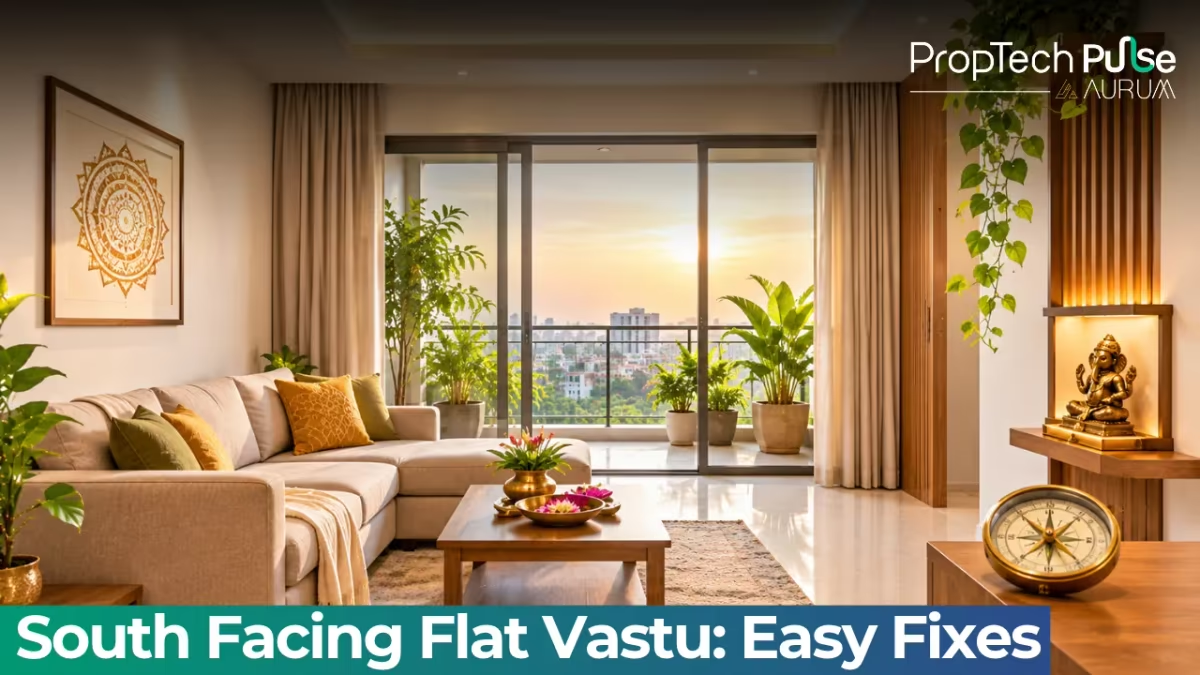
Planning a home often brings up questions about south facing flat vastu right away. Most buyers assume it carries heavy baggage based on old myths. The reality is simpler.
A home oriented toward the south enjoys steady afternoon sun. It retains warmth naturally.
Artificial lighting costs drop noticeably. Traditional Vastu Shastra lays out strict rules for these directions.
Modern high-rises bend those expectations completely. Concrete walls hold heat. Glass balconies trap breeze. Tall towers shield ground floors from harsh winds.
You can live comfortably in a southward layout. Just tweak the main entrance. Watch how the air flows through your apartment. Here is what actually matters for daily comfort.
Is a south facing flat bad or good?
Quick answer
The most common worry about a south facing flat bad myth is entirely unnecessary. South-facing units receive balanced natural light and retain warmth, which helps in most Indian climates. With minor adjustments to your main door and bedroom placement, the flat works perfectly for daily living.
Old texts link the south to Yama, the god of death. That single line terrifies buyers instantly.
It also misses the point those ancient authors were making. Wooden houses faced scorching noon sun back then. Pointing entrances toward cooler morning air made practical sense.
Modern buildings operate differently. Architects actually prefer south openings across many Indian cities.
They deliver consistent daylight without flooding living rooms with blinding morning glare. Late afternoon heat remains the only real downside.
Manage it easily with blinds or thick curtains. A well-shaded balcony works wonders too. Direction is just one variable when you evaluate properties. Location, floor height and cross-ventilation matter far more. Take a look at our guide on how to invest in residential real estate in six steps to weigh all factors before you pay a token.
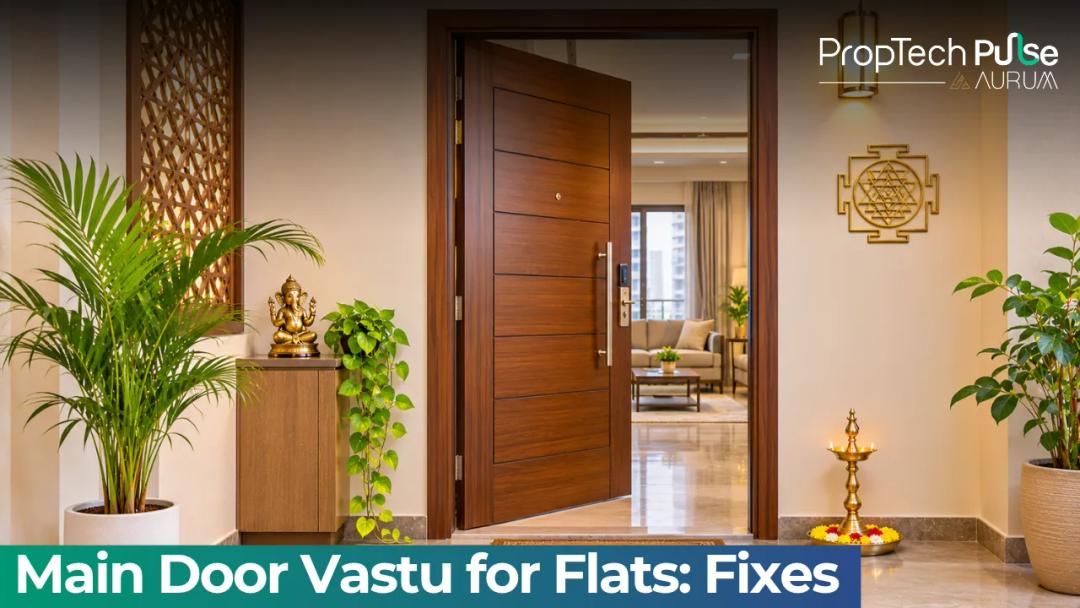
Handling the south facing main door safely
South-facing apartments usually get their primary air through the front door or an attached balcony.
If the door sits dead center, it creates what Vastu calls a straight flow. Air rushes in too fast. Energy feels scattered.
Shifting the door breaks nothing here. Builders won’t allow that anyway. Changing load-bearing walls ruins the entire tower’s structural plan.
Build a vestibule instead. Even a two-metre entry hall forces incoming air to slow down.
Place a small plant or a low console table near the threshold. This simple break stops direct rushing without blocking movement.
Flooring offers another quick solution. Darker shades work best for the south zone.
Since sunlight floods the foyer anyway, dark tiles ground the space nicely. Keep the hallway bright with warm white bulbs. Avoid heavy chandeliers directly over the frame. They pull the eye upward and make the entry feel narrow.
Front doors sometimes open straight into kitchens or bathrooms. Both rooms handle waste or cooking fire.
That clashes with a prime entrance. Install a sturdy door between the foyer and that adjacent room. Close it whenever possible.
Mapping south facing apartment vastu room-by-room
Once you pass the entrance, logical zoning takes over. Heavy elements belong in heavier directions. Place them in the south and west. Light furniture stays north and east.
Master bedroom and children’s zones
Sleeping quarters benefit most from this arrangement. The master bedroom belongs in the south-west corner.
Anchor sleepers with a heavy headboard against the south or west wall. Stability improves relationships. This helps especially when the bed faces a glass balcony or a long corridor.
Children thrive in the north-east corner. Young minds need quiet study spots.
Position their desk so they face north while reading. Avoid putting beds in the south-west corner until adulthood. It tends to make younger kids restless.
Kitchen, storage and pooja placement
Kitchens belong in the south-east corner. Agni, the fire element, aligns naturally there.
Tight layouts should use the east side as an acceptable alternative. Keep the cooking stove positioned so you face east while preparing food. That posture improves digestion. Smoke stays away from the dining area.
Storage spaces fit best in the west or south-west. Heavy wardrobes act as physical anchors in the south zone.
They balance lighter furniture in the north perfectly.
Pooja spaces require careful handling here. Traditional guidance advises against placing prayer areas in the south direction. Aim for the north-east corner instead. Place a small altar near the window. Never place it under a beam.
If the north-east corner holds a bathroom, skip prayer there entirely. Read our article on pooja room design for home ideas layouts and cost to see what works in compact urban flats.
Effective south facing house vastu remedies without renovations
Demolishing walls rarely happens in mid-rise projects. Builders deliver fixed layouts.
Good Vastu advice accounts for that reality. Remedies should stay cheap, reversible and visually pleasing.
Colours, mirrors, airflow and balcony treatments
Paint south-facing exterior walls in earthy tones if local laws allow it. Yellow ochre, sandy beige or soft brick red reflect heat nicely. Balance that warmth inside with creams and off-whites on northern walls. These lift the mood effectively.
Mirrors work surprisingly well here. A full-length mirror on the east wall opposite the living area doubles morning light without amplifying negative energy.
Do not place mirrors facing the bed or the kitchen stove. They bounce air back into the wrong spots.
Evening sun bakes south-facing balconies easily. Trellises with jasmine create a green buffer. Leaves break harsh rays. They bring fresh oxygen into the space too. A small fountain pot cools the southern wind before it enters your rooms.
Tip: Keep water fountains running in the north or east directions. Stagnant water in the south drains positive energy and attracts pests.
| Action | Traditional approach | Solution for high-rise flats |
|---|---|---|
| Main door alignment | Shift door to south-west or north-east. | Create a vestibule with angled dividers. |
| Kitchen stove position | Rearrange entire kitchen wall. | Maintain stove location but face cook east. |
| Heavy weights in south-west | Pour massive stone pillars. | Install tall bookshelves and king-size beds. |
| Total effort required | High structural alteration | |
When a south-facing layout just isn’t right for you
Some flats fail on reasons completely unrelated to Vastu. Check property documentation first. Clear title deeds prevent legal headaches later. Go through our property due diligence india checklist before signing any agreement.
Directional flaws always carry trade-offs. South openings give excellent light but poor night cooling. Summer temperatures regularly hit forty degrees? If cross-ventilation is weak, AC bills drag down comfort quickly. North-facing units feel fresher. West-facing flats take afternoon heat through large windows. Compare these options against each other.
Many homeowners specifically search for south facing flat vastu solutions when reviewing new floor plans. You can address both concerns simultaneously.
Remember: Vastu guides harmony, not punishment. Perfect compass alignment does not guarantee prosperity. A south-facing door is traditionally viewed as needing extra balancing measures.
Fix airflow. Darken southern exposure. Keep heavy furniture in back corners. Enjoy the extra daylight. If you want a professional review of your floor plan, explore the Pulse Vastu Packages for a detailed walkthrough.
Frequently asked questions
Is south facing flat bad or good?
Generally, a south facing flat is good. It receives steady afternoon sunlight which keeps the interior dry and deters dampness. The late-day heat can be managed effectively with thick curtains or exterior shading. Traditional myths claiming bad luck ignore modern building physics and lack of direct wind impact in high-rises.
How to improve east corner in south facing flat?
The north-east corner represents the cleanest energy in any layout. Place study desks for children in this zone to improve concentration. Use light greens or pale yellows on the walls. Keep the area clutter-free and ensure windows remain unobstructed so morning air circulates freely through the sleeping quarters.
Can we change the main door position in a south facing apartment?
Moving a main door in a high-rise is structurally impossible. Instead, build a small vestibule using a half-wall or decorative screen. This slows incoming air and stops it from rushing straight into the living space. Angle the entry slightly if the building permit allows minor non-load-bearing tweaks.
Where should the pooja room be in a south facing flat?
Vastu guides strongly advise against placing a pooja room in the south direction. Locate it in the north-east corner of your bedroom or living area instead. Ensure the idol faces south or west so devotees face north or east while praying. Keep the space above waist level and well illuminated.
Sources
- Mumbai City Municipal Corporation: Local development control and setback regulations (accessed October 2026)
Enjoyed this blog article? Visit PropTech Pulse for more interesting blogs.

Ask Pulse Ai anything about real estate

Unlock the Latest in Real Estate
News, Infographics, Blogs & More! Delivered to your inbox.

