New Launch - India Real Estate Report 2026.

Services
Knowledge Hub
Resources
Tools

Ask Pulse Ai
©PropTech Pulse 2025, All rights reserved.


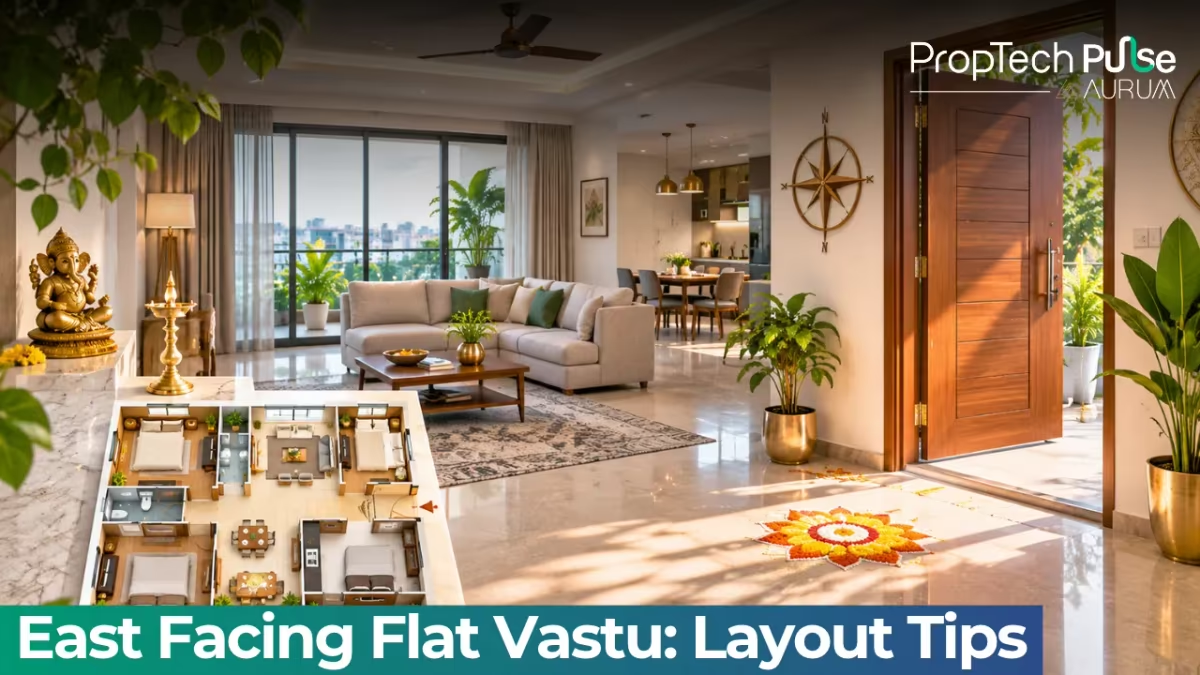
Buying a new home means sorting through competing priorities, and east facing flat vastu compliance often sits right at the top. Among those priorities, the east facing house vastu preference carries the most weight because buyers associate it with morning light and steady prosperity.
But before you commit, you must understand what east facing actually means in a high-rise tower and what structural rules protect your investment.
Is an East Facing Flat Good or Bad?
An east facing flat gets its positive reputation from two things: the way the sun moves across the sky, and the traditional association with the direction of Indra.
Morning sunlight brings warmth and natural ventilation into the living spaces between six and nine in the morning, which most families find more comfortable than heavy afternoon glare.
In Vaastu terms, the east direction governs growth and mental clarity, making it a highly sought-after orientation for homes.
Whether it suits your family depends on the floor plan. A well-designed east facing flat channels breeze through the living room and kitchen without trapping humidity. Exposed south and west walls make apartments hot in the afternoons unless shaded properly.
You must verify which wall actually holds your front door. In modern flats, the main entrance dictates the facing. Correctly aligned entrances boost liquidity and asking prices. Reading up on how important is vastu for flat resale before signing papers pays off.
Quick answer
An east facing flat is generally considered highly auspicious because it welcomes the strengthening morning sun, aligning with the traditional beliefs of Indra and prosperity. For modern apartments, the exact placement of the front door matters more than the tower’s orientation. Ensure the main entrance falls in the Indra or Jayanta pada for maximum benefit.
Mapping Your East Facing Flat Plan
Once you have established that the main door faces east, the next step is laying out the rooms according to their functional directions. An ideal east facing flat plan balances traditional energy flows with everyday comfort.
Main Door and Entrance Padas
Vaastu divides each wall into four sections called padas, meaning parts or footprints. Not every spot along the eastern wall works equally well.
The fourth pada (Jayanta) and the fifth pada (Indra) sit closest to the north-east corner and carry the strongest alignment for an east facing flat plan.
You can check the exact position of your door using a simple brass compass or a calibrated mobile application while standing inside the doorway, looking outward toward the corridor.
Avoid entrances that fall past the eighth pada (Bhrigu), which sits near the south-west junction and can create energetic friction for residents.
Living Room, Kitchen and Bedroom Zones
For a family living space, placing the living room in the east or north zone creates a bright and welcoming atmosphere.
The kitchen belongs in the south-east corner because Agni (the fire element) pairs naturally with that quadrant.
Cooking in the north-east or north zones breaks the traditional flow. The master bedroom should anchor the south-west portion of the flat to provide stability and calm sleep.
If you need dedicated space for spiritual practice, locating the puja room in the north-east corner remains the safest option. Exploring various pooja room design ideas helps you carve out a dedicated spiritual space without overcrowding your flat.
| Direction | Recommended Room Function | Why it Works |
|---|---|---|
| East | Main Door, Guest Living Area | Welcomes morning sunlight and mild winds |
| South-East | Kitchen | Aligns with fire elements and cooking heat management |
| South-West | Master Bedroom | Provides grounding and stable psychological balance |
| North-East | Puja Room, Light Open Space | Acts as a storage zone for positive movement and clarity |
The North-East Corner: Keeping It Open
In almost every Vaastu framework, the north-east zone represents the source of incoming positive energy.
Carving heavy structures over this corner, such as storing boxes or building a toilet, blocks the very energy the east facing flat plan tries to capture.
Keep this space entirely free from clutter and heavy furniture. Even lightweight plants should face inward toward the rest of the home.
An unobstructed north-east corner allows cross-ventilation to flow freely from the east entrance to the west. This drastically cuts down dampness in older buildings.
For those navigating multiple properties or dealing with unusual layouts, understanding the broader Vastu Shastra in real estate helps differentiate rigid temple architecture. Flexible residential solutions still honour core principles while adapting to modern towers.
East Facing Apartment: Practical Checks Beyond the Layout
A sound east facing flat layout holds little value if the microclimate makes the home uncomfortable.
Before signing the booking amount, spend at least one afternoon on the balcony or near the windows. Note how the shadows shift from three o'clock onwards.
In cities like Bangalore, Chennai, and Hyderabad, direct afternoon sun hits east-facing balconies hard during the peak March to May months.
A deep overhang, thick plantation on the building facade, or internal louvers solve most heat issues.
Look specifically for uninterrupted cross-ventilation paths.
If opening the eastern main door creates a straight draft rushing out the western rear window, the airflow is too fast. Proper homes feel airy but gentle, never drafty.
Visualising the final look of your chosen east facing flat layout saves significant money and prevents expensive demolition work later. Integrating tools for AR interior design shows how eastern lighting interacts with your finishes. You can test materials before committing to fixed installations.
Verdict: When an East-Facing Apartment is the Right Choice for You
Choosing an east facing flat works best when the main entrance lands in the upper padas. Ensure the kitchen respects the south-east quadrant while the master bedroom stays in the south-west.
Salaried professionals working from home benefit most from this orientation.
Growing families seeking reliable natural brightness and buyers valuing traditional harmony also gain strong rental appeal.
Builders facing structural constraints should offer a customised walkthrough instead of relying on standard brochures. Ask for a Live Vastu Check for expert evaluation of specific units.
Frequently asked questions
Is an east facing flat good or bad according to Vastu?
According to Vastu principles, an east facing flat is highly regarded because it receives the beneficial morning sun rays associated with Indra, the deity of rains and prosperity. This orientation promotes health, wealth, and mental clarity. However, whether it suits you entirely depends on the exact placement of your front door and internal room arrangement. A structurally sound layout always outweighs minor directional imperfections.
Where should the main door be in an east facing flat?
The main entrance works best when located in the third, fourth, or fifth pada (sections) along the eastern wall. Specifically, the Jayanta pada (fourth) and the Indra pada (fifth) are considered ideal because they avoid conflict with other directional zones. Using a calibrated compass inside the doorway ensures the measurement captures your actual entrance rather than the overall building tower face.
What should not be done in an east facing house vastu?
You should never place a heavy stairwell, water tank, or toilet directly over the north-east corner, as this blocks incoming positive energy. Avoid constructing the kitchen in the north-east quadrant or sleeping in the north-west bedroom, since these positions disrupt the traditional elemental balance. Also make sure that heavy furniture does not obstruct the main eastern doorway, which restricts natural morning airflow.
Which room is best for master bedroom in east facing flat?
The south-west portion of the flat serves as the best location for the master bedroom. This direction grounds the inhabitants psychologically and physically, promoting deeper sleep and marital stability. By anchoring the heaviest occupants in the south-west sector, you effectively utilise the earth element to offset the lighter air moving through the eastern and northern areas of the home.
Can I change my flat's direction if the entrance isn't east?
Ignore rigid rules if the entrance sits elsewhere. A secondary mirror, rangoli, or brass archway placed near the north-east zone helps simulate that morning energy flow. Many residents also rotate their seating arrangements and bed positions to face east while working or sleeping. Consult an expert to implement these subtle architectural tweaks without structural damage.
Does the floor level affect the Vastu of an east facing apartment?
Floor levels primarily influence climate and privacy rather than altering core Vastu directional alignments. Higher floors tend to receive stronger wind exposure and delayed sunlight, while lower floors absorb more heat from surrounding roads and landscaping. Adjust your balcony glass thickness, ventilation grills, and plant density to compensate for the altitude, ensuring the fundamental room placements remain strictly adhered to traditional standards.
Sources
- Uttar Pradesh RERA Portal: Sections 11 and 14 regarding builder sanctioned plans and buyer consent rights (accessed October 2026)
- Maha Metro: Building setback and shadow impact regulations impacting flat orientations (accessed October 2026)
- Haryana Metropolitan Road Transport: Development control norms related to floor space and municipal building codes (accessed October 2026)
Enjoyed this blog article? Visit PropTech Pulse for more interesting blogs.



Ask Pulse Ai anything about real estate

Unlock the Latest in Real Estate
News, Infographics, Blogs & More! Delivered to your inbox.

