New Launch - India Real Estate Report 2026.

Services
Knowledge Hub
Resources
Tools

Ask Pulse Ai
©PropTech Pulse 2025, All rights reserved.


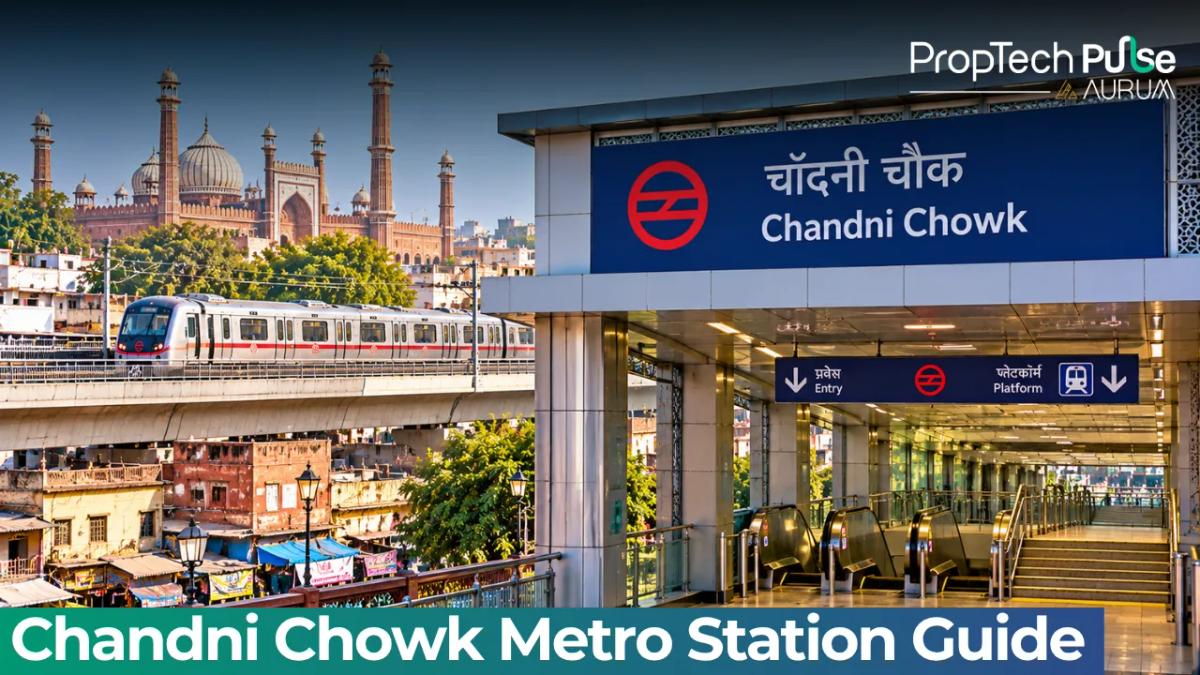
You just stepped out of Delhi Junction and your map app froze. The easiest way past the Chandni Chowk metro station chaos isn't checking a screen.
It's knowing which gate matches your destination. Opened in July 2005, this underground stop has handled Old Delhi transit for over twenty years. Swiping your card puts you straight into the commercial heart of chandni chowk delhi.
Location and Yellow Line connectivity
Quick answer
Chandni Chowk metro station serves Old Delhi on the DMRC Yellow Line between Samaypur Badli and HUDA City Centre Gurugram. It sits underground beneath Kaccha Bagh and provides five exits. Gate 1 heads to Fatehpuri Mosque, Gate 2 leads toward Red Fort, and Gate 5 opens straight onto the main Chandni Chowk market road.
The chandni chowk yellow line station sits entirely below the Kaccha Bagh crossroads. Above ground, surface stations spill queues onto busy traffic lanes. This underground layout lets thousands of shoppers slip through without fighting the congestion.
Trains connect north to Samaypur Badli and south to HUDA City Centre Gurugram. You stay on this backbone route until Rajouri Garden.
Delhi Clock Market in Chandni Chowk runs on daily footfall. Wholesalers selling precision instruments depend on shoppers exiting nearby. Real estate models confirm the pattern clearly. Transit hubs anchor dense retail patches, driving commercial leases up while turnover drops. Tenants rarely leave a prime spot near the gates.
Where to exit: gate-by-gate navigation
Portal guides usually list gates in order. They skip the reason you actually need a specific one. Wandering toward Gate 2 wastes time if you want spice wholesalers. Here is exactly where each numbered gate drops you on the street.
| Gate Number | Landing zone | Best for |
|---|---|---|
| Gate 1 | Fatehpuri Mosque and Hardayal Library | Heritage walks and evening strolls |
| Gate 2 | SP Mukherjee Road, near Delhi Public Library | Visiting the Red Fort and taking city tours |
| Gate 3 | Direct tunnel connection | Passengers switching to Delhi Junction rail lines |
| Gate 4 | MCD parking lot | Parking commuters and short drop-offs |
| Gate 5 | Sadar Bazar and Khari Baoli Spice Market access | Wholesale shoppers and traders |
Gate 5 handles bulk buyers best. The escalator drop-off lands you hundreds of metres from Sadar Bazar electronics and Khari Baoli warehouses. Skip the walk toward Gate 1 if your trolley is packed. Lanes near Gate 5 widen gradually, making cart movement straightforward.
Check the chandni chowk metro exit signs before hitting the turnstiles. Wrong exits force backtracking through crowds moving slower than monsoon traffic.
Gate 1 gives tourists the fastest path to Fatehpuri Masjid. From the mosque, head north for ten minutes to reach Red Fort walls. Gate 3 absorbs the steady stream of railway travelers. A covered underpass links the metro directly to Delhi Junction, shielding you from winter fog or summer heat.
Reaching old delhi railway station from the metro
Airports usually mandate long taxi rides after landing, but rail arrivals work smoothly here. Walking from Gate 3 to Delhi Junction takes roughly four minutes. Watch your step on the ramps if you haul a suitcase.
Platform numbers generally match the northern tube exit, enabling direct transfers to suburban and long-distance services.
This connection eases surface road pressure. Outer ring roads gridlock during Diwali weeks or major rallies. Chandni Chowk metro station users bypass jams completely. Heavy bags? Use the lift by Gate 2 and request an escort. Staff operate lifts during standard hours, so skip late-night visits after 11 pm.
Operating timings and fares on the chandni chowk metro
The station follows the broader corridor schedule. Morning departures begin at 5:42 am for commuters heading to Ghaziabad or North Campus. Evening intervals stretch to eight minutes after nine. Trains keep this rhythm through national holidays, but check DMRC alerts during power shortages.
| Direction | Terminal Station | Last Train Departure |
|---|---|---|
| Northbound | Samaypur Badli | ~11:08 PM |
| Southbound | HUDA City Centre Gurugram | ~11:19 PM |
Fares cap at ₹60 reaching Gurugram and ₹40 returning to Samaypur Badli. These rates cover the Rapid Car premium southward. Weekend pricing stays identical, though Friday evening crowds spike around five as corporate workers clock out.
Carry spare change for counters, noting that UPI tap-and-go now covers most machines.
New Delhi Chandni Chowk Pin Code covers 110006, marking the immediate commercial belt. Investors in this zone watch fare changes closely. Even a ₹5 hike pushes casual riders back to buses, tightening lease renewals for shop owners.
Facilities and accessibility
Cleanliness fluctuates by shift, yet daytime crews keep washroom zones clean and stocked. An SBI ATM sits outside Gate 1, with another near Gate 3. Platform-level restrooms appear on clear overhead signs. Concourse water machines accept notes since older coin slots jam frequently.
Disabled access routes center around the Gate 2 lift. Central platform escalators flip directions based on rush hour volume. Read the arrow boards carefully.
The east lane reverses early evening on weekdays to funnel crowds toward Gate 5. Press the intercom button; attendants control operations manually rather than trusting pure automation.
Security screening averages ninety seconds per passenger, adding delay when trains pull in tight. Reload kiosks glitch often, so use the DMRC app for instant balance tops. Factor in extra walking time if you transport bulky electronics.
Commercial demand near the metro hub
Transit development plays second fiddle to location gravity here, yet the station dictates values. Chandni chowk market predates the rail line by centuries, but metros cut tourist leakage.
Visitors previously abandoned Darya Ganj strolls due to heat or traffic delays. Now they alight at Gate 5 and continue straight.
Steady reliability holds commercial vacancy low against heritage trading belts. Retailers tolerate higher rents because footfall-to-sales ratios stay healthy. Property watchers studying metro proximity effects on apartment pricing spot the same logic shifting into nearby residential blocks like Daryaganj. Rental yields there hold steadier than newer suburbs lacking direct rail integration. Street-level shops command premiums simply because nobody parks downtown anyway.
Before you plan your next trip
Verify live departure screens before evening commutes. Stations occasionally pause Sunday maintenance cycles. The official app pushes signal alerts directly to your phone. Pocket loose change separately; crumpled notes jam venders instantly.
Memorise your target gate. Navigating chandni chowk metro station beats surface traffic snarls during peak afternoon hours.
Frequently asked questions
How to reach Chandni Chowk metro station from Indira Gandhi International Airport?
Take the Airport Express Metro to Kashmere Gateway station. Transfer immediately to the Yellow Line platform heading south toward HUDA City Centre Gurugram. Your third stop will be Chandni Chowk. The total journey takes approximately forty-five minutes including transfer time. Purchase your Yellow Line ticket at the counter using credit/debit cards or UPI tap-to-pay options available at all machines. Avoid external taxis once you exit the airport terminal to skip toll delays.
What is the distance between Chandni Chowk metro station and Jama Masjid?
Jama Masjid sits roughly 1.2 kilometres away from the station's central axis. Walking from Gate 5 gives you the shortest path, cutting across the open plaza before turning left toward the mosque's western gate. The route takes about fifteen to eighteen minutes on foot. You pass through busy wholesale lanes where traffic slows considerably. Many commuters prefer hiring an e-rickshaw outside Gate 5 for a three-minute ride that costs around ₹30.
Is Chandni Chowk metro station accessible for visually impaired persons?
The station includes tactile flooring strips running along safe pathways from the entrances down to the escalator landings. Tactile maps exist at the customer care desk, though availability depends on current stock levels. Staff members are trained to assist passengers upon request, and elevators provide vertical transport without steps. Announcements play over loudspeakers listing incoming train arrivals, helping blind travellers identify their correct platform well before stepping onto the edge.
What is the last metro time from Chandni Chowk to HUDA City Centre?
The final train departing Chandni Chowk bound for HUDA City Centre Gurugram leaves at 11:19 pm. Trains operate on fixed schedules even during holiday periods, so verify local announcements if power grids face strain. Service frequency decreases after 10 pm, meaning you may wait up to eight minutes between cars. If you miss this connection, the nearest alternative involves heading north to Kashmere Gateway, where shared autos run continuously toward South Delhi neighborhoods.
Sources
- Delhi Metro Rail Corporation: station coordinates, gate locations and facility listings (accessed October 2026)
- Delhi Metro Rail Corporation: daily train schedules and base fares across the Yellow Line network (accessed October 2026)
Enjoyed this blog article? Visit PropTech Pulse for more interesting blogs.




Ask Pulse Ai anything about real estate

Unlock the Latest in Real Estate
News, Infographics, Blogs & More! Delivered to your inbox.

