New Launch - India Real Estate Report 2026.

Services
Knowledge Hub
Resources
Tools

Ask Pulse Ai
©PropTech Pulse 2025, All rights reserved.


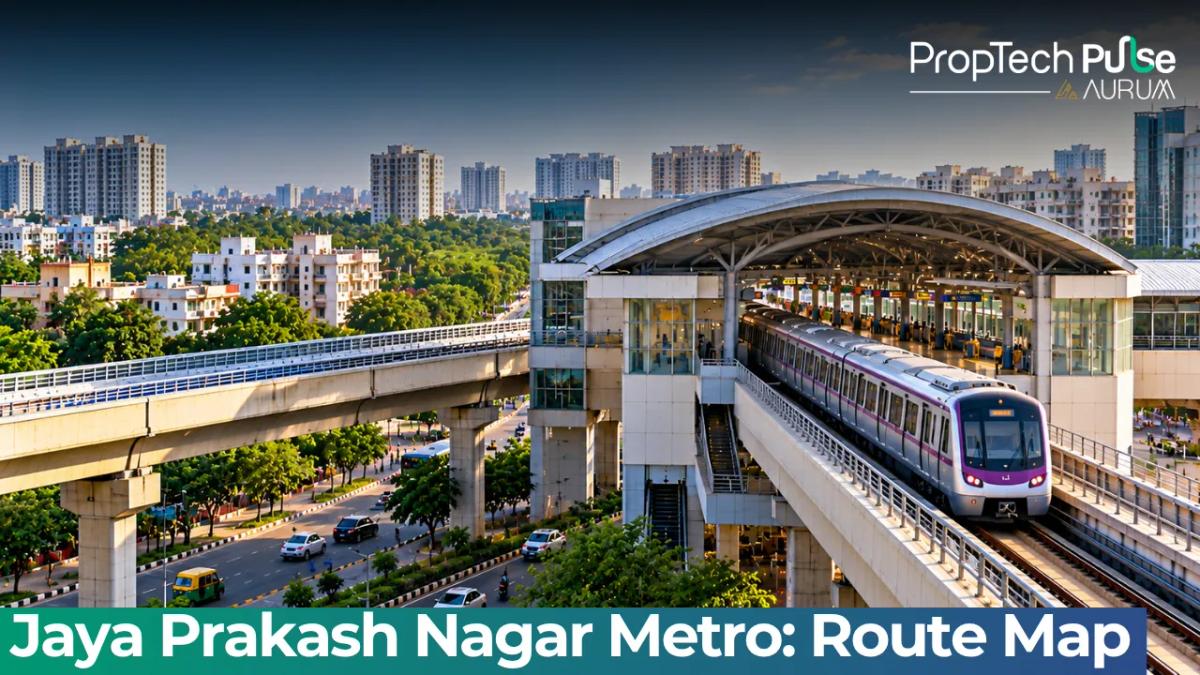
Renting a flat near JP Nagar metro station or buying property along Kanakapura Road means your daily commute dictates quality of life. Building amenities rarely make up for lost hours stuck in gridlock.
Evening crowds surge here because the JPN stop links two major IT corridors via a single transfer point. Boarding the wrong train drops you right into heavy Kanakapura Road traffic. This guide covers the exact location, Green Line routing, and last-mile options that actually save time.
Location and Station Basics
Quick answer
The JP Nagar metro station sits at the intersection of Kanakapura Road and the 100 Feet Ring Road. It operates on the Green Line (Nagasandra to Silk Institute) with side platforms, direct BMTC feeder bus connections, and zero on-site parking.
Officially named Jaya Prakash Nagar station with code JPN, the stop runs from Nagasandra north to Silk Institute south. Locals call it JP Nagar. The concrete structure sits exactly where Kanakapura Road crosses the wide 100 Feet Ring Road in the Gangadhar Nagar sub-locality.
Authorities opened the station in June 2017. The goal was to decongest the rapidly densifying southern fringes of Bengaluru. Surrounding the station are independent villas giving way to mid-rise apartments.
Rental volume spikes sharply towards Phases 5, 6, and 7. Buyers prioritize this pocket for its straightforward access to the Outer Ring Road and Hosur Highway.
Local buyers often pair metro proximity with broader locality analysis in our complete J P Nagar guide, checking everything from school catchments to flood zones before committing funds.
Entry Gates and Platform Layout
You buy tickets at ground-level counters and pass through fare gates. Stairs and lifts carry passengers upward to the mezzanine lounge, then to the upper tracks.
Side platforms mean a wrong turn costs extra time. Northbound trains toward KR Circle, Shivajinagar, and Nagasandra use the left track when facing the doors.
Southbound services to Yelachenahalli, Thindivanahalli, and Silk Institute run right. Help desks staff the concourse during operating hours. Peak-direction boards above the escalators save more time.
Green Line Route Guide
Peak hour headways drop to ten to twelve minutes. Late evening service stretches to fifteen minute gaps. Southbound trains pass Banashankari quickly. Northbound routes push past Yeshwantpur and Majestic before terminating at Nagasandra.
J P Nagar metro station travelers usually skip most stops. The stop works best as a transfer hub. Head north to Shivajinagar to swap lines for central Bengaluru trips.
Routing toward Electronic City and Whitefield requires one clean change onto the Yellow Line at RV Cross Road.
Morning and evening peaks choke interchange stations. Staff members monitor staircases to manage crush loads. Carrying heavy bags or traveling with kids adds buffer time. Counter windows bypass scanner lines entirely.
QR codes from the app load instantly unless validators freeze. For a full breakdown of stops and fares, see the full Namma Metro Green Line route map and timings.
Commuting to Bengaluru’s IT Hubs
Property values scale directly with predictable commute times. Office location determines whether this station serves you well.
Properties along the Outer Ring Road or Whitefield require careful line planning. You need to know exactly where to switch tracks and how long the transfer takes.
Recent infrastructure shifts alter commute patterns slightly. Swapping lines at Majestic remains the traditional path to Whitefield. Some professionals now take the metro eastbound to KR Puram instead.
Auto-rickshaws merge onto toll roads to skip old Madras Road traffic. This alternative saves time for offices near Horamavu. Toll expenses limit its viability to monthly passes and frequent commuters.
| Destination Hub | Interchange Station | Line Swap | Estimated Travel Time |
|---|---|---|---|
| Electronic City | RV Cross Road (RV Road) | Green to Yellow Line | 30 to 35 minutes |
| Whitefield | Majestic (Sri Shivarathreshwara Swamy Station) | Green to Purple Line | 40 to 45 minutes |
| Hebbal / Northern Industrial Areas | Nagasandra | Green Line Terminus | 45 to 50 minutes |
| Koramangala / Indiranagar | Cubbon Park / MG Road | Green to Red Line | 20 to 25 minutes |
These estimates reflect mid-day timing. Morning rush adds ten minutes at Majestic or RV Road. Barrier delays and waiting for arriving trains slow movement. Always account for those extra minutes when negotiating rental agreements close to work.
Rental Yields and Tenant Demand
Metro adjacency commands a measurable rent premium across southern Bengaluru. Tenants actively filter search parameters by distance to the station. Properties within eight hundred meters typically attract faster leasing cycles.
Studios and compact one-bedroom units generate the strongest cash flow. Salaried professionals prefer minimal maintenance and lower token amounts.
Two-bedroom layouts face slower turnover. Landlords in older society buildings frequently restrict short-term corporate leases. Verify building restrictions before purchasing for rental income.
Micro-market rents hover steadily despite broader inventory surges. Proximity to Electronic City keeps demand resilient.
Investors targeting capital appreciation should focus on upcoming infrastructure nodes branching off Kanakapura Road. Station-centric assets retain liquidity better during market corrections.
Last-Mile Connectivity: BMTC, Autos, and Taxis
The station solves only the first leg of your trip. Landing at JP Nagar leaves you squarely at a massive four-way signal. Kanakapura Road intersects the 100 Feet Ring Road and approaches Hosur Road simultaneously.
Navigating away requires using designated BMTC bus bays on the service roads. Hopping into main carriageway traffic wastes time.
| BMTC Route Number | Primary Destination | Peak Frequency |
|---|---|---|
| 210-B | Silk Institute / Hosur Road via Bannerghatta Road | Every 10 minutes |
| 378 | JP Nagar Phase 7 to Domlur via Sarjapur Road | Every 12 minutes |
| 215-N | Bommenahalli / Marathahalli Link | Every 15 minutes |
Uber and Ola queue zones sit just behind the station walls. Rides clear safely away from the main signal. Auto stands line the Ring Road service lane further down.
Locals prefer autos. Drivers weave through narrow phase streets where city buses cannot turn. Late shift workers should lock in a cab ride before exiting. Peak multiplier rates hit hard otherwise.
Buying a home with strong transit access usually cushions resale risk, but check how much premium local builders already charge before signing an agreement.
Parking Realities and Workarounds
The station offers zero official parking. This gap hurts drivers coming from peripheral phases. Residential density consistently outpaces infrastructure growth. Street spaces around exits drain before morning shifts start. Cars park illegally along the Ring Road shoulder.
Driving southbound one stop gets you to a regulated municipal lot at Banashankari. Authorities manage several hundred spots there for a standard daily fee.
Riding that extra stop inflates trip time to nearly forty-five minutes. Many families park informally near Thindivanahalli two stops south. They catch the train back to JP Nagar instead of circling for street space.
Smart parking plans announced for high-demand nodes stalled at JP Nagar. EV charging remains sparse at nearby public stands.
Infrastructure development cannot match current resident density yet. Driving daily remains impractical for most commuters.
Before you pay the booking amount
Test your exact commute twice on the metro app. Run a 9 AM Tuesday check alongside a 7 PM evening run. Headway changes sharply after midday.
Door-to-door time exceeding forty minutes during peak hours signals a bad deal. Walk the local radius yourself. Station queues and distant bus stops kill that convenience fast.
Frequently asked questions
Where is JP Nagar metro station located?
It sits precisely at the intersection of Kanakapura Road and the 100 Feet Ring Road in Gangadhar Nagar. The layout uses three levels. Ground floor handles ticket counters and fare gates. Passengers move up to the mezzanine lounge. Upper decks hold the actual tracks for boarding and alighting.
Is there parking at JP Nagar metro station?
No. The station premises do not offer any vehicle parking spaces for private cars or commercial two-wheelers. Drivers generally circle the adjacent four-way signal looking for informal street spaces, or choose to take the metro one stop southbound to Banashankari, which houses a regulated municipal paid parking lot.
Which metro line is JP Nagar station on?
The station falls officially on the Green Line of Namma Metro. Trains run continuously between Nagasandra in the northern outskirts and Silk Institute in the southern tip, passing directly through key commercial nodes like Majestic, Shivajinagar, and Cubbon Park along the way.
How to reach Electronic City from JP Nagar metro station?
Take the southbound Green Line train heading toward Silk Institute until you reach the RV Cross Road stop. Transfer immediately to the Yellow Line heading south. That single line swap drops you directly at Electronic City without requiring another change, provided you avoid early morning bottlenecks at the interchange station.
Is JP Nagar metro station close to the Outer Ring Road?
Yes, it is highly accessible. The main station exits feed directly onto the 100 Feet Ring Road and the primary Kanakapura Road signal. This positioning gives immediate cross-link access to the ORR entrance points leading toward Bommasandra, Whitefield, and Sarjapur without needing to navigate deep residential streets.
Sources
- Karnataka State Transport Department: Official BMTC route listings and feeder bus integration data (accessed October 2026)
Enjoyed this blog article? Visit PropTech Pulse for more interesting blogs.





Ask Pulse Ai anything about real estate

Unlock the Latest in Real Estate
News, Infographics, Blogs & More! Delivered to your inbox.

