New Launch - India Real Estate Report 2026.

Services
Knowledge Hub
Resources
Tools

Ask Pulse Ai
©PropTech Pulse 2025, All rights reserved.


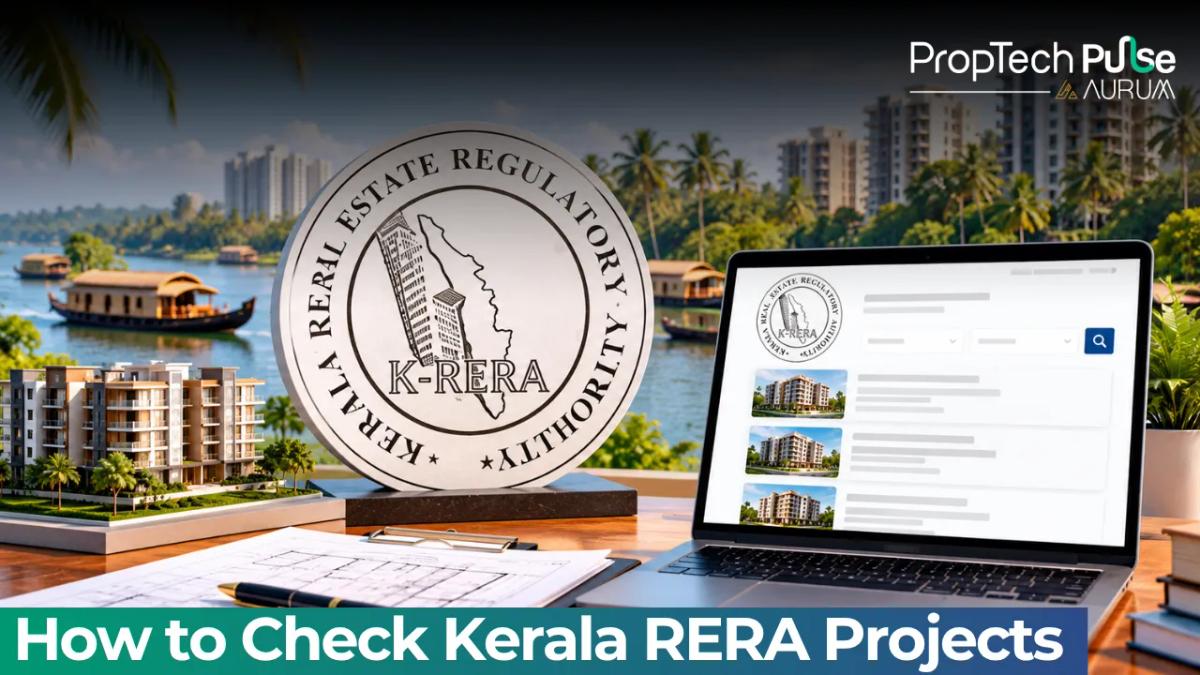
Many Kerala buyers live far from the flat they are buying. They are in the Gulf, in Bengaluru or abroad, and they rely on a brochure, a video call and a relative who can visit the site. That makes the online check on the official portal even more important.
This guide explains how Kerala RERA works for a buyer. It covers how to check a project, extra checks for waterfront sites, a worked currency example for NRI buyers, and how to complain about delays.
What Kerala RERA is
Quick answer
Kerala RERA is the state regulator under the RERA Act, 2016. It registers projects and agents, publishes project details and hears buyer complaints. Search the project's registration number on the official portal, then check approvals and any coastal clearances separately. Match the promoter, dates and carpet area to your papers before you pay.
The Real Estate (Regulation and Development) Act, 2016 is called RERA. It asks promoters to register covered projects and disclose plans, approvals and timelines. The Pulse RERA page gives the national picture.
How to check a project
- Ask for the number. Get the registration number in writing.
- Use the official site. Type the address yourself.
- Search the project. Use the project search by number, name, promoter or district.
- Match the facts. Promoter, location, carpet area and completion date must match your papers.
- Read the updates. Look for recent progress filings and any orders.
- Keep a copy. Save a dated screenshot or PDF.
If the project is missing, ask the promoter to explain in writing. The property legal verification guide lists the other documents to ask for.
Approvals and clearances
| Check | Question it answers | Who confirms it |
|---|---|---|
| RERA registration | Is the project registered and are its dates on record? | Kerala RERA portal |
| Building permit | Was the plan sanctioned and does the build match it? | Municipality, corporation or panchayat |
| Environmental or coastal clearance | Is the site allowed to build, and to what extent? | The relevant authority |
| Completion proof | Is the finished building cleared for use? | Local body; see the occupancy certificate note |
| Title and encumbrances | Does the seller own the land free of disputes? | A property lawyer |
Source: author's checklist; confirm current Kerala processes with each body.
The note on the occupancy certificate explains what proves a finished building is ready.
Waterfront and coastal projects
Kerala has many homes near the sea, backwaters and rivers. Sites close to water can be subject to extra rules on how and how far you can build.
Ask the promoter for the clearances in writing, then confirm them with the issuing body. A clean RERA page does not prove that a waterfront site cleared these rules.
Buying from abroad
Non-resident Indians can buy residential and commercial property in India under the foreign exchange rules. Payments normally need to come through banking channels.
If someone signs for you, a power of attorney needs care. Read the Pulse guide to NRI and owner powers of attorney and the overview on NRIs buying property in India.
Ask your relative or agent to visit the site, check the progress against the RERA updates and send dated photos before each instalment.
A worked currency example
Take a flat priced at ₹80 lakh, paid over construction. The rupee price is fixed, but the foreign currency you need depends on the exchange rate on the day you pay.
Assume the rate is ₹85 per US dollar. You would need 80,00,000 ÷ 85, or about $94,118. At ₹90 per dollar, you would need about $88,889.
The gap is about $5,229 on the same flat. These rates are made up to show the method. Use current rates and your bank's charges. Staged payments spread this risk, but each instalment is converted at its own rate.
Red flags
- No registration number. Ask for it in writing, in ads and in the agreement.
- A number that opens a different project. Stop and ask why.
- Missing building permit. The promoter cannot show it.
- No clearance papers for a waterfront site. Do not pay until they are shown.
- Old updates. No progress filings for several quarters.
- Pressure and cash. Quick deadlines or cash payments.
Delays and complaints
If possession is late, start with your agreement. Note the promised date, the registered date and what you have paid.
Send the promoter a written notice first. Then approach the authority. The Act allows interest on delay or a refund.
Compare builders before you commit. Start with the Pulse lists on builders in Kerala, builders in Kochi, builders in Kozhikode and builders in Thrissur.
Plan for the costs of buying too. See Kochi stamp duty and registration charges or the page for Kerala as a whole.
How to decide
Decision rule: before paying any booking amount, verify the RERA number yourself, get the building permit and any coastal clearance in writing, and have someone check the site. If any of these is missing, walk away or ask in writing.
Treat registration as the first check, not the last. After it, read the agreement, check title and compare builders. The Pulse property buying guide covers the path from search to possession.
Frequently asked questions
What is Kerala RERA?
Kerala RERA, often written K-RERA, is the Kerala Real Estate Regulatory Authority. It registers projects and agents, publishes project details and hears buyer complaints under the RERA Act, 2016.
How do I check a project on Kerala RERA?
Take the registration number from the seller and search it on the official Kerala RERA website. Match the project name, promoter, location and dates to your papers. Then confirm the building permit with the local body .
Can an NRI buy in a Kerala RERA registered project?
Yes. NRIs can buy residential and commercial property in India, with rules on payment routes and documents. A power of attorney, if used, needs care. Check the current Reserve Bank of India and tax rules and take advice before you transfer funds .
Do waterfront projects in Kerala need extra checks?
Often they do. Projects near the coast, backwaters or rivers may be subject to coastal or environmental rules. Ask for the clearances in writing and confirm them with the issuing body. RERA registration does not replace them .
What can I do if a Kerala RERA project is late?
Send the promoter a written notice, then approach the authority. The Act provides for interest on delay or a refund with interest. Keep your agreement, receipts and messages together before you file .
Sources
- Kerala Real Estate Regulatory Authority: registered projects, agents, orders and complaints [VERIFY: current portal address and sections] (accessed October 2026)
- Reserve Bank of India: rules on property purchase and payment routes for non-resident Indians [VERIFY: current FEMA rules] (accessed October 2026)
- India Code: Real Estate (Regulation and Development) Act, 2016 [VERIFY: section references and current amendments] (accessed October 2026)
- Author's calculations: dollar cost of an ₹80 lakh flat at assumed exchange rates
Enjoyed this blog article? Visit PropTech Pulse for more interesting blogs.





Ask Pulse Ai anything about real estate

Unlock the Latest in Real Estate
News, Infographics, Blogs & More! Delivered to your inbox.

