New Launch - India Real Estate Report 2026.

Services
Knowledge Hub
Resources
Tools

Ask Pulse Ai
©PropTech Pulse 2025, All rights reserved.


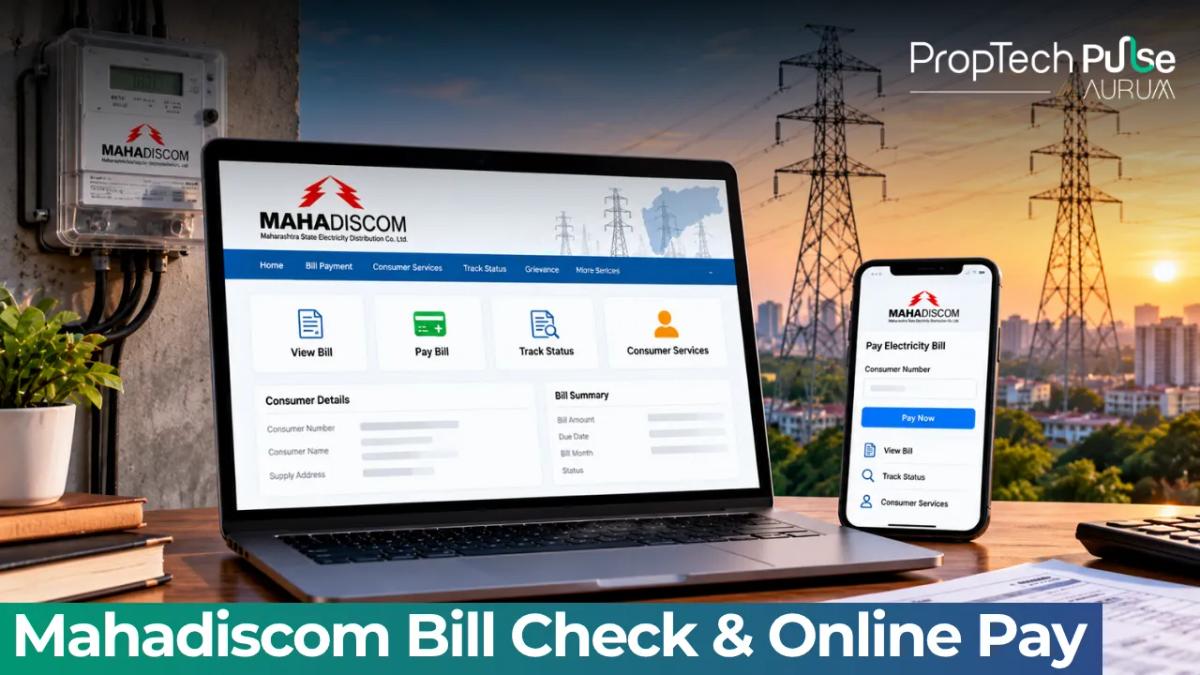
You need to see your current dues, understand why the amount jumped last month, and settle the payment before the due date hits. Checking your mahadiscom bill takes two minutes on your phone, and knowing how each component adds up stops surprises when the statement arrives.
How to Check Your Mahadiscom Bill Online Instantly
Quick answer
You can view pay bill msedcl directly through the official MahaDISCOM web portal using your 12-digit consumer number, or open the Mahavitaran mobile app for instant status checks. Enter your details, select the billing month, and your full statement loads immediately for review or download.
The fastest way to locate your bill starts with finding your unique identifiers. Every domestic connection carries a 12-digit consumer number printed on your physical paper statement, SMS alerts, and the monthly email digest. Beside it sits a 4-digit Billing Unit code that routes your account to the correct regional office. Keep these two numbers handy before logging in.
Start by visiting the MahaDISCOM self-service portal to access your latest usage data. The login screen asks for your consumer number and BU code, sometimes along with a captcha. Once authenticated, the dashboard shows your pending demand, previous arrears, and current projection. Switch between months to compare trends, or hit the download icon to save the PDF.
If you prefer managing utility handovers during property transitions, updating your consumer name early prevents billing delays. Keep administrative tasks organized alongside your broader home loan documents checklist what you need to apply. Monitoring usage regularly keeps monthly cash flow predictable alongside other recurring real estate taxes charges in India](link:337).
Current MSEDCL Electricity Rates and Tariff Slabs for 2026
Domestic Telescopic Slabs (Single Phase)
Maharashtra follows a telescopic pricing model for single-phase household connections. You do not pay a single flat rate for every unit consumed. Instead, each block of electricity carries its own rate, and your consumption moves up the ladder as usage grows. The base tariff covers essential services, while higher tiers reflect increased supply costs.
Rather than relying on approximated rates that change quarterly, focus on understanding the slab architecture so you can predict your bill accurately. The structure typically divides usage into four domestic bands. The first band covers low consumption, the second handles average households, the third captures heavy users, and the top tier applies to excessive draw. Each tier carries a steeper per-unit price than the one below it.
| Slab Band | Unit Range | Pricing Logic |
|---|---|---|
| Base / Essential | First 100 units | Lowest per-unit rate to cover minimum living needs |
| Standard | 101 to 300 units | Moderate increase reflecting average grid distribution costs |
| Higher Usage | 301 to 500 units | Steeper rate applied to substantial household draws |
| Premium | Above 500 units | Top-tier pricing for heavy commercial-style residential usage |
| Total Monthly Cost | Depends on total consumption | Sum of base charge + slab charges + additional levies |
Additional Charges: FAC, Wheeling, Tax, and Duty Explained
Your headline electricity rate rarely tells the full story. The final amount on your statement includes several mandatory overlays that often explain sudden bill spikes. Fuel Adjustment Charge compensates the discom for fluctuations in diesel and coal costs. It resets monthly and can swing positive or negative depending on market prices.
Wheeling charges fund the transmission network that moves power from generating stations to your local transformer. This is a flat per-unit levy regardless of your consumption tier. Tax on Sale represents the value-added tax applied by the state government, calculated as a fixed rate per unit pulled from the meter. Finally, Electricity Duty forms a percentage of your subtotal, varying slightly across zones within the state.
These layered charges sit on top of your base slab totals. A sharp jump in your mahadiscom bill usually results from crossing into a higher slab, rising FAC values, and increased AC running hours. Understanding how each component stacks up removes the guesswork.
How to Calculate Your MSEDCL Bill: Worked Example
Walking through a sample calculation shows exactly how the portal generates your final figure. Assume a household consumes 420 units in a single billing cycle under a standard single-phase connection. First, isolate the base fixed charge applicable to your pole type. Single-phase lines carry a lower monthly fixed fee compared to three-phase industrial setups.
Next, apply the telescopic rates to each unit band. The first 100 units fall into the cheapest tier. Units 101 through 300 carry the second rate. The remaining 120 units trigger the Higher Usage tier pricing. Multiply each segment by its respective rate, then add the three results together to get your total energy cost.
Secure the energy cost, then append the additional overlays. Multiply your total units by the flat wheeling rate. Add the per-unit tax on sale multiplied by your consumption. Apply the fuel adjustment factor currently active in your service region.
Sum everything, then calculate the electricity duty percentage on the subtotal before tax. Round off to the nearest rupee, and you arrive at the exact demand displayed on your consumer portal.
Practicing this math once builds confidence for future statements. Energy efficiency upgrades work similarly to how modern green buildings reduce overall power dependency by optimizing natural ventilation and insulation. Cutting peak-hours usage keeps you inside cheaper slabs.
Ways to Make MSEB Bill Payments Online
Pay via Web Portal, Mahavitaran App, and UPI Wallets
The MahaDISCOM website offers a straightforward checkout flow. After viewing your statement, select the outstanding amount, choose your payment method, and complete the transaction through net banking or card entry. The confirmation receipt generates instantly for future reference.
Users managing frequent payments appreciate how the dedicated Mahavitaran mobile application speeds this process up. Login biometrically, select your registered connection, and pay directly using UPI, wallets, or saved cards. Push notifications alert you before due dates, helping you maintain a disciplined payment schedule. Many users perform their monthly mahavitaran bill check early in the week to avoid network congestion near deadlines.
Third-party UPI platforms also support direct payments. Most major banking apps feature a utilities section where you enter your consumer number, fetch the current demand, and authorize the transfer. This method requires no separate logins and processes payments within seconds.
Digital Payment Discounts and Late Fees
Discoms frequently offer short-term incentives for electronic settlements. Digital payment discounts typically range between 0.2 percent and 0.5 percent on qualifying amounts, capped at a maximum saving per statement. These reductions appear automatically when you complete an mseb bill payment through approved online channels, so always prefer digital routing over counter transactions.
Late fees accrue quickly once the cut-off date passes. Penalties compound monthly until the full liability clears. Some regions also restrict reconnection services if arrears exceed certain thresholds. Settling ahead of schedule protects your credit standing and ensures uninterrupted supply during critical weather periods.
Distribution Warning Consumers located inside Mumbai city limits do not fall under MahaDISCOM. Those households receive bills from Tata Power Delhi or Adani Electricity, which operate entirely separate portals, tariffs, and mobile apps. Selecting the correct provider is essential before attempting to view pay bill msedcl services.
Important: Mahavitaran vs. Mumbai Electricity Providers
Review your consumption graph against previous months, cross-check the FAC value for the current quarter, and confirm whether any tenant or roommate adjustments require internal tracking. Once satisfied with the breakdown, proceed to your preferred digital gateway. Clearing dues promptly avoids late penalties and keeps your consumer record clean for future service requests or resale documentation.
Frequently asked questions
How to check MSEDCL bill online?
Visit the MahaDISCOM self-service portal on your browser or open the Mahavitaran mobile application. Enter your 12-digit consumer number and 4-digit BU code on the authentication screen. Select the desired billing month from the dropdown menu to view your consumption graph, pending dues, and complete statement. You can download the PDF invoice or proceed directly to payment within the same interface.
What is the difference between Mahavitaran and MSEDCL?
MSEDCL stands for Maharashtra State Electricity Distribution Company Limited, which serves the majority of Maharashtra outside Mumbai city limits. Mahavitaran is simply the brand name for the official mobile application and digital customer-facing platform launched by MSEDCL. They represent the same utility company and share identical consumer databases, payment structures, and regional coverage areas.
How to pay MSEB bill using UPI?
Open your preferred banking app and navigate to the bills or utilities section. Select electricity, enter your MahaDISCOM consumer number, and pull the live outstanding amount. Authorize the payment through your UPI PIN or fingerprint. The transaction settles instantly, and you receive a digital receipt containing your payment reference number for future dispute resolution or accounting purposes.
Why does my electricity bill spike even though usage stayed the same?
Bill jumps rarely stem from actual consumption changes alone. They usually result from quarterly revisions in the Fuel Adjustment Charge, which tracks raw material price volatility. High-temperature months also push automatic cooling devices into continuous operation, crossing you into heavier tariff slabs. Verify whether an annual billing cycle shift or delayed readings occurred alongside the apparent increase.
Can I download my old MSedcl bill download history?
Yes. Log into the official MahaDISCOM portal or the Mahavitaran app and navigate to the statement archive section. Most accounts retain printable records spanning up to twelve months. Select any past month, open the detailed breakdown, and tap the download icon to save the file. Maintaining a digital archive simplifies expense tracking and supports utility transfer paperwork during property handovers.
Sources
- Maharashtra Electricity Regulatory Commission: Tariff orders, domestic category notifications, and regulatory directives governing electricity pricing in the state (accessed October 2026)
Enjoyed this blog article? Visit PropTech Pulse for more interesting blogs.


Ask Pulse Ai anything about real estate

Unlock the Latest in Real Estate
News, Infographics, Blogs & More! Delivered to your inbox.

