New Launch - India Real Estate Report 2026.

Services
Knowledge Hub
Resources
Tools

Ask Pulse Ai
©PropTech Pulse 2025, All rights reserved.


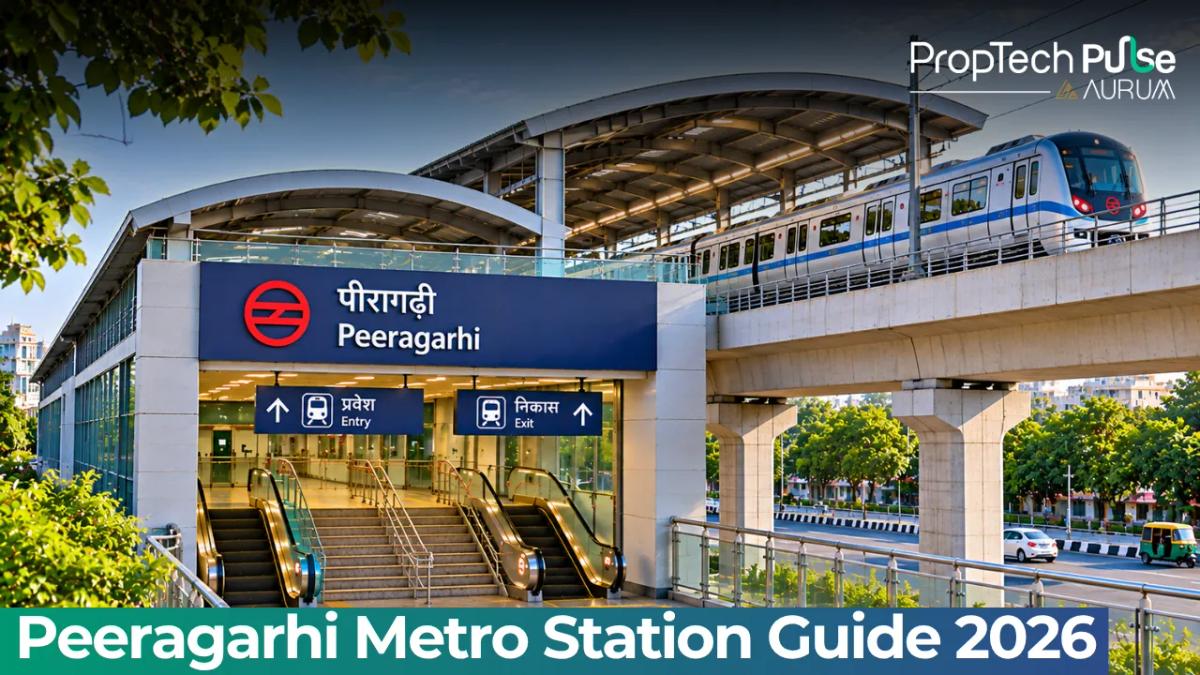
Commuters moving west along the arterial network rely on the peeragarhi metro station to reach central Delhi quickly.
Where is the peeragarhi metro station located?
Quick answer
The station sits on Rohtak Road near Peera Garhi Chowk. It serves dense residential grids in Paschim Vihar and the historic village outskirts in West Delhi.
High-profile land runs along one of the capital's busiest thoroughfares here. Massive foot traffic crosses this strip daily.
Predictability beats luxury for locals. Ground floor shops, banking branches, and transport aggregators cluster within walking distance, forming a micro-hub before passengers even reach the ticket gates.
Locality guide: Peeragarhi Chowk and Paschim Vihar homes outlines how the station footprint dictates building heights and rental valuations in the surrounding grids. Nearby agricultural plots transition into mid-rise apartments precisely because transit coverage shifts municipal zoning permissions. Peeragarhi village and Paschim Vihar area profile covers the demographic shift caused by daily rail capacity expanding past initial estimates. Land owners adjusted property tax brackets decades ago when developers realized the overhead alignment would bring structured passenger volumes.Routing and platform setup on the peeragarhi green line
Trains departing north-bound terminate at Shaheed Sthal. Those heading south-bound drop you closer to central business districts and educational corridors before reaching Delhi Secretariat.
The tracks stack neatly above the main carriageway. Standard dual-configuration handles the weight while train dispatch relies on central control systems tracking block sections rather than physical signals.
Stations ahead include Udyog Nagar and Paschim Vihar West moving toward the northern terminus. Previous stops take you straight to key academic hubs.
Platform screens keep waiting commuters safely separated from active tracks, preventing accidental entry during rapid acceleration phases.
Ventilation fans and exhaust louvers run continuously despite the ambient temperature outside.
Fire suppression pipes sit flush against ceiling mounts above the ticket checker booths. Safety standards aren't negotiable here.
Operating hours, first and last trains, and peak frequency
Train operations begin well before most office shifts start and continue through late night hours when shift workers clear the counters.
You will see tight headways between 8 AM and 11 AM, followed by compressed returns around 6 PM and 9 PM.
Gaps stretch slightly during mid-afternoon lulls and again past midnight maintenance cycles.
DMRC publishes updated timetables whenever school schedules change or special events disrupt normal routing.
Passenger counts spike right after festival holidays when temporary shuttles supplement regular flows.
Regular commuters learn to time arrivals based on visual queues rather than digital boards. Rush hour tolerances drop below five-minute delays because platform saturation forces staff to hold doors manually.
Smart card fares, contactless tapping and cash limits
Payment happens through automated fare collection machines scattered throughout the paid area.
You load money onto rechargeable plastic cards using vending kiosks or designated windows.
Each trip deducts a calculated amount based on distance brackets rather than flat zone rates.
Contactless credit and debit cards now work alongside physical magnetic strips, meaning frequent travelers rarely queue at cash desks.
Child concessions apply automatically when scanned against registered profiles linked to parental accounts.
Daily usage caps prevent runaway expenditures on weekend family outings.
Daily ridership peaks force quick tap-and-go discipline. You move fast or get stuck.
Entry gate delays usually stem from expired balance warnings or unreadable chip surfaces.
How proximity to a metro station affects apartment pricing explains why properties sitting within comfortable walking distance command higher resale values compared to those requiring expensive shuttle rides.Interchange validity: Magenta line integration in peeragarhi delhi
Transfers between lines depend entirely on approved walkways built to handle heavy cross-flows. Engineers have spent years designing them.
A dedicated overhead footbridge spans roughly 140 metres now. It connects existing Green Line concourses directly to future Mezzanine levels on the parallel corridor.
Structural reinforcement happened simultaneously with station expansion projects. Retrofitting later simply isn't an option anymore.
Once fully commissioned, passengers will descend stairs from upper platforms. Walk across sealed ramps passing retail outlets and security checkpoints, then board south-north bound carriages without re-tapping tickets.
Signage transitions from directional arrows. Expect line colour coding to match the new network topology soon enough.
Delays occurred previously. Utility relocation delayed trenching works beneath major intersections.
Steel girders lock into place finally. Testing protocols shift toward emergency evacuation drills and crowd simulation exercises.
Commercial property managers nearby monitor interchange announcements closely. Footfall spikes correlate perfectly with retail lease renewals and ground-floor vacancy drops.
Last-mile access: peeragarhi chowk and cluster feeder buses
Getting from home to the station entrance isn't straightforward. Uneven pavement stretches often clutter with street vendors make the final leg awkward.
E-rickshaw drivers, though, park in designated bays facing outward so passengers board safely away from moving traffic.
Auto-rickshaws circle slowly. Drivers hunt for curb space reserved specifically for transit pickups.
Fixed-route feeder buses fill the gaps. Two-wheelers become risky the moment weather turns heavy.
Operators run dedicated trips starting early, closing shortly before last trains depart.
Fares stay lower than point-to-point taxi rates. That comes with separate validation rules, though, applied at bus conductors' desks.
Rainy season drainage backups block approach roads occasionally. Pedestrians get pushed onto higher sidewalks while water recedes.
Municipal cleaners prioritize these corridors. Congestion spills backward onto highway lanes if they don't.
Metered parking geometry and published tariff slabs
Vehicle storage areas sit behind security barriers requiring electronic passes or daily permits.
Layouts group motorcycles separately from cars to maximize square footage utilization.
Guards patrol aisles looking for unreported scratches or unauthorized modifications.
Hourly charging structures discourage all-day commuter abuse while allowing visiting professionals to book appointments without worrying about overnight fees.
Full-day caps exist for regular users who prefer predictable monthly invoices instead of variable receipts.
Parking tip: Always collect the stamped receipt from the machine before leaving your vehicle. Lost entries trigger manual verification delays at exit gates.
Monthly subscription models offer discounted blocks but require background checks verifying residential addresses within designated radiuses.
Unauthorized plates get photographed and flagged immediately.
Commute-time matrix to airports, corporate parks and colleges
Travel durations matter more than raw distance when judging convenience.
West Delhi residents targeting employment clusters rely on consistent transfer points rather than unpredictable surface traffic.
Commute times from the peeragarhi metro station remain reliable even when surface arteries choke.
| Destination | Approximate Time | Notes |
|---|---|---|
| IGI International Airport Terminal 3 | 30 to 40 minutes | Requires transfer at Kashmere Gate |
| NSEC & NSIT Dwarka | 15 to 20 minutes | Direct access via few stops |
| Rajouri Garden Commercial Hub | 20 to 25 minutes | Transfer required at Rajouri Garden |
| IIT Delhi | 25 to 30 minutes | Connects via Azad Hind/Moti Bagh switch |
| TOTAL ESTIMATED COMMUTE WINDOWS | Varies by transfer count | Add buffer for platform waits |
These windows stay remarkably stable regardless of monsoon flooding or peak holiday shopping surges.
Surface roads choke easily under heavy loads while sub-surface arteries keep rhythm intact.
Tenants negotiate leases tighter once they calculate guaranteed door-to-desk arrival times rather than guessing bus reliability.
Employers reward flexible hours knowing staff can escape gridlock without calling sick.
What Commuters Should Check Before Relying on Peeragarhi Metro
Verify the exact status of the interchanging footbridge completion schedule before planning permanent relocation based strictly on cross-line transfer benefits.
Confirm actual parking permit eligibility criteria at the ground office since radius definitions shift periodically.
Map your specific last-mile route during evening rush hours to ensure e-rickstand availability matches your return trajectory.
Frequently asked questions
Is Peeragarhi an interchange metro station?
Currently, it operates exclusively on the Green Line. However, a massive 140-metre overhead footbridge is under final construction phases to connect this hub directly to the upcoming Magenta Line. Once tested and commissioned, passengers will walk across sealed ramps without re-entering ticket zones. This transforms the stop into a primary transfer node for West Delhi commuters heading to Saket or Sri Aurobindo Place.
Where does the Peeragarhi metro station lead?
Trains departing northwards terminate at Shaheed Sthal, passing key educational institutes like NSIT and IIT Delhi along the way. Services heading south deliver riders directly to the heart of the national capital, reaching Delhi Secretariat and central business districts quickly. Most passengers use this junction as a fast conduit avoiding surface gridlock on the Rohtak Road corridor.
What are the timing and frequency of trains at Peeragarhi metro station?
Operations typically commence well before standard office hours begin and maintain service deep into the night for shift workers. Headways compress significantly during morning and evening rush periods to handle platform saturation, whereas midday gaps widen slightly. Ridership planners advise checking official DMRC notices whenever holiday schedules temporarily alter dispatch rhythms or cause volume spikes.
How much is parking at Peeragarhi metro station?
Vehicles utilize a dedicated metered zone positioned behind security checkpoints separating motorcycle slots from automotive blocks. Charges operate on a sliding hourly structure capped by daily maximum thresholds to prevent misuse. Regular subscribers may apply for monthly passes following residency verification, ensuring predictable costs without chasing fluctuating daily receipts at automated kiosks.
How far is Peeragarhi metro station from IGI airport?
The journey spans roughly fourteen kilometres across western sectors. Commuters face an estimated thirty to forty minute transit window, though this duration inevitably grows when transferring lines at Kashmere Gate or navigating complex platform switches. Subsurface routing guarantees consistent arrival windows regardless of severe monsoon flooding choking surface highways.
Sources
- Delhi Metro Rail Corporation: Official station infrastructure details, routing maps, and operational standards (accessed October 2026)
Enjoyed this blog article? Visit PropTech Pulse for more interesting blogs.



Ask Pulse Ai anything about real estate

Unlock the Latest in Real Estate
News, Infographics, Blogs & More! Delivered to your inbox.

