New Launch - India Real Estate Report 2026.

Services
Knowledge Hub
Resources
Tools

Ask Pulse Ai
©PropTech Pulse 2025, All rights reserved.


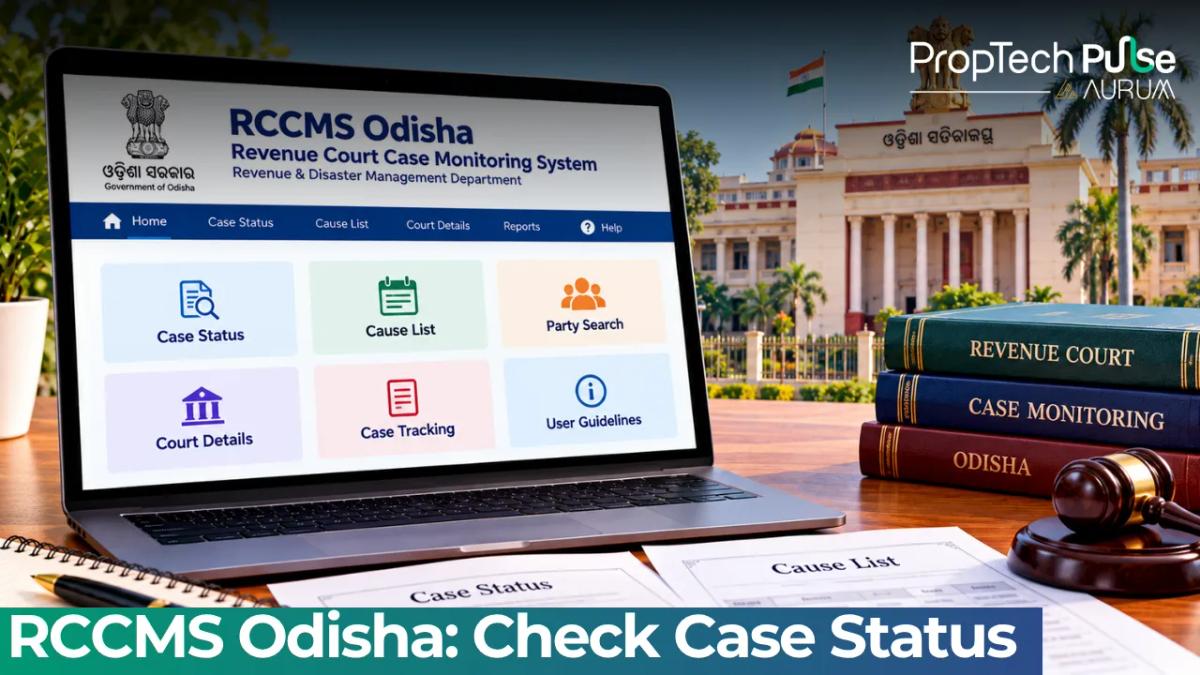
In Odisha, the Revenue Court Case Monitoring System (RCCMS) acts as the central hub for land and revenue disputes. Built by the National Informatics Centre (NIC), the system integrates directly into the Odisha Bhulekh ecosystem.
It manages everything from mutation appeals against local Tahsildars up to final hearings at the Additional District Magistrate (ADM) level. Vetting a plot in Khordha, Cuttack, or Balasore requires this step. Checking the RCCMS cause list protects your capital.
What is RCCMS Odisha?
Quick answer
The Revenue Court Case Monitoring System (RCCMS) Odisha is the state's official digital portal for tracking land and revenue disputes moving from Tahsildars to Sub-Collectors and Additional District Magistrates. Hosted on the Odisha Bhulekh domain, it allows users to view hearing schedules, access case files via mobile OTP, and monitor the outcome of active property litigation.
The revenue court hierarchy in Odisha operates on a strict three-tier escalation.
First, the Tehsildar rules on initial land disputes. Usually, the Sub-Collector then reviews the file if you disagree with that ruling. From there, appeals go to the Additional District Magistrate (ADM) or the Collector, depending on the district's caseload. RCCMS digitizes this entire pipeline.
Previously, citizens chased physical files through dusty government offices. Now these cases are logged directly into the portal. RCCMS digitizes this entire pipeline.
The system integrates partially with the Land Records Management System (LRMS). Reviewing courts pull up scanned documents and Khatian extracts instantly. It serves two audiences simultaneously.
Citizens track their own legal battles easily. Cautious buyers verify whether a seller's title is completely clean.
How to Check RCCMS Case Status Online
To find your revenue court case status using the RCCMS Odisha portal, skip any complicated multi-layer registration process.
The system uses mobile OTP authentication for security and instant access. This keeps the interface accessible for rural and urban residents alike. Follow these steps to use the dashboard efficiently:
- Access the official portal: Open the site at https://bhulekh.ori.nic.in/rccms/Default.aspx.
- Initiate the RCCMS login: Click on the 'Check Cause List' or 'View Case Status' option on the main menu. Enter your registered mobile number to receive a One-Time Password (OTP).
- Enter case identifiers: Once authenticated, input your case number, application ID, or the specific name of the parties involved in the dispute.
- Review the current stage: The portal will display the exact phase of your appeal, the presiding authority managing the file, and any scheduled hearing dates.
Property buyers cannot search purely by private names unless the case is publicly listed in the general cause list. You will need the exact case number instead.
Who Can File an RCCMS Appeal?
Revenue disputes rarely remain static once filed. Anyone holding a legal interest in the affected survey number can initiate proceedings.
Buyers might accidentally trigger an appeal if they purchase disputed land without proper notice. Sellers frequently lodge petitions to reverse unwanted mutations caused by clerical errors.
Timeline limits play a major role here. Most appeals must reach the Sub-Collector within 30 to 60 days of the original Tahsildar order.
Late filings get rejected outright by the registry desk at the collectorate.
Once an appeal enters the queue, neither party can unilaterally withdraw the matter without explicit court permission. Waiting for a voluntary withdrawal consumes months of transaction time.
How to View the Cause List
This calendar functions as the weekly schedule for upcoming revenue court hearings.
Using it helps you understand precisely when the next legal action on your plot will occur. Filter the list by district, Tahsil office, and specific month once you log in.
Scanning the grid for a specific case reveals whether the matter sits pending for counter-affidavits or a final order.
Keeping a regular watch prevents nasty surprises during handover. Signing a sale deed while a hearing waits on the board simply means inheriting a frozen asset.
Decoding Common RCCMS Case Types
When you pull up a file in the portal, the system tags it with a specific acronym. Understanding these codes matters because it tells you exactly how severe the underlying dispute runs.
| Acronym | Full Form / Meaning | What it means for the property owner |
|---|---|---|
| OLR | Original Letters Petition | A petitioner is formally challenging a Tahsildar's initial ruling on land mutation, inheritance transfer, or boundary alignment. |
| Sairat | Mutation Demarcation Appeal | An appeal filed directly against errors recorded in land measurement, ownership transfer, or physical field boundaries marked on the map. |
| BEBANDOBASTA | Land Survey & Record Dispute | Legacy cases dealing with historical record mismatches, inherited land partition errors, or invalid occupancy certificates. |
| MINERAL SAIRAT | Minor Minerals Dispute | Conflicts regarding excavation rights, sand or gravel mining permits on private agricultural plots, or disputed riverbed boundaries. |
| Action required for buyers | If any of these statuses show as active, pause the transaction until the ADM delivers a clear judgment or the opposing party withdraws the petition. | |
Different acronyms dictate different survival strategies. An OLR attack targets procedural flaws in the original mutation.
A Sairat petition challenges boundary measurements. Both freeze the marketability of the land. Your lawyer must check the filing date before advising on advance payments.
Why Homebuyers Should Check RCCMS Before Buying Land
Most buyers treat the Encumbrance Certificate (EC) and the Record of Rights (ROR) as the ultimate proof of ownership today.
Those documents prove who holds the paper title currently. They fail to prove that no one fights actively to strip that ownership away tomorrow.
An active RCCMS case signals an aggrieved party already filed an appeal. The legal landscape of that specific survey number shifts constantly under your feet.
Civil courts generally issue stay orders on property transactions the moment a revenue appeal triggers a major dispute. Signing an agreement for sale while an OLR petition sits on the Sub-Collector's desk risks tying your capital to a frozen asset indefinitely.
For property buyers An active case status does not automatically kill a deal, but it absolutely means the chain of title is contested. Do not proceed with paying the advance money until the opposing party withdraws the petition or the ADM explicitly rejects the appeal. A disputed sale deed can later be declared null in civil court, leaving you with minimal financial recovery against the original owner.
Before you release funds, cross-reference your site visit with the Dwist portal data. Download the latest ROR from Bhulekh Odisha ROR online guide. If you encounter any discrepancies between the physical boundaries and the recorded Khatian numbers, ask the seller to clear them at the Tahsil office first. For a structured walkthrough of the document verification process, see our property legal verification comprehensive guide. Audit past mutation attempts by referring to the DWIST Odisha mutation conversion guide.
Before you commit money to an Odisha plot
Download the latest Record of Rights. Match every survey number and Khasra number against the field boundaries yourself.
Verify the seller's name matches across the EC, the ROR, and the latest tax receipt. Request a legal opinion if any doubt exists. Sign only when revenue records match your intentions and show zero active appeals.
Frequently asked questions
What does RCCMS stand for in Odisha?
The acronym stands for Revenue Court Case Monitoring System. It is a web-based platform built by the National Informatics Centre specifically for Odisha's revenue administration to manage, track, and report on land-related disputes. The system digitises appeals moving from local Tahsildars up to higher appellate authorities.
How can I check my revenue court case status online?
You can check your revenue court case status directly through the official Odisha Bhulekh website. Navigate to the RCCMS module, enter your registered mobile number to generate a temporary login via OTP, and input your specific case or application ID to view the current hearing status.
Can I check RCCMS case status by mobile number?
Yes, the primary method for accessing case updates relies entirely on a registered mobile number. Once you input the phone number into the secure login interface, the system sends a One-Time Password to authenticate your identity before displaying sensitive legal data to authorised users.
What happens if a land dispute case goes to RCCMS?
When a land dispute enters the RCCMS pipeline, it triggers a formal review by higher authorities. While the sale deed remains valid in name, the actual title becomes contested. Courts typically issue stay orders on further transactions until the final appellate authority delivers a binding judgment on the ownership question.
Who are the sub-collectors and ADMs handling revenue appeals in Odisha?
These roles sit at the top of Odisha's revenue hierarchy. The Sub-Collector usually acts as the Second Appellate Authority, overseeing Tahsildar decisions across subdivisions. The Additional District Magistrate serves as the highest reviewer for complex ownership claims, mutation reversals, and mineral disputes across the district.
Sources
- Odisha Bhulekh Portal: Official RCCMS portal hosting, user manual, and case type reporting (accessed October 2026)
Enjoyed this blog article? Visit PropTech Pulse for more interesting blogs.





Ask Pulse Ai anything about real estate

Unlock the Latest in Real Estate
News, Infographics, Blogs & More! Delivered to your inbox.

