New Launch - India Real Estate Report 2026.

Services
Knowledge Hub
Resources
Tools

Ask Pulse Ai
©PropTech Pulse 2025, All rights reserved.


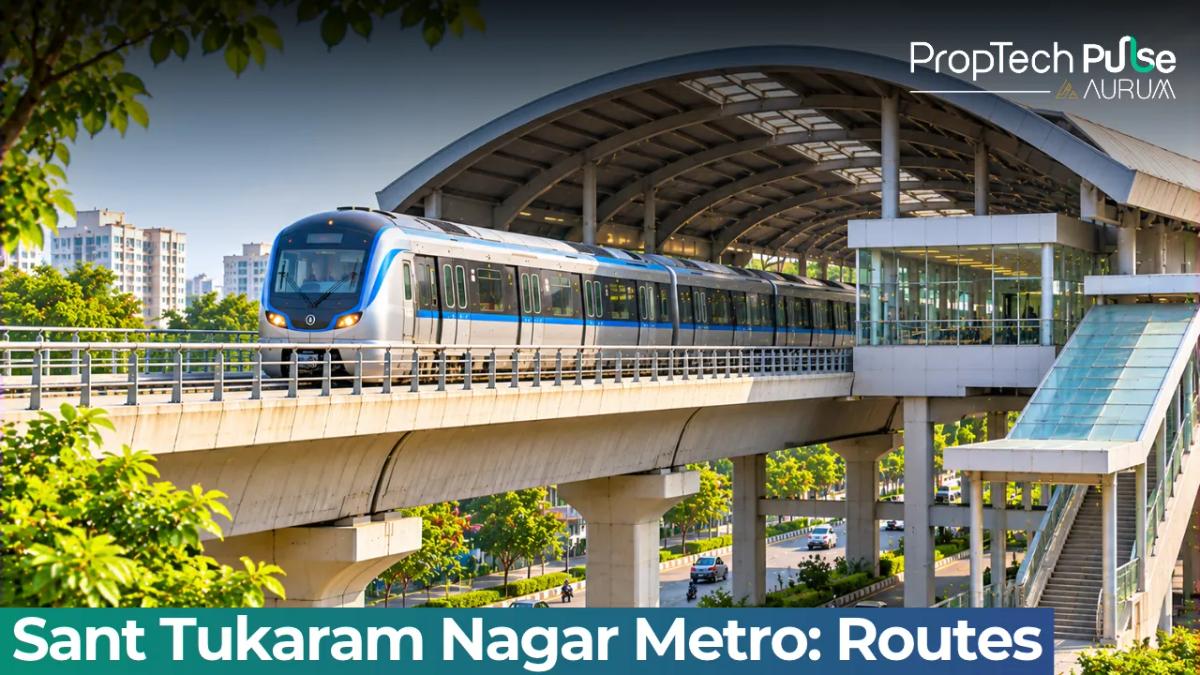
Commuting between Pimpri-Chinchwad and central Pune has become straightforward thanks to the Purple Line of Pune Metro. At its heart sits the Sant Tukaram Nagar metro station, which connects industrial workers in Dehugaon, Vadgaon, and Talegaon with commercial hubs and administrative offices in Swargate. For renters and buyers evaluating this node, knowing the exact platform setup, reliable arrival windows, and last-mile transport options matters far more than generic area guides.
Location and Access
Quick answer
Sant Tukaram Nagar metro station is an elevated Purple Line stop on the Old Mumbai-Pune Highway. It provides direct links to Swargate Railway Station and lacks dedicated parking inside the premises.
The station occupies a strategic stretch along the Old Mumbai-Pune Highway, sitting adjacent to the state inter-city bus terminal. Commuters calling the area by Sant Tukaram Nagar usually park their bikes or catch a bus from the terminal before stepping onto the metro floor.
The road network here handles heavy two-wheeler traffic during rush hours. This makes walking distances from surrounding pockets like Vallabh Nagar slightly longer than they appear on flat maps. Accessibility ramps and elevators are positioned near the main stairwells, ensuring smooth passage for wheelchair users and travelers carrying heavy luggage.
Security screening happens before entering the paid zone. Staff conduct routine bag checks at automated gates, so keep bags open and avoid prohibited items to speed up the morning queue. Foot traffic thickens rapidly once school and factory shifts overlap.
Local residents navigate a tangle of smaller lanes branching off the main highway. If you walk from the southern edge of Dehugaon, expect to cross the busy Old Mumbai-Pune Highway footpath. The ramp to the upper concourse is not always sheltered from sun or rain, so carry a light cover if you walk across during the monsoon months.
Platform Layout and Directions
This is an elevated structure built with two separate side platforms. Passengers often board the wrong train simply because announcements get lost in the background noise. Understanding which side takes you where saves time every single day.
| Platform | Destination Direction | Key Interchanges |
|---|---|---|
| Platform 1 | Swargate / Civil Court | Pune Junction Railway Station |
| Platform 2 | PCMC Bhavan | Industrial corridors in Wagle Nagar |
Always check the digital display boards above the stairs before crossing the foot-over bridge. A single missed transfer can add twenty minutes to your commute.
Exit turnstiles sit near the top of each platform staircase, allowing quick movement back to ground level without navigating crowded concourses. Waiting areas on the platforms have basic seating, but they fill up quickly between 08:00 AM and 09:30 AM. Factory supervisors sometimes wait here for their entire shift crews, turning a quiet spot into a packed corridor.
Stand clear of the yellow tactile strips near the edge, especially when trains arrive late afternoon and brake squeals get louder. The internal signage uses colour-coded lines matching the wider network map. Look for the purple band above each exit route to confirm you are facing the right direction.
Customer care counters located midway down the concourse handle recharge disputes and lost card queries faster than waiting on phone helplines.
Timings and Fares
Metro operations begin shortly after dawn, providing early shifts in nearby factories and warehouses a reliable lift. Evening services wrap up late enough to accommodate office workers returning from Swargate.
Trains run at steady intervals throughout the working week. Frequency tightens noticeably between 08:00 AM and 10:00 AM when passenger volume peaks. Holiday schedules sometimes see reduced frequency on non-working days, but emergency shuttle services often cover critical gaps.
Fares scale with distance traveled. A short hop to a nearby stop starts at ₹10, while journeys stretching toward the southern terminus cross into higher brackets. Digital wallets and contactless cards process entry and exit quickly, cutting down queue lengths compared to counter queues.
Last-mile warning Dedicated vehicle parking exists nowhere near the station entrances. Relying on auto-rickshaws from the Vallabh Nagar Bus Stand or hopping onto PMPML buses heading toward Swargate works best for daily commuters who travel from outlying villages.
Commuters arriving by private vehicles should plan alternative drop-off points a few streets away. Complete the final leg via auto-rickshaws standing at designated ranks, or board municipal buses bound for the CBD directly. Parking enforcement officers patrol the immediate periphery closely during peak office hours. Towing risks outweigh any convenience gained by dropping passengers right at the gate.
Connectivity and Nearby Residential Areas
Living close to transit hubs changes daily habits for tenants and owners alike. Communities spread across Sant Tukaram Road benefit from reduced weekly fuel spending and fewer traffic headaches. Affordable rental flats in Pimpri-Chinchwad cluster tightly within a kilometer of the platform, keeping walkability high for young professionals.
Older low-rise structures dominate these immediate blocks, offering compact studios aimed at single workers. Families looking for slightly wider plots often move toward New Sangavi, where larger apartments sit closer to parks and still maintain quick rail access. The transition toward newer mid-rise complexes in nearby wards shows developers adjusting layouts to appeal directly to transit-dependent households.
The highway itself acts as a loud barrier for ground-floor units. Soundproof double-glazed windows are standard in modern builds facing the Old Mumbai-Pune Highway. Properties backing onto smaller internal streets retain quietness while staying just five minutes away from the metro stairs on foot. Landlords price these inner-street rooms lower despite equal access, creating good value for long-term leases.
How does proximity to a metro station affect apartment pricing? Proximity typically lifts baseline rents by a solid margin, since landlords price in guaranteed commute reliability. Buyers should verify whether the quoted premium covers actual walking distance or merely a vague radius.
Always measure the route on foot during rush hour before signing papers. Street vendors lining the approach roads create bottlenecks in August, slowing pedestrian flow even if your building is technically next door.
Real Estate Impact and Living Near the Purple Line
Property values near Purple Line stations shifted dramatically after Phase 1 opened. Rentals spiked first, followed by resale prices creeping up in established colonies. Plots originally valued purely for industrial zoning now command a transit premium, particularly in pockets bordering Chakan and Wanowrie.
Investors buying ahead of upcoming interchange stations often secure higher appreciation later. Sant Tukaram Nagar metro station already enjoys mature connectivity, so riders boarding here today face consistent crowd levels. Builders launching fresh towers target blue-collar workers needing cheap rent, alongside salaried employees wanting quick office commutes.
Expect a mix of 1 BHK micro-units and larger 3 BHK family floors in single societies. Society committees manage water supply issues carefully, pooling resources to install overhead tanks because municipal pressure dips during summer months.
Watch for maintenance fees that exceed average society standards. Elevator upkeep and security staffing add up fast near busy nodes. Infrastructure strain keeps pace with population growth. PMPML buses feeding the station grow overcrowded earlier than usual, forcing commuters to rely on shared autos.
Water tankers arrive frequently to supplement supply for nearby high-rises. Municipal authorities occasionally delay waste collection due to narrow approach roads clogged by delivery vans. These everyday friction points matter more than glossy brochures when judging livability.
Before You Choose This Location
Use this decision rule when weighing rentals against purchases. If your job sits inside the industrial belt running from Chakan to Wagle Nagar, staying south of the station maximizes work hours.
Target employers clustered in Swargate or Shivajinagar? Book accommodation north of the station to avoid crossing city choke points during peak windows. Either way, confirm the exact street exit that drops you nearest to your starting point before accepting keys.
Check local market rates every quarter. Sudden policy shifts regarding land use or water supply can alter value trajectories overnight. Watch for encroachment notices affecting shop fronts or parking patches.
Municipal corporations regularly clear roadside obstructions, altering the visual landscape around society entrances. Negotiate lease terms specifically covering maintenance delays caused by civic work, because broken promises on infrastructure upgrades rarely get fixed voluntarily.
Frequently asked questions
On which line is the Sant Tukaram Nagar metro station located?
It sits directly on the Purple Line of Pune Metro, which spans the full North-South corridor running between PCMC Bhavan and Swargate. Riders transferring from older networks usually connect at Civil Court interchange, where Purple Line trains meet regional routes heading toward central Pune neighborhoods.
What are the timing and first train hours?
Service begins shortly after dawn each weekday, giving factory and warehouse employees a dependable ride before shift start times. Evening departures continue well past sunset, covering staff returning from downtown offices. Trains maintain regular spacing throughout the afternoon, though headways shorten slightly during morning peak waves.
Does Sant Tukaram Nagar metro have parking?
The operator has not allocated dedicated car or bike parking zones immediately surrounding the entrance gates. Commuters arriving by private vehicles should plan alternative drop-off points a few streets away. Complete the final leg via auto-rickshaws standing at designated ranks, or board municipal buses bound for the CBD directly.
How long does it take to reach Swargate from Sant Tukaram Nagar?
A direct ride from this platform down to Swargate covers roughly ten stops and typically consumes eighteen to twenty-two minutes, depending on dwell times at intermediate halts. Scheduling buffer remains wise given unexpected congestion on connecting roads once passengers disembark near major railway terminals.
Which nearby areas does the Sant Tukaram Nagar metro serve?
The rail node pulls riders from several residential clusters along the Old Mumbai-Pune Highway, notably Vallabh Nagar and pockets stretching toward Sukhwani Complex. These communities feed heavily into the station due to their concentration of budget-friendly rental stock and easy highway access, keeping footfall consistently high on weekdays.
Sources
- Mumbai Metropolitan Region Development Authority Metro Rail Limited (MMRCL): Passenger information updates and station infrastructure details (accessed November 2026)
Enjoyed this blog article? Visit PropTech Pulse for more interesting blogs.




Ask Pulse Ai anything about real estate

Unlock the Latest in Real Estate
News, Infographics, Blogs & More! Delivered to your inbox.

