New Launch - India Real Estate Report 2026.

Services
Knowledge Hub
Resources
Tools

Ask Pulse Ai
©PropTech Pulse 2025, All rights reserved.


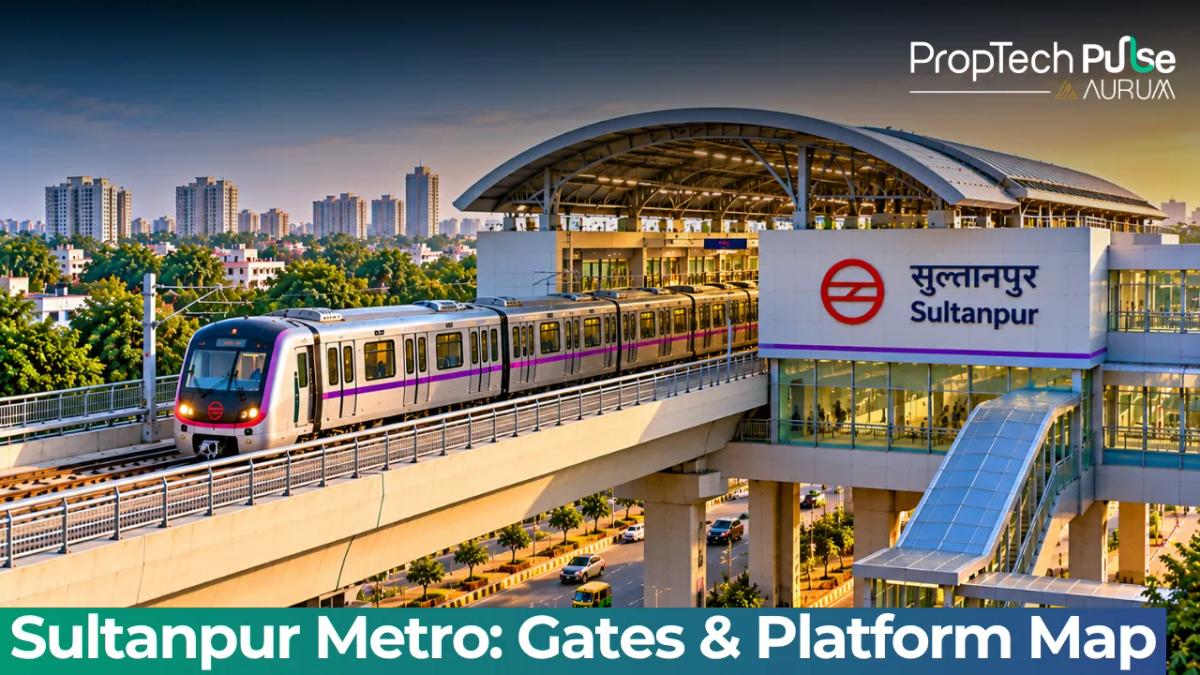
Commuters relying on the sultanpur metro station know the friction points all too well. Tracing the boundary toward the Gurugram industrial belt or moving through dense residential clusters, you need to know the exit routes to save time.
Most online pages bury practical transit answers under real estate listings or outdated traffic metrics. This guide maps the station from the ground up.
Exact Gate Map & Exit Directions
Quick answer
Sultanpur metro station has two primary operational exits. Gate 1 leads directly to Sultanpur Village Road and northern approaches, while Gate 2 aligns with MG Road, National Highway 48, and the connection toward Ghitouri and Gurugram.
Understanding which sultanpur metro gate no matches your destination saves ten minutes of backtracking.
You step onto the street and face a split decision. Carrying luggage or braving Delhi summers makes choosing the right exit crucial.
Gate 1 sits closest to the residential clusters of Sultanpur village. When you exit here, you face the local market stretch and the old service road feeding into Sultanpur Village Road.
This exit handles the bulk of the student commute toward nearby schools and the daily vegetable vendors setting up by the footpath.
Primary fare collection counters for regular commuters using paper tokens or cards also sit here. Fewer vehicles queue on the north side compared to the south, so auto-rickshaws can dock quickly.
| Exit Point | Primary Direction & Landmarks | Roadway Access | Best For |
|---|---|---|---|
| Gate 1 | Sultanpur Village Road, local markets, southern view of the overhead rail alignment | Sultanpur Village Rd, feeder roads | Residents of the village, students heading to schools, short-distance auto rides |
| Gate 2 | MG Road, Ghitouri intersection, north-western approach | NH-48 corridor, MG Road | Office commuters, long-distance bus transfers, travel toward Gurugram border |
If you step out of the wrong gate, the turnaround involves a full underground pedestrian crossing.
These crossings exist to separate foot traffic from the heavy trucks that haul material along MG Road. They work fine, but do not try to dash across during peak truck movement.
Commuter tip: The ticketing machines accept both physical contactless smart cards and UPI QR scans now, but carry a backup ₹50 note in cash for token purchases during network downtimes.
Yellow Line Platform Layout & Train Termination Rules
The sultanpur yellow line track configuration creates a unique bottleneck during evening rush hours.
Unlike most intermediate stations where trains simply pass through, Sultanpur hosts secondary terminating movements that shift platform usage unpredictably.
Platform 1 and Platform 2 operate as the standard east-west passing tracks. Trains originating from Samaypur Badli arrive on Platform 1 and depart for Rajiv Chowk or HUDA City Centre on Platform 2. This is the baseline rhythm of the line.
The confusion begins when peak volume spikes and the control room in Dwarka Sector 21 starts holding trains here rather than pushing them all the way to the southern termini.
Platform 3 serves as the auxiliary bay track. During the standard morning window, it remains largely idle, used mostly for maintenance stabling or overnight storage of rolled stock.
However, between 17:30 and 20:00 on weekdays, you will see multiple yellow line trains halt here to terminate.
The coach set empties its passengers. Crew swap occurs. The train then moves slowly out of the bay toward the workshop siding or loops back empty to join the next wave.
Why does this happen?
Traffic density on the central stretch between Kashmere Gate and Rajiv Chowk hits capacity faster than the southern legs can absorb. Holding a train at Sultanpur relieves pressure downstream without completely shutting down the line.
For standing passengers, it means delayed boardings and occasional announcements asking people to move toward the ends of the platform where the doors will open. Listen for the PA system.
When the guard signals the doors to close, do not sprint through the barriers. The gap widens during these holdovers because older coaches park slightly differently against the platform edge markers.
When the termination windows end, Platform 3 reverts to its standby role, though security staff still patrol it heavily due to stray passengers who miss their connecting trains.
Always verify the LCD display above the platform entrance before stepping onto the stair landing. The screens update dynamically when a train shifts tracks unexpectedly.
Operating Hours, Frequency & Direct Destinations
DMRC publishes a rolling timetable, and seasonal daylight adjustments sometimes tweak the first and last call times by fifteen minutes.
As of the current cycle, operations begin shortly before six in the morning and conclude just past eleven at night. Commuters board the Sultanpur metro here every day.
The exact clock-out varies slightly depending on whether you are boarding from the northbound or southbound side.
Headways form the practical heartbeat of your daily planning. During the core morning rush (08:00 to 10:30) and evening slump (18:00 to 20:00), trains arrive roughly every three minutes. Off-peak periods settle to a comfortable four-minute interval.
These intervals feel tighter than advertised because the acceleration curve on the raised guideway segments helps catch-up services reduce the perceived gap once the express clears the curve.
| Time Window | Frequency (Minutes) | Primary Direction |
|---|---|---|
| Morning Peak (08:00 – 10:30) | ~2.9 to 3.0 | Southbound (Rajiv Chowk, HUDA City Centre) |
| Mid-Day / Off-Peak (11:00 – 16:00) | ~3.5 to 4.0 | Balanced (North & South) |
| Evening Rush (17:30 – 20:00) | ~2.9 to 3.0 | Northbound (Samaypur Badli, Azadpur) |
For direct routes, the Yellow Line remains one of the few arteries that touches multiple hubs without forcing a platform change. You can reach major corporate parks in Cyber City by transferring at Shivaji Stadium or staying on until HUDA City Centre, though many professionals prefer the shuttle integration.
Direct connections to Indira Gandhi International Airport require switching at Kashmere Gate or Rajiv Chowk onto the Aqua or Blue line network.
How metro proximity affects apartment pricing often comes up in buyer conversations. Living within a ten-minute walk of the Sultanpur metro station consistently lowers monthly transport spend, especially when calculated against annual fuel inflation.
Daily commute costs shrink measurably over a five-year horizon when you factor in avoided fuel and toll fees.
Apartments near Sultanpur metro offer varied configurations, ranging from compact one-bedrooms aimed at young executives to larger three-bed layouts targeting extended families seeking privacy away from the station perimeter.
Gurugram Metro routes and timings offer a valid westward alternative for some office commuters. You will usually save time by sticking with the Yellow Line. Only switch modes when outer ring road traffic grinds to a halt.
DTC Bus Connection & Multi-Modal Transfer
The Delhi Transport Corporation interface at Sultanpur is strictly designed for feeder traffic. You will find Bus Route 517 parked or looping in the dedicated lay-bay just past the southern approach ramp.
This route connects the terminal stands toward Malviya Nagar and eventually stretches back toward Gurugram via the Sahana interchange. Rapid rail cannot cover every corner.
The shuttle bridge fills the gap by carrying passengers straight into the lower commercial pockets sitting beside older industrial plots.
Leaving the Sultanpur metro station through Gate 2, walking to the bus bay takes approximately four minutes on flat pavement. Navigating away from the rail hub requires knowing the difference between the bus lane and the stand-alone auto zones.
The surface gets uneven near the drainage grates during monsoon months. Do not attempt to jog through the puddles. A slow, steady pace prevents ankle strain more effectively than rushing.
Buses here run on a separate schedule tied to municipal depot rotations rather than passenger load factors.
Expect a headway of twelve to twenty minutes in the middle of the day, tightening to eight minutes during school and college release windows.
Tickets are sold at the counter inside the cabin. Drivers occasionally conduct onboard sales if the cabin queue backs up onto the sidewalk. Carry loose coins for the return leg, since exact change speeds up boarding significantly.
Transfer note: The DTC cabin closes thirty minutes before the last metro departure. Plan your backward journey accordingly if you are combining rail and road transit for an evening shift.
Parking, Accessibility & On-Site Facilities
Parking availability dictates whether you drive to the station or rely entirely on last-mile transit. The designated park-and-ride lot sits adjacent to Gate 1, offering a capped number of car and two-wheeler bays.
Once filled, which happens reliably by seven-thirty in the morning, overflow spills onto the nearby service lanes where unofficial valet operators hover with clipboards.
Demand keeps the side-road informal economy alive even though DMRC actively discourages these arrangements. Use the official slots if you secure one early.
The accessibility infrastructure meets modern compliance standards. Lift cabins connect the street-level concourse to the mezzanine and then up to the platform floor.
Lifts handle wheelchairs, prams, and heavy luggage without hesitation. A single lift occasionally requires routine maintenance checks that force pedestrians to use the ramps instead.
Tactile paving strips mark the ramp edges to assist visually impaired travelers. The gradient stays gentle enough for elderly users to navigate without gripping the handrails constantly.
Inside the station, drinking water coolers sit near both gate turnstiles, stocked daily by the municipal supply chain.
Gender-neutral restrooms have been installed to improve inclusivity for solo female commuters and transgender passengers. They sit on the same concourse level as the retail kiosks.
Bright and uniform lighting reduces shadow traps on the stair landings. Security patrols maintain a visible presence, focusing primarily on checking bags for prohibited lithium-ion batteries and liquids exceeding standard travel limits.
D S Properties listings near the station regularly rotate units that capitalize on the newly formalized accessibility upgrades, making older buildings suddenly viable for renters seeking barrier-free access.
Before You Commute From Here
Decide your exit route before you descend. Verify the LCD display above Platform 3 for any unexpected mid-route terminations. Scan the bus bay to see if your feeder is loading or stationary. A charged smart card prevents bottlenecks during morning surges.
Frequently asked questions
How many operational gates does Sultanpur metro station have?
The station currently maintains two fully operational gates. Gate 1 faces Sultanpur Village Road and caters to residents heading north or west along the local service lanes. Gate 2 aligns with MG Road and NH-48, serving commuters traveling toward Ghitouri, Sikanderpur Badshahpur, and the Gurugram border. Both exits connect directly to the concourse and platform levels via lifts and ramps.
What is the first and last metro timing from Sultanpur?
Operations typically commence just before 06:00 AM, allowing early arrivals to board toward Rajiv Chowk or Samaypur Badli. The final services depart the station close to midnight, though exact call times fluctuate seasonally based on DMRC's rolling timetable updates. Standing passengers should verify the LCD information boards on the platform shortly before intended departure.
Which gate should I take to reach MG Road or the Gurugram border?
Exit through Gate 2. This southern exit places you directly onto the pathway linking MG Road and the wider arterial network feeding into National Highway 48. The walk to the highway shoulder takes roughly five minutes on flat pavement. Avoid Gate 1 for this route, as it deposits you on the opposite side of the elevated structure, requiring a full pedestrian underpass to cross back.
Does the Delhi Metro run directly to Gurugram from Sultanpur?
Yes. The Yellow Line extends continuously southward from Sultanpur through Shivaji Stadium, Shaheed Sthal, and Morji Nasha Mukti Ashram until it reaches the final HUDA City Centre terminal. Trains operate with standard frequency throughout the day, meaning you stay seated on the same coach the entire time without mandatory platform shifts.
Is there parking available at Sultanpur metro station?
Limited designated parking exists near Gate 1, catering to both passenger cars and two-wheelers. Filling happens rapidly, often by mid-morning, prompting informal overflow options along the adjacent service roads. DMRC maintains the official lots but advises against unauthorized roadside bookings. Early arrival or reliance on shared transit maximizes reliability.
Sources
- Delhi Metro Rail Corporation (DMRC): Station codes, operating schedules, platform termination protocols, and accessibility features (accessed October 2026)
Enjoyed this blog article? Visit PropTech Pulse for more interesting blogs.





Ask Pulse Ai anything about real estate

Unlock the Latest in Real Estate
News, Infographics, Blogs & More! Delivered to your inbox.

