New Launch - India Real Estate Report 2026.

Services
Knowledge Hub
Resources
Tools

Ask Pulse Ai
©PropTech Pulse 2025, All rights reserved.


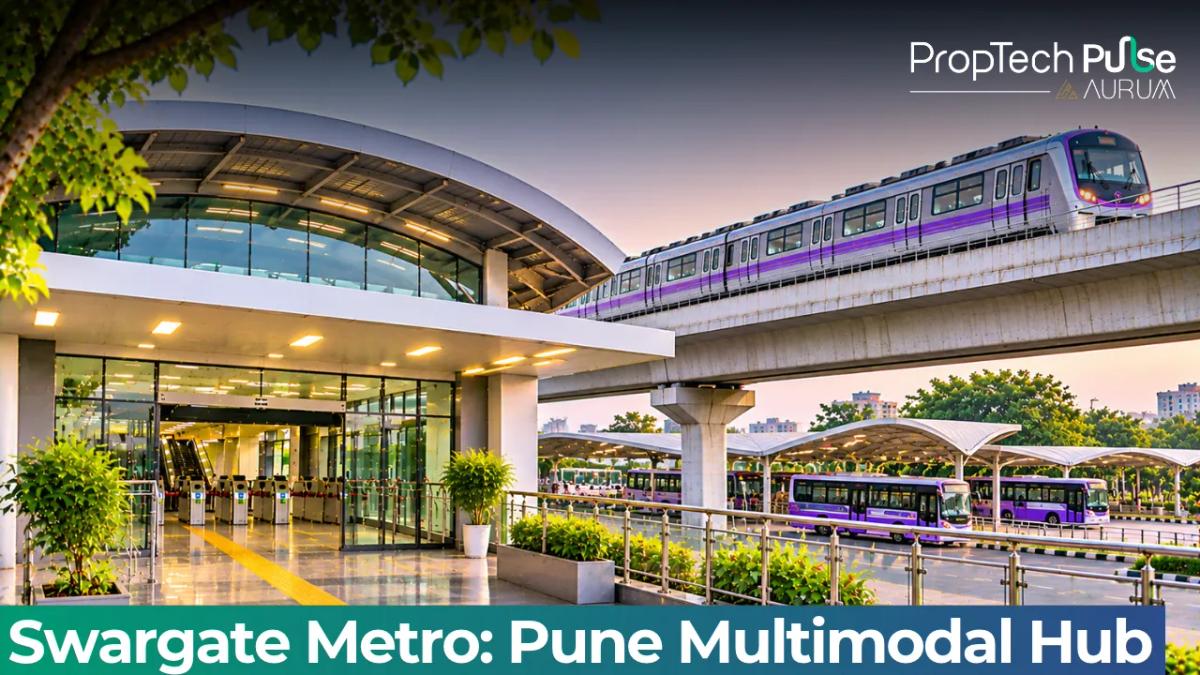
In Pune, Swargate used to mean one thing: gridlocked traffic merging into the old city. Today, the swargate metro station functions as the network's deepest, busiest, and most vital multimodal hub.
The station was engineered to handle massive footfall spikes caused by Jawaharlal Nehru Stadium events and Ganeshotsav processions.
Knowing the latest schedules for swargate metro station prevents weekend detours. If you rely on this interchange for your daily commute, knowing the exact transfer routes saves frustration.
What is swargate metro station?
Quick answer
The station serves as the southern terminus for Pune Metro Phase 1B (Purple Line). The station sits deep below Swargate Chowk. It acts as the main bridge linking the MSRTC intercity terminal, PMPML depots, and trains heading north toward Viman Nagar.
MahaMetro operates the station as part of a deliberately planned transit corridor. By sinking the concourses underground, planners avoided expanding surface traffic onto Swargate Chowk's strained intersections.
Before the subterranean passageways existed, crossing the main signal required patience and constant attention to turning vehicles.
Now, families and passengers with heavy luggage move safely across the entire node without stepping onto asphalt.
| Parameter | Details |
|---|---|
| Station identity | Southern Terminal (Phase 1B) |
| Network alignment | Purple Line |
| Platform type | Underground, Single Island Platform (P1 terminates here; P2 heads north toward PCMC Bhavan) |
| Depth below grade | Approximately 18 to 20 metres |
| Accessibility features | Multifunctional elevators, tactile flooring pathways, designated ramps for wheelchair users |
| Official operator | MahaMetro Rail (Maharashtra Metro Rail Corporation Ltd) |
swargate metro station timings and Peak Frequency
The system generally runs its first service out of the terminal at 6:00 AM. Last trains departing for the northern sectors head out around 11:33 PM.
Peak hours stretch from 7:45 AM to 9:45 AM. They run again from 6:00 PM to 8:30 PM.
Trains arrive every five to eight minutes during these heavy commuter windows. Outside those rush hours, the gap widens to ten or fifteen minutes.
Weekend afternoons carry steady traffic. Shoppers moving toward the main commercial stretches often fill the lower decks until evening.
Holiday adjustments MahaMetro routinely modifies departure intervals during Ganeshotsav, elections, or major stadium matches. Always check the official app before relying on off-peak travel during festival weeks.
swargate metro station route and Connected Stations
From the platform, trains move exclusively northward along the Purple Line toward the suburban edges. The full sequence includes:
Shukrawar Peth, Shaniwar Peth, Dagdi Chawl, New Sangvi, Shivajinagar, Nagar Road, Viman Nagar, Airport, Sinoindi Square, Wakad, Hinjawadi, Magarpatta City, Rajiv Gandhi Infotech Park, Baner, Ramwadi, Vanaz, Budhwar Peth, Sadashiv Peth, and finally terminating back at the south terminus.
The crucial interchange point happens at Civil Court station. Passengers reach this halfway mark roughly twenty minutes after departure.
Here, commuters can cross over to the Aqua Line between Vanaz and Ramwadi. For anyone visiting older heritage sites, getting off at Budhwar Peth keeps Shaniwar Wada within a brisk walk.
If you are weighing how easy this connectivity makes a neighbourhood to rent or buy, readers often track how metro proximity affects apartment prices when mapping their next purchase.
Transferring from MSRTC and PMPML Bus Bays
Swargate Chowk handles two massive bus networks. Moving between the coach depot and the metro gates requires using the dedicated subterranean pedestrian tunnels.
Walking above ground exposes you to chaotic auto-rickshaw queues and turning bus traffic. Those surface crossings easily waste twenty minutes during peak hours.
Follow this sequence for the smoothest transition:
- Exit the MSRTC or PMPML bay and look for signage marked Substation Tunnel or Metro Concourse.
- Descend the staircases or use the multifunctional elevators to reach the subsurface level.
- Walk the wide corridors linking directly to the metro ticketing hall.
- Pass through the security scanners and swipe your smart card or token at the entry gate.
- Take the separate elevator bank down to the underground platform.
Commuters switching between regional buses and the metro usually complete the walk in five to seven minutes. Elevator wait times spike briefly between 8:30 AM and 9:30 AM. Plan accordingly if mobility aids or heavy suitcases are involved.
Those navigating between PMPML routes should consult a Deshbhakt Keshavrao Jedhe Chowk area guide for nearby amenities while waiting for connections.
Estimated Fares and Payment Methods
Fares operate on a distance-based model. A short hop covering the initial stations costs around ₹10 to ₹15.
Riding the entire stretch from the southern terminus up to PCMC Bhavan or Ramwadi typically lands between ₹55 and ₹70. Prices shift slightly depending on the day tier and payment mode.
MahaMetro pushes its proprietary smart card heavily because it knocks roughly ten percent off each trip. Tokens remain available at the counters for casual visitors. Digital wallets and direct card taps work at the turnstiles.
Early complaints about poor signal underground were largely cleared once network providers deployed in-building coverage across the full tunnel stretch.
An IT professional commuting between Viman Nagar and swargate metro station covers roughly nine kilometres one way. That falls squarely into the second fare bracket.
A single smart card journey costs ₹15. Round trips amount to ₹30 per working day. Multiply that by twenty-two days, and the base transit budget lands at approximately ₹660 monthly.
Adding occasional longer rides toward Wagholi or Magarpatta keeps the total comfortably under ₹800.
| Journey distance | Estimated cost (Smart Card) |
|---|---|
| Up to 4 km | ₹10 |
| 4 km to 8 km | ₹15 |
| 8 km to 16 km | ₹20 to ₹25 |
| 16 km to 24 km | ₹30 to ₹35 |
| Over 24 km | ₹40 to ₹70+ |
| Maximum typical fare | ₹70 |
Token counter delays Queues form quickly before 9:00 AM. Loading value onto a smart card beforehand cuts queuing time drastically.
The Katraj Extension and Changes Near swargate chowk
A major shift looms for the southern approach. The approved Line 1B, often called the Katraj extension, plans to push three kilometres further south from the current terminus.
Construction milestones began taking shape after the cabinet approvals landed in late 2024. Officials are targeting completion by early 2029. This project effectively reconnects the historic Katraj area to the rapid transit grid.
Heavy drilling machinery and soil stabilisation crews will work continuously through 2027 and 2028. During active earth-moving phases, expect strict restrictions on parking along arterial roads feeding into swargate metro station.
Municipal authorities have previously rerouted certain bus approaches to bypass excavation zones entirely. Delivery trucks and private vehicles will face designated holding bays several hundred metres south of the junction.
Long-term watchers often map these expansions against pin code and transit details for Devmasa Chowk to see exactly where future foot traffic will concentrate once the southern stations activate. Property buyers targeting the southern fringe should note that street access points may shift temporarily.
Pedestrian pathways will be fenced off near the extension shaft locations. Signage remains clear, but carrying a printed map or offline location pin proves useful for unfamiliar drivers.
Before you plan your commute
Treat Swargate like any other deep-transit node: give yourself extra vertical travel time if you carry luggage or strollers, use the subsurface tunnels rather than fighting street crossings, and keep a loaded smart card handy to skip the morning ticket-line friction.
Frequently asked questions
How long does it take to walk from MSRTC to the swargate metro concourse?
If you use the dedicated subterranean pedestrian tunnels connecting the bus terminals to the metro gates, the journey takes roughly five to seven minutes. Stick to the indoor pathways instead of crossing the busy intersection above ground, which can easily add twenty minutes to your transit due to traffic signals and auto-rickshaw congestion.
Can I pay for my metro ride using a credit or debit card directly at the gate?
Yes, contactless tap-and-go functionality is enabled at the turnstiles. While tokens remain available at the physical counters, loading a MahaMetro smart card saves money by knocking roughly ten percent off every trip. Recent infrastructure upgrades resolved earlier mobile payment glitches caused by weak cellular signals underground.
Which station do I switch to if I want to reach Shaniwar Wada by walking?
You should disembark at either Shaniwar Peth or Budhwar Peth. Both stops sit close enough to the historic fort complex that you can cover the remaining distance on foot within twenty minutes. Keep in mind that walking offers fresh air but involves moderate elevation changes compared to taking the car.
Will the new Katraj line change which bus bays are available right now?
Construction activity for the southern extension has already forced municipal authorities to reroute specific bus approaches. Heavy earth-moving phases may restrict surface parking along the arterial roads feeding into Swargate Chowk until major structural milestones are crossed in the coming years.
Sources
- Press Information Bureau, Government of India: Cabinet approval documents and groundbreaking announcements for Phase 1B and Line 1B extensions (accessed November 2026)
Enjoyed this blog article? Visit PropTech Pulse for more interesting blogs.





Ask Pulse Ai anything about real estate

Unlock the Latest in Real Estate
News, Infographics, Blogs & More! Delivered to your inbox.

