New Launch - India Real Estate Report 2026.

Services
Knowledge Hub
Resources
Tools

Ask Pulse Ai
©PropTech Pulse 2025, All rights reserved.


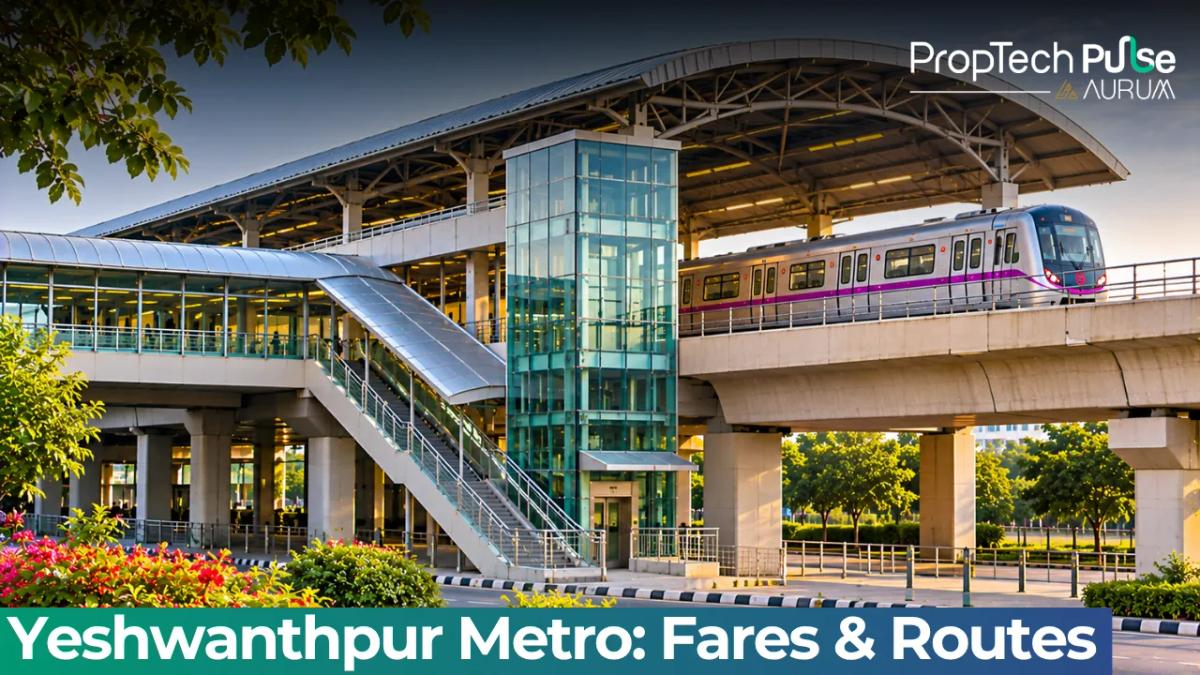
Yeshwanthpur metro station sits right at the throat of West Bangalore, handling the daily crush of commuters heading from the industrial corridors toward MG Road and Majestic.
Also spelled yesvantpur, this stop on the Namma Metro network connects workers at Peenya and the surrounding estates to the city’s commercial heart.
Whether you are planning your morning commute or evaluating rentals along Tumkur Main Road, knowing exactly how this station functions saves time and cuts unnecessary travel detours.
Which line does the metro station Yeshwanthpur serve?
Quick answer
Yeshwanthpur metro station falls on the Green Line (Madavara–Silk Institute corridor) and carries the code YPM. It serves workers in the adjacent industrial area, linking them directly to employment hubs like Peenya, Majestic, and Whitefield. You can skip the lengthy road commute that usually happens during peak traffic.
Bengaluru Metro Rail Corporation (BMRC) manages this site. It occupies the elevated track between Madavara in the north and Silk Institute in the south.
Network maps label it as stop ten of thirty-two. Look closely at the announcements. They alternate between 'Yeshwanthpur' and 'Yesvantpur' depending on whether the focus is the industrial township or the old post office area. Namma Metro Green Line route and fare guide breaks down the full corridor if you need to trace connections further out.
Yeshwanthpur green line: route map and connecting stations
Located centrally on the corridor, this stop anchors the western route. To the south, the next stop is Sandal Soap Factory, which funnels passengers toward Hebbel and the upcoming North South Corridor interchange.
Moving north, the following halt is Goraguntepalya, leading straight into the dense residential belts of Marathahalli and eventually Silk Institute.
This positioning explains why the station never feels completely empty. Business parks, warehousing units, and logistics hubs cluster around the Tumkur Main Road stretch, creating a steady background flow of passenger movement independent of the main office rush. If you are tracking new developments here, proximity to this specific node consistently shifts rental premiums. See how proximity to a metro station affects apartment pricing to understand the typical yield impact.
Namma metro timings for Yeshwanthpur station
Service windows run reliably throughout the week, though early risers and late-night shift workers need to mark the differences.
- Monday to Saturday: First trains reach Yeshwanthpur roughly around 05:00 hrs. Service continues until 23:05 hrs.
- Sunday: Operations begin slightly later, with first arrivals near 07:00 hrs. Cut-off remains 23:05 hrs.
Frequency peaks at six-minute intervals between 08:00 and 10:00, and again between 18:00 and 20:00.
During afternoon slumps, headways stretch to nine or ten minutes. The official BMRC site publishes real-time disruptions, so always cross-check before planning a return journey from the opposite direction.
Travel fares and commute times
Metro fares in Bangalore follow a zone-based token structure. Yeshwanthpur metro station sits in the outer western belt, meaning short hops to nearby industrial zones are cheap, while longer trips into Central Bangalore trigger higher slabs. A Smart Card grants automatic tiered discounts that compound over a month.
| Destination Station | Direction | Approximate Time | Token Fare (₹) |
|---|---|---|---|
| Goraguntepalya | North | 5 mins | 20 |
| Nadaprabhu Kempegowda (Majestic) | South | 18 mins | 40 |
| MG Road | South (requires 1 change) | 33 mins | 70 |
| Whitefield | South-East (requires 1 change) | 1 hr 18 mins | 120 |
| Monthly cost at 2 weekday journeys/day to Majestic (No Smart Card) | ₹2,400 | ||
| Monthly cost at 2 weekday journeys/day to Majestic (With Smart Card, Peak 5% disc.) | ₹2,280 | ||
Smart Card mathematics work in your favor if you track the percentages correctly. Outside weekday peak hours (typically 10:00 to 16:00), the system deducts ten percent off the base fare.
During peak windows, the discount drops to five percent, but the cumulative monthly savings still easily clear three hundred rupees for a regular commuter. Never rely on cash tokens unless you are testing a route, because reloadable cards also grant access to priority lanes at select busy gates.
Platform layout, gates and station amenities
Yeshwanthpur metro station operates as an upgraded three-level facility spanning functional decks.
The ground floor houses the turnstiles, the public concourse, and administrative offices.
Above that sits the mezzanine level, which contains the primary ticket counter, the fare validation machines, and the stair/elevator crossover between opposing tracks. The top platform deck splits into two side platforms serving opposite directions.
Commuters boarding towards Madavara face west/south-west, while the Silk Institute bound trains depart facing east/north-east. Crucially, platform doors slide open on the left-hand side relative to the direction of travel. If you are carrying heavy baggage from an inter-city train, stick to the elevators rather than climbing the staircase, which sees congestion starting at 07:30.
Gate navigation tip The station spreads seven entry-exit gates labelled A through G. Don't guess your approach. Gate D and E funnel directly onto Tumkur Main Road, while Gates A and B handle the local market and bus terminus crowd. Follow the overhead directional arrows painted in contrasting yellow paint to avoid circling back.
Yeshwanthpur metro station covers the essentials. Counters stock rechargeable Smart Cards and paper tokens. An ATM stands near the central concourse, and basic restrooms occupy the mezzanine level close to Gate C. Security checks happen at every entry point, so keep your bag accessible for scanning.
Accessibility: the skywalk connecting to Yeshwanthpur railway station
The most underutilized asset at this node is the covered skywalk.
Completed in 2019 after earlier funding disputes delayed the project, the hundred-metre covered bridge physically connects the metro concourse to Platform Six of Yeshwanthpur Junction Railway Station.
For inter-state travellers arriving on overnight Deccan Queens or Konkan Railway shuttles, this walkway removes the chaos of crossing the multi-lane road and wrestling with freight yard pedestrian crossings.
You can roll a suitcase straight from the rail waiting area into the metro turnstile. Keep your train ticket handy, as security personnel sometimes request it during off-peak evening checks when the footfall is lighter.
The railway junction itself handles significant long-distance traffic. If you need current train departure status or platform allocation, refer to the Ministry of Railways schedule directly at indianrail.gov.in before committing to a road transfer.
Nearby residential options and landmark spots
Rentals and resale flats within a kilometre radius cater heavily to factory supervisors, mid-level managers, and IT professionals shifting to West Bangalore.
Properties along the inner streets of HAL II Stage command a slight premium due to lower noise pollution compared to Tumkur Main Road.
Expect smaller carpet areas (600 to 900 sq ft) dominating the inventory here, designed specifically for nuclear families and young singles.
If you are looking at a builders-in-hand deal or an older society resale, verify the completion certificate and encumbrance record before booking. The West Bangalore jurisdiction has seen several redevelopment proposals, and understanding the legal standing prevents costly delays. Cross-check the builder's credentials on Karnataka RERA project verification before signing any agreement for sale.
Before you book or plan your route
Commute math dictates whether this station adds value to your day or drains it. Calculate your total door-to-door time, factoring in the ten-minute walking buffer from your home to the nearest gate.
If the round trip exceeds ninety minutes daily, the convenience erodes. For prospective tenants, negotiate rent based on the actual distance to Gate D or E, rather than simply the station name.
Verify society parking availability immediately, as ground-level car spaces hit capacity by 19:00 and overflow forces residents to street park.
Frequently asked questions
How much is the metro fare from Yeshwanthpur to MG Road?
A standard single journey token ticket from Yeshwanthpur to MG Road costs ₹70. This route requires one interchange, typically at Kempegowda or Majestic depending on your specific destination on the Red Line. Using a Smart Card reduces the peak-hour cost to approximately ₹66 and offers a larger 10 percent saving during non-peak hours, making it cheaper for daily office commuters.
What are the timings of Namma Metro at Yeshwanthpur?
First trains generally reach Yeshwanthpur around 05:00 hrs on weekdays, with regular service continuing until 23:05 hrs. On Sundays, the system opens slightly later, with the first services reaching the station near 07:00 hrs. Always carry a charged phone or check the official app, as festival schedules or emergency maintenance occasionally adjust these cut-off times by thirty minutes.
How many gates are there at Yeshwanthpur metro station?
The station provides seven designated entry and exit gates, labeled A through G. These gates distribute foot traffic efficiently across the complex, preventing bottlenecks during rush hour. Access points generally align with specific bus routes and landmark streets. Checking the digital signage before descending the stairs or elevator saves time when meeting someone outside.
Can we park our vehicle at Yeshwanthpur metro station?
Yes, dedicated parking space is available at the ground level of the station for two-wheelers and four-wheelers. This facility makes the station a viable drop-off point for commuters who drive from outlying suburbs like Devanahalli or Electronic City. Keep your parking receipt safe, as daily caps apply and rates change periodically based on municipal guidelines.
Sources
- Bengaluru Metro Rail Corporation Ltd. (BMRC): Station layout, operational hours, fare matrix, and Smart Card discount structure (accessed October 2026)
Enjoyed this blog article? Visit PropTech Pulse for more interesting blogs.


Ask Pulse Ai anything about real estate

Unlock the Latest in Real Estate
News, Infographics, Blogs & More! Delivered to your inbox.

