

©PropTech Pulse 2025, All rights reserved.

What is Build-to-Suit?
Build-to-Suit
Build-to-Suit refers to a custom construction approach where one party develops a structure precisely matching another’s specifications. For instance, an occupant or user outlines layout needs, design preferences, and operational requirements, while a builder or owner handles the actual construction, ensuring the final space meets those unique demands. This model often saves time and money by avoiding subsequent renovations or retrofits.
Key Points:
- Tailored Design: Eliminates guesswork by focusing on pre-set occupant standards.
- Occupant Involvement: Collaboration from blueprint to finishing touches, guaranteeing functionality.
- Financing Arrangements: Deals may bundle long-term commitments like leases or installment payments.
- Enhanced Efficiency: With fewer modifications post-completion, the asset is ready for immediate use.
By addressing specialized requests—technical equipment areas, layout constraints, or environmental compliance—build-to-suit solutions optimize usage and reduce unnecessary retrofitting later.
Recent Glossary
What is the yield gap between offices and warehouses?
What is the YEIDA Sector 22D plot scheme?
What is Yamuna Expressway industrial city?
What is the yield spread over G-Secs for REITs?
What is the year-over-year vacancy trend in coworking?
View More...
Recent FAQs
What are the red flags to watch for in a new project brochure?
What are the processing fees and other charges on a home loan?
Can I earn while learning through Pulse University and how is it tracked?
How does age affect the eligibility result in a home loan calculator?
How does the learn and earn model at Pulse University work?
View More...
Insight Pulse
Uncategorized
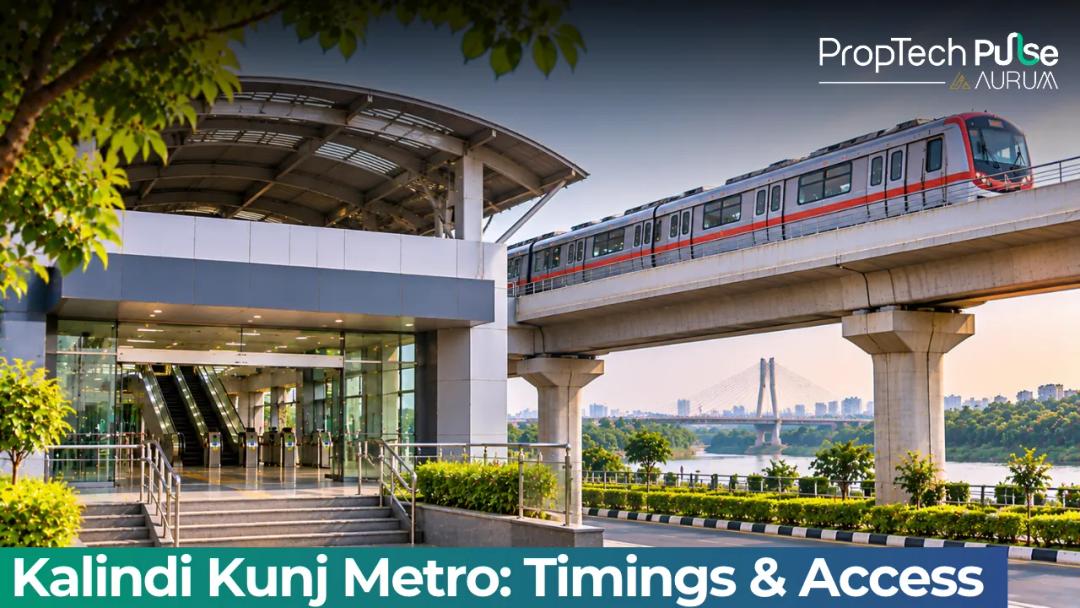
Kalindi Kunj Metro Station: 2026 Timings, Fares & Access
You need to know whether the 23:56 last train to Botanical Garden leaves before your shift ends. Alternatively, a 2 BHK in Madanpur Khadar might hold its rent even after the next interchange opens. Kalindi Kunj works as a quiet junction on the Magenta Line. Its positioning right on the Delhi–Uttar Pradesh border dictates pace and pricing for half a dozen adjacent neighbourhoods. In this guide What is Kalindi Kunj Metro Station? Platform Layout, Gates & Facilities Localities and Property Impact Near Kalindi Kunj Metro Before You Move Near Kalindi Kunj Metro Frequently asked questions What is Kalindi Kunj Metro Station? Quick answer Kalindi Kunj metro station sits on the Magenta Line in Madanpur Khadar, New Delhi. Opened in December 2017, the station features side platforms, runs first trains at 06:03 towards Botanical Garden and 06:06 back towards Krishna Park Extension, and serves as the current southern terminus while the network extends to the planned Madanpur Khadar interchange on the Golden Line. The station falls under the North Central Terminal zone of the Delhi Metro Rail Corporation. Trains reverse here every ten to fifteen minutes depending on the roster, which shapes both the daily commute rhythm and how locals plan evening trips across South and East Delhi. Kalindi Kunj Metro Location & Connectivity Calculated coordinates place the facility squarely in Madanpur Khadar, postal code 110076. The station cluster sits just north of the Kalindi Kunj Toll Booth. That geographic placement matters. It funnels cross-border commuters who work in East Delhi or Sarita Vihar but prefer to pay Delhi municipal rates. Roads connecting directly to the Khasra Khera bypass feed into the older stretch that becomes the Mathura Road corridor further west. If you rely on feeder buses, the stand outside Gate 1 pulls routes from Jasola, Mithapur, and parts of Greater Kailash. The station sits between Jasola Vihar Shaheen Bagh and the line's physical end point until the Golden Line tunnel reaches up from the south. Kalindi Kunj Metro Timings Daily headways change slightly between peak work hours and late-night slots. Locking down the exact first and last departure windows avoids missed rides on weekdays. The table below maps the split directions. Operating windows on the Magenta Line from Kalindi Kunj, checked August 2026 Direction First Train Last Train Towards Botanical Garden 06:03 23:56 Towards Krishna Park Extension 06:06 23:06 During morning rush, intervals tighten to five minutes twenty seconds. After 10:00 am and again after 4:00 pm, gaps stretch to six minutes five seconds. Weekends push the off-peak schedule earlier, and DMRC trims the evening tail for depot maintenance. Always verify the weekly engineering window notice posted at station entrances. Kalindi Kunj Metro Fares & Ticketing Fares follow DMRC’s distance-based slab system. A single journey from Kalindi Kunj to Rajiv Chowk costs ₹43 on regular weekdays and drops to ₹32 on Sundays. Short hops stay under ₹10, while cross-city runs to Kashmere Gate or Dwarka Sector 21 sit between ₹55 and ₹70. Ticket vending machines take cards, QR scans, and cash. NCNC users must tap out at every interchange to avoid double charges. Concession quotas exist for students and senior citizens. Platform Layout, Gates & Facilities in Kalindi Kunj Delhi Design favours function here over grandeur. Built on a raised concrete base, the structure manages monsoon runoff from the adjacent flat terrain. Station Access Gate 1 funnels everyone into one concourse level, then splits onto two separate side platforms. Step down onto Platform 1 for Botanical Garden trains, or board Platform 2 heading towards Krishna Park Extension. There are no cross-over bridges at grade zero, so choosing the wrong deck means waiting for a reversal cycle rather than switching tracks midway. Moving equipment includes three lifts positioned along the concourse wall and escalators leading straight to the boarding decks. The entire setup qualifies as Divyang-friendly, covering tactile guidance paths, braille signage at ticket windows, and dedicated seating zones. Paid concourse toilets operate from early morning until station closure. First aid rooms staff a single rotating paramedic desk linked to the nearest community health centre. Nearby Landmarks & Destinations Within walking distance or a short autorickshaw ride, the area clusters several functional destinations. Atlantic Water World sits roughly 1.5 kilometres east, pulling weekend footfall that stretches queue times at Gate 1. Shaheen Bagh Market lies half a kilometre south, drawing bulk grocery and textile shoppers who transfer between bus and rail. Indraprastha Apollo Hospital anchors the medical travel corridor about 2.8 kilometres away; patients and attendants frequently use the station because parking inside hospital grounds remains tight. Localities and Property Impact Near Kalindi Kunj Metro Transit nodes quietly regrade surrounding pins. Proximity to a Delhi metro gateway usually lifts asking rents by 8 to 12 percent compared to parallel streets that lack direct feeder access. The mechanics are simple: fewer commuting hours mean landlords price in convenience, and developers bundle rooftop terraces or covered parking premiums to justify higher sale rates. Residential Demand in Madanpur Khadar and Jaitpur Jaitpur and Mithapur absorb most of the overflow from East Delhi's core. They offer lower density than Nehru Place or Mayur Vihar, and the land parcels sit closer to highway corridors. Tenants working in Gurugram or Noida via the Eastern Peripheral Expressway often settle here to avoid peak-hour bottlenecks on NH-44. Landlords capitalise by pushing up brokerage percentages whenever vacancy dips below 14 percent annually. If you are factoring resale value, measure the actual walking time to the platform gates rather than straight-line distance. A building two blocks inland feels significantly different from one facing the station exit, especially during July rainfall. Study how proximity to a metro station affects apartment pricing to model the premium accurately before committing to an agreement or booking token. Future Development: Connection to Golden Line & Madanpur Khadar The line currently stops here, but DMRC's blueprints designate Madanpur Khadar as a major interchange where the emerging Yellow-Green alignment converges. Once the interchange corridor breaks ground and completes grading, foot traffic shifts from purely directional to genuinely cross-sectional. Properties within a six-block radius typically see speculative bidding rise 6 to 9 percent in the twelve months preceding station commissioning. Rental yields in pocket-sized apartments tend to climb faster than gross values because business travellers and mid-level corporate employees prefer furnished flats near multi-line hubs. Investors tracking growth around Kalindi Kunj Metro Station should test baseline numbers before construction ramps up. Run your own projections using a rental yield calculator to separate realistic returns from brochure hype. Before You Move Near Kalindi Kunj Metro Station Decide your anchor point first. Workplaces near Akshardham or Kashmere Gate sit a thirty-eight-minute Magenta Line commute away, keeping travel comfortably under forty-five minutes. Offices spanning multiple districts require extra checks on monsoon-ready feeder routes. First-time renters should inspect drainage slopes behind buildings facing Gate 1. Basement waterproofing details consistently outperform surface painting jobs during July rains. When evaluating sales inventory, demand the RERA registration number and cross-check plot approval on the Delhi development authority portal. Avoid properties claiming prime metro adjacency without verifying actual access roads on latest survey maps. Complete your due diligence with a checklist tailored to current market conditions before signing. Read home buying in India in 2026 to align your document verification steps with updated compliance rules. Frequently asked questions What is the first and last metro time at Kalindi Kunj? The earliest departure heads toward Botanical Garden at 06:03, with the final train leaving at 23:56. Back toward Krishna Park Extension, the first service starts at 06:06 and concludes at 23:06. These slots adjust slightly during monthly maintenance windows, so check the weekly notice board at Gate 1 before late-night commutes. How many gates are there at Kalindi Kunj metro station? There is a single passenger entrance labelled Gate 1, positioned on the south-west corner of the elevated platform. All access roads, lift shafts, and fare vending machines converge here. Pedestrians moving between the station and neighbouring plots simply walk straight onto the raised driveway without navigating additional tiered crossings. Is parking available at Kalindi Kunj metro station? Parking space exists primarily for bicycles and limited two-wheelers tucked behind the concourse fence. Four-wheeler lots have not been constructed because the elevated footprint restricts surface expansion. Daily commuters usually leave vehicles at private compounds along the adjacent bypass and walk the remaining distance. Which metro line stops at Kalindi Kunj? Only the Magenta Line serves this station today. It functions as the southernmost terminal for Phase III extensions, meaning all trains reverse direction here. Connectors to the planned Yellow-Green interchange sit a few hundred metres downstream, pending ongoing tunnel breakthroughs. How far is Kalindi Kunj metro station from Atlantic Water Park? The water park entrance sits roughly 1.5 kilometres east of Gate 1. Most visitors cover the gap in fifteen minutes on foot or take a local autorickshaw that waits near the bus stand. Traffic peaks between Friday evenings and Sunday afternoons when family groups return from afternoon sessions. Does Kalindi Kunj metro station support disabled passengers? Yes. The facility carries full Divangjan-friendly certification. Tactile paving lines guide visually impaired travellers from the street curb to ticket counters. Elevators match platform height precisely, and wheelchair seating zones mark both boarding decks. Staff remain trained to assist with ramp deployment if temporary power fluctuations occur. Sources Delhi Metro Rail Corporation: Operating hours, peak frequency, fare slabs, lift/escalator counts, facility details, and zone classification (accessed October 2026) Enjoyed this blog article? Visit PropTech Pulse for more interesting blogs.

PropTech Pulse Editorial
13th November 2026
Uncategorized
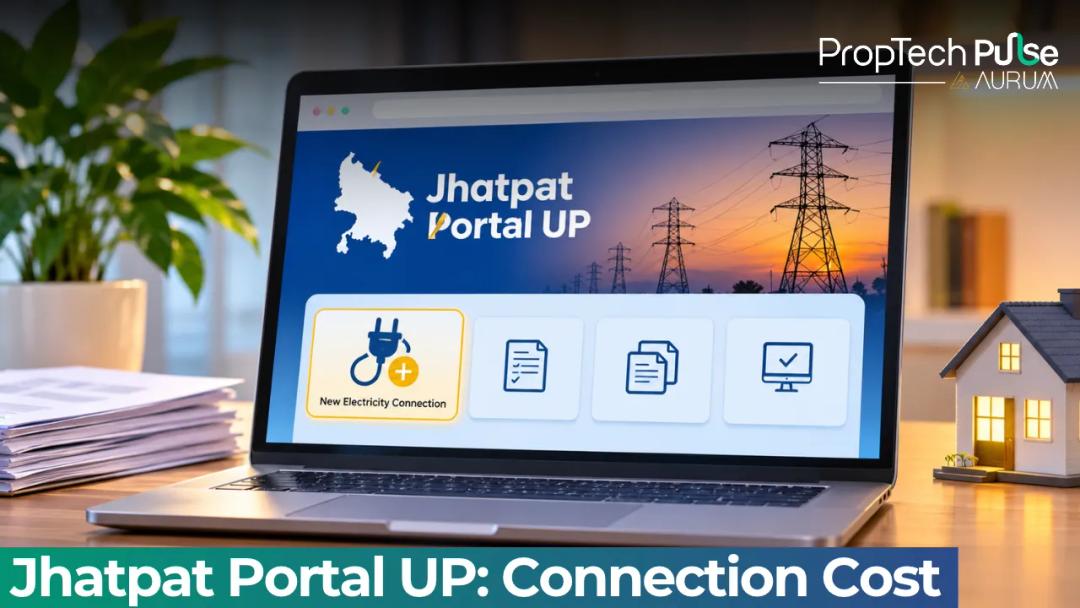
Jhatpat Portal UP: Electricity Connection Cost & Documents
If you own or rent a property in Uttar Pradesh and need a fresh electricity supply, the process has moved online. The jhatpat portal is the official single-window platform where all five UP DISCOMs process new domestic and commercial meter requests. It is designed to move applications faster than the old counter-based system, but the actual upfront cost depends heavily on one factor most applicants overlook. Using the dashboard requires understanding the difference between the fixed registration fees and the variable Supply-Affording Charges (SAC). Many applicants also confuse the site with a free subsidy programme. Below is a practical walkthrough of what the portal actually charges, the documents you need to upload, and why jhatpat applications frequently sit stuck in pending status. In this guide What is the Jhatpat Portal UPPCL? How to Login to Jhatpat Portal and Check Status Jhatpat Connection Cost Breakdown (2026 Rates) Documents Required for Jhatpat Connection How to Pay Security Deposit and SAC Online Why Your Application May Stall Legal Timelines and Helplines Before You Submit Your Jhatpat Application Frequently asked questions What is the Jhatpat Portal UPPCL? Quick answer The Jhatpat portal is the official online application system for new electricity connections in Uttar Pradesh, covering all five DISCOMs. It processes both residential (LMV-1) and small commercial (LMV-2) applications. It is a service delivery tool, not a financial scheme or subsidy programme. The digital intake valve handles every district's distribution network. Whether you deal with MVVNL, PVVNL, DVVNL, PuVVNL or KESCO, the workflow stays identical. People searching for jhatpat yojana usually want the application form itself. The name sounds like a welfare scheme, but there is no free power attached. The system simply standardises forms and fee calculations that previously required physical visits. Registration takes less than ten minutes if your details are ready. LMV-1 (Low Voltage Domestic): For residential homes, villas and independent floors. LMV-2 (Low Voltage Commercial): For shops, small offices, clinics and ground-floor rentals operating as businesses. Picking the right category scales the security deposit slightly higher for commercial setups. The platform routes your request directly to the local field engineer for that street either way. Dual-purpose properties often get confused at this stage. If your ground floor runs a salon and your upper floor is purely residential, you must apply twice. One LMV-1 for the home and one LMV-2 for the shop. Merging them triggers automatic rejection because the load calculation differs completely. How to Login to Jhatpat Portal and Check Status To begin, visit the official website and select your specific DISCOM division. Mobile OTP authentication handles the entire jhatpat login process. You enter your number, receive a six-digit code, and access your dashboard instantly. Your screen shows three counters. The main metric to track remains Pending at Applicant. Most stalled files sit here waiting for a corrected photo or a missing field. Upload clear scans immediately to push the case forward. A status reading of Pending at Office means the junior engineer has received the request. Dispatch schedules depend entirely on local workloads. Checking the app daily won't rush the technician. Watch for system alerts instead. You can switch divisions quickly from the homepage dropdown menu. Use this feature if you manage multiple plots across different districts like Lucknow and Gorakhpur. Each dashboard keeps its own queue separate. Jhatpat Connection Cost Breakdown (2026 Rates) The total cost splits into two parts. First comes the non-refundable processing fee paid at checkout. Second covers the physical line extension running from the pole to your premises. Focusing solely on base fees misses the bigger picture. The Supply-Affording Charge dictates your final bill. This amount pays for the copper wire and poles reaching your gate. Estimated upfront costs for a standard 2 kW domestic connection, 2026 rates Load Requirement Metering Security Deposit SAC (Line ≤100 m) SAC (Line 101–300 m) Total Upfront Outlay 2 kW (Domestic Standard) ₹1,855 ₹1,500 ~₹4,500 to ₹6,000* ₹3,355 (Base) 5 kW (High AC usage) ₹3,500 ₹2,250 ~₹6,750 to ₹9,000* ₹5,750 (Base) Typical House (200 m from line) ₹1,855 - ₹5,250 (Approx) ₹7,105 Prices spike fast if your plot sits off-grid. You might register paying for a 100-metre run initially. A surveyor could measure 200 metres later. The charge triples immediately. Always verify your distance before finishing your jhatpat registration. High-demand areas face stricter load caps. Districts experiencing peak summer stress often restrict new 5 kW connections until the grid stabilises. The portal will block your selection and force a lower load tier if capacity is exhausted locally. You can request a load upgrade after installation once your bill history proves consistent payment habits. The finance team reviews your account for twelve months before approving the swap to a larger transformer. Documents Required for Jhatpat Connection The checklist looks simple enough on paper. The digital uploads demand sharp, readable scans though. Blurry images get rejected automatically by the system validation check. Your status returns to Pending at Applicant until you re-upload properly. You will need: Aadhaar card of the applicant linked to the mobile number used for login. A recent passport-size photograph. Proof of ownership including property tax receipt, registered sale deed or mutation extract. Or a notarised rent agreement accompanied by a No Objection Certificate from the landlord. For rentals, prepare a notarised agreement alongside a landlord NOC. The field engineer matches your document address to the physical site. Mismatches trigger instant rejection. Knowing lease versus rent differences helps clarify your right to request consent letters without triggering disputes. rent meaning in hindi lease vs rent difference rules covers that legal ground. Document Trap Alert: If your land record shows multiple owners, the portal requires signatures or NOCs from ALL co-owners. Missing even one signature stops the entire pipeline. Double-check the family tree on your title deed before scanning. Homeowners should verify plot boundaries on the UP Bhulekh portal. Land records show exactly where the nearest line meets your site. This prevents arguments over whether the new meter belongs inside your compound wall. the UP Bhulekh portal gives you that precise data. Joint families often struggle with signatory authority. The primary holder listed on the khata must initiate the request. Any secondary owner can upload supplementary ID proofs, but the system locks the applicant role to one person per property. How to Pay Security Deposit and SAC Online Payment gates open once all uploads pass initial verification. The dashboard generates a unique challan number tied to your application ID. You must settle both the fixed deposit and the estimated SAC line charges before a field team gets assigned. UPI and net banking carry the highest success rates during evening hours when server traffic spikes. Cards sometimes timeout when bank fraud filters flag government utility payments. Stick to BHIM apps or direct debit transfers if possible. Download the payment confirmation PDF immediately after checkout. Store it in a separate folder labelled Jhatpat_Payment_2026. The finance department cross-references this file against the engineering dispatch list. If the tracker shows your application as Paid but the engineering status stays Pending for more than forty-eight hours, email your divisional office attaching that exact PDF. Tax treatment differs for commercial users claiming capital allowances. Business owners should retain the itemised receipt showing separate SAC and meter deposit columns. Accountants use that split to classify infrastructure upgrades versus regulatory compliance costs. Why Your Application May Stall A smooth application flows straight through the pipeline. The SAC Estimation Error: You might estimate fifty metres to the nearest pole. The surveyor finds one hundred eighty metres instead. The finance department halts the file to recalculate wire costs. This delay adds weeks to your timeline. The Field Engineer Bottleneck: Engineering approval happens first. Physical crews then drill and string the wire. Teams share jobs across hundreds of accounts simultaneously. If your request waits past seven days post-approval, email the Assistant Engineer directly. Include your ID. Ask for a concrete timeline update. The Transformer Capacity Hold: Some older colonies lack spare transformer capacity. Even with clean docs and paid fees, the system queues you behind priority upgrades. The portal displays a Waiting List indicator instead of Active Approval. Call the distribution officer to ask about scheduled capacity expansion in your ward. Legal Timelines and Helplines The Central Electricity Authority sets strict deadlines. These counts start only after you pay fully and submit clean docs. They are mandatory rules, not soft targets. Metro Municipalities (e.g., Lucknow, Kanpur, Varanasi): Maximum 3 working days. Town Areas: Maximum 7 working days. Rural Villages: Maximum 15 working days. Meters install late occasionally. Dial 1912 to file a formal grievance if deadlines expire. You can also email your divisional manager. Most offices publish direct contact lines on their sites. Force majeure clauses suspend these timelines during severe monsoon flooding or grid maintenance windows. The DISCOM posts emergency suspension notices on their regional pages. Follow those updates to avoid filing unnecessary complaints that drain your resolution quota. Before You Submit Your Jhatpat Application Walk your property perimeter first. Measure the distance to the nearest overhead line. Run a tape or walk a counting pedometer along the shortest path. Expect high SAC fees if the route crosses neighbours' yards or runs along public roads. Calculate that stretch before opening your jhatpat account. A quick outdoor check keeps your budget predictable and stops wasted effort chasing expensive connections. Double-check your neighbourhood's load rating if you plan heavy appliance usage soon. Installing a dual AC setup or industrial pump on a standard 2 kW line causes immediate tripping. Upgrade to 5 kW upfront rather than paying the rerating fee twice. Frequently asked questions Is Jhatpat a free government scheme or subsidy? No, it is not a welfare programme offering free electricity. The portal acts purely as a digital administrative tool for applying to buy a new meter and power line. While the name sounds like a state-sponsored initiative, applicants must pay the full metering deposit and Supply-Affording Charges out of pocket before installation begins. How do I login to the Jhatpat portal using my mobile number? Visit the official website for your DISCOM division and locate the login section. Enter your registered number, click Send OTP, input the six-digit code sent via SMS, and you will access your application dashboard instantly. What happens if the electricity line is more than 100 meters from my house? You will face a steep increase in your upfront costs. The base price covers connections situated within 100 metres of the existing grid. Any distance beyond that threshold triggers a surcharge calculated per metre. Expect the total bill to triple or quadruple if the main wire runs significantly far from your property boundary. Can a tenant apply for a new connection on Jhatpat? Yes, but you cannot use your own address proof as the sole document. The portal requires a valid rent agreement paired with a written No Objection Certificate from the property owner. You must also ensure the landlord agrees to share basic identification details so the meter is legally linked to the premises. How long does the DISCOM take to install the meter after payment? Legally, they must finish the work within three working days for metro cities, seven days for towns and fifteen days for rural areas. This clock starts only after you successfully upload all verified documents and the finance department confirms your funds have cleared. Delays usually happen due to labour shortages or material logistics. What are the complaint helpline numbers for each UP DISCOM? Each DISCOM maintains its own regional office roster, but all customers can dial the national utility toll-free number 1912 to log complaints anywhere in the state. For faster results, look up the direct email or desk phone for your local Assistant Engineer, as they control the actual work orders and crew assignments. Enjoyed this blog article? Visit PropTech Pulse for more interesting blogs.
PropTech Pulse Editorial
13th November 2026
Uncategorized
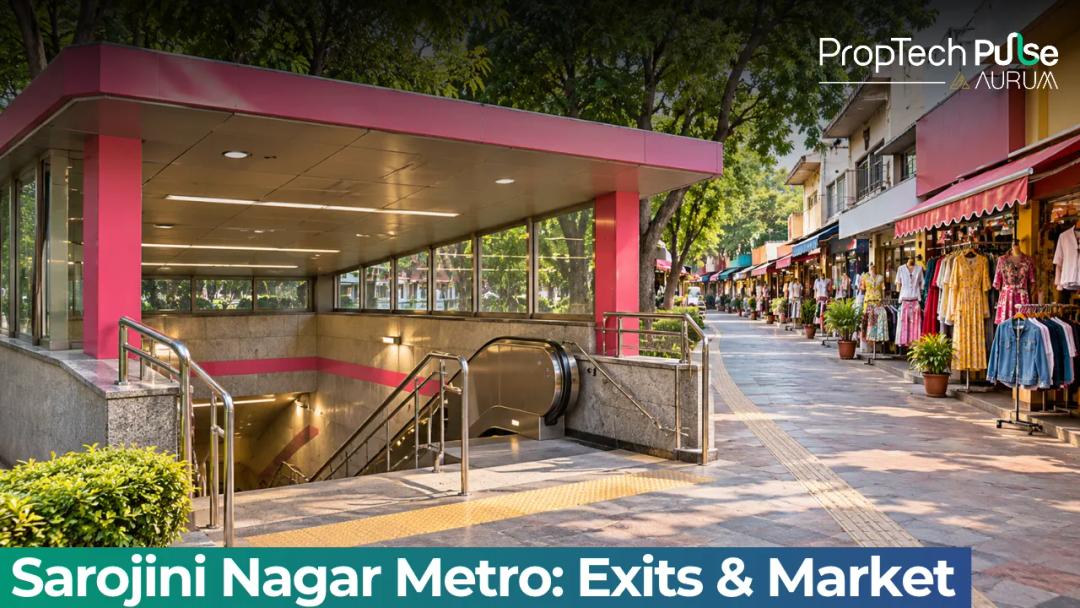
Sarojini Nagar Metro Station: Exits, Timings & Market Guide
Sarojini Nagar metro station is your direct gateway to India’s biggest street market, but stepping out of the wrong gate wastes twenty minutes on a busy Saturday. Reaching the bargain stalls requires knowing which exit drops you inside the vendor lanes, plus understanding when weekend foot traffic turns into a bottleneck. This guide maps the exact walk from your train door to the clothing piles, shows how to skip road jams using the DTC bus network, and gives you a realistic timetable so you get back home before the last train leaves. In this guide Which line serves Sarojini Nagar? Reaching Sarojini Nagar Market Near Metro: The Best Exit Strategy Station Timings, Platforms & On-site Facilities What to Do When Sarojini Nagar Metro is Too Crowded Frequently asked questions Which line serves Sarojini Nagar? Sarojini Nagar metro station sits on Delhi’s longest route, the Pink Line, running from Shaheed Sthal in Ghaziabad to Bharatkupam in Rajouri Garden. The station code is SOJI. Travelers from north-east Delhi catch the direct service here without switching lines. Passengers arriving from south-west Delhi usually transfer at Dilli Haat-INA or Kashmere Gate. The platform layout follows standard underground geometry. Trains arrive every four to six minutes during peak periods. You can track live status through the official transit app or operator website. For those looking to understand how station location impacts local living costs, see our breakdown on how proximity to a metro station affects apartment pricing. Reaching Sarojini Nagar Market Near Metro: The Best Exit Strategy Quick answer Sarojini Nagar market nearest metro is Gate No. 1 of the Sarojini Nagar metro station on the Pink Line. Stepping out here puts you a very short two hundred metres from the primary clothing stalls, translating to a five-minute walk under normal footfall. Gate No. 2 adds unnecessary distance and leads toward residential streets rather than the vendor clusters. The station has two main surface exits. Gate No. 1 opens directly onto the ring road facing the commercial lanes. Gate No. 2 dumps you closer to residential clusters behind the bazaar. Most visitors make the same mistake and wander out of Gate No. 2. This adds extra steps before they even spot the first stall. Use Gate No. 1. Stepping out here places you a few dozen metres from the initial clothing stretch where wholesalers display seasonal clearance stacks. The market fans out quickly across intersecting streets. The central Johri Tekri corridor handles the highest volume. Shoppers here focus on heavily discounted formal and casual wear. Branching paths off the main road lead to narrower alleys. These alleys hold budget footwear, electronics accessories, and homeware. Moving deeper avoids the densest traffic. You gain access to lesser-known vendors stocking older inventory. DTC feeder services stop right outside the station concourse. Routes 536 and 544 run along the inner ring road. They connect the station to hubs like Dhaula Kuan and Nizamuddin. Auto-rickshaws and e-rickshaws depart from a designated stand nearby. Switching to these options beats fighting evening gridlock. Check the full schedule on the public transport portal at delhidisstransport.com. Here is how the walk time breaks down depending on your starting gate and final destination inside the market: Walking distance from station entrances to key market zones Exit / Entry Point Destination Inside Bazaar Approximate Walk Time Gate No. 1 (Ring Road) Main clothing stalls & designer outlet zone 3 to 5 minutes Gate No. 1 (Ring Road) Deeper accessory & footwear lanes 7 to 9 minutes Gate No. 2 (Residential side) Primary market entrance via side path 8 to 10 minutes Bhikaji Cama Place Station Outer perimeter of Sarojini Nagar market 15 to 18 minutes Crowd alert: The Friday and Sunday afternoon slots draw the heaviest crowds. Shoppers typically start crossing into the station concourse between 4 p.m. and 6 p.m., causing mild delays on the escalators. Plan your return trip before 4 p.m. to avoid the surge. Station Timings, Platforms & On-site Facilities The station opens around 6 a.m. and closes to boarding shortly before 11 p.m. Last trains shift slightly later on weekends. Checking the operator’s site the night before prevents unnecessary waits. Platform levels feature standard amenities. Ticket barriers, validation machines, information displays, water points, and sheltered waiting areas keep commuters comfortable. Vending machines and basic medical assistance counters sit near the mezzanine level. Snack kiosks and tea stands pop up immediately outside Gate No. 1. They cater to commuters moving straight toward the market. There are no formal food courts inside the station itself. For broader context on nearby residential pockets, check the details on locality overview. Note the exact new Delhi pin code for mailing purposes. Commuters exploring alternative transit corridors can also review our detailed analysis on Uttam Nagar metro station access. Understanding how transit reliability dictates property demand helps prospective landlords plan short-term rentals. Reviewing how proximity to a metro station affects apartment pricing provides helpful baseline data. What to Do When Sarojini Nagar Metro is Too Crowded Weekend footfall can turn the concourse into a squeeze-box, especially on sale days when bulk buyers flood the entry gates. When the station becomes impractical, shifting your approach saves time and energy. Alternative Interchange Points Bhikaji Cama Place station on the Violet Line sits about 1.3 kilometres away. A short cab ride or bicycle-sharing trip gets you past the worst congestion. A fifteen-minute walk or a quick auto-hopper lands you near the market’s western boundary. Dilli Haat-INA station on the Yellow Line offers another viable swap. It sits roughly 1.8 kilometres away and provides direct interchanges for travelers from far-flung suburbs. Taking a longer route sounds counterintuitive. Exiting at a wider station during heavy weekend surges halves your travel fatigue. It beats wrestling through packed escalators at your preferred stop. Last-Mile DTC Bus Connections Board the 536, 544, AC-544, or 544A feeder buses instead of forcing your way through packed escalators. These DTC shuttles loop around the neighbourhood. They deposit passengers close to the primary vendor streets. You avoid long walks inside the station complex. Refer to the Shastri Nagar metro station guide for a complete transit plan. It outlines similar commuter routing strategies across the capital. Combining a bus hop with a shorter foot journey keeps you comfortable. You minimize exposure to sudden monsoon showers. Before you step out into the market Your best strategy depends entirely on your starting point and the day of the week. Take the direct Pink Line to Gate No. 1 if you travel on a weekday morning. Beat the rush early to secure the best stalls. Switch to the Violet Line via Bhikaji Cama Place on weekends. Hop onto a DTC bus to bypass station bottlenecks completely. Keep a small foldable bag handy either way. Carry cash for the smaller stalls. UPI acceptance varies widely among independent traders. Frequently asked questions Which metro station is nearest to Sarojini Nagar Market? The nearest station to the famous bargain hub is the Sarojini Nagar metro station on the city's Pink Line. Located directly adjacent to the commercial lanes, stepping out of Gate No. 1 drops you within a short walking distance of the primary clothing and accessory stalls, making it the most practical choice for shoppers avoiding lengthy commutes. Which gate of Sarojini Nagar metro comes out closest to the market? Gate No. 1 provides the most direct and quickest access to the market, placing you mere metres from the main street-side stalls. Gate No. 2 faces away towards quieter residential roads and adds significant walking time for anyone intending to head straight into the crowded market lanes or catch a DTC feeder bus. How far is Sarojini Nagar metro station from the market? Depending on your starting gate, the distance varies between three to nine minutes on foot. Using the recommended Gate No. 1 reduces the walk to roughly two hundred metres for the initial clothing sections, while reaching the deeper accessory lanes takes closer to seven minutes under steady pedestrian flow. Is there parking available at Sarojini Nagar metro station? Standard parking spaces remain extremely limited due to the narrow urban footprint surrounding the station platforms. Visitors relying on private vehicles generally need to use paid lots located slightly further down the main ring road or rely on the extensive DTC bus fleet and e-rickshaw networks available immediately outside the station exits. Enjoyed this blog article? Visit PropTech Pulse for more interesting blogs.
PropTech Pulse Editorial
13th November 2026
Uncategorized
Kalindi Kunj Metro Station: 2026 Timings, Fares & Access
You need to know whether the 23:56 last train to Botanical Garden leaves before your shift ends. Alternatively, a 2 BHK in Madanpur Khadar might hold its rent even after the next interchange opens. Kalindi Kunj works as a quiet junction on the Magenta Line. Its positioning right on the Delhi–Uttar Pradesh border dictates pace and pricing for half a dozen adjacent neighbourhoods. In this guide What is Kalindi Kunj Metro Station? Platform Layout, Gates & Facilities Localities and Property Impact Near Kalindi Kunj Metro Before You Move Near Kalindi Kunj Metro Frequently asked questions What is Kalindi Kunj Metro Station? Quick answer Kalindi Kunj metro station sits on the Magenta Line in Madanpur Khadar, New Delhi. Opened in December 2017, the station features side platforms, runs first trains at 06:03 towards Botanical Garden and 06:06 back towards Krishna Park Extension, and serves as the current southern terminus while the network extends to the planned Madanpur Khadar interchange on the Golden Line. The station falls under the North Central Terminal zone of the Delhi Metro Rail Corporation. Trains reverse here every ten to fifteen minutes depending on the roster, which shapes both the daily commute rhythm and how locals plan evening trips across South and East Delhi. Kalindi Kunj Metro Location & Connectivity Calculated coordinates place the facility squarely in Madanpur Khadar, postal code 110076. The station cluster sits just north of the Kalindi Kunj Toll Booth. That geographic placement matters. It funnels cross-border commuters who work in East Delhi or Sarita Vihar but prefer to pay Delhi municipal rates. Roads connecting directly to the Khasra Khera bypass feed into the older stretch that becomes the Mathura Road corridor further west. If you rely on feeder buses, the stand outside Gate 1 pulls routes from Jasola, Mithapur, and parts of Greater Kailash. The station sits between Jasola Vihar Shaheen Bagh and the line's physical end point until the Golden Line tunnel reaches up from the south. Kalindi Kunj Metro Timings Daily headways change slightly between peak work hours and late-night slots. Locking down the exact first and last departure windows avoids missed rides on weekdays. The table below maps the split directions. Operating windows on the Magenta Line from Kalindi Kunj, checked August 2026 Direction First Train Last Train Towards Botanical Garden 06:03 23:56 Towards Krishna Park Extension 06:06 23:06 During morning rush, intervals tighten to five minutes twenty seconds. After 10:00 am and again after 4:00 pm, gaps stretch to six minutes five seconds. Weekends push the off-peak schedule earlier, and DMRC trims the evening tail for depot maintenance. Always verify the weekly engineering window notice posted at station entrances. Kalindi Kunj Metro Fares & Ticketing Fares follow DMRC’s distance-based slab system. A single journey from Kalindi Kunj to Rajiv Chowk costs ₹43 on regular weekdays and drops to ₹32 on Sundays. Short hops stay under ₹10, while cross-city runs to Kashmere Gate or Dwarka Sector 21 sit between ₹55 and ₹70. Ticket vending machines take cards, QR scans, and cash. NCNC users must tap out at every interchange to avoid double charges. Concession quotas exist for students and senior citizens. Platform Layout, Gates & Facilities in Kalindi Kunj Delhi Design favours function here over grandeur. Built on a raised concrete base, the structure manages monsoon runoff from the adjacent flat terrain. Station Access Gate 1 funnels everyone into one concourse level, then splits onto two separate side platforms. Step down onto Platform 1 for Botanical Garden trains, or board Platform 2 heading towards Krishna Park Extension. There are no cross-over bridges at grade zero, so choosing the wrong deck means waiting for a reversal cycle rather than switching tracks midway. Moving equipment includes three lifts positioned along the concourse wall and escalators leading straight to the boarding decks. The entire setup qualifies as Divyang-friendly, covering tactile guidance paths, braille signage at ticket windows, and dedicated seating zones. Paid concourse toilets operate from early morning until station closure. First aid rooms staff a single rotating paramedic desk linked to the nearest community health centre. Nearby Landmarks & Destinations Within walking distance or a short autorickshaw ride, the area clusters several functional destinations. Atlantic Water World sits roughly 1.5 kilometres east, pulling weekend footfall that stretches queue times at Gate 1. Shaheen Bagh Market lies half a kilometre south, drawing bulk grocery and textile shoppers who transfer between bus and rail. Indraprastha Apollo Hospital anchors the medical travel corridor about 2.8 kilometres away; patients and attendants frequently use the station because parking inside hospital grounds remains tight. Localities and Property Impact Near Kalindi Kunj Metro Transit nodes quietly regrade surrounding pins. Proximity to a Delhi metro gateway usually lifts asking rents by 8 to 12 percent compared to parallel streets that lack direct feeder access. The mechanics are simple: fewer commuting hours mean landlords price in convenience, and developers bundle rooftop terraces or covered parking premiums to justify higher sale rates. Residential Demand in Madanpur Khadar and Jaitpur Jaitpur and Mithapur absorb most of the overflow from East Delhi's core. They offer lower density than Nehru Place or Mayur Vihar, and the land parcels sit closer to highway corridors. Tenants working in Gurugram or Noida via the Eastern Peripheral Expressway often settle here to avoid peak-hour bottlenecks on NH-44. Landlords capitalise by pushing up brokerage percentages whenever vacancy dips below 14 percent annually. If you are factoring resale value, measure the actual walking time to the platform gates rather than straight-line distance. A building two blocks inland feels significantly different from one facing the station exit, especially during July rainfall. Study how proximity to a metro station affects apartment pricing to model the premium accurately before committing to an agreement or booking token. Future Development: Connection to Golden Line & Madanpur Khadar The line currently stops here, but DMRC's blueprints designate Madanpur Khadar as a major interchange where the emerging Yellow-Green alignment converges. Once the interchange corridor breaks ground and completes grading, foot traffic shifts from purely directional to genuinely cross-sectional. Properties within a six-block radius typically see speculative bidding rise 6 to 9 percent in the twelve months preceding station commissioning. Rental yields in pocket-sized apartments tend to climb faster than gross values because business travellers and mid-level corporate employees prefer furnished flats near multi-line hubs. Investors tracking growth around Kalindi Kunj Metro Station should test baseline numbers before construction ramps up. Run your own projections using a rental yield calculator to separate realistic returns from brochure hype. Before You Move Near Kalindi Kunj Metro Station Decide your anchor point first. Workplaces near Akshardham or Kashmere Gate sit a thirty-eight-minute Magenta Line commute away, keeping travel comfortably under forty-five minutes. Offices spanning multiple districts require extra checks on monsoon-ready feeder routes. First-time renters should inspect drainage slopes behind buildings facing Gate 1. Basement waterproofing details consistently outperform surface painting jobs during July rains. When evaluating sales inventory, demand the RERA registration number and cross-check plot approval on the Delhi development authority portal. Avoid properties claiming prime metro adjacency without verifying actual access roads on latest survey maps. Complete your due diligence with a checklist tailored to current market conditions before signing. Read home buying in India in 2026 to align your document verification steps with updated compliance rules. Frequently asked questions What is the first and last metro time at Kalindi Kunj? The earliest departure heads toward Botanical Garden at 06:03, with the final train leaving at 23:56. Back toward Krishna Park Extension, the first service starts at 06:06 and concludes at 23:06. These slots adjust slightly during monthly maintenance windows, so check the weekly notice board at Gate 1 before late-night commutes. How many gates are there at Kalindi Kunj metro station? There is a single passenger entrance labelled Gate 1, positioned on the south-west corner of the elevated platform. All access roads, lift shafts, and fare vending machines converge here. Pedestrians moving between the station and neighbouring plots simply walk straight onto the raised driveway without navigating additional tiered crossings. Is parking available at Kalindi Kunj metro station? Parking space exists primarily for bicycles and limited two-wheelers tucked behind the concourse fence. Four-wheeler lots have not been constructed because the elevated footprint restricts surface expansion. Daily commuters usually leave vehicles at private compounds along the adjacent bypass and walk the remaining distance. Which metro line stops at Kalindi Kunj? Only the Magenta Line serves this station today. It functions as the southernmost terminal for Phase III extensions, meaning all trains reverse direction here. Connectors to the planned Yellow-Green interchange sit a few hundred metres downstream, pending ongoing tunnel breakthroughs. How far is Kalindi Kunj metro station from Atlantic Water Park? The water park entrance sits roughly 1.5 kilometres east of Gate 1. Most visitors cover the gap in fifteen minutes on foot or take a local autorickshaw that waits near the bus stand. Traffic peaks between Friday evenings and Sunday afternoons when family groups return from afternoon sessions. Does Kalindi Kunj metro station support disabled passengers? Yes. The facility carries full Divangjan-friendly certification. Tactile paving lines guide visually impaired travellers from the street curb to ticket counters. Elevators match platform height precisely, and wheelchair seating zones mark both boarding decks. Staff remain trained to assist with ramp deployment if temporary power fluctuations occur. Sources Delhi Metro Rail Corporation: Operating hours, peak frequency, fare slabs, lift/escalator counts, facility details, and zone classification (accessed October 2026) Enjoyed this blog article? Visit PropTech Pulse for more interesting blogs.
PropTech Pulse Editorial
13th November 2026
Uncategorized
Jhatpat Portal UP: Electricity Connection Cost & Documents
If you own or rent a property in Uttar Pradesh and need a fresh electricity supply, the process has moved online. The jhatpat portal is the official single-window platform where all five UP DISCOMs process new domestic and commercial meter requests. It is designed to move applications faster than the old counter-based system, but the actual upfront cost depends heavily on one factor most applicants overlook. Using the dashboard requires understanding the difference between the fixed registration fees and the variable Supply-Affording Charges (SAC). Many applicants also confuse the site with a free subsidy programme. Below is a practical walkthrough of what the portal actually charges, the documents you need to upload, and why jhatpat applications frequently sit stuck in pending status. In this guide What is the Jhatpat Portal UPPCL? How to Login to Jhatpat Portal and Check Status Jhatpat Connection Cost Breakdown (2026 Rates) Documents Required for Jhatpat Connection How to Pay Security Deposit and SAC Online Why Your Application May Stall Legal Timelines and Helplines Before You Submit Your Jhatpat Application Frequently asked questions What is the Jhatpat Portal UPPCL? Quick answer The Jhatpat portal is the official online application system for new electricity connections in Uttar Pradesh, covering all five DISCOMs. It processes both residential (LMV-1) and small commercial (LMV-2) applications. It is a service delivery tool, not a financial scheme or subsidy programme. The digital intake valve handles every district's distribution network. Whether you deal with MVVNL, PVVNL, DVVNL, PuVVNL or KESCO, the workflow stays identical. People searching for jhatpat yojana usually want the application form itself. The name sounds like a welfare scheme, but there is no free power attached. The system simply standardises forms and fee calculations that previously required physical visits. Registration takes less than ten minutes if your details are ready. LMV-1 (Low Voltage Domestic): For residential homes, villas and independent floors. LMV-2 (Low Voltage Commercial): For shops, small offices, clinics and ground-floor rentals operating as businesses. Picking the right category scales the security deposit slightly higher for commercial setups. The platform routes your request directly to the local field engineer for that street either way. Dual-purpose properties often get confused at this stage. If your ground floor runs a salon and your upper floor is purely residential, you must apply twice. One LMV-1 for the home and one LMV-2 for the shop. Merging them triggers automatic rejection because the load calculation differs completely. How to Login to Jhatpat Portal and Check Status To begin, visit the official website and select your specific DISCOM division. Mobile OTP authentication handles the entire jhatpat login process. You enter your number, receive a six-digit code, and access your dashboard instantly. Your screen shows three counters. The main metric to track remains Pending at Applicant. Most stalled files sit here waiting for a corrected photo or a missing field. Upload clear scans immediately to push the case forward. A status reading of Pending at Office means the junior engineer has received the request. Dispatch schedules depend entirely on local workloads. Checking the app daily won't rush the technician. Watch for system alerts instead. You can switch divisions quickly from the homepage dropdown menu. Use this feature if you manage multiple plots across different districts like Lucknow and Gorakhpur. Each dashboard keeps its own queue separate. Jhatpat Connection Cost Breakdown (2026 Rates) The total cost splits into two parts. First comes the non-refundable processing fee paid at checkout. Second covers the physical line extension running from the pole to your premises. Focusing solely on base fees misses the bigger picture. The Supply-Affording Charge dictates your final bill. This amount pays for the copper wire and poles reaching your gate. Estimated upfront costs for a standard 2 kW domestic connection, 2026 rates Load Requirement Metering Security Deposit SAC (Line ≤100 m) SAC (Line 101–300 m) Total Upfront Outlay 2 kW (Domestic Standard) ₹1,855 ₹1,500 ~₹4,500 to ₹6,000* ₹3,355 (Base) 5 kW (High AC usage) ₹3,500 ₹2,250 ~₹6,750 to ₹9,000* ₹5,750 (Base) Typical House (200 m from line) ₹1,855 - ₹5,250 (Approx) ₹7,105 Prices spike fast if your plot sits off-grid. You might register paying for a 100-metre run initially. A surveyor could measure 200 metres later. The charge triples immediately. Always verify your distance before finishing your jhatpat registration. High-demand areas face stricter load caps. Districts experiencing peak summer stress often restrict new 5 kW connections until the grid stabilises. The portal will block your selection and force a lower load tier if capacity is exhausted locally. You can request a load upgrade after installation once your bill history proves consistent payment habits. The finance team reviews your account for twelve months before approving the swap to a larger transformer. Documents Required for Jhatpat Connection The checklist looks simple enough on paper. The digital uploads demand sharp, readable scans though. Blurry images get rejected automatically by the system validation check. Your status returns to Pending at Applicant until you re-upload properly. You will need: Aadhaar card of the applicant linked to the mobile number used for login. A recent passport-size photograph. Proof of ownership including property tax receipt, registered sale deed or mutation extract. Or a notarised rent agreement accompanied by a No Objection Certificate from the landlord. For rentals, prepare a notarised agreement alongside a landlord NOC. The field engineer matches your document address to the physical site. Mismatches trigger instant rejection. Knowing lease versus rent differences helps clarify your right to request consent letters without triggering disputes. rent meaning in hindi lease vs rent difference rules covers that legal ground. Document Trap Alert: If your land record shows multiple owners, the portal requires signatures or NOCs from ALL co-owners. Missing even one signature stops the entire pipeline. Double-check the family tree on your title deed before scanning. Homeowners should verify plot boundaries on the UP Bhulekh portal. Land records show exactly where the nearest line meets your site. This prevents arguments over whether the new meter belongs inside your compound wall. the UP Bhulekh portal gives you that precise data. Joint families often struggle with signatory authority. The primary holder listed on the khata must initiate the request. Any secondary owner can upload supplementary ID proofs, but the system locks the applicant role to one person per property. How to Pay Security Deposit and SAC Online Payment gates open once all uploads pass initial verification. The dashboard generates a unique challan number tied to your application ID. You must settle both the fixed deposit and the estimated SAC line charges before a field team gets assigned. UPI and net banking carry the highest success rates during evening hours when server traffic spikes. Cards sometimes timeout when bank fraud filters flag government utility payments. Stick to BHIM apps or direct debit transfers if possible. Download the payment confirmation PDF immediately after checkout. Store it in a separate folder labelled Jhatpat_Payment_2026. The finance department cross-references this file against the engineering dispatch list. If the tracker shows your application as Paid but the engineering status stays Pending for more than forty-eight hours, email your divisional office attaching that exact PDF. Tax treatment differs for commercial users claiming capital allowances. Business owners should retain the itemised receipt showing separate SAC and meter deposit columns. Accountants use that split to classify infrastructure upgrades versus regulatory compliance costs. Why Your Application May Stall A smooth application flows straight through the pipeline. The SAC Estimation Error: You might estimate fifty metres to the nearest pole. The surveyor finds one hundred eighty metres instead. The finance department halts the file to recalculate wire costs. This delay adds weeks to your timeline. The Field Engineer Bottleneck: Engineering approval happens first. Physical crews then drill and string the wire. Teams share jobs across hundreds of accounts simultaneously. If your request waits past seven days post-approval, email the Assistant Engineer directly. Include your ID. Ask for a concrete timeline update. The Transformer Capacity Hold: Some older colonies lack spare transformer capacity. Even with clean docs and paid fees, the system queues you behind priority upgrades. The portal displays a Waiting List indicator instead of Active Approval. Call the distribution officer to ask about scheduled capacity expansion in your ward. Legal Timelines and Helplines The Central Electricity Authority sets strict deadlines. These counts start only after you pay fully and submit clean docs. They are mandatory rules, not soft targets. Metro Municipalities (e.g., Lucknow, Kanpur, Varanasi): Maximum 3 working days. Town Areas: Maximum 7 working days. Rural Villages: Maximum 15 working days. Meters install late occasionally. Dial 1912 to file a formal grievance if deadlines expire. You can also email your divisional manager. Most offices publish direct contact lines on their sites. Force majeure clauses suspend these timelines during severe monsoon flooding or grid maintenance windows. The DISCOM posts emergency suspension notices on their regional pages. Follow those updates to avoid filing unnecessary complaints that drain your resolution quota. Before You Submit Your Jhatpat Application Walk your property perimeter first. Measure the distance to the nearest overhead line. Run a tape or walk a counting pedometer along the shortest path. Expect high SAC fees if the route crosses neighbours' yards or runs along public roads. Calculate that stretch before opening your jhatpat account. A quick outdoor check keeps your budget predictable and stops wasted effort chasing expensive connections. Double-check your neighbourhood's load rating if you plan heavy appliance usage soon. Installing a dual AC setup or industrial pump on a standard 2 kW line causes immediate tripping. Upgrade to 5 kW upfront rather than paying the rerating fee twice. Frequently asked questions Is Jhatpat a free government scheme or subsidy? No, it is not a welfare programme offering free electricity. The portal acts purely as a digital administrative tool for applying to buy a new meter and power line. While the name sounds like a state-sponsored initiative, applicants must pay the full metering deposit and Supply-Affording Charges out of pocket before installation begins. How do I login to the Jhatpat portal using my mobile number? Visit the official website for your DISCOM division and locate the login section. Enter your registered number, click Send OTP, input the six-digit code sent via SMS, and you will access your application dashboard instantly. What happens if the electricity line is more than 100 meters from my house? You will face a steep increase in your upfront costs. The base price covers connections situated within 100 metres of the existing grid. Any distance beyond that threshold triggers a surcharge calculated per metre. Expect the total bill to triple or quadruple if the main wire runs significantly far from your property boundary. Can a tenant apply for a new connection on Jhatpat? Yes, but you cannot use your own address proof as the sole document. The portal requires a valid rent agreement paired with a written No Objection Certificate from the property owner. You must also ensure the landlord agrees to share basic identification details so the meter is legally linked to the premises. How long does the DISCOM take to install the meter after payment? Legally, they must finish the work within three working days for metro cities, seven days for towns and fifteen days for rural areas. This clock starts only after you successfully upload all verified documents and the finance department confirms your funds have cleared. Delays usually happen due to labour shortages or material logistics. What are the complaint helpline numbers for each UP DISCOM? Each DISCOM maintains its own regional office roster, but all customers can dial the national utility toll-free number 1912 to log complaints anywhere in the state. For faster results, look up the direct email or desk phone for your local Assistant Engineer, as they control the actual work orders and crew assignments. Enjoyed this blog article? Visit PropTech Pulse for more interesting blogs.
PropTech Pulse Editorial
13th November 2026

Ask Pulse Ai anything about real estate

Unlock the Latest in Real Estate
News, Infographics, Blogs & More! Delivered to your inbox.

