New Launch - India Real Estate Report 2026.











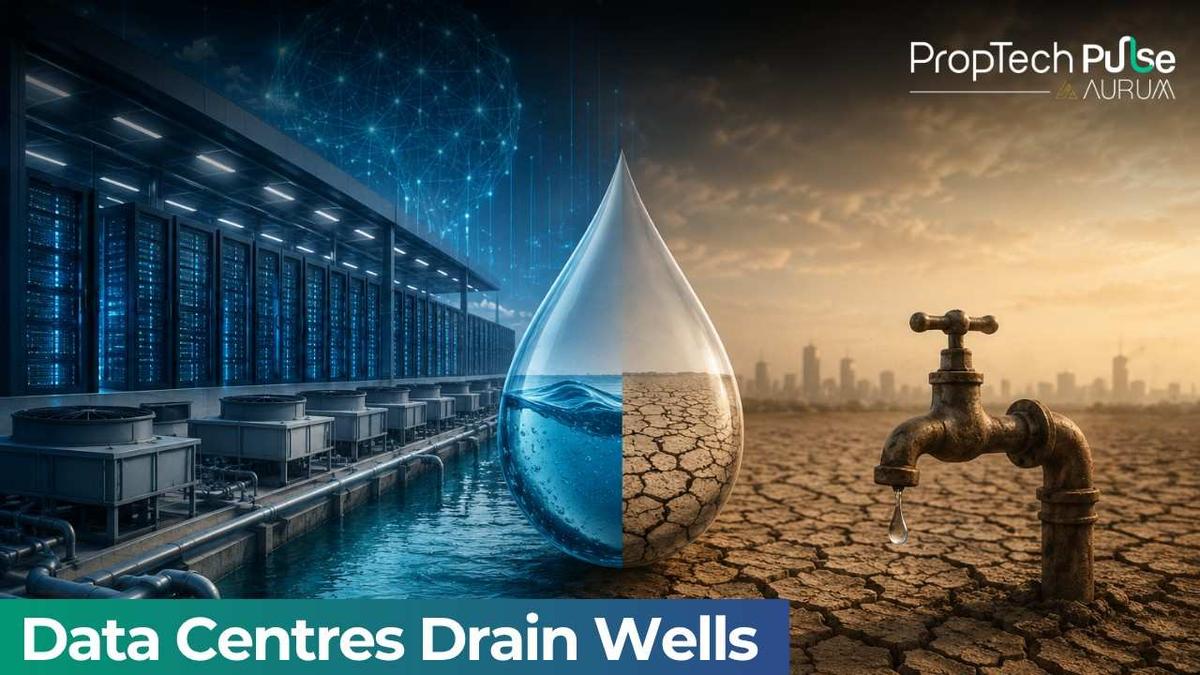
As India aggressively scales its digital infrastructure to support the global artificial intelligence (AI) boom, a severe environmental trade-off is emerging. According to a detailed investigative report published by Countercurrents, the rapid proliferation of massive AI data centres is placing an unprecedented strain on the country's already fragile water resources. These facilities, essential for processing vast amounts of data, require billions of litres of water annually to maintain the critical cooling systems necessary to prevent hardware failure. In regions already grappling with acute water scarcity, this industrial demand is effectively "draining India's wells dry."
The scale of consumption is staggering; industry estimates suggest that a large-scale data centre can consume as much water as a small city. Unlike traditional industries, the water usage in data centres is continuous and rising as AI models become more computationally intensive. This surge in demand is particularly visible in major tech hubs like Chennai, Mumbai, and Bengaluru, where groundwater levels have already plummeted to historic lows. The competition for water between local residents, agriculture, and high-tech infrastructure is creating a new flashpoint in the national water crisis.
Groundwater Depletion and Local Impact
The reliance of many data centres on local groundwater extraction has led to a rapid decline in the water table surrounding these digital hubs. This extraction has immediate and devastating consequences for local communities and the agricultural sector. Key impacts noted in the report include:
- The drying up of traditional village wells and borewells, forcing residents to rely on expensive private water tankers for basic survival.
- A significant reduction in soil moisture in surrounding areas, which is negatively impacting crop yields and farmer livelihoods.
- The potential for irreversible damage to local aquifers, which can lead to land subsidence and the permanent loss of water storage capacity.
The Challenge of Sustainable Cooling and Policy Gaps
While some technology firms have pledged to move toward "water-neutral" or "water-positive" operations by 2030, the current reality remains heavily dependent on water-intensive evaporative cooling. Experts argue that the transition to closed-loop or liquid cooling systems is moving too slowly to counteract the immediate ecological damage. Furthermore, there is a perceived lack of stringent regulatory oversight and specific environmental mandates tailored to the unique consumption patterns of the data centre industry.
To prevent a total collapse of local water security, environmentalists are calling for an immediate re-evaluation of how digital infrastructure is approved and situated. Recommendations include mandating the use of recycled wastewater for industrial cooling, implementing strict "water-use effectiveness" (WUE) benchmarks, and incentivising the development of data centres in regions with lower water stress. As the AI race intensifies, the ability of India to balance its digital ambitions with basic environmental survival will remain the defining challenge for the sector through the 2026-27 fiscal year.
Enjoyed this update? Visit PropTech Pulse for more real estate news and market insights.