New Launch - India Real Estate Report 2026.

Services
Knowledge Hub
Resources
Tools

Ask Pulse Ai
©PropTech Pulse 2025, All rights reserved.


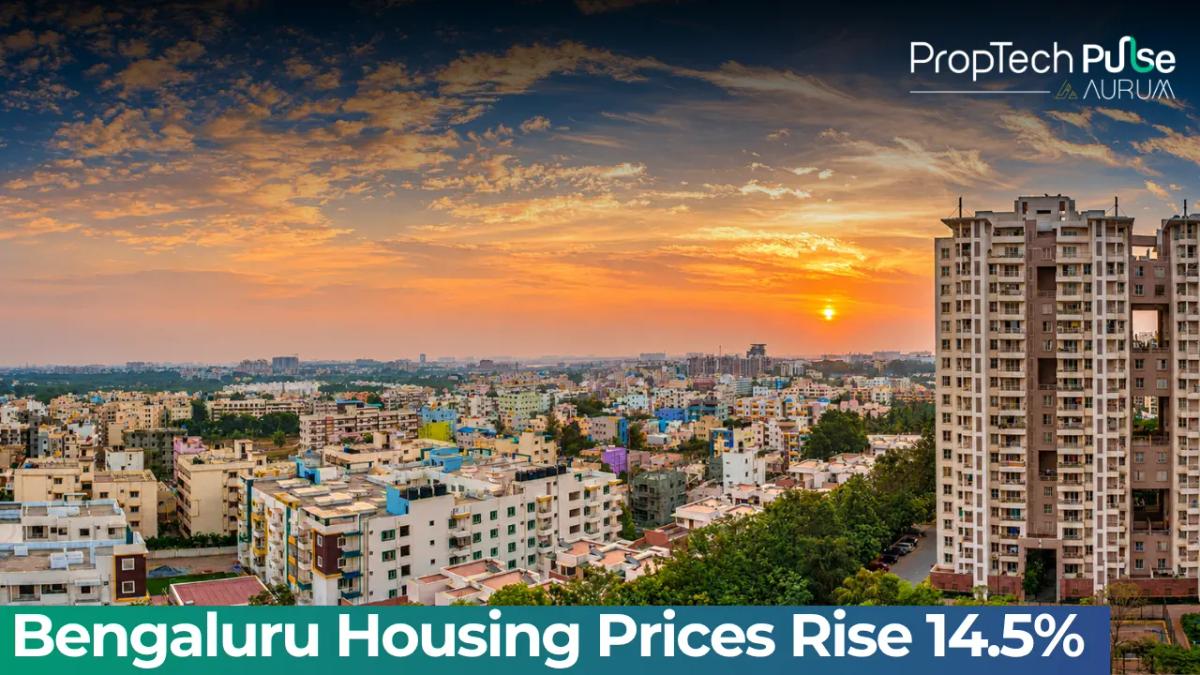
Bengaluru recorded the highest annual housing price growth among India's six major residential markets in Q3 2026, with prices rising 14.5% year on year.
The National Capital Region (NCR) followed at 10.6%, Chennai at 10.2% and the Mumbai Metropolitan Region (MMR) at 8.9%, according to a NoBroker report.
Bengaluru Leads Housing Price Growth in Q3 2026
Bengaluru led residential price appreciation for the third consecutive quarter. Prices increased by 14.5% in Q1, reached 16% in Q2 and stood at 14.5% in Q3 2026.
The city's average residential price rose to ₹11,293 per sq ft from ₹9,863 per sq ft a year earlier. Housing demand increased by 14%, while new launches declined by 12%, leaving buyers with fewer newly launched homes to choose from.
North Bengaluru and East Bengaluru recorded the strongest launch activity during Q3. According to the report, new residential supply is likely to remain concentrated in these two areas.
NCR Housing Prices Rise as Demand Weakens
NCR recorded annual housing price growth of 10.6%, although high property prices continued to affect demand. Demand declined by 8% in Gurugram, 9% in Noida and 5% across the rest of the region.
Within NCR, Faridabad registered the highest price growth at 15%, followed by Noida at 11% and Gurugram at 8%. New launches fell 23% to 7,177 units as developers became more cautious, particularly in higher-priced markets.
Ghaziabad, Noida and Faridabad together accounted for 77% of NCR's new launches. Faridabad was the only NCR market to record demand growth during the quarter.
Hyderabad and Pune Record Moderate Growth
Hyderabad recorded the slowest annual housing price growth among the six markets, at 5.6%.
Its average residential price reached ₹8,732 per sq ft, close to Pune's ₹8,622 per sq ft. Hyderabad's growth slowed from 9% in Q2, returning closer to the 5.1% recorded in Q1.
A substantial pipeline of large project completions and modest demand growth limited price appreciation in Hyderabad.
Developers are expected to focus on completing and selling existing projects, particularly in West Hyderabad, while pacing new launches.
Pune recorded 7.7% annual price growth, down from 10% in Q2 and 8% in Q1. New launches increased while demand remained broadly flat, giving buyers more options and moderating price growth.
Also Read: Top 5 Emerging Real Estate Hotspots in India and Why Investors Are Choosing Them
Festive-Season Launches and Supply Outlook
Pune and MMR are likely to remain active markets for new residential launches during the festive season.
Project-registration activity in Maharashtra typically increases ahead of major festivals, and launches in both markets recovered sharply in Q3 compared with the low base recorded in Q3 2025.
Chennai's residential activity is expected to receive support from demand growth, infrastructure development and employment expansion.
In NCR, developers are likely to remain selective about new supply, with a greater share of launches in comparatively affordable markets.
Also Read: Buying Under-Construction? Here's Your Real Checklist
Key Takeaways
- Bengaluru led annual housing price growth at 14.5% in Q3 2026.
- NCR grew 10.6%, Chennai 10.2% and MMR 8.9%.
- Hyderabad recorded 5.6% growth, while Pune registered 7.7%.
- Demand, new launches and available inventory varied across the six residential markets.
Explore the latest property rates and trends to research residential market movements.
Enjoyed this update? Visit PropTech Pulse for more real estate news, investment insights and property market trends.


