New Launch - India Real Estate Report 2026.

Services
Knowledge Hub
Resources
Tools

Ask Pulse Ai
©PropTech Pulse 2025, All rights reserved.


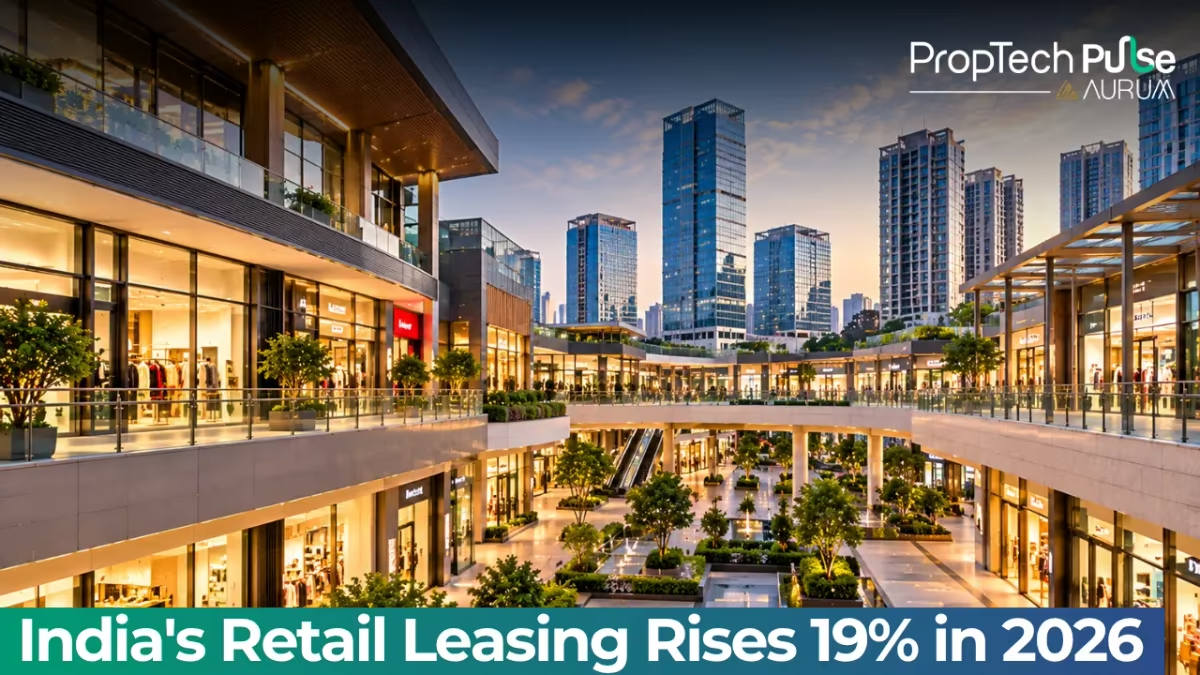
India's retail real estate market recorded approximately 5.8 million square feet of space absorption during January to September 2026, marking a 19% year-on-year increase.
Delhi-NCR led retail leasing, followed by Mumbai and Hyderabad, with the three markets accounting for approximately 67% of total space absorption, according to a CBRE Research report released at CII Realty 2026 on October 28.
Delhi-NCR Leads India's Retail Real Estate Market
Delhi-NCR recorded approximately 1.9 million square feet of retail space absorption during the first nine months of 2026.
Mumbai followed with around 1 million square feet, while Hyderabad recorded approximately 0.9 million square feet.
The concentration of leasing across these three markets highlights their importance to India's organised retail property sector.
Retailers continued to expand selectively, focusing on long-term store performance and profitability amid inflationary pressures, cautious consumer sentiment and limited availability of suitable space.
For commercial real estate developers and investors, leasing activity provides an indicator of occupier demand.
However, leasing volumes alone do not establish rental growth, occupancy levels or investment returns for individual malls and retail properties.
Retail Leasing and New Supply Increase Across India
India added approximately 1.8 million square feet of new retail space during the first nine months of 2026. Delhi-NCR contributed around 1.3 million square feet, while Mumbai added approximately 0.5 million square feet.
Notable additions included DLF Midtown Plaza, DLF Summit Plaza and Felix Plaza in Delhi-NCR, alongside the Outlet Mall of India in Bhiwandi, Mumbai. These developments added retail space to two of the country's leading leasing markets.
During the July-September quarter, retail space absorption reached approximately 2 million square feet, supported by around 0.9 million square feet of new supply.
Delhi-NCR, Mumbai and Hyderabad together accounted for more than 69% of leasing during the quarter.
Fashion and Apparel Drive Commercial Property Demand
Fashion and apparel brands accounted for 39% of retail leasing during January-September 2026, making them the largest contributor to occupier demand.
Domestic retailers represented 73% of leasing, followed by brands from Europe, the Middle East and Africa at 11%.
Continued store expansion, modernisation and interest in experience-led retail formats supported demand. Food and beverage businesses also contributed to leasing activity during the July-September quarter.
Looking ahead, café chains and restaurants are expected to support demand for food and beverage space.
Traditional jewellers, lab-grown diamond retailers and entertainment operators are also expected to contribute to retail leasing, according to the report.
Secondary Locations Could Attract Retail Development
Limited availability of quality retail space in prime locations is creating scope for secondary and peripheral markets to attract occupiers.
Ram Chandnani, managing director of leasing services at CBRE India, said the Grade A mall pipeline and improving infrastructure could help these locations emerge as retail destinations and support new high-street development.
For commercial real estate, this could broaden the locations considered by retailers and developers.
The extent of expansion will depend on the availability of suitable properties, infrastructure, consumer demand and the commercial viability of individual projects.
Also Read: Delhi NCR Retail: 3M Sq Ft New Supply Set for 2026
Real Estate Industry Highlights Regulatory Reform and Housing Demand
At CII Realty 2026, industry leaders also discussed regulatory reforms, housing affordability and sustainable urban development.
Bhuvnesh Pratap Singh of the Department for Promotion of Industry and Internal Trade highlighted efforts to reduce regulatory costs through digitisation and automation, alongside the removal of more than 47,000 compliance requirements.
Speakers also discussed the need for demand-led development. Anil Saraf of ASF Group of Companies cautioned against launching projects without adequately assessing end-user requirements, particularly in middle-income and rental housing segments.
Ashwinder R Singh, chairman of the CII Northern Region Committee on Real Estate, said India's real estate market was valued at approximately $500 billion and projected to reach $1 trillion by 2030.
He also highlighted affordability challenges, noting that homes priced below Rs 50 lakh recorded a 23% fall in sales during the first quarter.
Also Read: India's Shopping Malls Emerge as Real Estate Investments
Key Takeaways
- India recorded 5.8 million square feet of retail space absorption in the first nine months of 2026, up 19% year on year.
- Delhi-NCR led with 1.9 million square feet, followed by Mumbai at 1 million and Hyderabad at 0.9 million.
- Fashion and apparel brands accounted for 39% of retail leasing, while domestic retailers represented 73%.
- Secondary and peripheral locations could attract more retail development as prime space remains limited and infrastructure improves.
Explore more commercial property trends and market developments through real estate insights and analysis.
Enjoyed this update? Visit PropTech Pulse for more real estate news, investment insights and property market trends.


